A plea to be wild, scenic

We are fortunate to live in a region that has been recognized for its conservation significance at the federal, state and local levels. The rural character and quality of life that define our sense of home and place would be special to us even without this recognition, but with it we have a chance that many other communities have lost to keep it for generations to come.

There are at least four federal designations that currently apply to the Northwest Corner of Connecticut and beyond. The federal Forest Legacy designation for western Connecticut has brought millions of dollars to private landowners who have wild and working forest lands, and helped protect more than 6,000 acres in Kent, Sharon, Canaan/Falls Village and Norfolk. 

The Federal Highlands Conservation Area that encompasses 26 towns in northwest Connecticut has brought millions more;  helped willing landowners protect more than a thousand acres in Kent, Warren, Cornwall, Canaan/Falls Village and Norfolk; and has attracted matching state funding. 

The Upper Housatonic Valley National Heritage Area (which includes nine towns in northwest Connecticut and more in the Southern Berkshires) has drawn much-deserved attention to the iron heritage of our region, with grants to the Salisbury Association and Sharon Historical Society for interpretive signs.

Federal USDA designation of prime and significant agricultural soils in Sharon, Salisbury, North Canaan and elsewhere has made farmers here eligible for grants from the Natural Resources Conservation Service and the state of Connecticut Department of Agriculture that have protected farms and supported sustainable resource management throughout our area.

Each of these federal designations has brought resources to our communities to fairly compensate willing landowners for protecting their properties or to support local initiatives to highlight the rich cultural and ecological heritage of our region. None has resulted in the government taking land, and none of these programs has the statutory authority to do so. 

•  •  •

The Housatonic River is a resource that defines and links our communities and deserves to be conserved. For many decades, citizen action by groups as varied as the Berkshire Litchfield Environmental Council (BLEC); my own employer, the Housatonic Valley Association (HVA); and appointed members of the Housatonic River Commission (HRC) has helped stave off some of the most urgent threats to our river while demanding accountability for upstream pollution. 

Wild and Scenic designation would help bolster the importance of these locally driven conservation efforts. It is noteworthy that the River Commission, which formed as a local alternative to Wild and Scenic designation when it was first proposed for the Housatonic River in the late 1970s, now fully supports it and has brought it back to our communities for consideration. 

I understand concerns about government overreach, but I do not see how that applies in this case. There is no acquisition funding associated with the proposed Wild and Scenic designation. Public dollars to acquire conservation interest in land are dramatically decreasing at both the state and federal levels. If we want access to what little remains, or even to encourage willing landowners to donate land or easements, the IRS tax code is clear that open space preservation be “pursuant to a clearly delineated federal, state or local government policy.” 

In the competitive world of conservation finance, the more of these policies that can be cited, the better. I worked for four years on a Forest Legacy project in our area that twice failed to rank nationally even though it was near the Appalachian Trail, was offered at a substantial discount, buffered a public drinking water supply area and would have protected 900 acres of highly significant forest land. I do not know whether Wild and Scenic designation would have tipped the balance, but I sure wish I could have included it among the citations for its conservation significance.

Federal designations of conservation significance have been tremendously helpful to our region and have made our own conservation and preservation initiatives more successful. Private landowners and the public at large have benefited, but so too have the natural resources on which we and the plants and animals with which we share this landscape depend. I am glad that my home community of North Canaan has endorsed the Wild and Scenic effort, and hope our neighbors will do the same.

Tim Abbott is program director of Housatonic Valley Association’s Litchfield Hills Greenprint. His blog is at www.greensleeves.typepad.com. 


Latest News

Living art takes center stage in the Berkshires

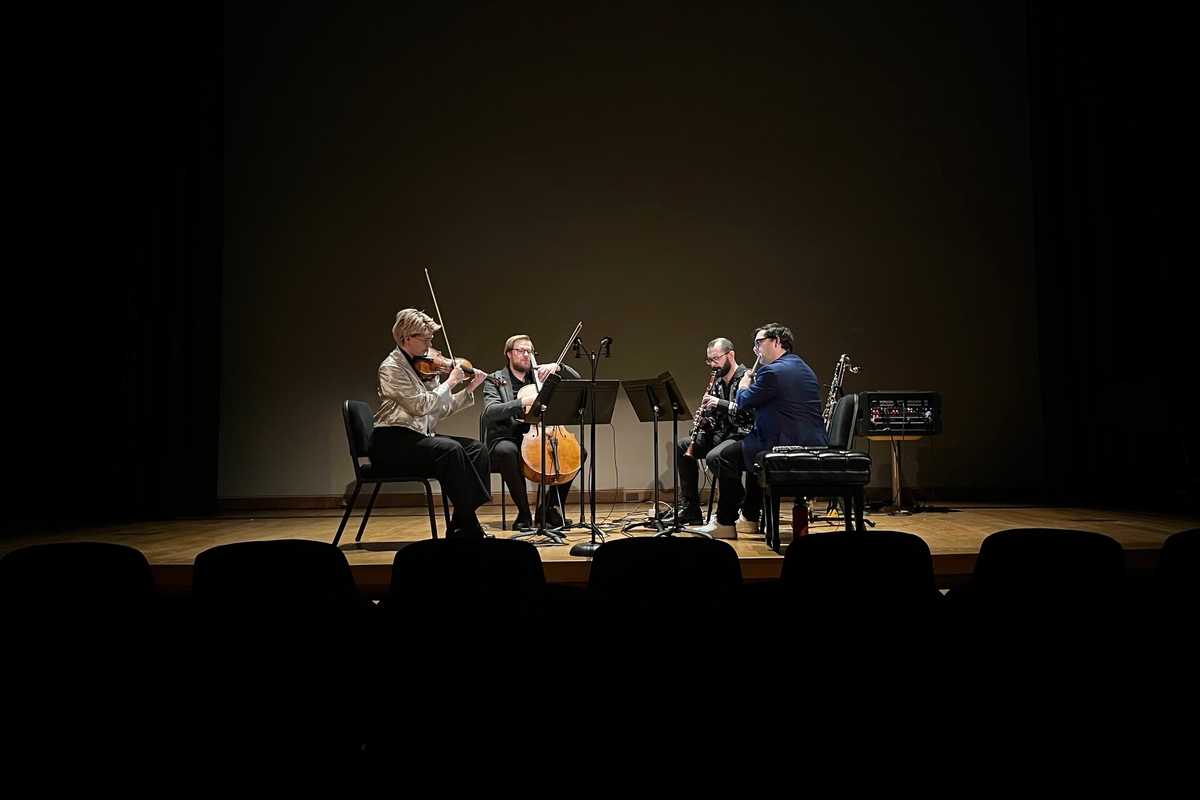
Contemporary chamber musicians, HUB, performing at The Clark.

D.H. Callahan

Northwestern Massachusetts may sometimes feel remote, but last weekend it felt like the center of the contemporary art world.

Within 15 miles of each other, MASS MoCA in North Adams and the Clark Art Institute in Williamstown showcased not only their renowned historic collections, but an impressive range of living artists pushing boundaries in technology, identity and sound.

Keep ReadingShow less
Persistently amplifying women’s voices

Francesca Donner, founder and editor of The Persistent. Subscribe at thepersistent.com.

Aly Morrissey

Francesca Donner pours a cup of tea in the cozy library of Troutbeck’s Manor House in Amenia, likely a habit she picked up during her formative years in the United Kingdom. Flanked by old books and a roaring fire, Donner feels at home in the quiet room, where she spends much of her time working as founder, editor and CEO of The Persistent, a journalism platform created to amplify women’s voices.

Although her parents are American and she spent her earliest years in New York City and Litchfield County — even attending Washington Montessori School as a preschooler — Donner moved to England at around five years old and completed most of her education there. Her accent still bears the imprint of what she describes as a traditional English schooling.

Keep ReadingShow less
Jarrett Porter on the enduring power of Schubert’s ‘Winterreise’
Baritone Jarrett Porter to perform Schubert’s “Winterreise”
Tim Gersten

On March 7, Berkshire Opera Festival will bring “Winterreise” to Studio E at Tanglewood’s Linde Center for Music and Learning, with baritone Jarrett Porter and BOF Artistic Director and pianist Brian Garman performing Franz Schubert’s haunting 24-song setting of poems by Wilhelm Müller.

A rejected lover. A frozen landscape. A mind unraveling in real time. Nearly 200 years after its premiere, “Winterreise” remains unnervingly current in its psychological portrait of isolation, heartbreak and existential drift.

Keep ReadingShow less
google preferred source

Want more of our stories on Google? Click here to make us a Preferred Source.
A grand finale for Crescendo’s 22nd season

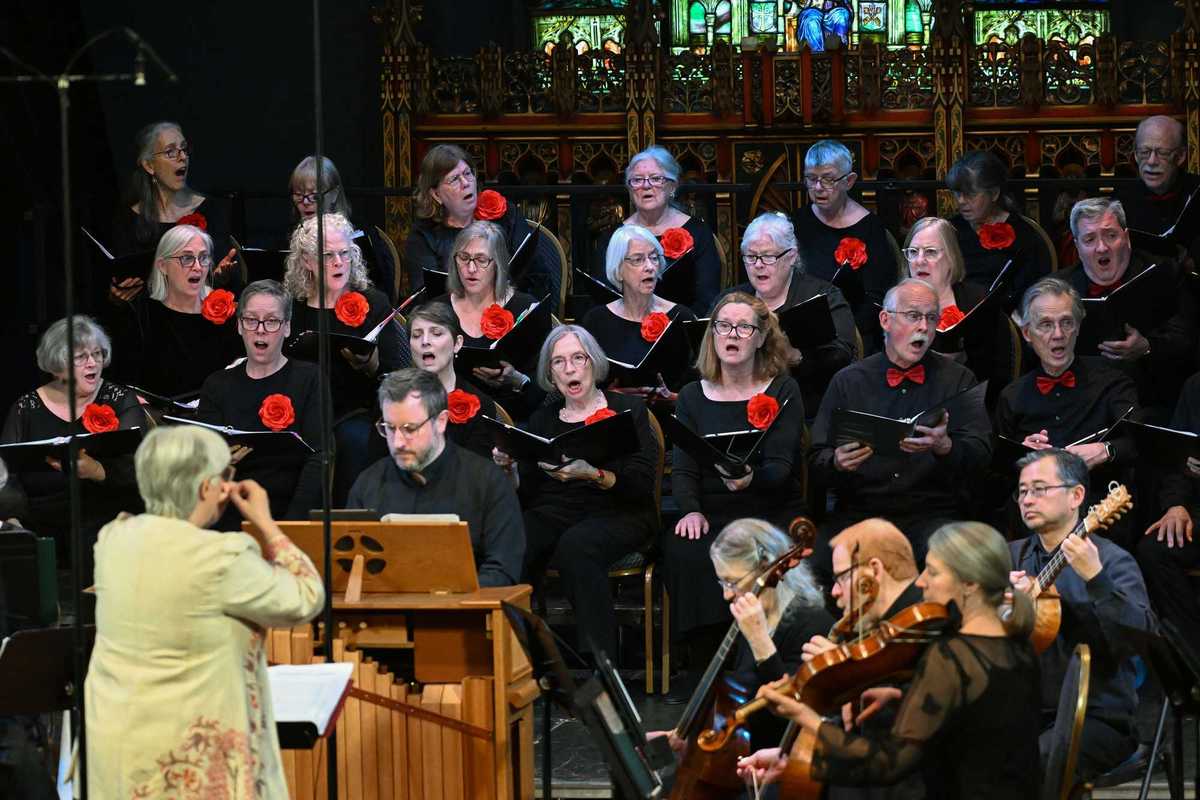
Christine Gevert, artistic director, brings together international and local musicians for a season of rare works.

Stephen Potter

Crescendo, the Lakeville-based nonprofit specializing in early and rarely performed classical music, will close its 22nd season with a slate of spring concerts featuring international performers, local musicians and works by pioneering composers from the Baroque era to the 20th century.

Christine Gevert, the organization’s artistic director, has gathered international vocal and instrumental talent, blending it with local voices to provide Berkshire audiences with rare musical treats.

Keep ReadingShow less

Leopold Week honors land and legacy

Leopold Week honors land and legacy

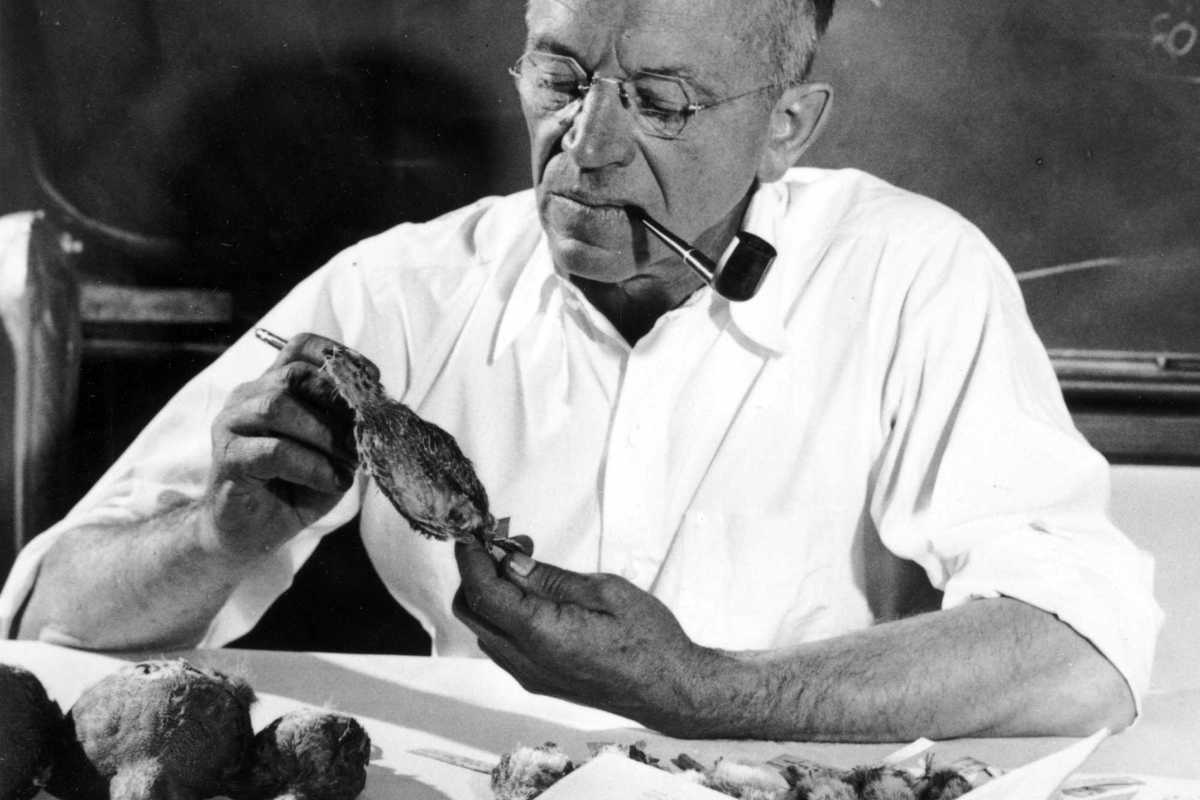
Aldo Leopold in 1942, seated at his desk examining a gray partridge specimen.

Robert C. Oetking

In his 1949 seminal work, “A Sand County Almanac,” Aldo Leopold, regarded by many conservationists as the father of wildlife ecology and modern conservation, wrote, “There are some who can live without wild things and some who cannot.” Leopold was a forester, philosopher, conservationist, educator, writer and outdoor enthusiast.

Originally published by Oxford University Press, “A Sand County Almanac” has sold 2 million copies and been translated into 15 languages. On Sunday, March 8, from 3 to 5 p.m. in the Great Hall of the Norfolk Library, the public is invited to a community reading of selections from the book followed by a moderated discussion with Steve Dunsky, director of “Green Fire,” an Emmy Award-winning documentary film exploring the origins of Leopold’s “land ethic.” Similar reading events take place each year across the country during “Leopold Week” in early March. Planning for this Litchfield County reading began when the Norfolk Library received a grant from the Aldo Leopold Foundation, which provided copies of “A Sand County Almanac” to distribute during the event.

Keep ReadingShow less

Erica Child Prud’homme

Erica Child Prud’homme

WEST CORNWALL — Erica Child Prud’homme died peacefully in her sleep on Jan. 9, 2026, at home in West Cornwall, Connecticut, at 93.

Erica was born on April 27, 1932, in Doylestown, Pennsylvania, the eldest of three children of Charles and Fredericka Child. With her siblings Rachel and Jonathan, Erica was raised in Lumberville, a town in the creative enclave of Bucks County where she began to sketch and paint as a child.

Keep ReadingShow less
google preferred source

Want more of our stories on Google? Click here to make us a Preferred Source.
google preferred source

Want more of our stories on Google? Click here to make us a Preferred Source.