Thank you!
Your support is sustaining the future of local news in our communities.

Portrait of Pauline Kael Opens Berkshire Film Festival

When it comes to a trailblazing voice in film like that of New Yorker critic Pauline Kael, the question is: what can you say about her that she couldn’t say herself? That is what director Rob Garver set out to do in his debut documentary, “What She Said: The Art of Pauline Kael.” It’s an immediately gripping, energized salute to a woman who paved the way for American film criticism as an art form. As Vanity Fair writer Lili Anolik says in the film, “She turned the movie review into something as expressive as a short story or a sonnet.”

Director Rob Garver spoke with Compass about “What She Said,” which will open the 2019 Berkshire International Film Festival in Great Barrington on May 30.

Alexander Wilburn: Within 10 minutes of watching “What She Said” I was thinking, “I wish I were having coffee tomorrow with Pauline Kael. I just want to hear her opinions.” Choosing her as the subject of your first full-length documentary and doing what I imagine was years of research, you must feel the same way?

Rob Garver: I think she would have been a fantastic friend, and she had so many friends, which is one of the things I learned. Atypical, maybe, of a serious writer. She was outgoing and loved to share the movies with people.

AW: It’s a really affectionate and appealing film. For you, why Pauline Kael?

RG: I read her as a kid in high school and in college. I started becoming really interested in movies and Super 8 and making movies with my friends. When I read her, she had the same enthusiasm for movies as I did as a kid. I didn’t know at the time she was a middle aged woman. It was a creative idea too, I had the challenge to tell the story of someone who wrote about movies through the movies. So that’s why there’s 210 pieces of different movies in my movie. I wanted to try to show you her experience of the movies. And her experience was unique because she was born in 1919, 100 years ago, and her life really spanned the history of 20th century movies. But the spark was really bringing her creative voice alive, because it was so alive to me when I first read her. Her voice was different. It’s personal. It’s funny. It’s honest. It’s insightful. 

AW: I thought the use of movie clips in the documentary was so interesting because it visually weaves motifs from her life. Starting with the tough dames of the 1930s films, and later as she finds her stride as America finds a stride in the 1970s wave of film. 

RG: It was a lot of trial and error, picking and choosing the things that worked and didn’t. It took me four years to make this movie from beginning to end. I had started to collect movies and get ideas for pieces that I could use. It was fun to find something that worked. I had to be patient with it, but when that paid off it was really rewarding. 

AW: When you were reading Pauline Kael as a kid, did your opinions match up?

RG: That’s the thing, a lot of people I talked to, we didn’t love her because we agreed with her, we loved her because she was really an artist in her own right. She expressed herself and she didn’t really care what people thought. She wasn’t trying to be the objective critic, she was all in for a movie, whether she liked it or didn’t like it. She was going to tell you what she thought. I disagreed with her on “2001,” and I think on a lot of other movies. You can always just appreciate someone who is very honest with how she thinks and how she feels about a movie. It was nice when you agreed, but when you didn’t you could have these arguments in your head with her.

AW: There was a line in the movie where someone points out, “The role of the critic isn’t to convince you.” 

RG: Camille Paglia said that.

AW: You have a real cast of provocative icons in their given fields — John Guare, Quentin Tarantino, Camille Paglia. How did you select your interview subjects?

RG: I didn’t just want to have film people and I didn’t just want to have her friends. I wanted to have other artists, and directors she reviewed, and directors like Tarantino and David O. Russell, whom she didn’t. I knew that it would make for a richer film to have different perspectives and give the audience a little bit more to chew on.

AW: Sarah Jessica Parker, who obviously voiced the narration of a famous fictional New York writer, voices the writing of Pauline Kael. How did her involvement come about?

RG: I had the idea that she would be good because she is associated with New York and writers, and not just for “Sex and The City,” but just last year she had started her own publishing imprint. She’s publishing new, mostly female young writers. She loves the written word and she told me her mother subscribed to The New Yorker and they would read her reviews together. And a fortuitous thing I found, the very last review Pauline published before she quit The New Yorker was “L.A. Story,” the Steve Martin movie from 1991, and the near very last sentence Pauline wrote was about Sarah Jessica Parker. It turned out Sarah knew that.

AW: I’m always curious to ask documentary filmmakers when their subject has died: if by magic you could ask Pauline Kael one thing, what would it be?

RG: The thing that really surprised me about her life is that she turned down the opportunity for a good job because she wanted to be a different kind of writer. There’s a moment in the documentary when she gets an advertising copy writing job and she says, “When they put my name on the office door and I was promoted I knew I had to quit because I would be stuck there.” I would definitely ask her how did she feel that day and how hard was it to make that decision? There are points in people’s lives that make all the difference.


This interview has been edited for space. 


“What She Said” is opening on May 30 at The Berkshire International Film Festival. For more information go to www.biffma.com


Latest News

The Cornwall Whale resurfaces in West Cornwall

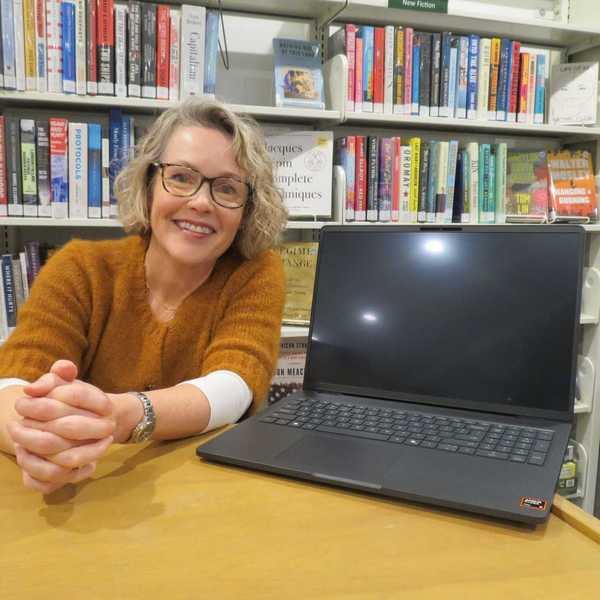
The Cornwall Whale is the brain-child of visual and experiential designer Lindsay Stadig.

D.H. Callahan

There’s something oddly familiar yet intangibly foreign about the Cornwall Whale. It’s not an interiors store, even though there are chairs and furnishings for sale. It’s not an art gallery, though there are paintings and sculptures occupying every corner of the space. It’s not a boutique, even with locally handmade shoes and carefully selected garments. No, The Cornwall Whale is something truly unique in the world of the truly unique.

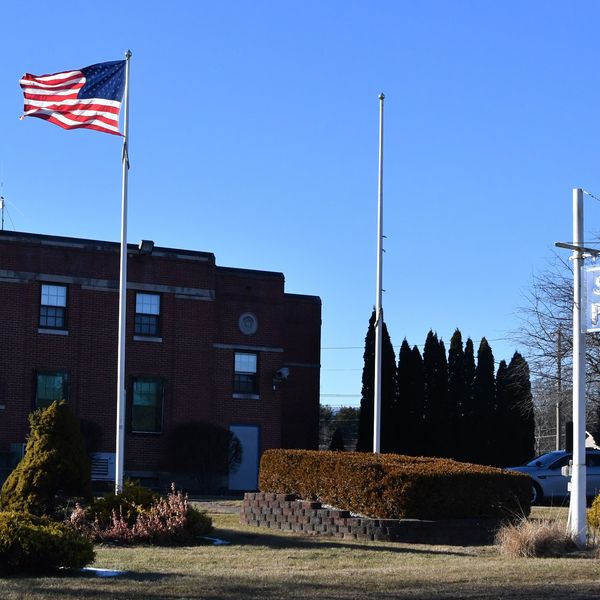
The enigmatic shop popped up in the early winter of 2025 at the Hughes Memorial Library, right on the bank of the Housatonic River in West Cornwall. It is the brain-child of visual and experiential designer Lindsay Stadig.

Keep ReadingShow less

Social justice songwriting fall retreat

Social justice songwriting fall retreat

Singer, songwriter and activist Taína Asili leads a social justice songwriting retreat Nov. 20-23 at Soul Fire Farm in Petersburgh, N.Y.

Provided

Music has long been a powerful tool for protest, solidarity and social change. From civil rights anthems to contemporary songs of resistance, songwriting has helped give voice to movements and inspire collective action. Singer, composer and activist Taína Asili will explore that tradition during a four-day Social Justice Songwriting Retreat, Nov. 20 to 23, at Soul Fire Farm in Petersburgh, New York.

The retreat comes amid a renewed interest in collective singing as a form of activism. Organizations such as Singing Resistance are bringing people together across the country to use songs as tools for solidarity, nonviolent resistance and community building. The movement draws on the long history of music in social justice struggles, emphasizing the power of singing together to overcome fear, strengthen connections and inspire collective action.

Keep ReadingShow less
Where Calvin, Hobbes and Rockwell meet

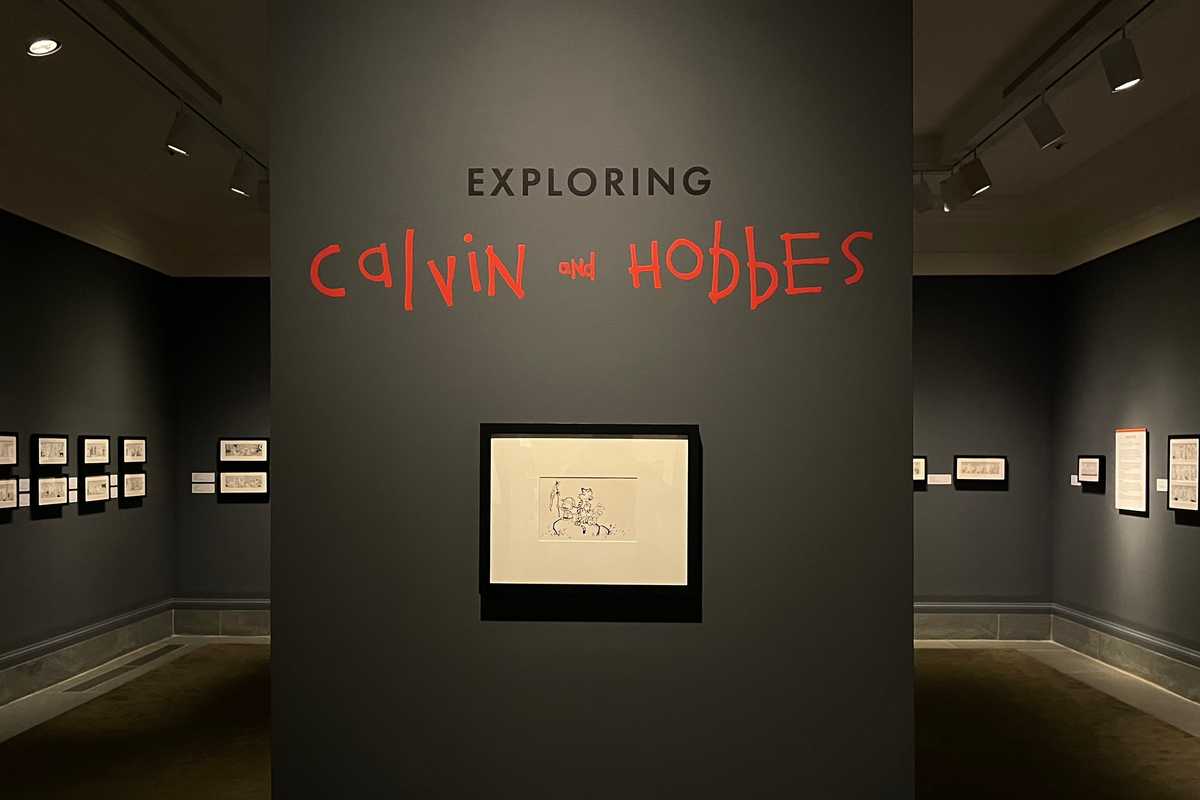
Original “Calvin and Hobbes” comic strips by Bill Watterson are on view alongside works by Norman Rockwell in “Exploring Calvin and Hobbes” at the Norman Rockwell Museum. Stockbridge. The exhibition runs through May 31, 2027.

D.H. Callahan

Two distinctive approaches to American life and storytelling come together in a new exhibition at the Norman Rockwell Museum in Stockbridge, Massachusetts. Opening Saturday, Nov. 14, the exhibition brings the imaginative world of Bill Watterson’s “Calvin and Hobbes” into conversation with the familiar scenes of everyday life captured by Norman Rockwell. Though separated by generations and working in different mediums, both artists found humor, humanity and complexity in the seemingly ordinary.

Norman Rockwell skyrocketed to popularity when he started painting the covers for the Saturday Evening Post, a magazine with a history spanning more than two centuries.Its last print edition ran this past September, transitioning the publication to an online-only format. From 1897 until 1963, it published a new issue every week. Over that time, it published writings by literary legends like F. Scott Fitzgerald, Kurt Vonnegut, Agatha Christie, William Faulkner, Edgar Allan Poe, Louis L’Amour, John Steinbeck and Lenox, Massachusetts resident Edith Wharton, and featured comics by “Peanuts” creator Charles M. Schultz. In 1916, the magazine first featured one of Rockwell’s illustrations. He was just 22 years old.

Keep ReadingShow less
google preferred source

Want more of our stories on Google? Click here to make us a Preferred Source.

Chim Chim Cher-ee! A local sweep makes movie magic
Dick Van Dyke, Julie Andrews and the Banks children in Disney’s 1964 classic, “Mary Poppins.”

There are few films in the history of Hollywood that have endeared themselves to kids of all ages like “Mary Poppins.” On Sunday, Nov. 22 at 2 p.m., the classic story of a magical nanny, a couple precocious children, some cartoon penguins and a chimney sweep will screen at the Colonial Theatre in North Canaan. For the third year in a row, the event will be free of charge, thanks to Salisbury-based chimney sweep Rob Keller of Sultans of Soot.

Keller has been cleaning, relining and tending to area chimneys for over 30 years while raising a family in the community. He credits the Colonial for making its theater available for sponsored events like this one. Of course, Keller doesn’t need to drum up any more business this time of year. His motivation for the sponsorship is simply to give back to the community and create opportunities for togetherness. Seeing the joy and excitement of the kids and families who are making this a yearly tradition is more than enough for him.

Keep ReadingShow less
Erinys Quartet brings its furious energy to Wethersfield

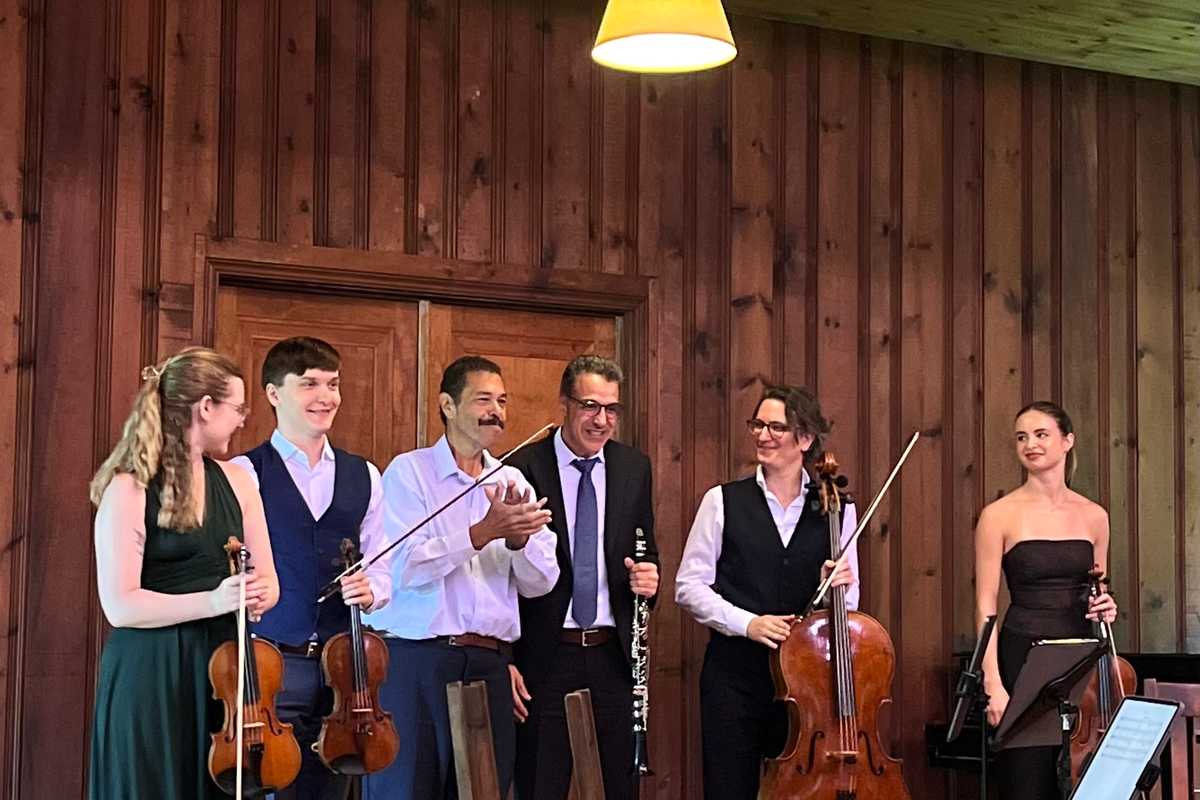
The Erinys Quartet with Oskar Espina Ruiz and Alfonso Fuentes at Music Mountain in August 2026.

D.H. Callahan

This past summer, the Erinys Quartet, a chamber music ensemble, premiered a new composition by Puerto Rican composer Alfonso Fuentes at Music Mountain in Falls Village, Connecticut, accompanied by clarinetist Oskar Espina Ruiz. On Nov. 21 and 22, the same group will take the mountain’s programming on the road, performing together again at the Carriage House at the Wethersfield Estate & Garden in Amenia, New York.

The Erinys Quartet originated at the Sibelius Academy in Helsinki in 2018, when its members were all students. The musicians are from across the globe, with roots in Finland, Lithuania, Estonia, Rochester, New York, and Greece. The quartet’s name is taken from Greek mythology, in which the Erinyes were chthonic goddesses of vengeance. Homer referred to them in his epic “The Iliad,” writing, “the Erinyes, that under earth take vengeance on men, whosoever hath sworn a false oath.” Their Roman counterparts are the Furies. And indeed, the quartet can harness some rather furious energy..

Keep ReadingShow less

Tangled gift guide 2026

Tangled gift guide 2026

The Tacky Pescador Mag-Pad box fits in a shirt pocket, holds plenty of flies and has a spot for the tiny ones.

Patrick L. Sullivan

Anyone with the misfortune — er, the unbridled joy — of having a fly-fisherperson on the Christmas list knows the problem. In a sport where idiosyncrasy is an art form, how does the gift giver find something the giftee will use?

Also, how can this be accomplished without spending vast sums?

Keep ReadingShow less
google preferred source

Want more of our stories on Google? Click here to make us a Preferred Source.

google preferred source

Want more of our stories on Google? Click here to make us a Preferred Source.