Proposed budget is $31.6 million

WINSTED — Town Manager Dale Martin presented a proposed budget of $31.6 million for fiscal year 2013-14 at the Winchester Board of Selectmen’s first budget workshop of the year Thursday, Feb. 28, at Town Hall.Martin was joined by Mayor Maryann Welcome and Selectmen Michael Renzullo, Candy Perez, Glenn Albanesius and Ken Fracasso at the meeting.The audience included residents and several department leaders, including Town Clerk Sheila Sedlack, her husband and Gilbert School Corp. Chairman Steven Sedlack, Police Chief Robert Scannell, Building Inspector Marc Melanson and outgoing Department of Public Works Chairman James Rotondo.Residents approved the fiscal year 2012-2013 town budget, the fourth one proposed by the board, at a referendum last October for $30,932,241, an increase of $199,718 from the previous fiscal year.As a result, the town’s mill rate remained unchanged from the previous year, with the tax rate set at 25.43 mills.To generate roughly the same amount of tax income in fiscal year 2013-14, the town would need to raise the tax rate to 30.20 mills, an increase of 4.77 mills, Martin noted.31 mils proposedMartin told selectmen he is developing the 2013-2014 budget around the concept of raising the tax rate to an even 31 mills, which would generate $20,700,000 in revenue from the town’s grand list at an assumed 97 percent collection rate.Combined with $370,000 in collection fees, along with interest and property lien fees of $200,000, Martin said the town would receive a combined total of $21,292,200 in property taxes.Other town revenues are set to include $800,000 in Water and Sewer Administration funds, $325,000 in employee medical contributions and $250,000 from other local revenues.Martin said the town is expected to receive $8,950,176 in state revenues, which includes $8,145,716 in Education Cost Sharing funds, $302,668 in Town Aid Road grant funds and $263,578 in a Hold Harmless Grant.In total, Martin forecasts the town will receive a total of $31,617,376 in revenues for fiscal year 2013-2014.As for expenditures, the top expenditure listed by Martin is for the Board of Education at $19,958,149.The amount is the state mandated Minimum Budget Requirement (MBR), which is the same MBR and amount of funds the school district received for the current fiscal year.While Superintendent of Schools Thomas Danehy proposed a budget of $22,199,590 for fiscal year 2013-2014 at a public hearing in February, Town Manager Martin said he plans to hold the school district to the MBR funding level.Other town expenditures, as listed by Martin, include: $4,306,000 for town personnel, $2,175,000 for medical benefits, $700,000 for debt service, $600,000 for the town’s pension contribution, $500,000 for municipal insurance and $450,000 in Regional Refuse Disposal District One (RRDD1) funds, for a total of $28,689,149 in projected expenditures.“These figures are all just a starting point for discussion,” Martin said. “These numbers may change between now and two weeks from now when we present the budget. We have not gotten the official number yet from RRDD1 yet.”Martin said after the town paid its projected expenditures, it will have roughly $3 million the town could use for potential programs or projects.“What is not in the expenditure costs is daily operational costs for departments, including utilities and gasoline,” Martin said. “That will have to come out of the $3 million.”He said various town departments proposed 32 separate capital projects for 2013-2014, which total $1.96 million.Selectmen respondAfter his presentation, Martin asked the selectmen for their recommendations for any potential town capital projects.Instead, Selectmen Fracasso questioned the way Martin put together the draft budget.“I think we’re all getting too far ahead of ourselves,” Fracasso said. “We have to take a step back because there is nothing in this budget presentation which lists bond payments. I know we have one due in June for $500,000 and one due in August for $300,000. A few days ago we spoke about hopefully getting funds from next year’s tax receipts to pay for this year’s bonds.” Fracasso said he is worried the town is not budgeting properly.“If you add everything up, we are already short by $2.5 million.”“All of the bond payments are already accounted for in the general fund,” Martin told Fracasso. “There are two bond payments owed by the Water Department and two owed by the Sewer Department. Those have been included in the budget under the Water and Sewer fund.”Martin said any balance owed by the Water and Sewer departments will be included in the upcoming proposed rate structure for water and sewer customers.At a selectmen’s meeting on Feb. 19, town auditor Chris King revealed every year since 1999 the town has advanced $300,000 to $400,000 a year from its municipal general fund to help make up for shortfalls in the water department’s budget.He said the funds need to be repaid to the town and by the end of this fiscal year, the amount owed to the town’s general fund by the department will be $3.2 million.As part of the discussion he had with the selectmen, King proposed two separate plans that would have water and sewer customers see substantial rate increases.While neither plan has been approved, at the Feb. 28 workshop Selectmen Fracasso said he is firmly against both plans.“This proposed budget is based on tripling or quadrupling existing water and sewer rates,” Fracasso said. “If we lose businesses, people move out of town or if we have houses foreclosed on, we won’t be able to meet bond obligations. I don’t think [the departments] will be able to raise enough revenue to pay for these things. So we’re going to be right back in the same position that we are right now. We are not going to have enough money to pay for these things and we will be robbing money from future years.”Selectmen Perez reminded Fracasso the Water and Sewer Commission, as per Town Charter, sets customer rates and the selectmen have no control over them.“That’s why I previously suggested we have a formal agreement with them to assure us we would get those funds,” Perez said.Martin said on Wednesday, Feb. 27, he met with members of the Water and Sewer Commission, including commission Chairman Richard Nalette, Town Attorney Kevin Nelligan and Town Auditor King.“The intent of the commission is to a set a public hearing in order to raise the rates to accommodate for an eight-year repayment plan,” Martin said. “Those rates will be effective on Monday, April 1.”“So if they drive business out of town and it becomes too expensive to live here, I don’t think that the bondholders are going to say they’ll forgive these bonds,” Selectman Fracasso said. “I think the Water and Sewer Commission, working with [King], will have to monitor what the impacts of the rates are,” Martin said. “But, for budgeting purposes, the commission accepts the eight-year repayment plan.”Martin said the proposed Water and Sewer rate increase would see customers pay an increase of $250 per year.“With this proposed mill rate, which is revenue neutral, residents are going to be pretty close to what they previously paid in taxes,” Martin told the selectmen. “The question is, do you really want to go higher on a mill rate when residents are already facing an increase in water and sewer rates?”Selectman Fracasso said that no matter what happens, the town should invest in its fund balance budget line item.“If we don’t put money into the fund balance, we are going to be right in the same boat that we are in right now,” Fracasso said. By the time the workshop ended, the selectmen in attendance had not proposed changes to the proposed budget.Martin said he will present a formal budget to the selectmen on Friday, March 15.After Martin’s formal budget presentation, as required by the Town Charter, there will be at least two public hearings on the proposed budget.The annual town meeting is scheduled for Monday, May 6.At the meeting, a referendum to vote on the budget will be scheduled.

Latest News

Living art takes center stage in the Berkshires

Contemporary chamber musicians, HUB, performing at The Clark.

D.H. Callahan

Northwestern Massachusetts may sometimes feel remote, but last weekend it felt like the center of the contemporary art world.

Within 15 miles of each other, MASS MoCA in North Adams and the Clark Art Institute in Williamstown showcased not only their renowned historic collections, but an impressive range of living artists pushing boundaries in technology, identity and sound.

Keep ReadingShow less
Persistently amplifying women’s voices

Francesca Donner, founder and editor of The Persistent. Subscribe at thepersistent.com.

Aly Morrissey

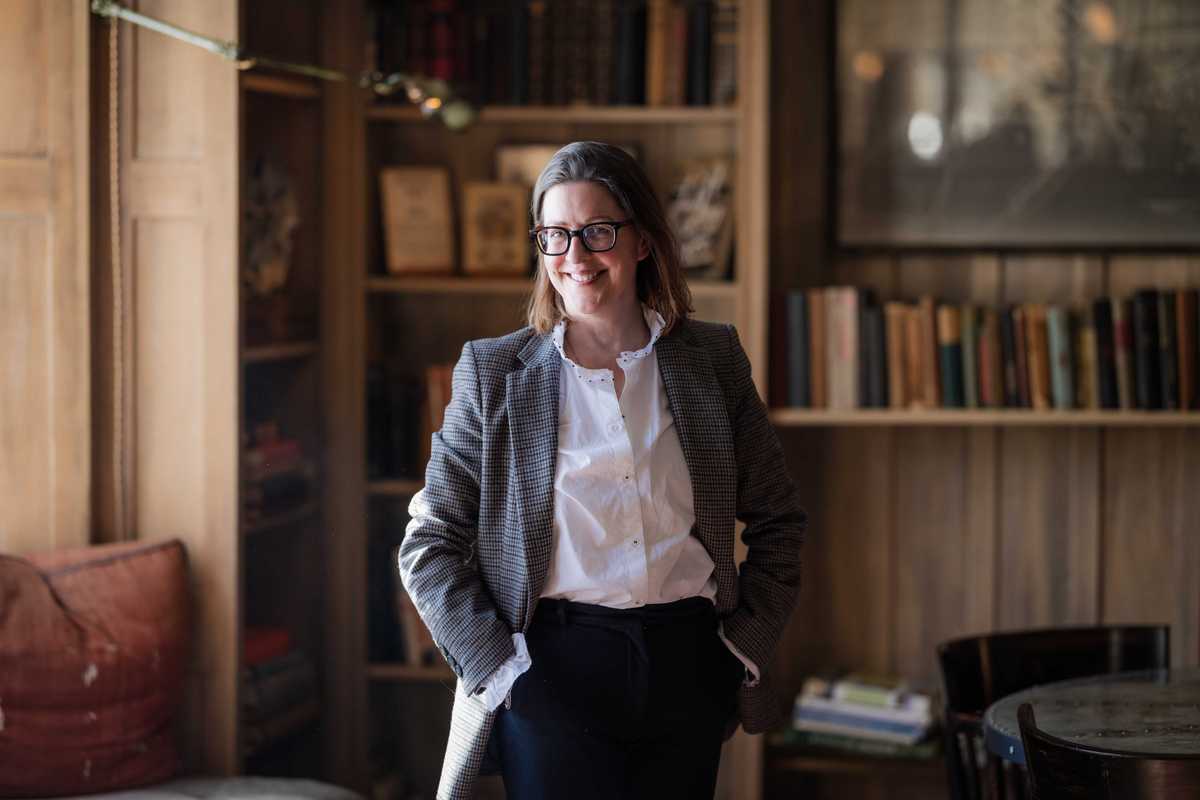
Francesca Donner pours a cup of tea in the cozy library of Troutbeck’s Manor House in Amenia, likely a habit she picked up during her formative years in the United Kingdom. Flanked by old books and a roaring fire, Donner feels at home in the quiet room, where she spends much of her time working as founder, editor and CEO of The Persistent, a journalism platform created to amplify women’s voices.

Although her parents are American and she spent her earliest years in New York City and Litchfield County — even attending Washington Montessori School as a preschooler — Donner moved to England at around five years old and completed most of her education there. Her accent still bears the imprint of what she describes as a traditional English schooling.

Keep ReadingShow less
Jarrett Porter on the enduring power of Schubert’s ‘Winterreise’
Baritone Jarrett Porter to perform Schubert’s “Winterreise”
Tim Gersten

On March 7, Berkshire Opera Festival will bring “Winterreise” to Studio E at Tanglewood’s Linde Center for Music and Learning, with baritone Jarrett Porter and BOF Artistic Director and pianist Brian Garman performing Franz Schubert’s haunting 24-song setting of poems by Wilhelm Müller.

A rejected lover. A frozen landscape. A mind unraveling in real time. Nearly 200 years after its premiere, “Winterreise” remains unnervingly current in its psychological portrait of isolation, heartbreak and existential drift.

Keep ReadingShow less
google preferred source

Want more of our stories on Google? Click here to make us a Preferred Source.

A grand finale for Crescendo’s 22nd season

Christine Gevert, artistic director, brings together international and local musicians for a season of rare works.

Stephen Potter

Crescendo, the Lakeville-based nonprofit specializing in early and rarely performed classical music, will close its 22nd season with a slate of spring concerts featuring international performers, local musicians and works by pioneering composers from the Baroque era to the 20th century.

Christine Gevert, the organization’s artistic director, has gathered international vocal and instrumental talent, blending it with local voices to provide Berkshire audiences with rare musical treats.

Keep ReadingShow less

Leopold Week honors land and legacy

Leopold Week honors land and legacy

Aldo Leopold in 1942, seated at his desk examining a gray partridge specimen.

Robert C. Oetking

In his 1949 seminal work, “A Sand County Almanac,” Aldo Leopold, regarded by many conservationists as the father of wildlife ecology and modern conservation, wrote, “There are some who can live without wild things and some who cannot.” Leopold was a forester, philosopher, conservationist, educator, writer and outdoor enthusiast.

Originally published by Oxford University Press, “A Sand County Almanac” has sold 2 million copies and been translated into 15 languages. On Sunday, March 8, from 3 to 5 p.m. in the Great Hall of the Norfolk Library, the public is invited to a community reading of selections from the book followed by a moderated discussion with Steve Dunsky, director of “Green Fire,” an Emmy Award-winning documentary film exploring the origins of Leopold’s “land ethic.” Similar reading events take place each year across the country during “Leopold Week” in early March. Planning for this Litchfield County reading began when the Norfolk Library received a grant from the Aldo Leopold Foundation, which provided copies of “A Sand County Almanac” to distribute during the event.

Keep ReadingShow less

Erica Child Prud’homme

Erica Child Prud’homme

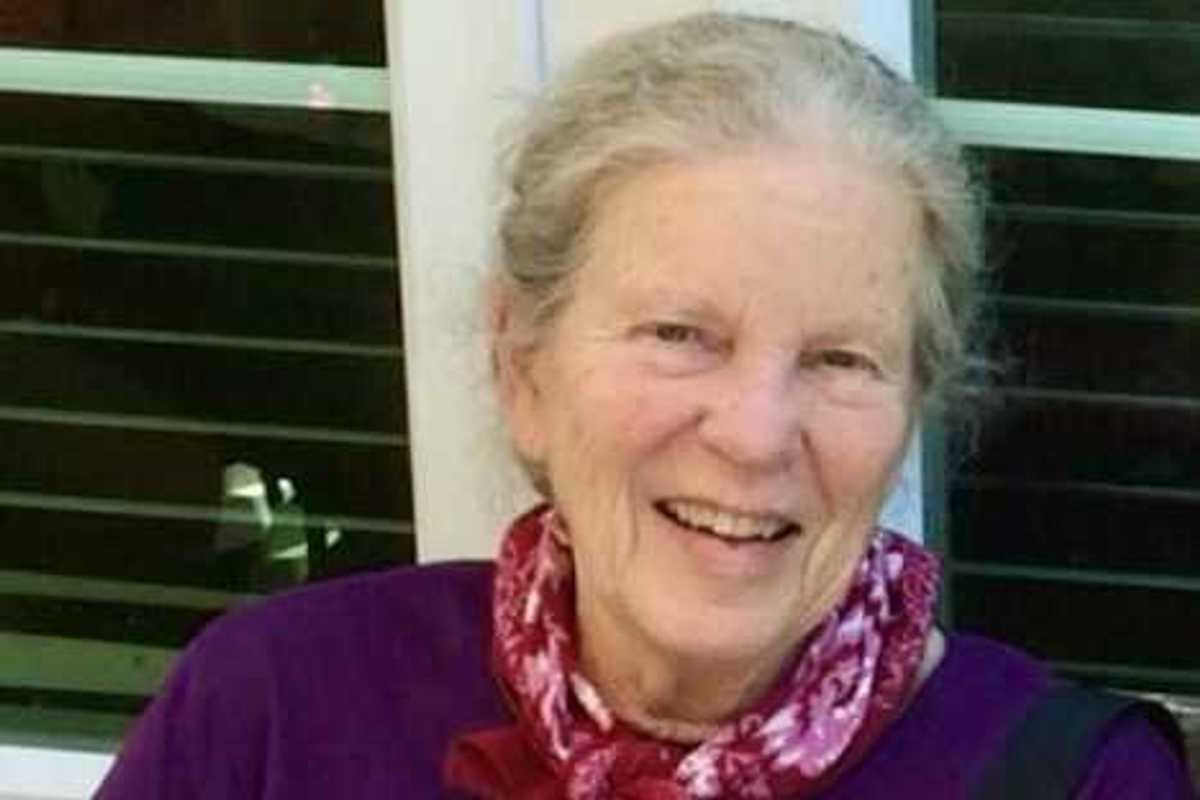
WEST CORNWALL — Erica Child Prud’homme died peacefully in her sleep on Jan. 9, 2026, at home in West Cornwall, Connecticut, at 93.

Erica was born on April 27, 1932, in Doylestown, Pennsylvania, the eldest of three children of Charles and Fredericka Child. With her siblings Rachel and Jonathan, Erica was raised in Lumberville, a town in the creative enclave of Bucks County where she began to sketch and paint as a child.

Keep ReadingShow less
google preferred source

Want more of our stories on Google? Click here to make us a Preferred Source.

google preferred source

Want more of our stories on Google? Click here to make us a Preferred Source.