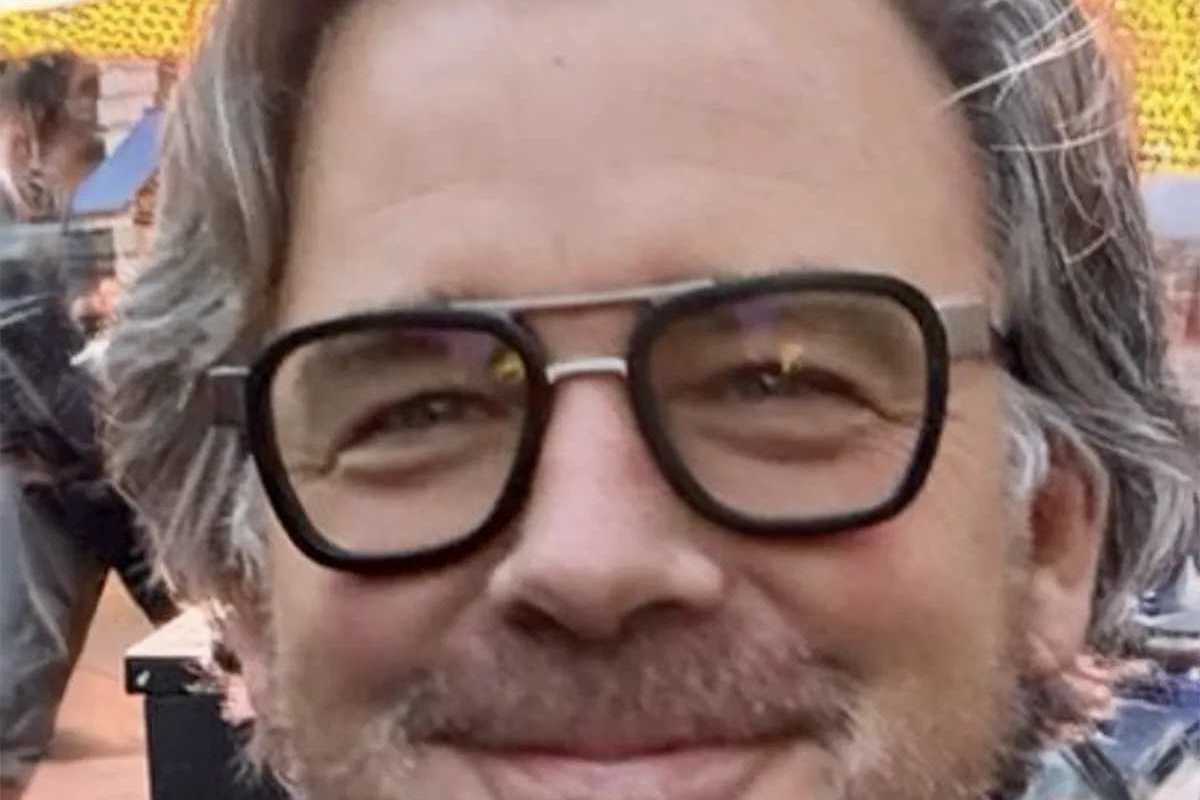
KENT — A sense of sadness pervaded the town this week as news of the death of Robert (Robbie) Kennedy spread. Kennedy died Monday, Feb. 9, at the age of 71.
Kennedy was a beacon of light, known by legions of citizens, if not personally, but as the guy who could be seen riding his bicycle in all kinds of weather, determined to get to his destination; yet always taking the time for a wave. Kennedy faced challenges, but there were no barriers when it came to making an impact on all who knew him.
Remembrances of him abounded in conversations throughout town and on the hundreds of messages posted on social media. His sister-in-law, Apple Kennedy, summed up what everyone was saying — “a beautiful soul.”
The son of the late John and Olga Kennedy, Kennedy was born in Guam. His father, a physician, worked for the World Health Organization and was chief of public health for USAID. The family, which consisted of eight children, lived on and off overseas and would come back to Kent during leaves. Kennedy attended the Devereux School before entering Housatonic Valley Regional High School, graduating in 1974.
His sister Gretchen Kennedy said in their early days in Kent, her brother would walk her infant son in his stroller and visit all the businesses. That was his introduction to townspeople and how he became an integral part of the community. Joe Bianchi kept his cows in the Kennedys’ barn, she said, which sparked Kennedy’s deep love of animals. “He worshipped the ground Joe walked on, and would so look forward to him coming every afternoon to feed the animals and bring him candy.”
His sister said the family was overwhelmed by the outpouring of support and kind words about her brother. “He loved life to the fullest. His sudden death spared him so much pain and loss of independence. It was very much a blessing.”
Gary Davis, former owner of the local IGA supermarket, recalled how his mother, the late Anne Davis, hired Kennedy 31 years ago. He worked until Covid hit. He was assigned specific tasks, such as unloading trucks, cleaning the store or cardboard compaction. Davis said he took his responsibilities seriously, was always courteous with the customers and was a joy to be around.
“Robbie was never in a bad mood,” said Davis. “It worked out for us and for him. He was considered part of the IGA family. Recently I got together with him a lot. It’s tough to lose a buddy. I miss him so much.”
Davis echoed what many were saying about Kennedy. “Everybody knew him and he knew everybody. He was a real town character.” His sister said some dubbed him, “The mayor of Kent.”
Always eager to be involved and yearning companionship, Kennedy wanted very much to be part of the Kent Volunteer Fire Department. Member Ed Matson said he was honored to be named an active emergency member. He would ride his bike from his then-home in north Kent to the firehouse for meetings. “When his bike failed him, we all chipped in to buy him a new one that even had a flashing light to ensure his safety.”
The department put out a statement about his death, saying “His smile, his wave and his spirit will be missed greatly, not just by his KVFD family, but so many in our community.”
Matson spoke about Kennedy never uttering a bad word about anyone. “He was a simple, caring person who tried to help everyone. Many people didn’t know the things he did for others.” But those who were neighbors of Kennedy when he moved to Templeton Farms senior apartments, knew first-hand how he would always give assistance. Ruth Woodard described his kind acts, including shoveling snow off cars or bringing residents their mail. “He had such a big heart,” she said.
Ben Martin met Kennedy when they both attended youth park and recreation games: Martin as a dad and Kennedy as a spectator. Martin is the football coach at Kent School and just before the season started two years ago, he invited Kennedy to be his volunteer assistant coach. It was a deep honor and a responsibility he took seriously. He would do all the tasks asked of him, along with encouraging accountability from the players.
“He was my right-hand man,” said Martin. “Often he and I were the first at practice and the last to leave. The kids really loved him. He was my best buddy. We’d sometimes go out for lunch or to a movie. I valued my relationship with him.”
Martin and the team presented Kennedy with a varsity letter and Kennedy was so pleased to have him come to his apartment to see it framed and on the wall.
St. Andrew’s Episcopal Church became an important part of Kennedy’s life in the last few years. The former pastor, the Rev. Douglas Worthington, welcomed him and “helped him along in the spirit of growth and acceptance,” said current pastor, the Rev. Richard Clark. He became a crucifer, carrying the cross and leading the procession in his white robe during services. “He wanted to do it right, so we practiced,” said Clark. “The church was a special place for him.”
Resident Melissa Cherniske said when she was a Boy Scout mother, Kennedy would come to meetings to learn how to tie knots or participate in whatever the lesson was. Even more recently he organized drum circles outside Foreign Cargo, the store owned by his brother Jeff Kennedy on Main Street.
The family will hold a celebration of life on May 9, which will include a service at St. Andrew’s followed by a reception at the fire house.
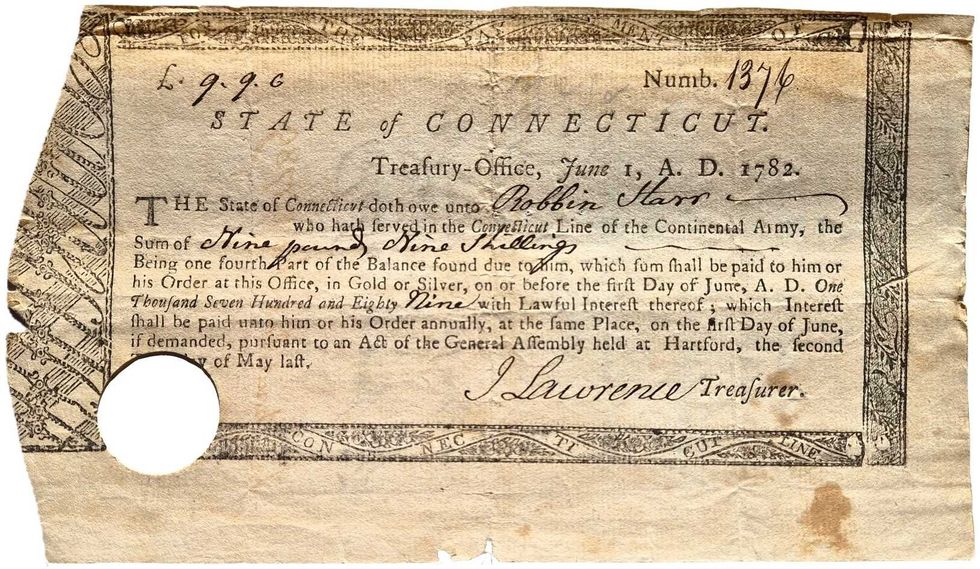 Pay Bill for Robin Starr’s service in the Continental Army.Courtesy the Alex Breanne Corporation
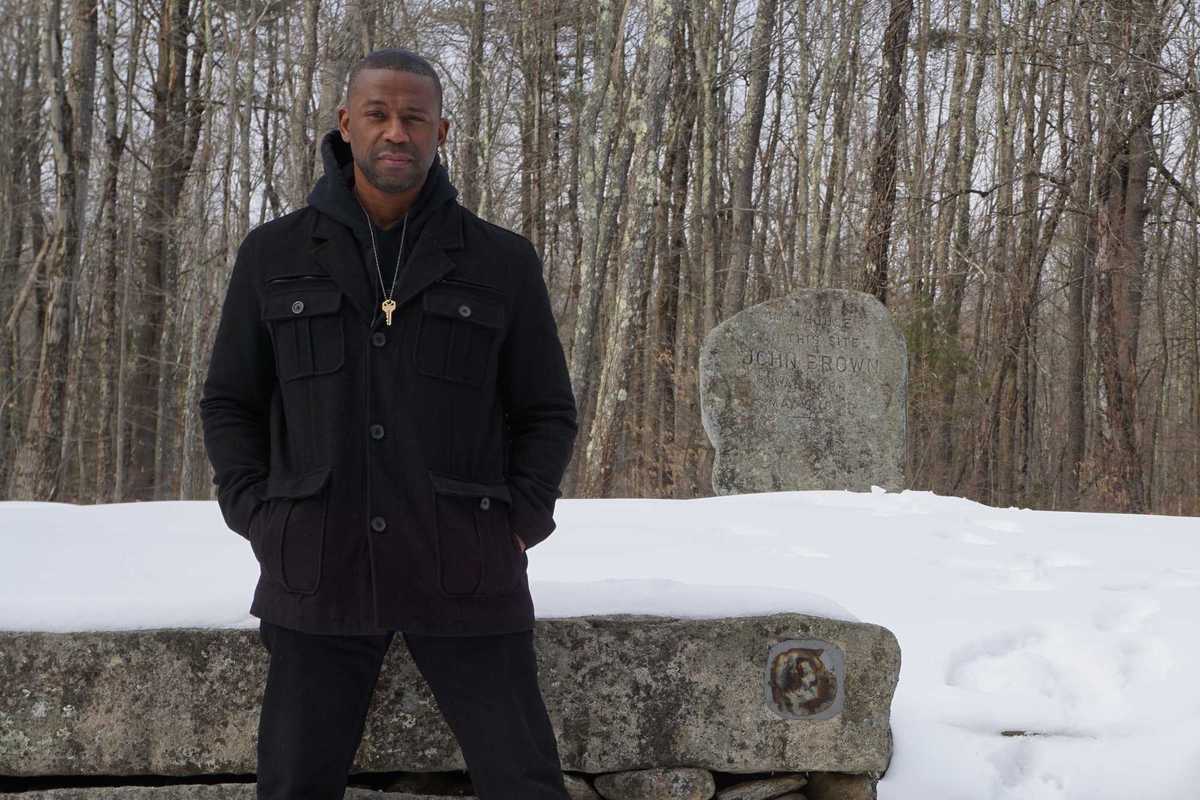
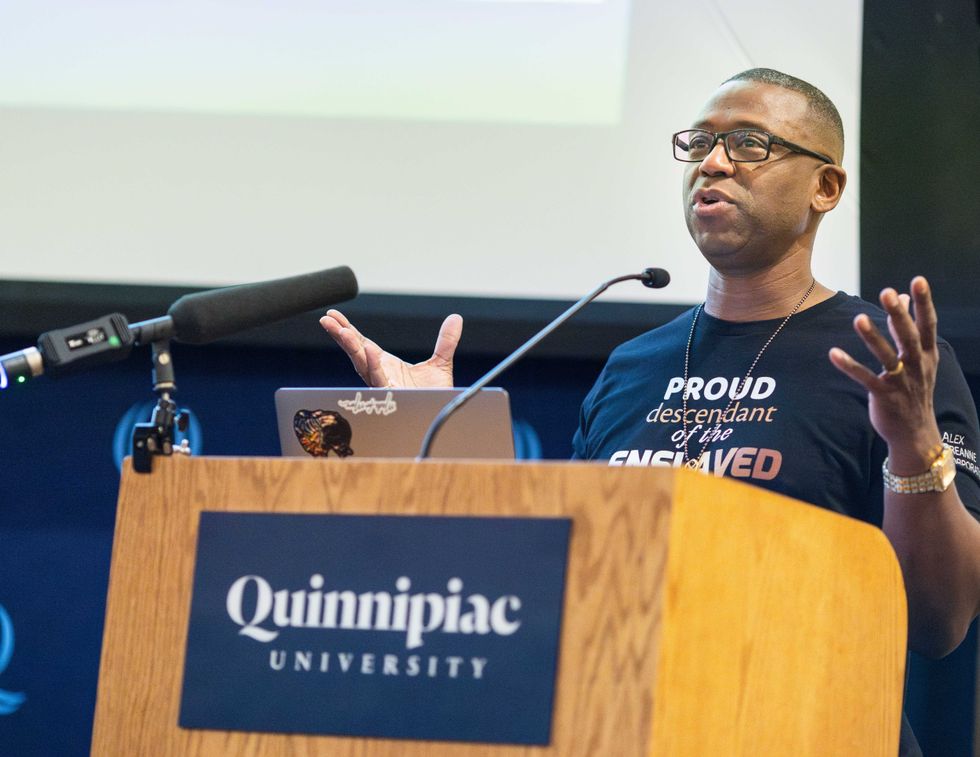 John Mills speaking at Quinnipiac University.Courtesy the Alex Breanne Corporation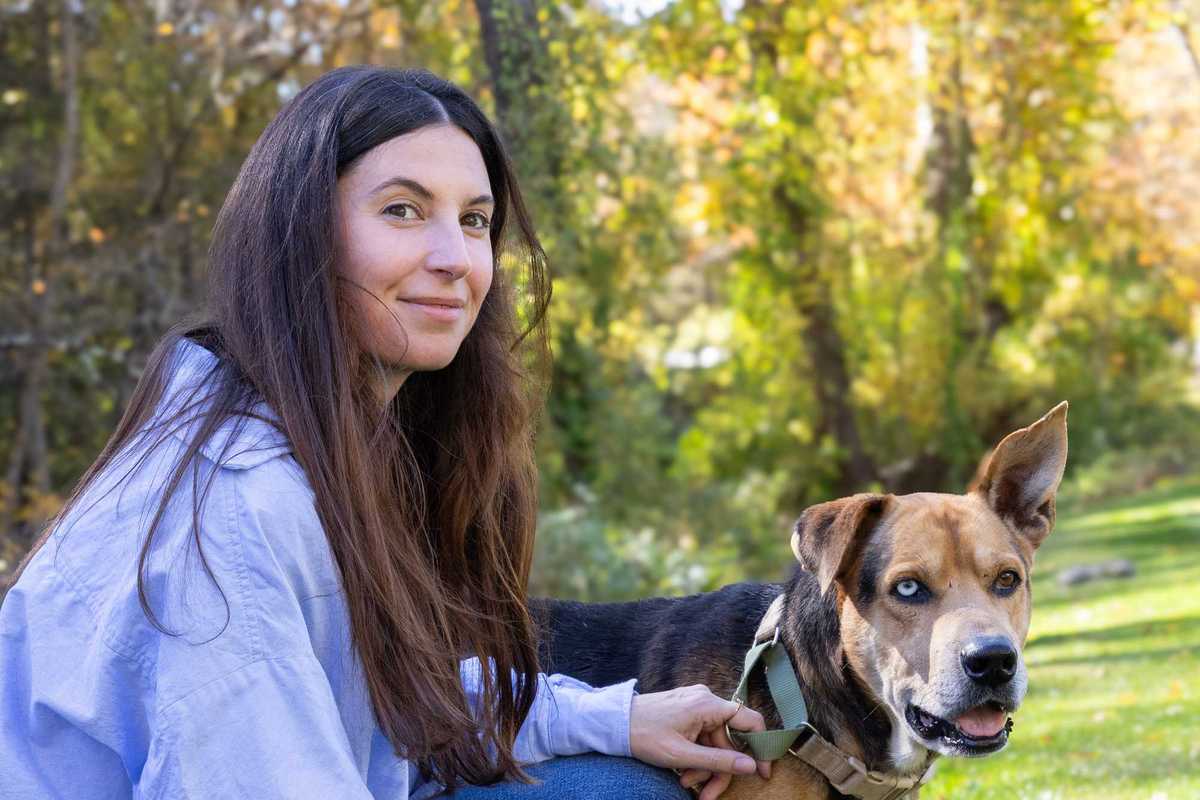
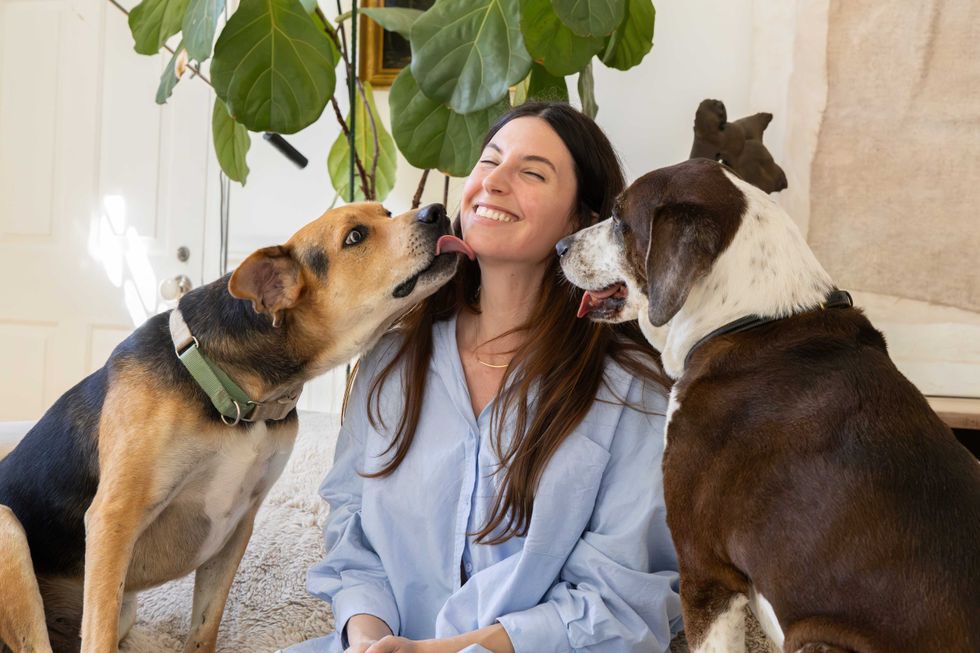 Stephanie Saetta,with her rescue dog George and Blue (left), a shepherd mix awaiting his forever home.Madi Long
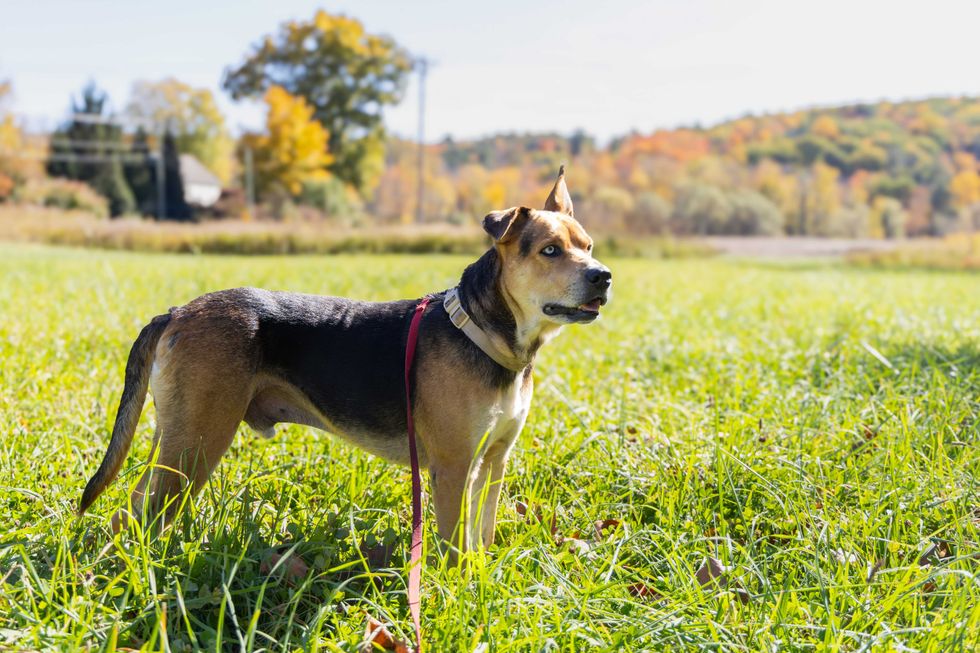 Blue, a 7 year-old Shepard mix, is waiting for his forever home. Madi Long