Sailing, sailing over the bounding seas

The romance of the sea, ah, even sitting on a large boulder all alone at the edge of remote Dog Pond in Goshen my thoughts often wandered to the days I had sailed the bounding seas, first aboard Norway’s Christian Radich and then the USGC Eagle. Both were student training tall ships.Was it really romantic? On our first Saturday night after we had hoisted the sails in Bermuda’s Hamilton Harbor, I sat on an orange crate on the Radich — this was not a cruise ship — with a reporter from the Associated Press, on his crate.The cadets, except a few on watch, were in their bunks. The officers were where they belonged, in the officer’s quarters.We had brought a bottle of Scotch on board as a gift to what we had heard were hard-drinking Norwegians. “No alcohol on this ship,” the XO told us. The surprised AP man turned to me: “I haven’t spent a sober Saturday night since I left college,” he whispered. So, Saturday night we uncorked the bottle and, between telling lies, passed the bottle back and forth between us on the empty deck.There was enough breeze for the ship to heel over about 30 degrees or so. The sails were bulging tight as they pulled the ship through the water. Looking up, the sky, empty of clouds, presented a dazzling panoply of endless universes.We could have been sailing with Magellan and the other early great explorers, or conspiring with Fletcher Christian to seize the Bounty from Captain Bligh.u u uWhat I never thought of was hitting an iceberg and plunging into the icy waters off of Newfoundland with more than a 1,000 other hapless souls aboard the ill-fated Titanic.But this year, the Titanic and the best movie filmed about the disaster have captured the imagination of the American and British publics. Again, after a 100 years.In a story that has been told many times (one of my first books when I was a teenager was about the sinking of the unsinkable and largest ship to ride the waves) new facts continue to emerge.One of lesser importance describes the dinner menu on the night of the unholy crash. It had been hidden for a number of years in the pocket book of one of the survivors. Dinner in the first dining salon featured 10 courses, from oysters, to cream of barley, to poached salmon, filet mignon, sauté of chicken, roast squab, on to lamb, roast duckling, sirloin of beef, to a variety of vegetables, pate de foie gras, ending with the three choices of dessert in the final course, Waldorf pudding, peaches in Chartreuse jelly, chocolate and vanilla éclairs and French ice cream.Then there is the kosher kitchen! “I didn’t know that there were any Jews on the Titanic” was a remark recorded in a recent newspaper account. No Jews on the Titanic! One of the iconic stories of the last hours of the great ship is a powerful tale of sacrifice: Ida Straus, wife of Isidor Straus, co-owner of Macy’s, refused to get into a lifeboat when sailors were refusing to seat men. She declared she had lived with her husband for all these years of a happy marriage and would stay with him to the end. They went to their watery grave together. There are numerous memorials in Europe to this unique woman.Did they dine on kosher delicacies? Potato Pancakes a la Belfast? We will never know. The Strauses occupied one of the most expensive suites on the great ocean liner and we have no copy of the kosher kitchen’s menu that night. Nor I have seen a copy of the spartan dinner served the thousand immigrants in third class who were seeking a new life in America. And who suffered the most casualties.u u uWhile there were more than a thousand passengers lost when the ship slipped into the ocean, more lives were lost at sea during the last days of World War II than on the Titanic.In the book “Armageddon: The Battle for Germany, 1944-1945,” author Max Hastings relates how the Soviets stopped the Nazi blitzkrieg 20 miles from Moscow and pushed the Germans back into their own homeland. There’s in the book an extraordinary story of the exploits of a Soviet submarine commander. He just happened to be sailing in the North Sea when he came upon a passenger ship loaded with 5,000 transplanted German civilians trying to return to their homeland by sea. The Russian captain let loose his torpedoes and sank the vessel in moments, drowning most of the hapless Germans. He proceeded along the shore, came upon another port with another 5,000 Germans hastily boarding another old passenger ship. Torpedoes sent that ship sinking into the waters, carrying its cargo of humans to their deaths as well.The exploits of this captain were kept quiet for many years because the captain had lacked credibility and the KGB didn’t believe his story. He persisted in trying to tell it and so enraged the KGB that he was sent to prison for seven or eight years. When his story was corroborated and he was released, he was given a sort of hero’s welcome upon his return home.That’s only a smidge of my stories of sailing the bounding waves. There was the time the troopship I was on broke down in the middle of the Atlantic ... but that’s for another time.Freelance writer Barnett Laschever, formerly of Goshen, taps away on his iMac in a nice cottage in a Simsbury retirement village.

Latest News

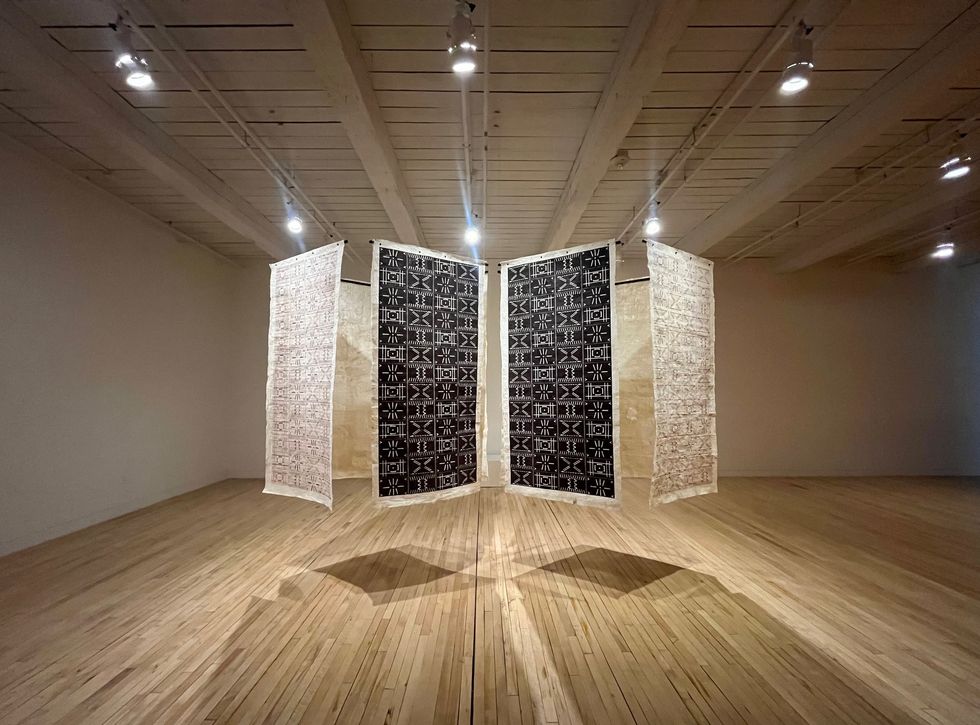
Living art takes center stage in the Berkshires

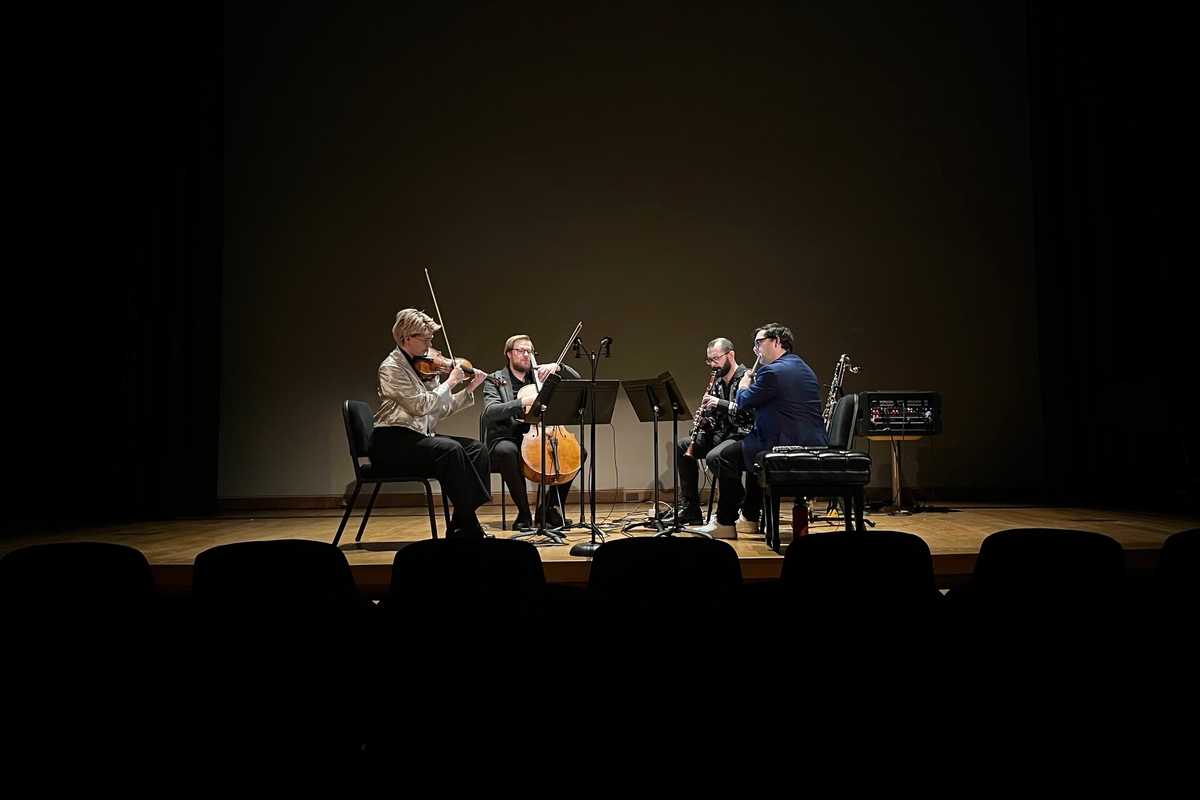
Contemporary chamber musicians, HUB, performing at The Clark.

D.H. Callahan

Northwestern Massachusetts may sometimes feel remote, but last weekend it felt like the center of the contemporary art world.

Within 15 miles of each other, MASS MoCA in North Adams and the Clark Art Institute in Williamstown showcased not only their renowned historic collections, but an impressive range of living artists pushing boundaries in technology, identity and sound.

Keep ReadingShow less
Persistently amplifying women’s voices

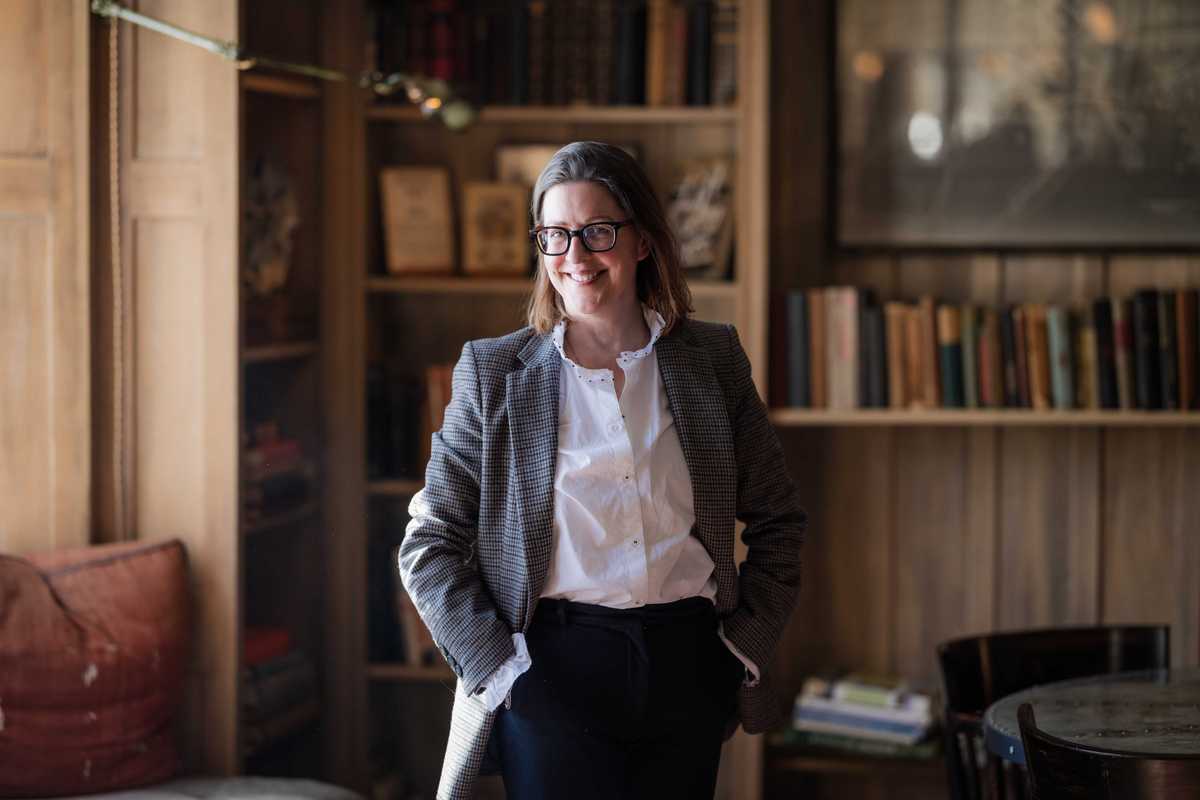
Francesca Donner, founder and editor of The Persistent. Subscribe at thepersistent.com.

Aly Morrissey

Francesca Donner pours a cup of tea in the cozy library of Troutbeck’s Manor House in Amenia, likely a habit she picked up during her formative years in the United Kingdom. Flanked by old books and a roaring fire, Donner feels at home in the quiet room, where she spends much of her time working as founder, editor and CEO of The Persistent, a journalism platform created to amplify women’s voices.

Although her parents are American and she spent her earliest years in New York City and Litchfield County — even attending Washington Montessori School as a preschooler — Donner moved to England at around five years old and completed most of her education there. Her accent still bears the imprint of what she describes as a traditional English schooling.

Keep ReadingShow less
Jarrett Porter on the enduring power of Schubert’s ‘Winterreise’
Baritone Jarrett Porter to perform Schubert’s “Winterreise”
Tim Gersten

On March 7, Berkshire Opera Festival will bring “Winterreise” to Studio E at Tanglewood’s Linde Center for Music and Learning, with baritone Jarrett Porter and BOF Artistic Director and pianist Brian Garman performing Franz Schubert’s haunting 24-song setting of poems by Wilhelm Müller.

A rejected lover. A frozen landscape. A mind unraveling in real time. Nearly 200 years after its premiere, “Winterreise” remains unnervingly current in its psychological portrait of isolation, heartbreak and existential drift.

Keep ReadingShow less
google preferred source

Want more of our stories on Google? Click here to make us a Preferred Source.

A grand finale for Crescendo’s 22nd season

Christine Gevert, artistic director, brings together international and local musicians for a season of rare works.

Stephen Potter

Crescendo, the Lakeville-based nonprofit specializing in early and rarely performed classical music, will close its 22nd season with a slate of spring concerts featuring international performers, local musicians and works by pioneering composers from the Baroque era to the 20th century.

Christine Gevert, the organization’s artistic director, has gathered international vocal and instrumental talent, blending it with local voices to provide Berkshire audiences with rare musical treats.

Keep ReadingShow less

Leopold Week honors land and legacy

Leopold Week honors land and legacy

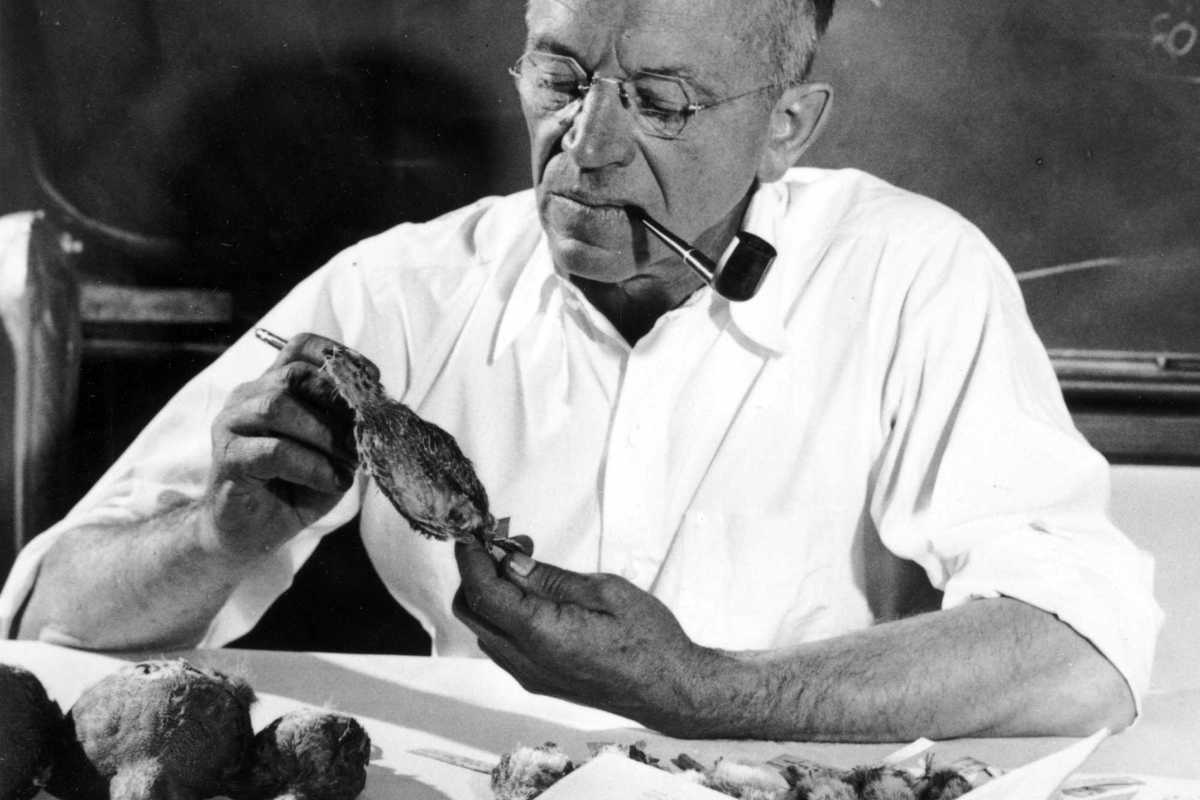
Aldo Leopold in 1942, seated at his desk examining a gray partridge specimen.

Robert C. Oetking

In his 1949 seminal work, “A Sand County Almanac,” Aldo Leopold, regarded by many conservationists as the father of wildlife ecology and modern conservation, wrote, “There are some who can live without wild things and some who cannot.” Leopold was a forester, philosopher, conservationist, educator, writer and outdoor enthusiast.

Originally published by Oxford University Press, “A Sand County Almanac” has sold 2 million copies and been translated into 15 languages. On Sunday, March 8, from 3 to 5 p.m. in the Great Hall of the Norfolk Library, the public is invited to a community reading of selections from the book followed by a moderated discussion with Steve Dunsky, director of “Green Fire,” an Emmy Award-winning documentary film exploring the origins of Leopold’s “land ethic.” Similar reading events take place each year across the country during “Leopold Week” in early March. Planning for this Litchfield County reading began when the Norfolk Library received a grant from the Aldo Leopold Foundation, which provided copies of “A Sand County Almanac” to distribute during the event.

Keep ReadingShow less

Erica Child Prud’homme

Erica Child Prud’homme

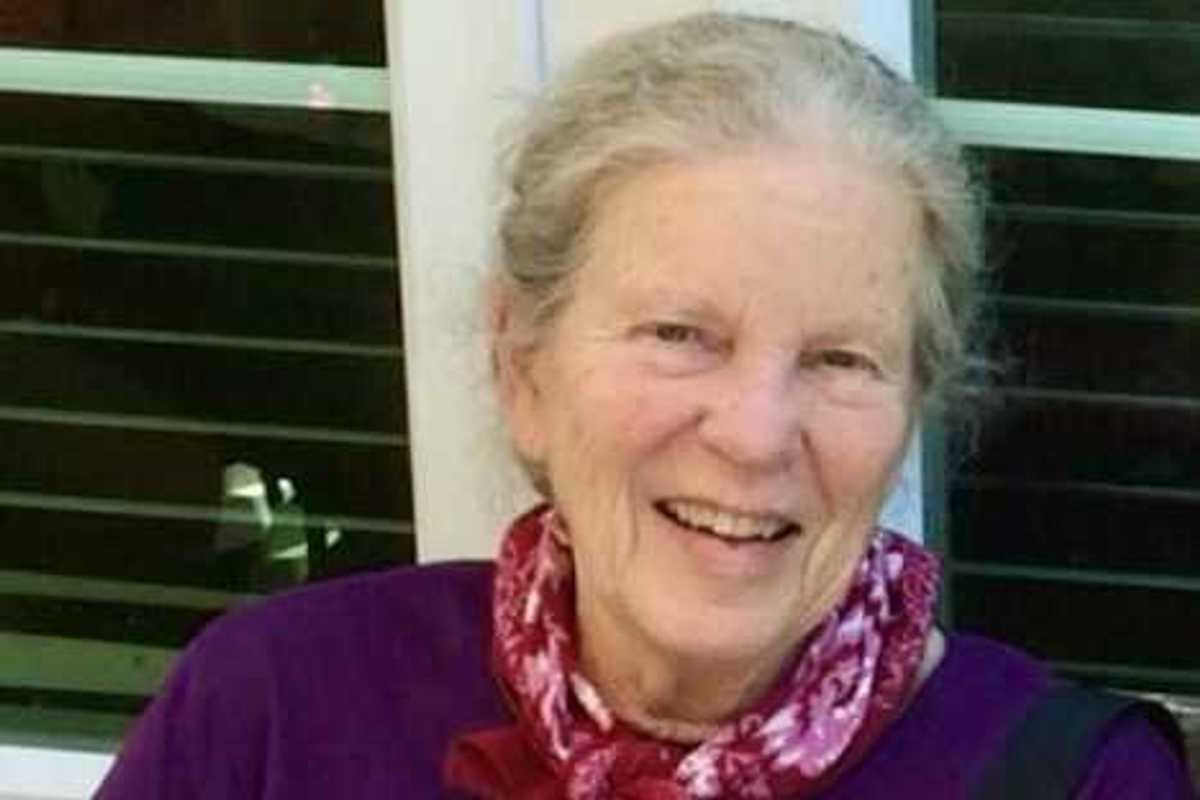
WEST CORNWALL — Erica Child Prud’homme died peacefully in her sleep on Jan. 9, 2026, at home in West Cornwall, Connecticut, at 93.

Erica was born on April 27, 1932, in Doylestown, Pennsylvania, the eldest of three children of Charles and Fredericka Child. With her siblings Rachel and Jonathan, Erica was raised in Lumberville, a town in the creative enclave of Bucks County where she began to sketch and paint as a child.

Keep ReadingShow less
google preferred source

Want more of our stories on Google? Click here to make us a Preferred Source.
google preferred source

Want more of our stories on Google? Click here to make us a Preferred Source.