Salisbury housing market saw end-of-year rush in December

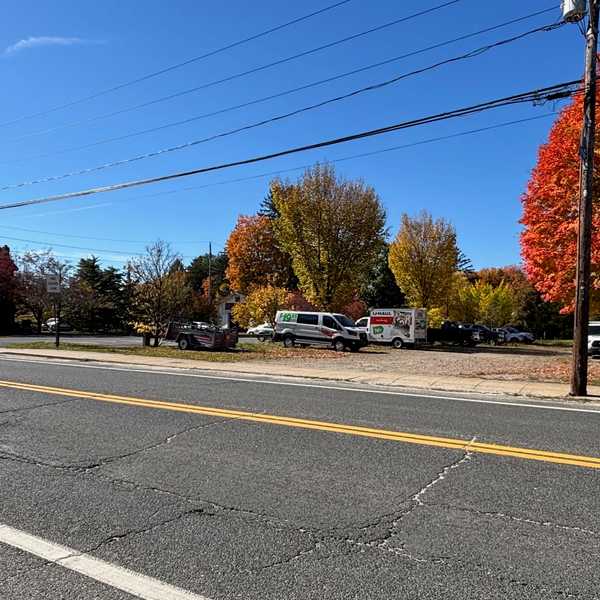
Built in 1880, 369 Lime Rock Road sold for $360,000.
Christine Bates


Built in 1880, 369 Lime Rock Road sold for $360,000.
SALISBURY — Salisbury’s December recorded property transfers were the busiest of the year with the sale of 11 properties recorded — not including the 10 plots sold to individuals by the Salisbury Cemetery Association. Only two properties were sold for over a million dollars and two commercial properties on Main Street and Lime Rock Road sold for under $500,000. In mid-January there were 16 homes listed for sale with 11 over a million dollars.
Transactions
21 Greystone Lane — 2 houses including a 1 bedroom/1 bath cottage and a 4,229 square foot home with 3 bedroom/3 full baths/2 half baths on 33 acres sold by Margery H. Hetzel to Sarah B. Kapnick and Andrew C. Elken for $3.3 million.
280 & 280A Taconic Road — two houses built in 1880 each with 4 bedrooms on 6.5 acres sold by Peter Lorenzo to Raccard Properties LLC for $800,000.
5 Reservoir Road — 3 bedroom/3 bath house on 3.15 acres sold by Louis Baker Bell Jr Trustee Harriette A. Mellen Revocable Trust to Kevin and Alyssa Mahoney for $860,000.
329 Main St. — a commercial building with 2,022 square feet sold by Furnace Village LLC to Idle Biscuit LLC for $400,000.
54 Main St. — 5 bedroom/4.5 bath home on 1 acre sold by Andrew Foley to Jennifer Portnoy Trustee Jennifer Portnoy Living Trust for $1.46 million.
24 Bunker Hill — 4 bedroom/2 bath home on 2.5 acres sold by Michael G. and Samuel A. Reid, Mariel M. and James S. Reid Trustees of Reid Family Trust to Aida and Christopher Stoddard for $695,000.
432 Undermountain Road — 3 bedroom/2 bath house sold by Ryan Hartje to Elizabeth A. Romaker and Spencer C. Crawford for $325,000.
87 South Canaan Road 7C — 2 bedroom/2.5 bath condo sold by Susan S. Match Trustee of Susan S. Match Revocable Trust to Jeffrey G. Hamlin and Inge Heckel for $649,000.
369 Lime Rock Road — Investment property with four apartments by Lime Rock Ventures Incorporated to Bridgeview Management LLC for $360,000.
27 Fowler St. — 2 bedroom/1 bath house on .03 acres sold by Peter Ronald Kuglstatter to Austen Hayes for $300,000.
30 Selleck Hill Road — 2 acres of land sold by Halleck and Theresa Lefferts to Salisbury Housing Trust for $174,017.
*Town of Salisbury real estate sales recorded as sold between Dec. 1 and Dec. 31, 2024, provided by the Salisbury Town Clerk. Property details provided in town tax cards. Note that recorded transfers occur after the actual real estate closing and will also include private sales. Current market activity from Smart MLS. Transfers with no consideration are not included. Compiled by Christine Bates, Real Estate Advisor with William Pitt Sotheby’s International Realty, Licensed in Connecticut and New York.

Nathan Miller
Millerton’s former Water Department building, ravaged by fire, as it awaited demolition in summer 2025.
Nearly 18 months after a fire destroyed Millerton’s Public Works building, which housed the Highway Department and Water Department, construction is expected to begin within weeks on a new Water Department facility and pumphouse.
The new building would restore the village’s full water pumping capacity and allow officials to end the state of emergency declared after the fire. Village officials are also planning a separate Highway garage, with details of that project still being finalized.
Fire project manager Caroline Farr-Killmer has been in charge of replacing the building since the fire destroyed it. In June, she said construction could begin on the new Water Department and pumphouse once the plan is approved by the Dutchess County Department of Health.
Millerton Mayor Jenn Najdek said she expects construction to start as soon as the designs get approval from the health department.
Officials described the new Water Department building as an urgent need. Farr-Killmer explained the village’s water system has been functioning with just one operational well, causing concerns about potential water shortages at that wellhead and its longevity. The village cannot operate the second well until it is enclosed in a structure, Farr-Killmer said.
Najdek originally expected Board of Health approval to come in early June, but as of Thursday, July 9, the plans are stalled as health officials deliberate the plans.
Despite the stall, Najdek doesn’t expect the project to affect Millerton’s plans for the week-long celebration of Millerton’s 175th birthday set for July 11 to 19.
Since the fire last winter, property restoration firm BELFOR has been working to clear and prep the site for a brand new set of buildings.
Farr-Killmer explained the Water Department building, which will house one of Millerton’s municipal wells, must now be a separate structure from the Highway Department building due to environmental and health regulations. Municipal wells require up to a 200-foot buffer from other structures to prevent drinking water contamination.
In the weeks after the fire, Farr-Killmer visited the charred building almost daily and documented damage to the structure and inventory. She said the fire itself was only the beginning, and pointed out that navigating insurance, rebuilding plans and deadlines have been hidden challenges.
Graham Corrigan
NorthEast-Millerton Library
A new initiative at the NorthEast-Millerton Library aims to digitize a collection of photographs, newspapers and other historical materials documenting the community’s early history.
Once completed, the collection will be available online and will include photographs, yearbooks, newspaper microfilm and slides reflecting the area’s past. The materials come from personal collections as well as archives from the Millerton News and its predecessor, the Millerton Telegraph.
Library Director Rhiannon Leo-Jameson has been overseeing the project. “It’s fascinating to see what makes it in,” she said. “There’s lots of landscapes and scenery, and little moments from town, like children jumping rope. Those sometimes have a hand-written caption, like, ‘having fun on the first nice day of the year.’”
Momentous occasions are also included — politician Robert Moses pops up during a campaign tour through the region, and Hudson Valley native Franklin Delano Roosevelt is a recurring figure. A member of his security detail was from Millerton.
The selection of what is being posted online involves a process that still relies on the discernment of the human eye. “I was surprised at how manual it still is,” Leo-Jameson said. “They spot check a reel to determine the image quality and aperture, then they scan the whole reel, then they send it to a second company who will manually segment the news articles.
Once the images are fully digitized, they’ll be available on the Hudson River Valley Heritage website at hrvh.org. Yearbooks dating back to 1951 from Webutuck School District and Millerton Union Free High School are already available. “There are so many names I know from working in the community,” said Leo-Jameson, “and it’s amazing to see how young they were.”
Nathan Miller
Diane Price holds a picture of her father, Bill Doughty, in her home on Maple Avenue in Millerton.
Longtime resident and former Webutuck teacher Diane Price has lived in Millerton since her family moved to the area in 1961, spurred by her grandparents’ ailing health.
It would take 52 years after that move for Price to learn that her family’s connection to the community dates back to its founding days — when her great-grandfather and local druggist Levi P. Hatch was considered one of the village’s nine founding professionals.
The discovery began in 2013, when she read a magazine article on the village’s founders and realized she had a connection to Hatch. He was Price’s great-grandfather.
“He was considered one of the nine founding professionals,” Price said. The discovery came decades after Price first moved to Millerton in 1961, when her father, Bill Doughty, relocated the family there to be closer to his parents, Millerton natives Roy and Mae Doughty.
The discovery, sparked by the article and later expanded through research by local amateur historian Sarah Hermans, cemented Price’s connection to a community that she had been in love with since she was a girl.
Hatch arrived in Millerton by train, according to research completed by Price and Hermans, and settled in the village, where he soon met Lottie Mae Scribner, who lived on nearby Silver Mountain. The two married, though the exact date is unknown, and lived in a house on Elm Avenue — also known today as Route 22. The pair had four children.
Price’s grandmother, Mae Hatch, was the youngest of Levi and Lottie’s four kids. Price describes her as a talented musician who could play piano by ear despite a lack of formal lessons.
“She played for the grange dances,” Price said. Mae married a Poughquag resident named Roy Doughty, Price’s grandfather, and the pair also settled down in Millerton.
Roy Doughty, Price said, worked at Dutchess Auto in the early days of the automobile industry. But a stroke forced him to take a less-intensive job as a tax collector. Roy and Mae also had four children — Helen, Erma, Richard and Price’s father, William “Bill” Doughty.
Bill Doughty graduated from school in Millerton in 1936 and was drafted into World War II in 1941. During the war, Bill served as a first lieutenant in the U.S. Army Corps of Engineers. He moved to Pittsfield, Massachusetts, upon returning to the states and settled down with a resident of that town named Rita Mazur, Price’s mother. The pair married in 1946 and had three children — William Jr., known as “Mike;” Diane, born in 1949; and Patrick.
Bill was eventually drafted for the second time to serve during the Korean War, and his family moved from Pittsfield to New Smyrna Beach in Florida for about three years, Price said.
After his service ended, the ‘60s had arrived and Price’s grandparents’ health was deteriorating. Prior to the move to Florida, her family regularly made road trips from Pittsfield to Millerton to visit and care for her grandparents. But in 1961, her family moved to Millerton permanently, where her mother and father lived out the rest of their lives.
Price was 13 when her family moved to Millerton permanently. She said she already loved the community, describing it as close-knit, safe and entertaining.
“In 1961, I went to the movies and I met a boy,” Price said. “I sat with that boy and my parents knew about it before I got home.”
She said the community has changed dramatically since she moved here in the 1960s. At the time, everybody knew each other. The highlight of the weekend was the Friday night train bringing visitors from New York City. But opportunities in the community declined over the decades, and now many people who grew up in the area feel they have to leave to make a living.
“What industry is there?” Price said. “What reason do we have for children or teenagers or adults to stay here? Where can they work and make a decent living?” Those questions have been on her mind for decades, she said, as she watched her students and her own children grow up and leave Millerton to find work and build their lives.
Despite the anxiety, Price looks back fondly on her upbringing in the village and the community that still exists here.
“Every day is a gift,” Price said. “How can I be anything but grateful for the life that I lived?”

Want more of our stories on Google? Click here to make us a Preferred Source.
Aly Morrissey
Dick Hermans in the Oblong Bookstore on Millerton’s Main Street in 1985.
As Millerton celebrates its 175th anniversary, one of Main Street’s most enduring institutions continues to shape the face of Main Street. Oblong Books, the independent bookstore that has served generations of readers, remains a cultural cornerstone of the village 50 years after opening its doors.
The store officially celebrated its golden milestone in August 2025 with a “good old-fashioned block party.” Hundreds turned out for the family-friendly event featuring live music, food trucks, raffles and entertainment.
Second-generation co-owner Suzanna Hermans, daughter of Oblong’s founder Dick Hermans, said the event was more than just a party.
“We wanted to celebrate our friends, neighbors and generations of customers who have kept us here for 50 years,” she said. “It’s a thank-you to the people of Millerton, in particular, without whom we’d never be here.”
The store’s history was highlighted and celebrated leading up to the birthday bash.
Oblong co-founder Dick Hermans originally opened the store in 1975 with a vision of creating a welcoming space for lovers of good books and music. With a $10,000 loan, he and founding partner Holly Nelson opened their first 400-square-foot shop on Main Street — now home to the soon-to-open Black Rabbit dispensary.
As the business grew, Oblong expanded into Harold’s Apparel — now Cottage+Camp — in 1981, and eventually purchased its current building. To this day, staff remember walking the books across the street by hand during the move.

Oblong Jr. — a children’s bookstore located next to Oblong in what was once a shoemaker’s storefront – came later, as did their second location in Rhinebeck.
Over 50 years, Oblong navigated shifts in technology, consumer behavior and the broader economy.
In the 1990s, the rise of big-box chains like Barnes & Noble and Borders contributed to a steep decline in independent bookstores across the country. Then, the emergence of eBooks and Amazon further threatened smaller shops.
More recently, bookstores are facing the threat of censorship and efforts to limit access to books.
Through it all, Suzanna Hermans says it has been the support of the local community that helps Oblong weather these industry-wide changes.
“One thing that spans the whole length of it is our incredible staff that has worked for us over these last 50 years,” she says.
Since its founding, Oblong has employed more than 200 people — many of whom have stayed for five to 40 years. “Folks tend to stay a long time, which is an incredible testament to their admiration for bookselling,” she says. “But we also work really hard to be a great place to work.”
Over the decades, Oblong has also become a destination for top-tier literary events featuring celebrity authors, local favorites and emerging voices.
“We love our authors,” Hermans says. “We’ve built up a reputation that you can send your best-touring authors here to the Hudson Valley and they’re going to sell their books at our events.”
Though much has changed over the years, the heart of Oblong Books remains the same: books, music and community.
Graham Corrigan
Meg Musgrove, left, and Jessica Rose Lee opened Rosemary Rose Finery on May 1.
Millerton’s Main Street has weathered its share of booms and busts over the past 175 years. But in 2026, the downtown is buzzing once again, fueled in no small part by a wave of new businesses that have opened their doors.
The storefronts run the gamut: Rosemary Rose Finery, Jones & Daughters, and Dutchess Trading Company have jewelry and home goods on offer. Tri-Corner F.E.E.D. and Pasture Kitchen keep the community fed with an emphasis on locally-sourced products. Candy-Os and the T-Shirt Farm have combined into a one-stop shop for sweets and fabrics. Muanjai Tea is bringing a new flavor of café to the area, and Black Rabbit Farms will be the town’s first purveyor of recreational cannabis.
Sitting side by side on Main Street’s curve, Black Rabbit Farms and Muanjai Tea will be the newest businesses on the block. The respective owners expect to open this summer.
Black Rabbit Farms owner Douglas Broughton has been cultivating marijuana since the 1990s, but its recent legalization led him to pursue a retail space. He found a location in the former Demitasse space at 32 Main St.
The tea shop, the brainchild of Kanchisar Jiradhanaiphat and John Schildbach, will offer Thai tea classics such as pink milk, but Schildbach was quick to clarify that “this isn’t going to be a bubble tea shop.” The menu will also feature Thai tea ice cream floats, lattes and matcha drinks.
Muanjai Tea is taking over the former Candy-Os space. It became available after Candy-Os owner Gillian Osnato decided to combine her inventory of sweets with the T-Shirt Farm, her other business on the block. “I was skeptical about how to merge them, but I think it worked,” Osnato said. “There are two different sets of equipment, and each has its own set of challenges, but everyone seems to be excited. ”
Then there’s Jones & Daughters, a boutique offering apparel, jewelry, home goods, and gifts next door to the Moviehouse. It opened last month in the former Geary Gallery Space. “We wanted to create a place to shop that felt as thoughtful as this community,” co-founder Constance Edwards said. “The perfect outfit, something beautiful for your home, a gift that actually means something.”

More jewelry and artisan goods are available at Rosemary Rose Finery. Founder Jessica DeCarlo Lee moved into the space in May. She shares it with Meg Musgrove, who runs Common Place Craft Workshop. The result is a combination workshop and retail space that has received rave reviews and return customers. Herbal medicines, screen-printing, and pottery are among the store’s offerings.
Millerton’s recent business growth is becoming increasingly visible. After opening last year, local market Tri-Corner F.E.E.D. and farm-to-table restaurant Pasture Kitchen continue to thrive.
Tri-Corner has carved a niche in a town in need of groceries. It offers farm-fresh meats, seasonal vegetables, prepared foods, coffee and baked goods. “We really want to reduce barriers for people to be able to afford nutritious, local food,” said Blake Myers, director of food programs at the Tri Corner F.E.E.D. Market. “Anybody can come in and shop.”
Pasture Kitchen, formerly Tallow, survived a rebrand on the strength of its expanded and locally-sourced menu. The restaurant blends popular classics like burgers and chicken sandwiches with steak frites, burrata salads, and a rotating wine selection.
But while some new tenants were drawn to Millerton’s rising profile, others are interested in preserving its history.
Some are longtime residents interested in preserving and repurposing the town’s iconic buildings — like Jason Jobson, Richard Lambertson, and Christophe Pourny of Dutchess Trading Company. They opened in the old Terni’s storefront in 2024, renovating the space topreserve one of the town’s most historic structures.
The trio has converted the mirror-lined space — which has served as a cafe, boarding house, and tackle shop over its hundred year history — to a home goods and gifts store. “We love the town because there are so many people that have been coming here their whole lives,” said Jobson. “We get a lot of people from the Berkshires, too,” added Lambertson. “They come up Route 22 and stop for lunch.”
Nathan Miller
The arrival of the railroad in the Town of North East in 1851 is heralded as the moment Millerton came into being — ushering in a boom period for the area that transformed it from a sparsely populated farming community into a hub of commerce.
That moment was brought about by Sidney Greene Miller and his associate civil engineers in their work as contractors for the New York and Harlem Railroad. After his work, Millerton quickly grew from an insignificant hamlet in North East to the center of the town’s activity within just 25 years.
The railroad’s contribution to the area’s growth, along with Miller’s reported congeniality, as described in a 2001 history of the village produced by the North East Historical Society, led village founders Alexander Trowbridge, Col. John Winchell, Walter Wakeman, Platt Paine and soon-to-be Connecticut Governor Alexander Holley to name Millerton after the civil engineer when it was officially formed in 1875.
But little is known about Miller, beyond the findings uncovered by the North East Historical Society and some investigative work by Sarah Hermans, an amateur historian who grew up in Millerton.
Hermans said public documents on him are sparse, although she found enough to roughly map out his life from records available online.
Miller was born in New York City in 1817, where he was raised by Sylvanus Miller. An obituary for Miller when he died in 1900 said his father, Sylvanus, was a judge, and census records list his profession as “lawyer.”
Miller became a civil engineer, serving as a partner of Morris, Miller and Schuyler when that company was contracted to expand the New York and Harlem railroad north from New York City to Albany. Records show Miller lived in New York City in the early 1850s when the Millerton stop was built, but he didn’t stay in the city long.
Census records indicate Miller left New York State within the decade. He, his wife and three children moved to Westport, Connecticut, in 1854 and then to Virginia in 1856. There, Miller and his wife, Sarah Williamson, had three more children.
Miller and his family were forced out of their home in Alexandria, Virginia, when the United States Army seized the house to use as a hospital during the Civil War.
By 1870, the family had moved to Savannah, Georgia. Documents from Miller’s life are limited, but records indicate that building railroads led him to move frequently. Within just 10 years, Miller and his family, now including a grandson, were recorded as living in Chatham Township in New Jersey in 1880.
Miller did return to New York City at some point before his death in 1900, as shown by death records and an obituary published in The New York Times.
Miller was buried in Green-wood Cemetery in Brooklyn.
Hermans said her research on Miller began by accident while she was researching a friend’s family history. She said she thought Miller would have been a local before she started researching, but soon found out he never even lived in Millerton.
“I was delighted and shocked to find out that he was actually a ‘city person,’” Hermans said.

Want more of our stories on Google? Click here to make us a Preferred Source.

Want more of our stories on Google? Click here to make us a Preferred Source.