If I lived up in the Twin Lakes section of Salisbury, I might order something new off the menu at the restaurant at O’Hara’s Landing Marina.
But I only go about once a year, and it’s always the pancakes the draw me there, like a cartoon character whose nose leads her, floating through the air, following a visible and delicious cloud of scent.
Don’t get me wrong, I’m perfectly capable of making a nice pile of pancakes any day of the week. But there is something about the cakes that chef Mary Ouellette cooks up at the marina that I can’t quite capture on my own at home.
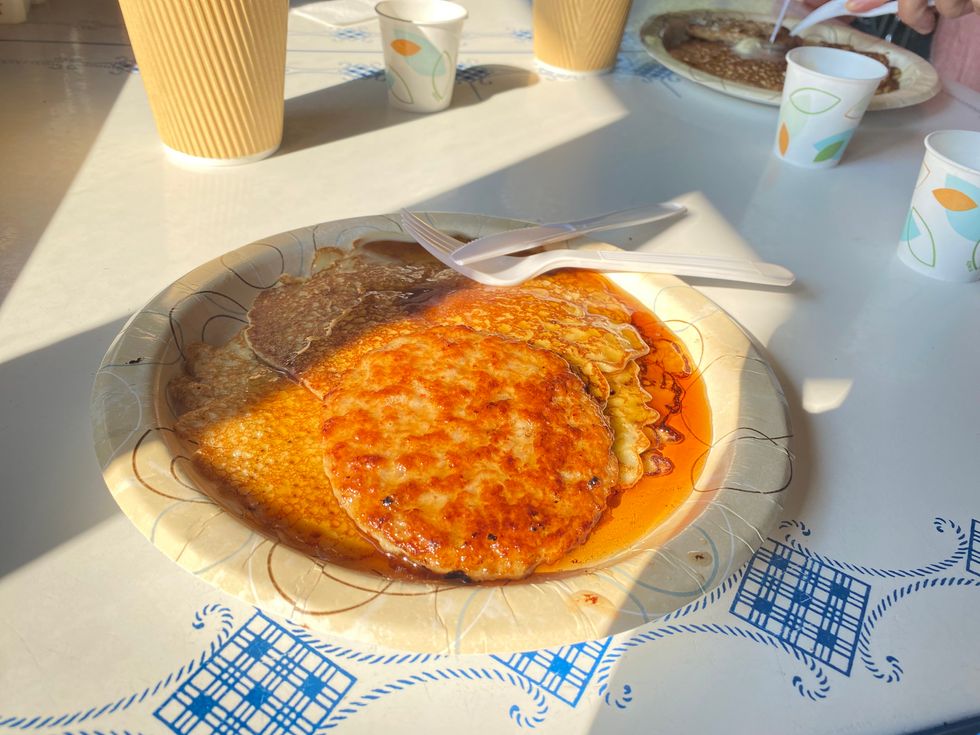
I don’t like a thick, fluffy pancake, as are offered in many American eateries, the kind that stick to your teeth. I want a Swedish-style pancake, lacy and light, with a surface decoration like a beautiful Maori tattoo.
I finally got up the nerve (now that the busy summer season at the marina is over) to ask Mary to share her pancake wisdom with me.
“Do you use a lot of eggs?” I asked. It’s a very eggy pancake. Creamy. Mmmm.
She laughed.
“It comes from a box,” she said. “Gold Medal. But it’s only sold to restaurants.”
All great artists like to downplay their gifts, as Mary did with her pancakes. Because the fact is this: She’s not following the package instructions. She’s adding more water.
“It changes the whole texture,” she said, adding, “I like them thin.” (I do too.)
How much? Just enough. She can feel when it’s thin and light enough to meet her standards. If you’re trying this at home, you can keep adding milk until the batter is light enough to spread out like lace, but not so light that it can’t hold its shape.
The temperature on the grill is also essential. It must be hot but not too hot. And as any experienced pancake maker knows, the grill gets hotter and hotter the longer you cook, so you have to continually adjust the heat. It’s like playing a Stradivarius violin; you have to get a feel for it through years of practice.
Mary has been the cook at the marina restaurant (which is called Mary’s Café) for 43 years (yes, that is not a typo! She said 43 years!), so if you love the pancakes at the marina restaurant, you can thank Mary.
You might also know her from the cook shack at the annual ski jump competition in Salisbury at Satre Hill (early February, every year). She was the Salisbury Winter Sports Association Official Chef for, umm, let’s see: “Oh, at least 25 years.” She gave up that gig a couple years ago.
If you want to see Salisbury as it was in the mid- 20th century, then you want to go to O’Hara’s Landing Marina for a summer breakfast. You can sit outside on the porch if there’s a table there (or bring a blanket and you can sit on the beach).
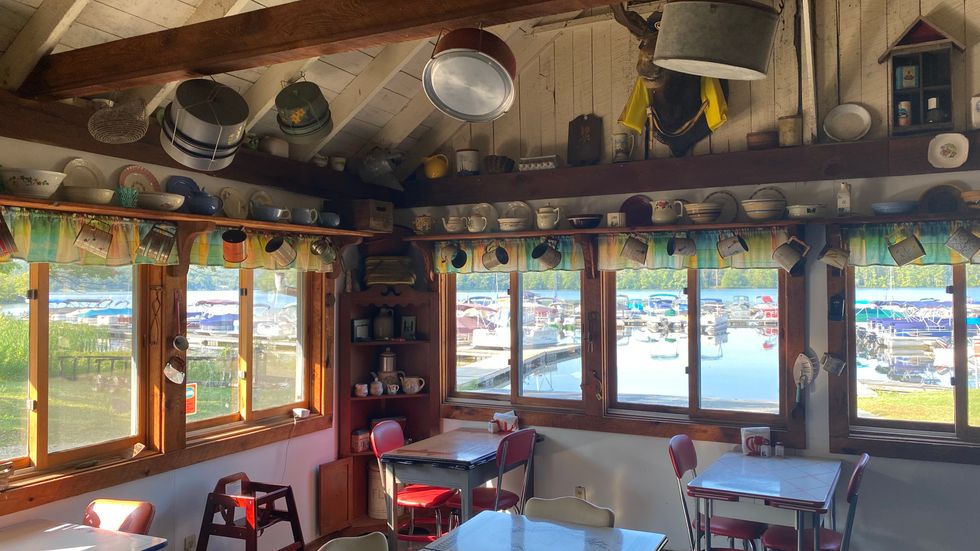
If you sit indoors, though, you really do travel back in time, thanks to decor that is unironically old and 1950s. Mary credits Michelle Haab, co-owner of the marina with her husband, David, for the interior design.
“The Haabs have been here about 47 years,” Ouellette said. “Michelle is the one who collected all the stuff that’s on the walls. She’s been doing it little by little for at least the past 20 years.
“Everything is authentic,” she added. “It’s all from the 1940s and 1950s.”
The menu at the restaurant, Mary stressed, offers more than just pancakes. You can get all the diner classics: eggs, egg sandwiches, French toast, bacon and sausage.
The house specialty is Eggs O’Hara: “It’s like an Egg McMuffin but it’s on a roll and you get your choice of bacon or sausage.”
That’s a popular item — but not as popular as the pancakes.
At lunch, the menu is similarly Old School, with hot dogs, tuna fish sandwiches, grilled cheese and patty melts — which Mary describes as “a grilled cheese on rye with a hamburg on it.”
When I noted that most people today call them hamburgers, she said, with a kind of audible shrug, “I’ve always said hamburg.”
So there are hamburgs and I guess cheese burgs on the menu too. And fries (always fries).
O’Hara’s is a seasonal delight, which is part of what makes it a precious experience. As the sun rises later every day, the restaurant will open later — 7 a.m. on Saturdays and Sundays during the regular season, 7:30 a.m. as it gets into autumn. On Fridays, the restaurant is open from 9 a.m. to 3 p.m.
Everything will close Columbus Day weekend for the winter (call ahead to 860-824-7583, or stop by and see if Mary’s posted information on the door). In theory, the 2023 season will begin in May “but I couldn’t open until June this year; I couldn’t get any help.”
If you were ever there on a weekend in 2022 and saw a tall silver-haired gentleman bringing food to tables, it wasn’t the usual kind of diner help. It was the contractor who is adding an addition to the building (large enough to handle the increasingly popular pontoon boats). Sometimes the Haabs’ daughter helps out, on Saturdays.
Anyone who wants to learn the delicate art of making a perfect pancake should call Mary and offer to help out next summer. At some point, of course, Mary is going to want to retire.
For now, she says she will keep cooking until “I physically can’t do it, I guess. Right now I’m fine, but I’ve been doing it a long time. But every year I manage to get back and do it.”
To learn more, go to www.oharaslanding.com. Or stop by the restaurant — but be prepared to wait, especially on a Sunday morning.
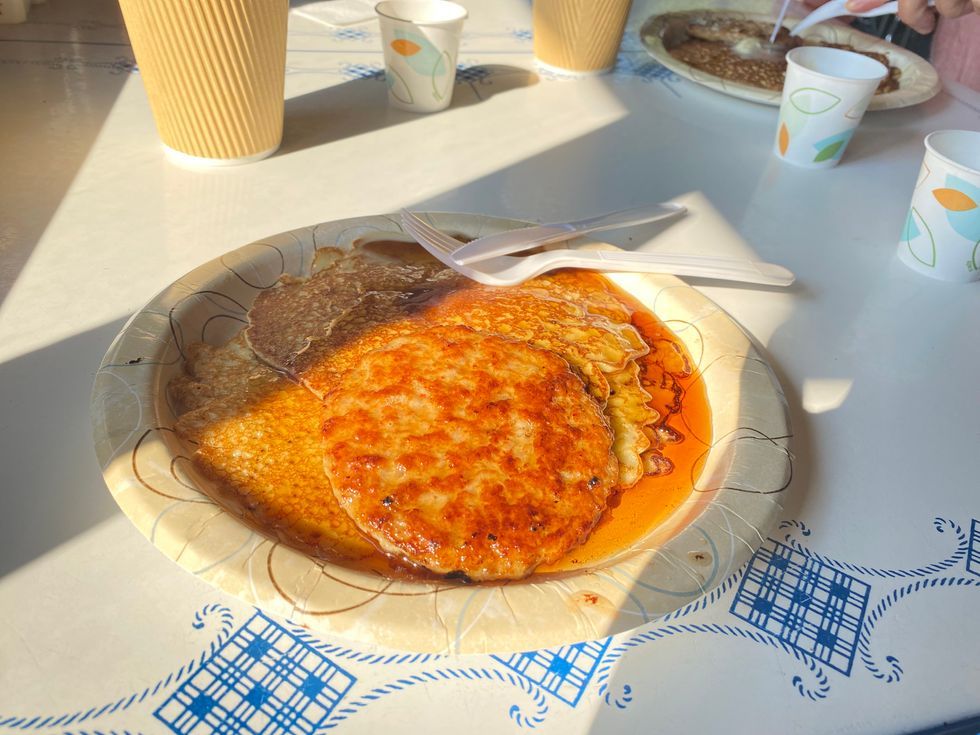
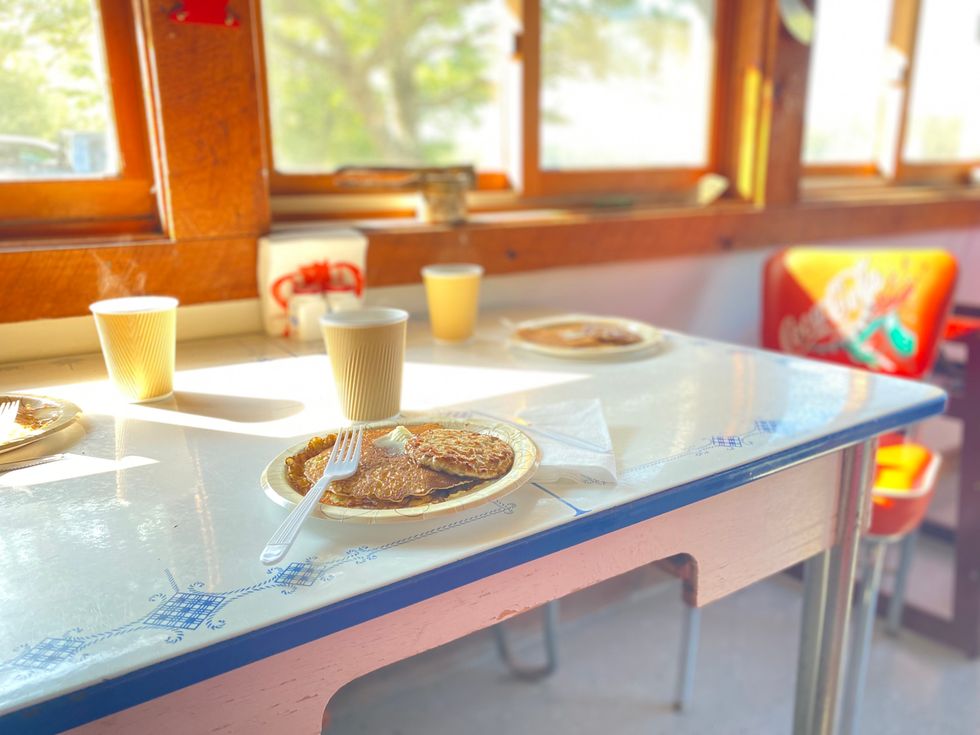
A morning is made better with pancakes at Mary’s Cafe at Twin Lakes’ O’Hara’s Landing. Photo by Cynthia Hochswender
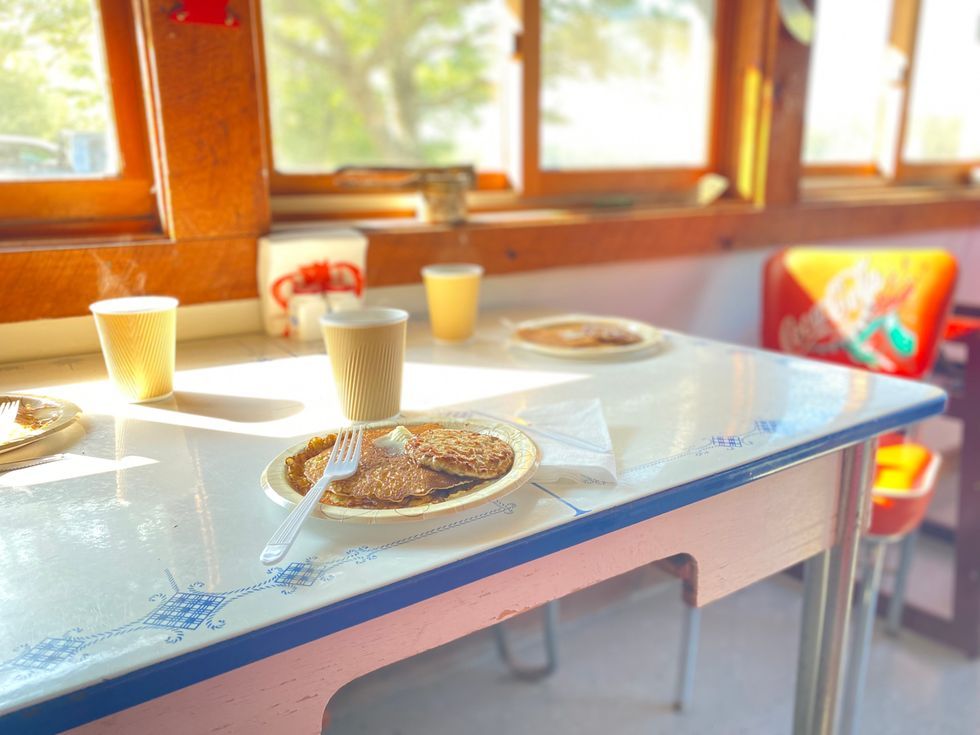
A morning is made better with pancakes at Mary’s Cafe at Twin Lakes’ O’Hara’s Landing. Photo by Cynthia Hochswender
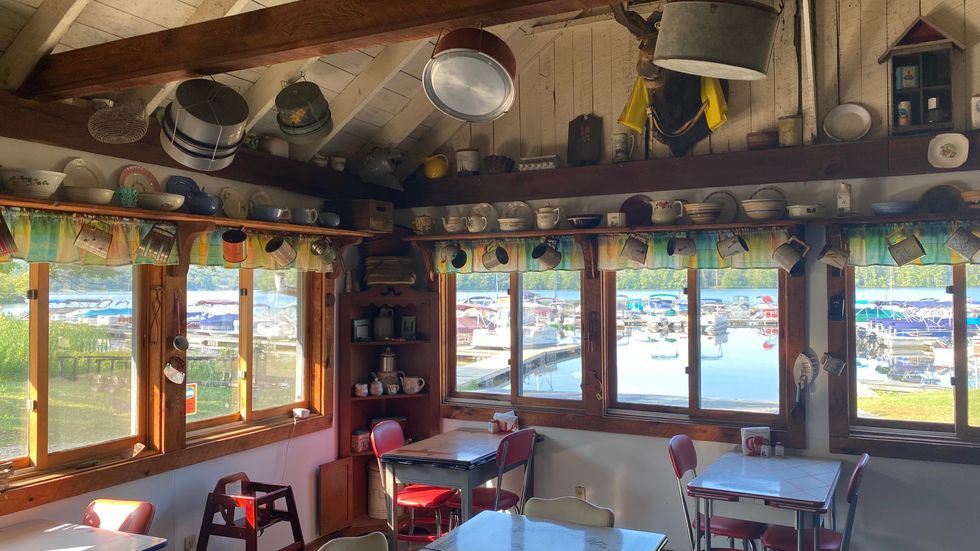
A morning is made better with pancakes at Mary’s Cafe at Twin Lakes’ O’Hara’s Landing. Photo by Cynthia Hochswender
A morning is made better with pancakes at Mary’s Cafe at Twin Lakes’ O’Hara’s Landing. Photo by Cynthia Hochswender
A morning is made better with pancakes at Mary’s Cafe at Twin Lakes’ O’Hara’s Landing. Photo by Cynthia Hochswender
A morning is made better with pancakes at Mary’s Cafe at Twin Lakes’ O’Hara’s Landing. Photo by Cynthia Hochswender



 Tiffany Lemelin, shelter manager, brushing Marsala upon arrival.Provided
 Michael DeBarba, certified dog trainer working with Marsala.Jennifer Almquist
 Marsala wins a heart.Jennifer Almquist

 Sadie, center, a Carolina dog, plays with her friend Negra, a terrier mix. Bella Linda, the small poodle, has since been adopted.L. Tomaino
 Wesley, a young, exuberant mix, is looking for an active home.L. Tomaino
 Bonnie and Clyde, an affectionate terrier pair.L. Tomaino

 Provided