Thank you!
Your support is sustaining the future of local news in our communities.

SCOTUS on trial

No other democratic nation on earth has its highest court Justices appointed for life. In all other countries there are mandatory term limits and/or mandatory retirement age for high court Justices (like U.S. corporations where CEO’s retire at 65). The nation’s “marriage” to confirmed justices “‘til death us do part” is non- comprehensible to other nations, and resented by many Americans.

There is no national election for Supreme Court Justice, rather a Presidential appointment which requires Senate confirmation — no confirmation — no ascension — ask Bork. The Senate confirmation is a republic validation for a Justice — the process certainly isn’t democratic. California with a population of 40 million has two Senators — 1 per 20 million citizens. Eight states have populations of less than 1.1 million – 6 of these states have 1 of their 2 Senators representing abbut 250,000 citizens. Like the Electoral College, voters in all 50 states are not equally represented. Half of U.S. states, 25 states, have less than 5 million citizens — one eighth the number of voters living in California, one quarter the voters living in New York, one third the number living in Pennsylvania.

Up to 1991, when Clarence Thomas was confirmed by a Senate vote of 52-48, appointed Justices received over 90 confirmation votes: O’Connor in 1986 was a 99-0 confirmation (followed by Alito 58-42), Ginsburg 96-3 (Barrett 52-48), Scalia 98-0 (Gorsuch 54-45), Stevens 98-0 (Kagan 68-37), Kennedy 97-0 (Kavanaugh 50-48). Many Justices privileged by “‘til death do us part” terms, have recently received less than 60% of the nation’s Senate confirmation, some questionably confirmed by a national majority.

Let’s review Thomas’ confirmation vote in 1991 — 52-48. When one researches who, which Senators voted for Thomas’s confirmation to a lifetime appointment, one finds that though Thomas squeezed through on 52 Senator confirmation votes, when one researches what actual Senators with what state population voted for Thomas, he was shy of 50% of the national vote. The majority of American voices were lost in the unequal distribution of Senators to actual voters. So what about Alito, Kavanaugh, Barrett, Gorsuch, Jackson — which states with what populations confirmed their life-time appointment to the highest court in the land?

Early in 2024, SCOTUS will not only host trials of high interest, high impact related to Trump, his 91 indictments and his eligibility to be on a state ballot but the Court, the Justices themselves will be on trial — intensely scrutinized for their deliberations and decisions, their process and their substance. With continued investigatory adeptness, individual Justices will be scoured — already much grist for dissatisfaction with a trio of the Justices. The Court itself is at question, is it fit to be at the constitutionally prescribed pentacle of the American judicial system?

With the highest disapproval rating ever for a Supreme Court, continuous headlines boldly unmask individual ethical and legal misbehavior — a bundle of fiscal follies/corruption. Some justices petulantly dismiss the American public’s preferences and opinions as well as exhibit distain for the core SCOTUS precept of stare decisis “to stand by things decided.” At their very public confirmations at least three of the recent appointees swore allegiance to stare decisis then within months overturned Roe vs. Wade.

Not elected, appointed for life, some SCOTUS Justices are brazenly draped not in black gowned prudent judgment but sharp-tongued arrogance, personally having histories, decades, of misconduct, fiscal advantages parlayed by persons seeking Court favor. Alito with vim and venom toward the Congress falsely states: “No provision in the Constitution gives them the authority to regulate the Supreme Court — period.” Really? What about confirmations, removals/impeachment, the number of Justices, terms of office, procedures such as motion dockets (i.e., shadow dockets judicial actions taken without any reported documentation)?

Regardless of sizzling rhetoric, the Supreme Court and its Justices collectively and individually are bound by law and order. It is past time to, in particular, reassess and revise not only codified ethical conduct but terms with limits — this isn’t a marriage — it is a prominent position that ought have designated terms like the President, the Senate, the House.

Kathy Herald-Marlowe lives in Sharon.
The views expressed here are not necessarily those of The Lakeville Journal and The Journal does not support or oppose candidates for public office.

Latest News

A life reshaped by clay in “Matin”

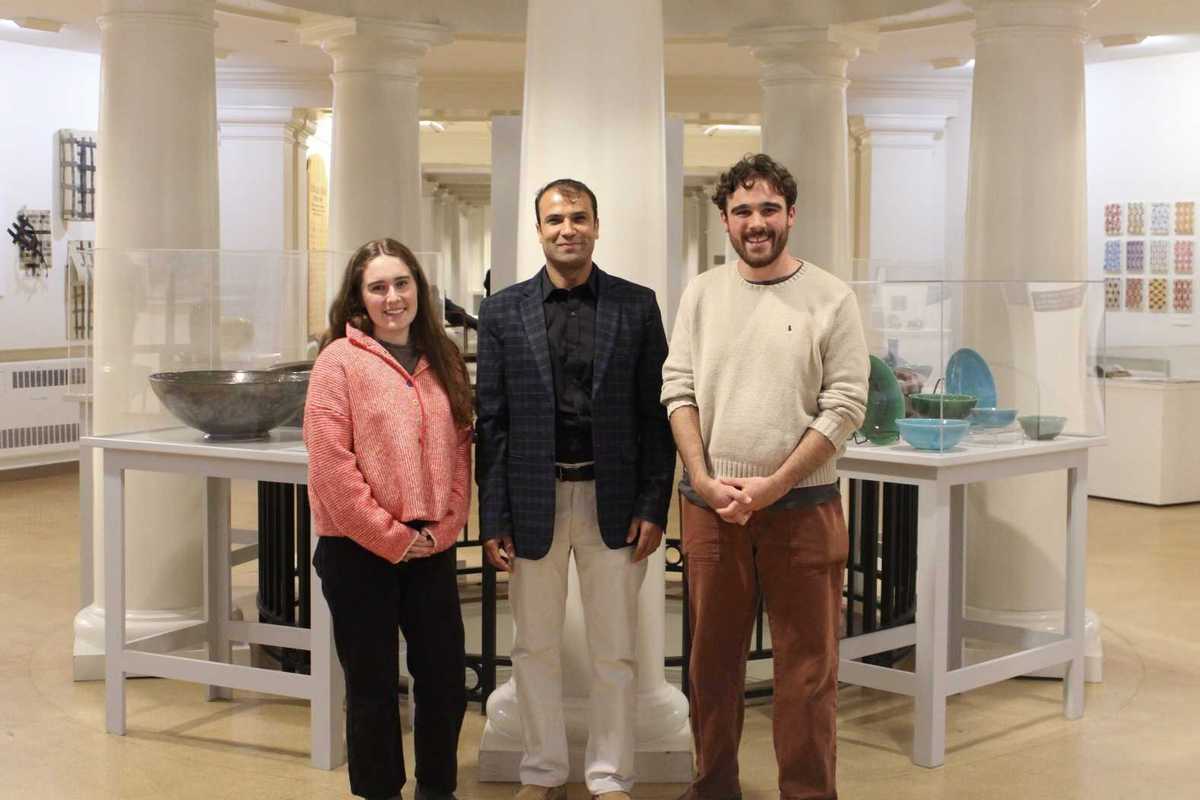
Left to right: Hannah Wheeler, Matin Malikzada and Yonah Sadeh.

D.H. Callahan

On Monday, Oct. 26, a group of students, teachers and local residents gathered at the Hotchkiss School in Lakeville for a screening of the new short documentary “Matin.” The film tells the story of Matin Malikzada, a seventh-generation Afghani potter making a new life in New Milford, Connecticut. The film was made by local filmmaker Yonah Sadeh, creator of the Video Wall at the David M. Hunt Library, and Berkshires-based potter Hannah Wheeler, who were both present for the screening, along with Malikzada himself.

As a member of the seventh generation of his family to master the art of pottery, Malikzada had done things the way his family had for over a century. Istalif, the village where his family has lived for generations, was known throughout Afghanistan for its pottery, with wares sent across the country for use as everyday cups, bowls, plates and other vessels. The pottery-making families of Istalif gathered clay from the same mountain, about 30 to 45 minutes away by donkey. Every July, they would head north toward the Uzbekistan border to gather ishkar, a plant they processed by hand to make their signature glazes.

Keep ReadingShow less
Meg Sher finds her calling among the stacks

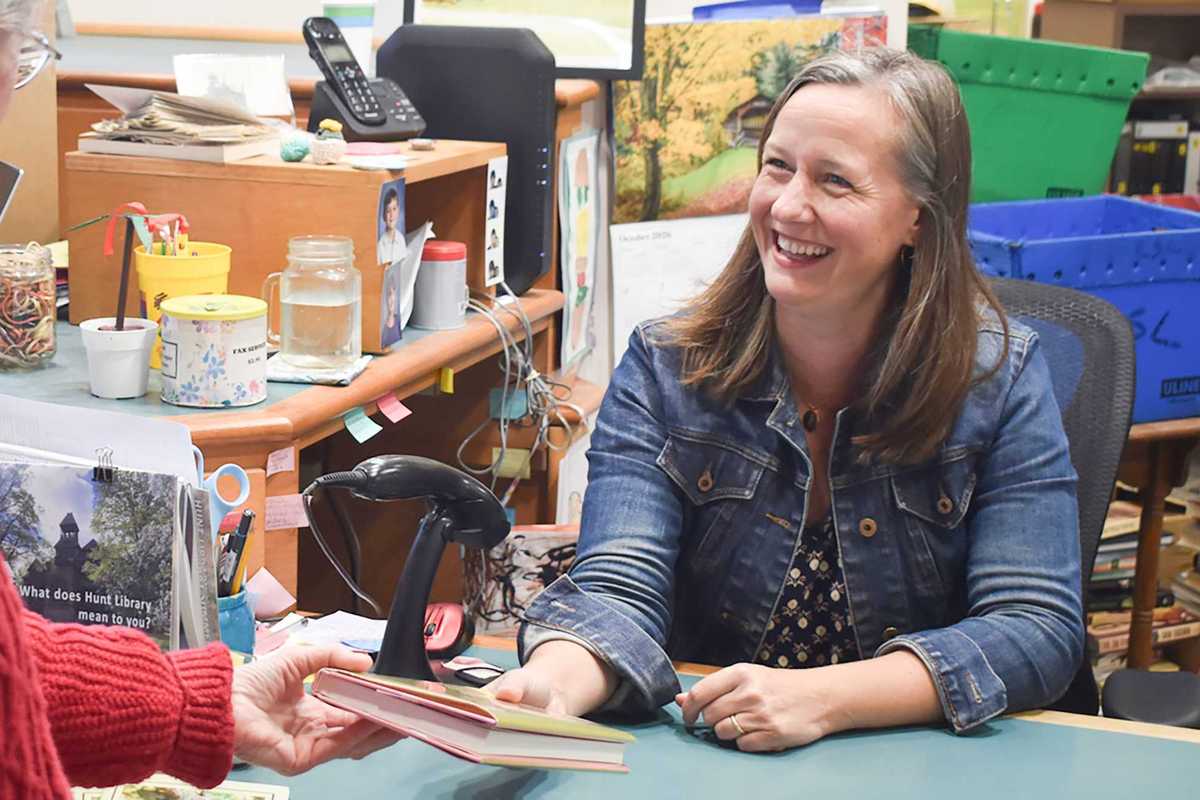
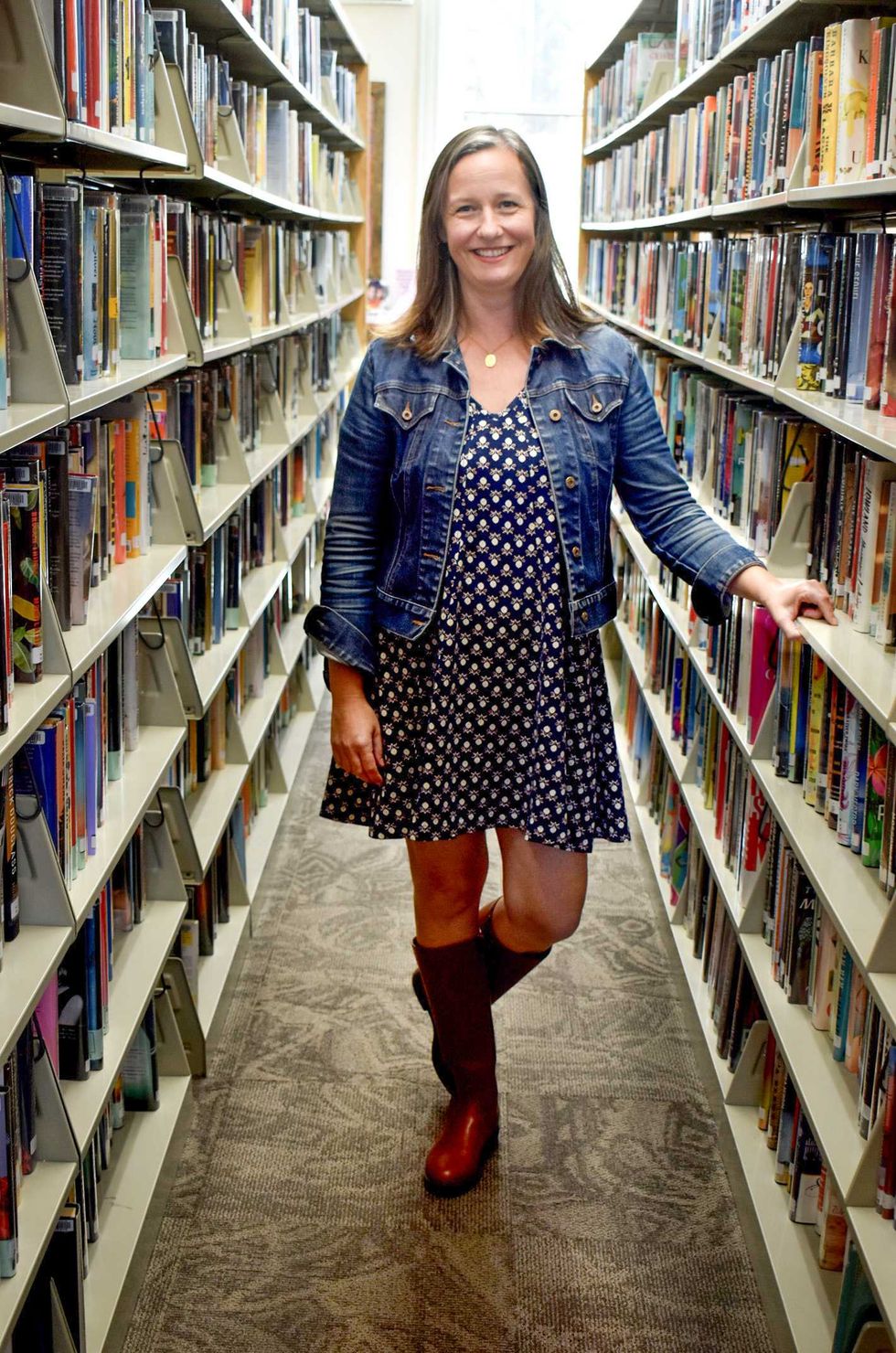
Meg Sher, executive director of the David M. Hunt Library in Falls Village.

L. Tomaino

When Meg Sher came to Falls Village in 2006 from Old Lyme, Connecticut, where she grew up, she never imagined she’d someday be the executive director of the David M. Hunt Library.

Although, in hindsight, perhaps it makes sense.

Keep ReadingShow less
Crescendo’s 23rd season speaks to the heart and mind

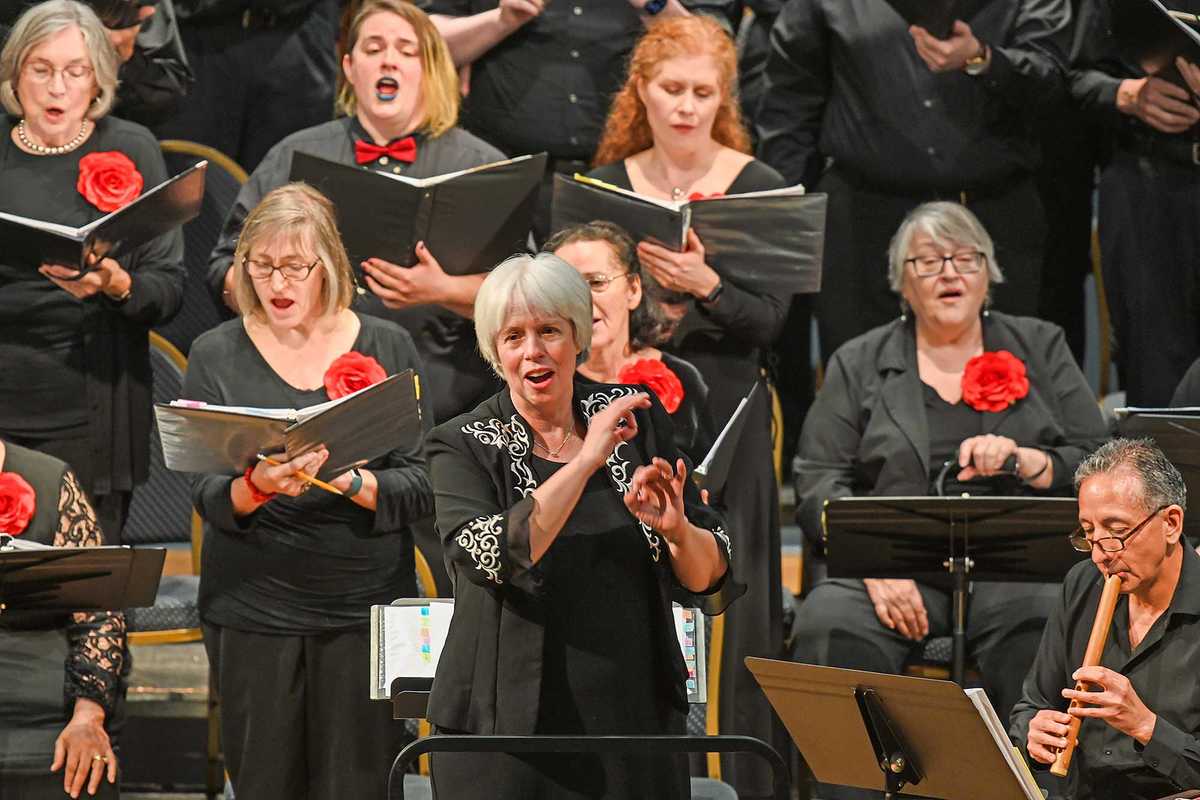
Christine Gevert, founding artistic director of Crescendo, conducts the audience at a performance.

Steve Potter

For Christine Gevert, founding artistic director of Crescendo, music from centuries past is anything but a relic. It is a living, breathing art form, full of drama, emotional complexity and, occasionally, surprises. As the regional choral and period-instrument ensemble launches its 23rd season, Gevert is once again bringing forgotten masterpieces into the present.

“Early Music has been my lifelong passion and the focus of my specialization in Europe and South America,” Gevert said. “Bringing this repertoire to our audiences in a nuanced way that does justice to its incredible depth, intensity, and beauty is deeply important to me.”

Keep ReadingShow less
google preferred source

Want more of our stories on Google? Click here to make us a Preferred Source.

Close Encounters with Music celebrates 35 years of musical discovery

Close Encounters with Music’s 35th season opens with “Saluting the Clarinet” featuring clarinetist Alexander Fiterstein.

Provided

For 35 years, cellist Yehuda Hanani has been inviting audiences to experience classical music in unexpected ways. As founder and artistic director of Close Encounters with Music, Hanani has built a concert series that goes beyond the music itself, exploring connections to literature, history, politics and the human experience.

This year, Close Encounters celebrates its 35th season with “Celebration & Discovery,” a seven-concert series that opens Sunday, Nov. 1, at the Mahaiwe Performing Arts Center in Great Barrington.

Keep ReadingShow less
Shinbone Alley brings spooky songs to Spencertown

Seeing isn’t always believing. Sometimes it’s the lack of a defined picture that can be the most compelling. And when Alex Harvey of Shinbone Alley sings his supernaturally charged sea shanties and street ballads, the unseen will be downright scary. On Oct. 30, the historically inclined storyteller and performer will create a spooky evening of forbidden tales and yarns through a carefully chosen series of songs at Spencertown Academy of Arts.

The repertoire for the performance is a bit fraught. Over the years, Shinbone Alley has explored the world of folklore through music. Though the group usually features two musicians, Harvey, a multi-instrumentalist and singer, will be performing solo. That is, of course, unless you include the spirits.

Keep ReadingShow less
Malian blues and Moroccan Gnawa meet in Sheffield
Vieux Farka Touré
Proivded

Desert winds rarely blow into the Berkshires, but on Nov. 5, they will carry the Malian blues and Moroccan Gnawa music to Race Brook Lodge.

That evening, Malian guitarist Vieux Farka Touré, often called “the Hendrix of the Sahara,” and Moroccan musician Samir LanGus will play at the lodge’s Event Barn in Sheffield, Massachusetts, at a benefit for the foundation Touré directs.

Keep ReadingShow less
google preferred source

Want more of our stories on Google? Click here to make us a Preferred Source.

google preferred source

Want more of our stories on Google? Click here to make us a Preferred Source.