Selectman blasts HRRC for depot delays

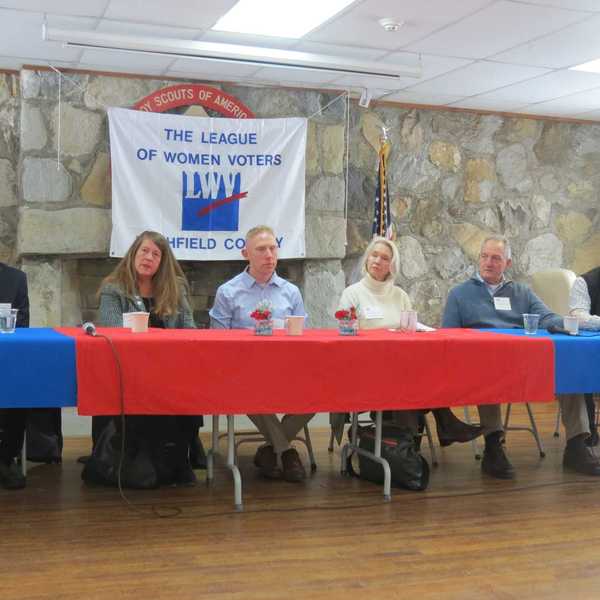
NORTH CANAAN — What appears to be a lack of communication is expected to cause significant delay in the final phase of the historic Canaan Union Station rebuilding project. At the March 4 Board of Selectmen’s meeting, Selectman Charlie Perotti had uncharacteristically strong words for the Housatonic Railroad Co. (HRRC). He blamed them for a delay that could set the project back months, explaining that a relatively simple document, a forced account agreement that allows a right-of-way over a grade crossing to a parking lot south of the depot, is all that is needed, yet a year has gone by since it was requested.Perotti is the liaison between the town, the railroad, the state Department of Transportation (DOT) —which needs to approve the project — and the Connecticut Railroad Historical Association, which has owned the depot since January 2003. It has been a long, often frustrating decade of planning and fundraising. A wing destroyed by fire in 2001 has been rebuilt with grants and cash and in-kind donations. Much of the work to restore it as a business center, and add a railroad museum, is done. A federal appropriation of $1.3 million, administered by the state DOT, remains to pay for interior and exterior finish work and landscaping. That work was on track to go out to bid this month.A very frustrated Perotti said last week he was toning down his remarks because the meeting was being videotaped. He had seen a letter that morning, dated March 2, from Housatonic Railroad Company General Counsel Edward Rodriguez, who wrote that the railroad had always been supportive of the rebuilding, and that they had been advised a few weeks prior that they were to receive revised plans for review, but they had not yet arrived.Perotti was able to speak by phone with Rodriguez that afternoon.“I told him if I didn’t get something here this evening, I was going to go to the press and put it on their shoulders that they’re the ones who are holding this project up,” Perotti said. “The state will not move forward until they get this forced account agreement. I spoke with [DOT engineer] Tom Burgess for more than an hour today. He said the railroad has had the documents since May of last year.”He went on to say he had seen the plans needed for review on the desk of Matthew Boardman, at the engineering office in the HRRC North Canaan headquarters, and was told they would be sent to the legal office in Old Lyme.As part of the project, HRRC will conduct a $69,000 upgrade to that crossing that will bring it up to standards for vehicular traffic. The crossing is on a spur that curves along the north side of the depot. The agreement is required by the federal government in order for it to reimburse the railroad company.HRRC disputes claimsRodriguez spoke with The Lakeville Journal at length last week. He disputed much of what Perotti said, including a promise to provide an explanation in time for the March 4 board meeting.He said it was his understanding that it was Perotti who would be sending the plans to his office. There was the issue of a meeting planned for January to finalize the plans. Perotti this week produced emails that included one from Dec. 17 to all parties involved. All responded except for HRRC and the meeting did not take place. The email contacts used by the DOT include Boardman and HRRC owner John Hanlon.Rodriguez said they responded and that they were told the meeting was canceled.“We didn’t cancel, and we are not in the habit of ignoring the DOT,” he said.More to the point is the understanding of exactly what is needed from the HRRC.Another email, from Burgess, dated July 26, 2012, and directed to all parties, states, “This element of the project must progress. Lack of a force account agreement and estimate will delay the authorization of federal funds. Please coordinate getting the HRRC tasks, estimate and agreement in place.”Perotti said the railroad plans to install drainage along a 50-foot-wide DOT easement on the south side of the depot, along the unused east/west rail line. Use of that property was given to the Connecticut Railroad Historical Association for parking and the planned drainage work is not a matter of contention.While Perotti said HRRC is incorrect in including the drainage as part of what is needed to move forward, Rodriguez said the drainage is “intimately connected with the crossing.”“The only reason to have a vehicular grade crossing is to access the parking lot,” Rodriguez said. “The way we work with the DOT is to have everything in place. There is also a pedestrian crossing there. Before we are willing to sign an agreement, we have to resolve all the issues regarding the parking area.”He also said during the conversation that Boardman had brought the plans to the Old Lyme office, but that he was advised by Burgess that other engineering submissions were still missing.He reiterated from his March 2 letter the three areas that need review by HRRC: the building, the grade crossings and the easements DOT will give the town in conjunction with the depot use. Among the concerns are that the building footprint not be expanded to impede clearance for trains passing by, and that the passenger platforms are preserved for future use.The plan on record does not change the footprint and the Connecticut Railroad Historical Association has always sought to preserve the platform, which was spared in the fire, as part of an authentic restoration.A failure to communicatePerotti said earlier this week the problems seemed to center on a lack of communication between the two railroad offices that included emails not being forwarded to Rodriguez. He also said there are two different departments of the DOT involved. Railroads normally work with DOTRail, which owns the railroad easement and regulates use. The DOT’s engineering division is overseeing the depot project.“The drainage easement is between the railroad and DOTRail. It has nothing to do with what is needed for this project. Neither does the crossing on Main Street. This agreement is a simple form, according to Tom Burgess. It’s just a paragraph or so stating that they are willing to enter into an agreement with the town to use the crossing.”In the meantime, Perotti said, the Connecticut Railroad Historical Association continues to hold fundraisers to pay its bills. There are at least two parties interested in leasing space there, including a planned restaurant.“They would be much-needed paying tenants, but we don’t know how long they are going to wait, not to mention that the cost of building materials is going up and this project is not going to get any cheaper to do.”

Latest News

Living art takes center stage in the Berkshires

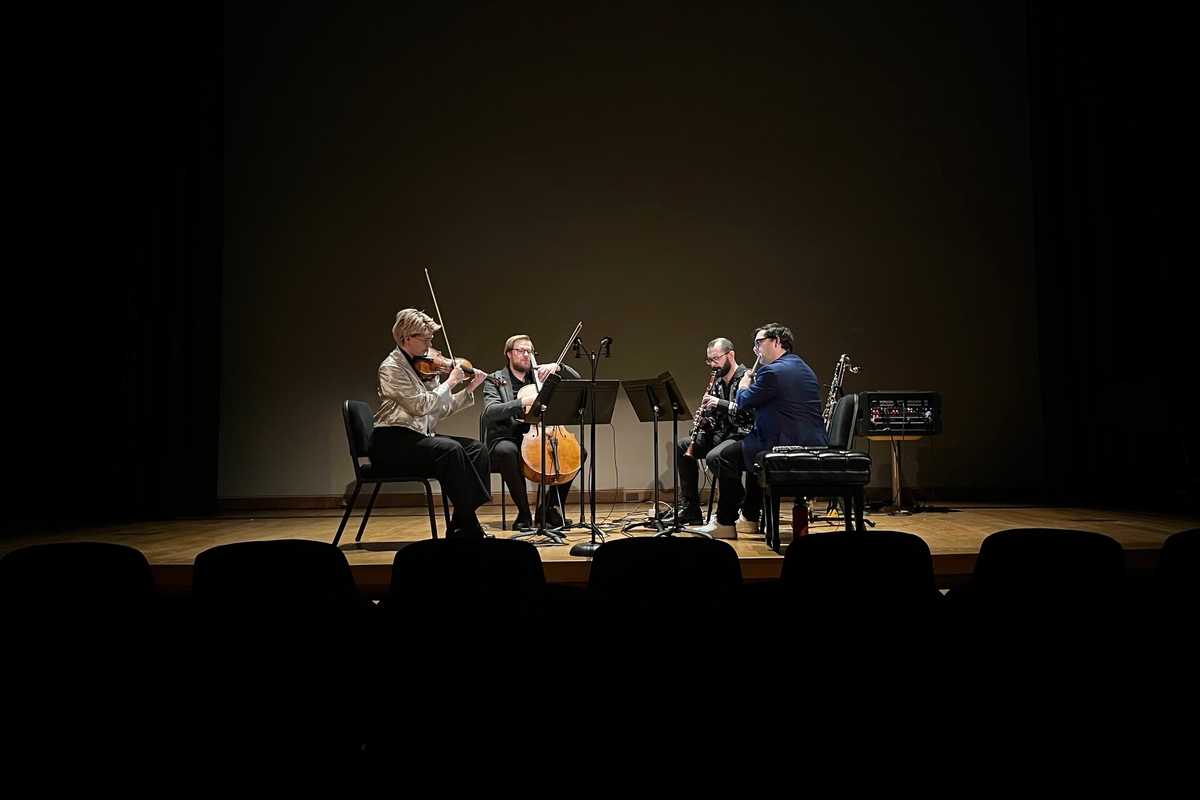
Contemporary chamber musicians, HUB, performing at The Clark.

D.H. Callahan

Northwestern Massachusetts may sometimes feel remote, but last weekend it felt like the center of the contemporary art world.

Within 15 miles of each other, MASS MoCA in North Adams and the Clark Art Institute in Williamstown showcased not only their renowned historic collections, but an impressive range of living artists pushing boundaries in technology, identity and sound.

Keep ReadingShow less
Persistently amplifying women’s voices

Francesca Donner, founder and editor of The Persistent. Subscribe at thepersistent.com.

Aly Morrissey

Francesca Donner pours a cup of tea in the cozy library of Troutbeck’s Manor House in Amenia, likely a habit she picked up during her formative years in the United Kingdom. Flanked by old books and a roaring fire, Donner feels at home in the quiet room, where she spends much of her time working as founder, editor and CEO of The Persistent, a journalism platform created to amplify women’s voices.

Although her parents are American and she spent her earliest years in New York City and Litchfield County — even attending Washington Montessori School as a preschooler — Donner moved to England at around five years old and completed most of her education there. Her accent still bears the imprint of what she describes as a traditional English schooling.

Keep ReadingShow less
Jarrett Porter on the enduring power of Schubert’s ‘Winterreise’
Baritone Jarrett Porter to perform Schubert’s “Winterreise”
Tim Gersten

On March 7, Berkshire Opera Festival will bring “Winterreise” to Studio E at Tanglewood’s Linde Center for Music and Learning, with baritone Jarrett Porter and BOF Artistic Director and pianist Brian Garman performing Franz Schubert’s haunting 24-song setting of poems by Wilhelm Müller.

A rejected lover. A frozen landscape. A mind unraveling in real time. Nearly 200 years after its premiere, “Winterreise” remains unnervingly current in its psychological portrait of isolation, heartbreak and existential drift.

Keep ReadingShow less
google preferred source

Want more of our stories on Google? Click here to make us a Preferred Source.
A grand finale for Crescendo’s 22nd season

Christine Gevert, artistic director, brings together international and local musicians for a season of rare works.

Stephen Potter

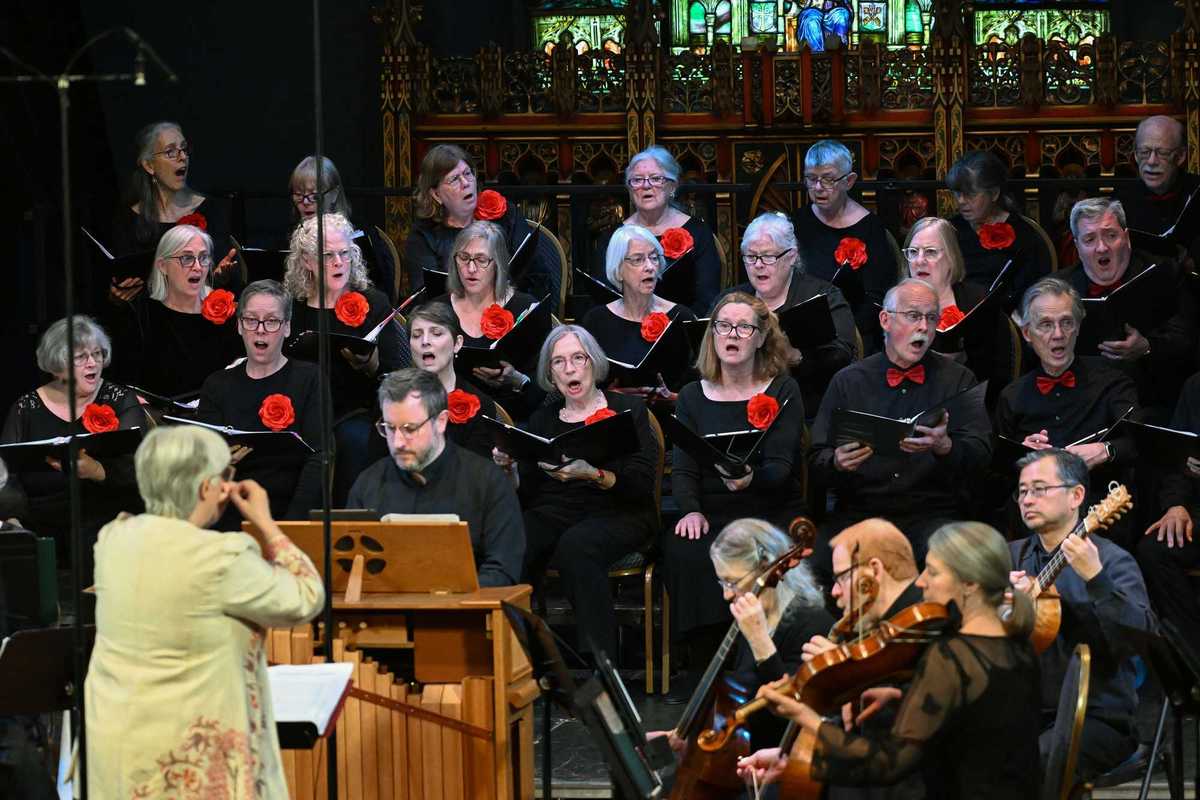
Crescendo, the Lakeville-based nonprofit specializing in early and rarely performed classical music, will close its 22nd season with a slate of spring concerts featuring international performers, local musicians and works by pioneering composers from the Baroque era to the 20th century.

Christine Gevert, the organization’s artistic director, has gathered international vocal and instrumental talent, blending it with local voices to provide Berkshire audiences with rare musical treats.

Keep ReadingShow less

Leopold Week honors land and legacy

Leopold Week honors land and legacy

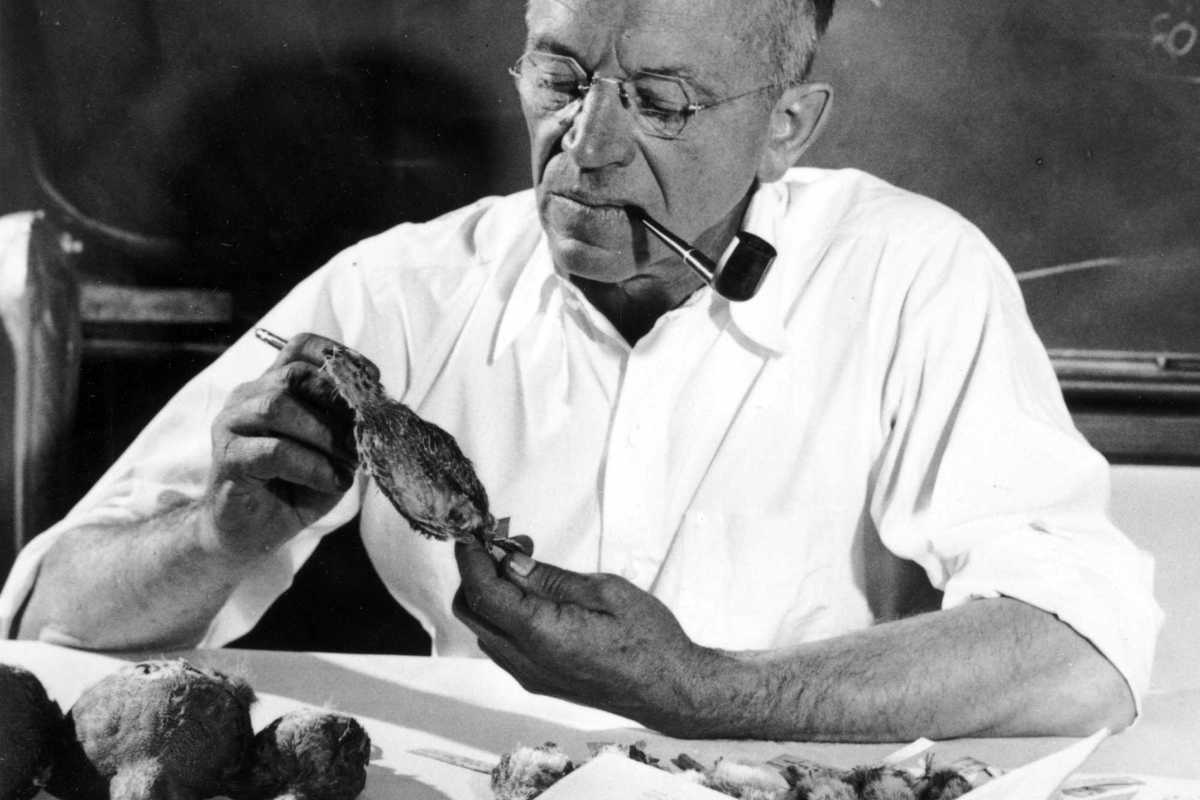
Aldo Leopold in 1942, seated at his desk examining a gray partridge specimen.

Robert C. Oetking

In his 1949 seminal work, “A Sand County Almanac,” Aldo Leopold, regarded by many conservationists as the father of wildlife ecology and modern conservation, wrote, “There are some who can live without wild things and some who cannot.” Leopold was a forester, philosopher, conservationist, educator, writer and outdoor enthusiast.

Originally published by Oxford University Press, “A Sand County Almanac” has sold 2 million copies and been translated into 15 languages. On Sunday, March 8, from 3 to 5 p.m. in the Great Hall of the Norfolk Library, the public is invited to a community reading of selections from the book followed by a moderated discussion with Steve Dunsky, director of “Green Fire,” an Emmy Award-winning documentary film exploring the origins of Leopold’s “land ethic.” Similar reading events take place each year across the country during “Leopold Week” in early March. Planning for this Litchfield County reading began when the Norfolk Library received a grant from the Aldo Leopold Foundation, which provided copies of “A Sand County Almanac” to distribute during the event.

Keep ReadingShow less

Erica Child Prud’homme

Erica Child Prud’homme

WEST CORNWALL — Erica Child Prud’homme died peacefully in her sleep on Jan. 9, 2026, at home in West Cornwall, Connecticut, at 93.

Erica was born on April 27, 1932, in Doylestown, Pennsylvania, the eldest of three children of Charles and Fredericka Child. With her siblings Rachel and Jonathan, Erica was raised in Lumberville, a town in the creative enclave of Bucks County where she began to sketch and paint as a child.

Keep ReadingShow less
google preferred source

Want more of our stories on Google? Click here to make us a Preferred Source.
google preferred source

Want more of our stories on Google? Click here to make us a Preferred Source.