WINSTED — Several municipal department leaders gave presentations at the Board of Selectmen’s meeting on Monday, Dec. 17, in order to discuss possible ways to increase town revenues.The presentations came in light of Town Manager Dale Martin revealing that, if town operations continue as they are, the town is expected to have a $200,000 budget deficit by the time fiscal year 2012-2013 ends.Martin said that the town only could control the revenues that come in from town departments.The other revenues the town receives, other than property taxes, includes funds via various state and federal aid which the town cannot control or increase.The first department head to give a presentation to the selectmen was Public Works Chairman James Rotondo.Rotondo told the selectmen that the income that comes into the department is limited.“In the buildings and parks side of public works it’s only a maintenance function that we perform, so there is no income there,” Rotondo said. “The highway department charges for road opening permits and driveway permits, but that is very small income that we earn from those things.”He said the biggest income maker for the department was cemetery services, which are expected to make the department $23,650 this year.However, Rotondo argued against raising the fees for the department’s cemetery services because all of the fees were already raised significantly in 2012.“We made all the changes we could in that department,” Rotondo said.The next speaker, Police Chief Robert Scannell, went over the services the department provides.Scannell suggested that the fee for fingerprinting services for pistol permits, employment purposes and citizenship purposes, could be increased from $5 to $10.“In the department, our biggest source of revenue is parking tickets,” Scannell said. “These fees are set by town ordinances.”He said that in fiscal year 2011-2012, parking tickets bought in $16,586 in revenue to the town.This year, the town is estimated to make $7,000 in parking ticket fines.“The fees for parking tickets are controlled either by town ordinance or by state statute,” Scannell said. “I suggest that, to make more revenue for the town, we could raise the fees for pistol permits and background checks made by the department.”The fees for many of the other services provided by the department are mandated by either the state or town ordinances.Marc Melanson, chairman of the town’s Building Department, said that most of the fees his department charges are set by town ordinances and the revenue it makes is determined primarily by the economy.“In the past few years what the department has made in revenue has been pretty low,” Melanson said. “We have had years where we have made $250,000, but that is when we have had large building projects in town.” Melanson said that in fiscal 2010-2011 the department’s income was $97,000.“I estimate that we will hit $88,000 by the end of this fiscal year,” Melanson added. “That is mostly in building department and zoning department fees. The only way we can increase revenues is by increasing fire marshal service fees.”However, Melanson said that because the fire marshal position is currently part-time, it would be difficult to fully provide services to all property owners who request it.Recreation Department Director Tricia Twomey told the selectmen that the possibilities to increase revenues in her department are very limited.The department is expected to bring in $10,500 in fiscal year 2012-2013, but Twomey said revenues all go back into the program for various needs, including staff and equipment needs.“We have raised the prices on a lot of fees that we charge residents who participate in the programs, but we have noticed that when you raise the price, our participation rates go down,” Twomey said. “Our department’s mission is to make sure we get as many people as possible to participate in recreation activity. Revenue is not our number one priority. Our priority is to get people involved and making sure everyone participates.”Collector of Revenues Arlene Boutin said that, just like Twomey’s department, her department was also limited in potential increased revenue possibilities.“Obviously, we run by state statute, it’s not like we can increase anything if we need to,” Boutin said. “The only thing I can see as possibly increasing revenue is by increasing fees for residents who use their credit cards for paying taxes.”Boutin said that the department uses Bank of America for their credit card services.She said that Finance Director Henry Centrella told her that the company charges the town bank fees for processing credit card payments.However, she did not know how much the company charged the town in fees.“A lot of towns passes the fee to the taxpayer and not foot the credit card processing fees,” Boutin said. “That might add some money to the town’s general fund. We need to investigate this.”Boutin said that the change might involve upgrading the town’s credit card payment system.She added that, last year, the town processed $1.2 million in credit card payments.The final department head who spoke to the selectmen about potential revenue increases was Inland Wetlands Agent Scott Eisenlohr.Just like the other department heads before him, in his brief presentation Eisenlohr said that the possibilities for increased revenue in his department was limited.“The fees that we currently charge are comparable to surrounding towns, including Torrington,” Eisenlohr said. “There’s hardly any enforcement in the town of inland wetlands projects because my position is down to 16 hours of part-time work.”The selectmen did not make any decisions after the presentation was made, but Mayor Maryann Welcome said the shortfall would be a topic of discussion at future meetings.
Latest News
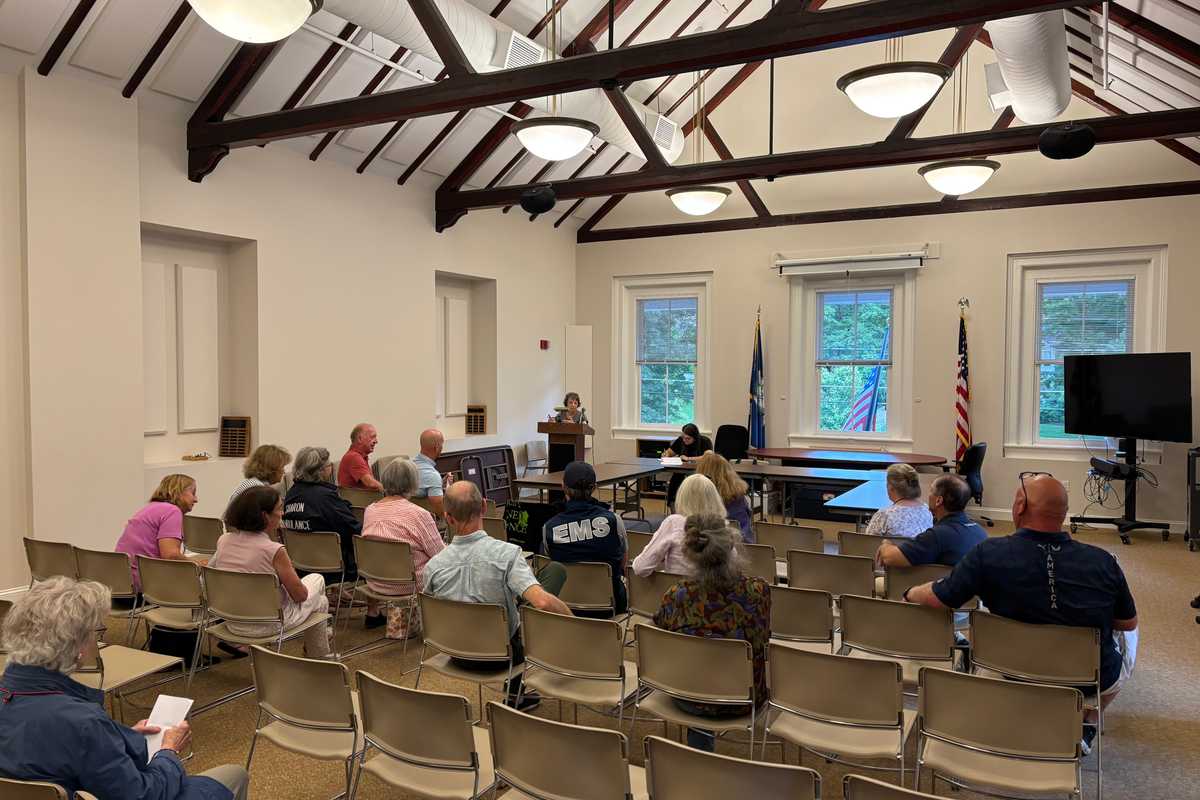
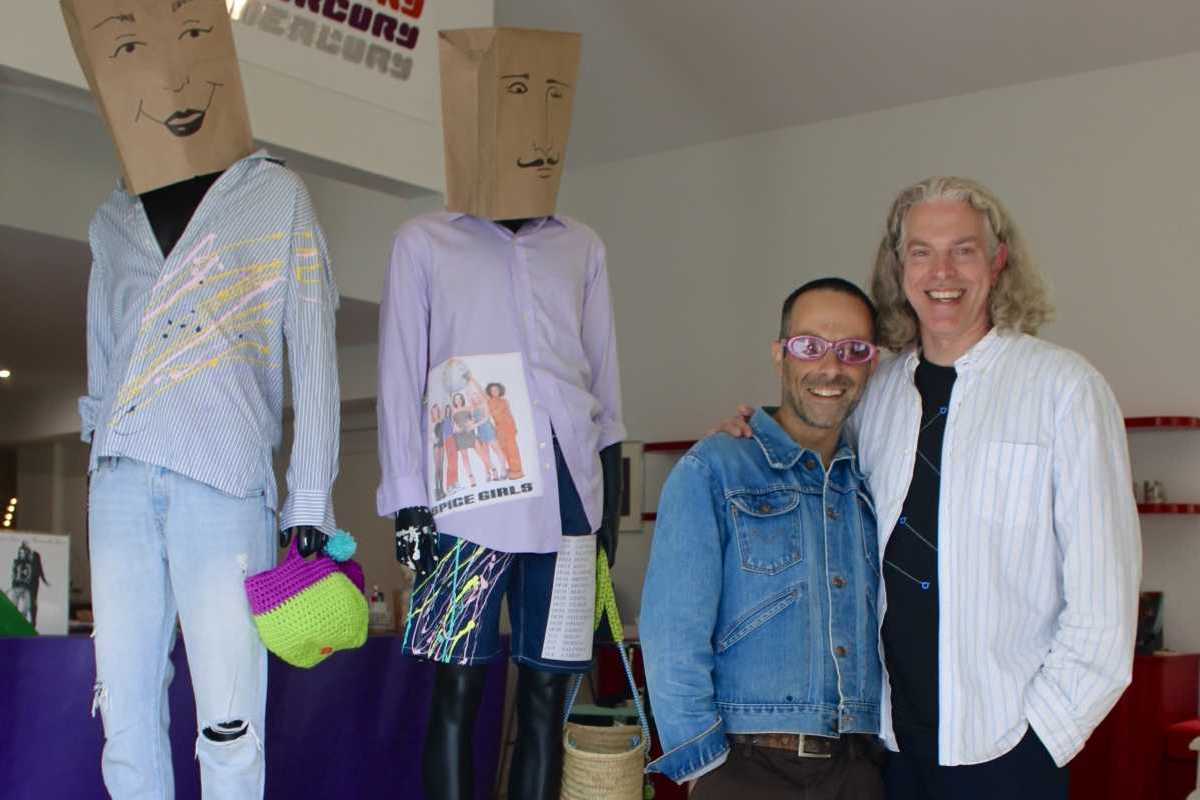
Greg Fricke and James Boehmer, co-owners of Peggy Mercury in Kent, recently launched their first fashion line, “Imaginary Concerts.”
Provided
Fricke and Boehmer are not there to stock their shelves with the same products customers find at standard makeup retailers. They’re there to help customers find what works for them. That usually means asking customers about themselves and learning about their beauty habits, skin, style and the way they like to present themselves. Fricke and Boehmer believe it’s their job to help customers bring out the qualities that suit them and determine what works best for their look.
So much of the Peggy Mercury world is about emboldening people to become more creative, and possibly bolder, versions of themselves. Some of this comes through the store’s creative collaborations with artists, designers and stylists.
It’s part of an ethos that encourages them and their friends to use the shop as a kind of laboratory, trying out new creative experiments without knowing how they might turn out. Whether in fashion, painting, fiber arts or photography, the projects almost always turn out marvelously.
A line of sterling silver charms they sell started as a small project by their friend Nolan Percival. In the beginning, the pieces were for close friends and loved ones. But Boehmer and Fricke encouraged Percival to get a little more serious about the project and create a whole line for the store. Today, it’s one of their top-selling collections.
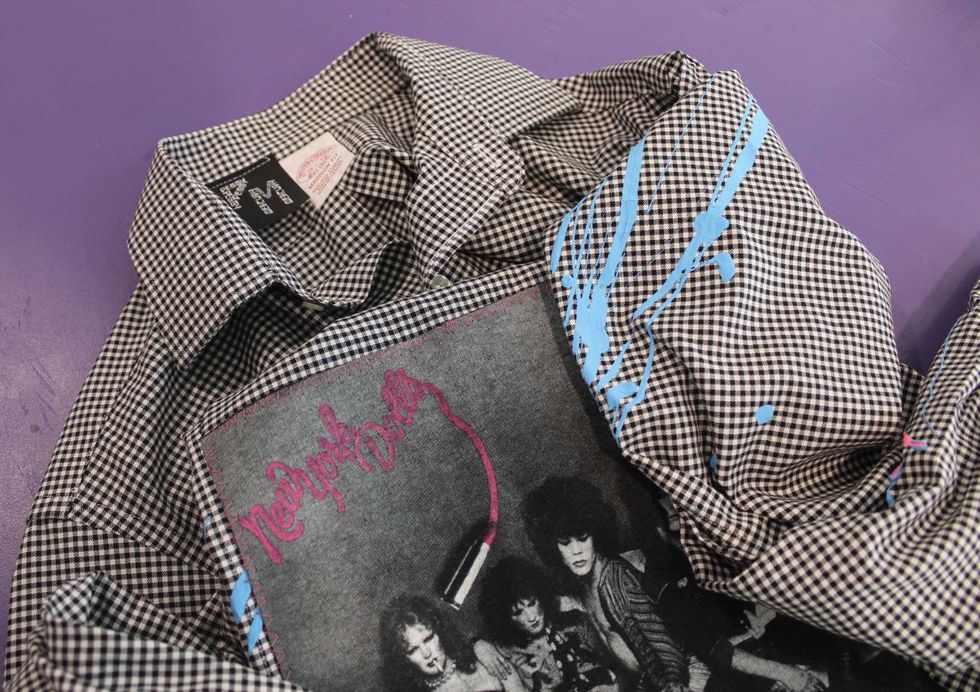 Classic styles, bold colors, and creative concerts make up the “Imaginary Concerts” line at Peggy Mercury.Provided
“Imaginary Concerts” has the duo taking their own advice.
The project started as a way for Boehmer to connect with his mother, who had been diagnosed with Alzheimer’s disease. Taking old concert shirts from his own collection, Boehmer and his mother began cutting out the graphics with the idea that they would make a quilt together. Unfortunately, she died before they could complete the project in 2025. The pieces, which were ready for production, were put on the back burner as Boehmer and Fricke dealt with their loss and the whirlwind of projects that never seemed to cease at Peggy Mercury.
But the harsh winter of 2026 presented an opportunity to take some time and focus on themselves. Part of that meant revisiting and redefining the concert T-shirt project. This time, instead of looking to the warmth and comfort of a quilt, they turned to another passion — fashion.
Taking a page from their own book, they wanted to create something that felt comfortable to them. They took two disparate loves — one rooted in simple preppy style, with clean lines and classic silhouettes, and the other in the nitty gritty worlds of punk rock and pop — and blended them together to create something entirely new. Pulling from the staples of vintage Brooks Brothers and Charvet collections, they applied the graphic elements with bold stitching reminiscent of punk jackets of the ‘70s and ‘80s, but with a much more sophisticated air.
But the remixing isn’t just the pairing of prep and punk. The pieces are not canon. They take liberties with the realities of concert tours, combining one band’s dates with another band’s logos, mixing them all up until the reality is lost and imagination is the only truth.
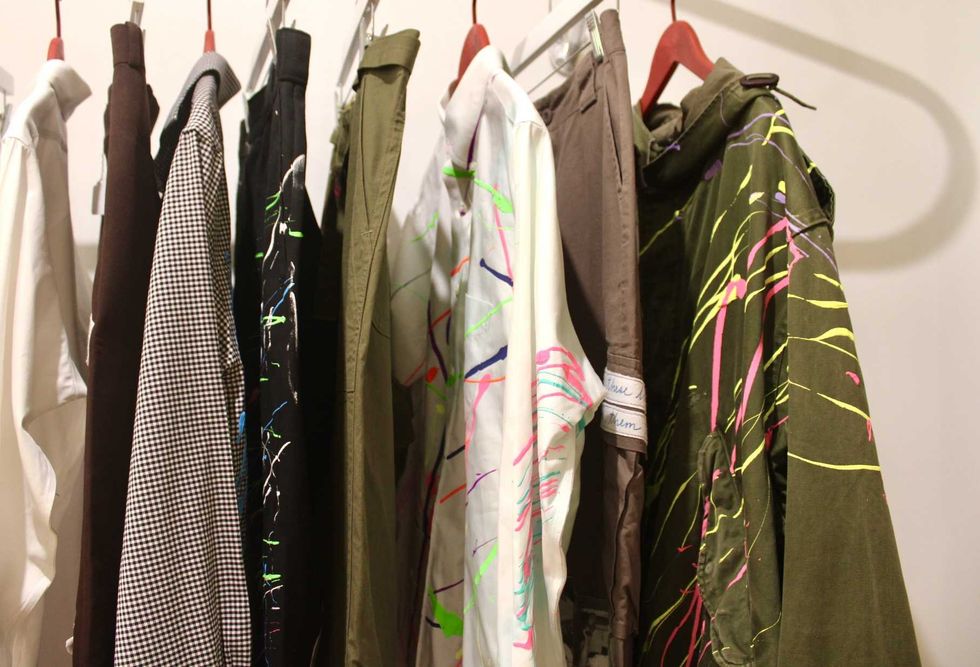 Shirts from Peggy Mercury’s first fashion line, “Imaginary Concerts,” hang on display.Provided
Adding to the mix is an element of perpetual creativity. Art can be messy, both figuratively and literally, and many of Fricke and Boehmer’s artist friends carry evidence of their work on them at all times. As a nod to these tireless creatives, the duo added haphazard splashes of bright color, giving the line an even more distinctive feel.
For them, “Imaginary Concerts” passes the “Peggy Test.” The mythical Peggy Mercury is a fictional figurehead for the company, a character who thrives on creativity and change. The name, much like the clothing line, is a mixture of interests: Mercury is a planet, a deity and an elusive, transformative element, while Peggy is the wonderfully stylish and boundary-pushing Peggy Guggenheim.
Everything Fricke and Boehmer put in their store has to pass this test: Would Peggy Mercury approve? For their first collection, the answer is a resounding yes.
Peggy Mercury is at 9 Maple St., Unit 2, Kent.


Want more of our stories on Google? Click here to make us a Preferred Source.