Latest News

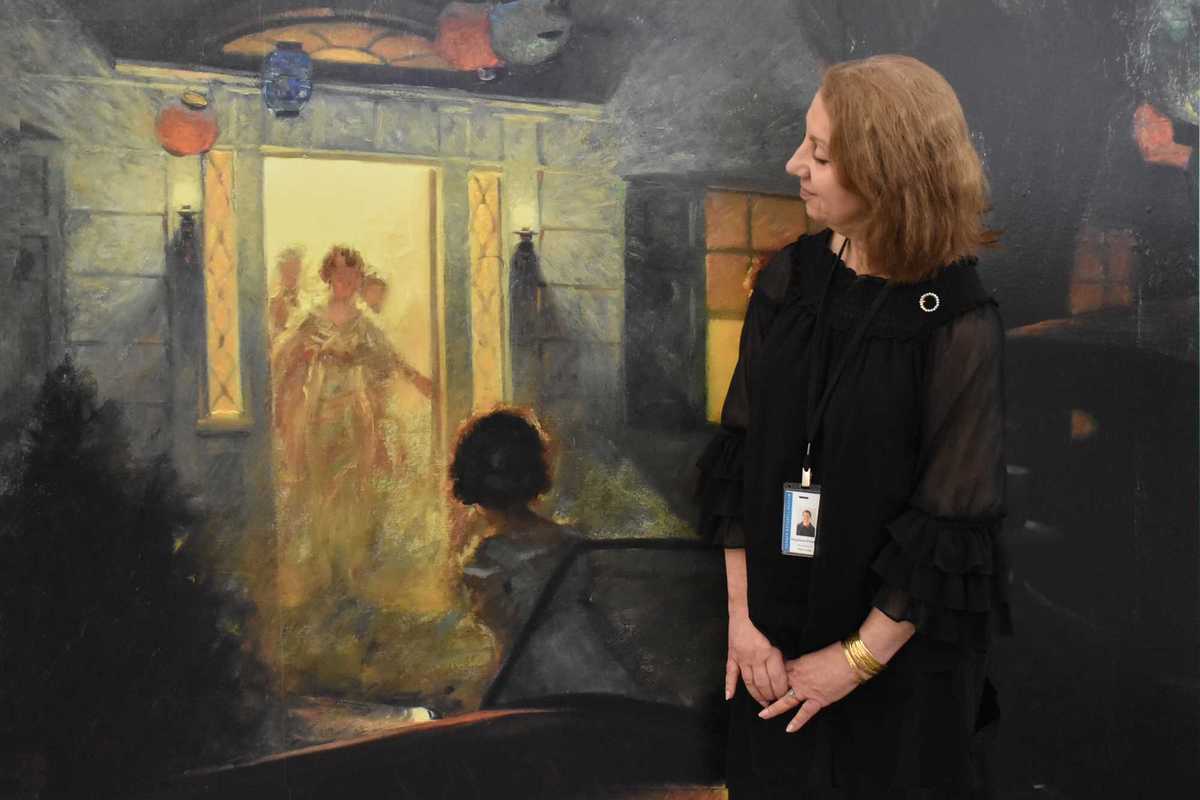
Stephanie Haboush Plunkett
L. Tomaino
“The field of illustration is very close to my heart,” she said. Inspired by that example, she studied illustration at Pratt Institute and began her career as an illustrator before shifting toward museum work. An internship at the Brooklyn Museum proved pivotal. “It was inspiring to see the children come alive in front of art,” she recalled.
In addition to her curatorial work, Plunkett is the author of two children’s books, “Kongi and Potgi: A Cinderella Story from China” and “Sir Whong and the Golden Pig,” and has written or co-authored numerous books on illustration, including “Drawing Lessons from the Famous Artists School” and “Leo Lionni: Storyteller, Illustrator, Designer.” She earned an MFA from the School of Visual Arts and built a museum career that included positions at the Brooklyn Museum, the Brooklyn Children’s Museum and the Heckscher Museum of Art before joining the Norman Rockwell Museum, where she has worked for 31 years.
But elevating illustration has meant challenging decades of critical skepticism.
“The goal has been to shine a light on this important American art form and to elevate public awareness of its artistic and cultural importance,”Plunkett said.
As a popular and widely circulated art, illustration is sometimes thought of as inferior to fine art, such as painting and sculpture. Plunkett considered why. She theorized that the 1913 New York Armory Show, the International Exhibition of Modern Art, with works by artists such as Picasso, Matisse and Duchamp, initially contributed to this evaluation. In the 1930s and ’40s, abstract expressionism became the art of the nation, and the rift widened further.
“Norman Rockwell became the antihero for many art critics of the time,” said Plunkett. “Illustration was viewed as too commercial and sentimental because of its emphasis on visual storytelling.”
Plunkett calls illustration “art with a job to do.” She explained, “Illustrators are adept at solving visual problems for their clients while expressing their own aesthetic and artistic vision.”
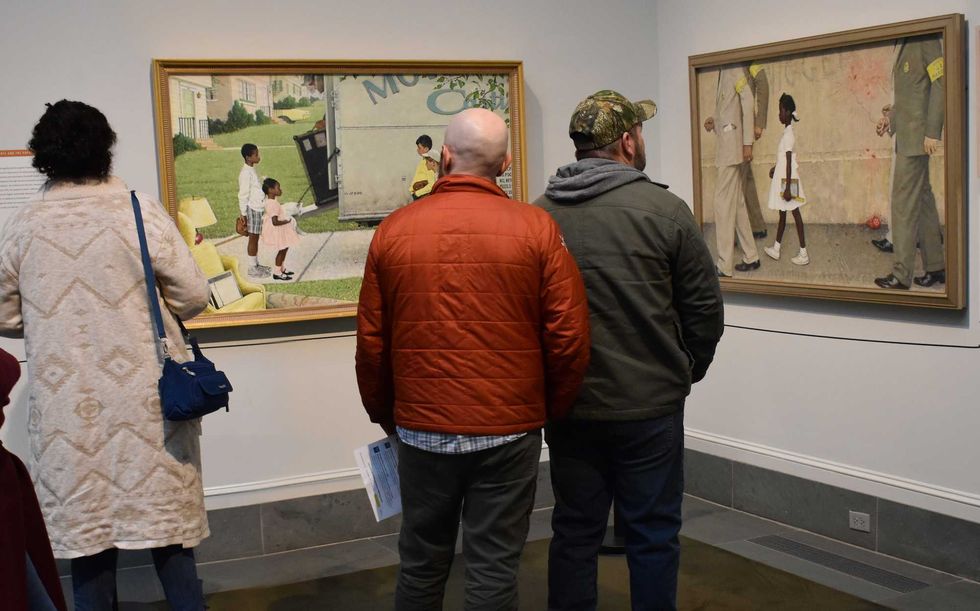 Visitors consider Norman Rockwell’s paintings on Civil Rights for Look Magazine, “New Kids in the Neighborhood” (1967) and “The Problem We All Live With” (1963.) L. Tomaino
She noted that the line between the fine and applied arts “is much more porous now, with many artists working across platforms and styles.” She cited late-20th-century illustrators like Marshall Arisman, Barbara Nessim, Robert Cunningham, Bernie Fuchs and Mark English as illustrators who forged unique approaches to working and seeing.
Plunkett commented that people want to see the original illustrations. “Generally, Rockwell exhibitions bring high attendance. Currently, our traveling exhibition, ‘Norman Rockwell: From Camera to Canvas,’ is at the New Britain Museum of American Art, but we’ve traveled Rockwell and illustration to 45 states and several countries, including Japan, France, Italy and Germany.”
Nowadays, illustrators take on subjects that are important to them. “The children’s book industry is committed to sharing the richness and diversity of people and cultures with young readers.” Plunkett cited the late illustrator Jerry Pinkney’s commitment to this goal. As a boy, Pinkney found no books portraying children like him, and “his life’s mission as an artist was to present inspiring, positive images of children of color.”
The Norman Rockwell Museum and Rockwell Center seeds were sown when “Rockwell placed the first 199 artworks in the care and collection of the Norman Rockwell Museum upon its founding in 1969, some of which he personally acquired for the fledgling collection,” said Plunkett. “The museum’s current Rockwell holdings include 865 original artworks, the artist’s Stockbridge studio and an archive of 400,000 photographs, letters, props and first uses of the artist’s work. We also hold about 25,000 illustrations by other artists, from the historical to the contemporary.”
“We call ourselves the home for American illustration. We have a real commitment to illustrators and what they’ve accomplished,” said Plunkett.
The Norman Rockwell Museum is located at 9 Glendale Road, Stockbridge. For more information and to purchase tickets, visit
nrm.org

Want more of our stories on Google? Click here to make us a Preferred Source.

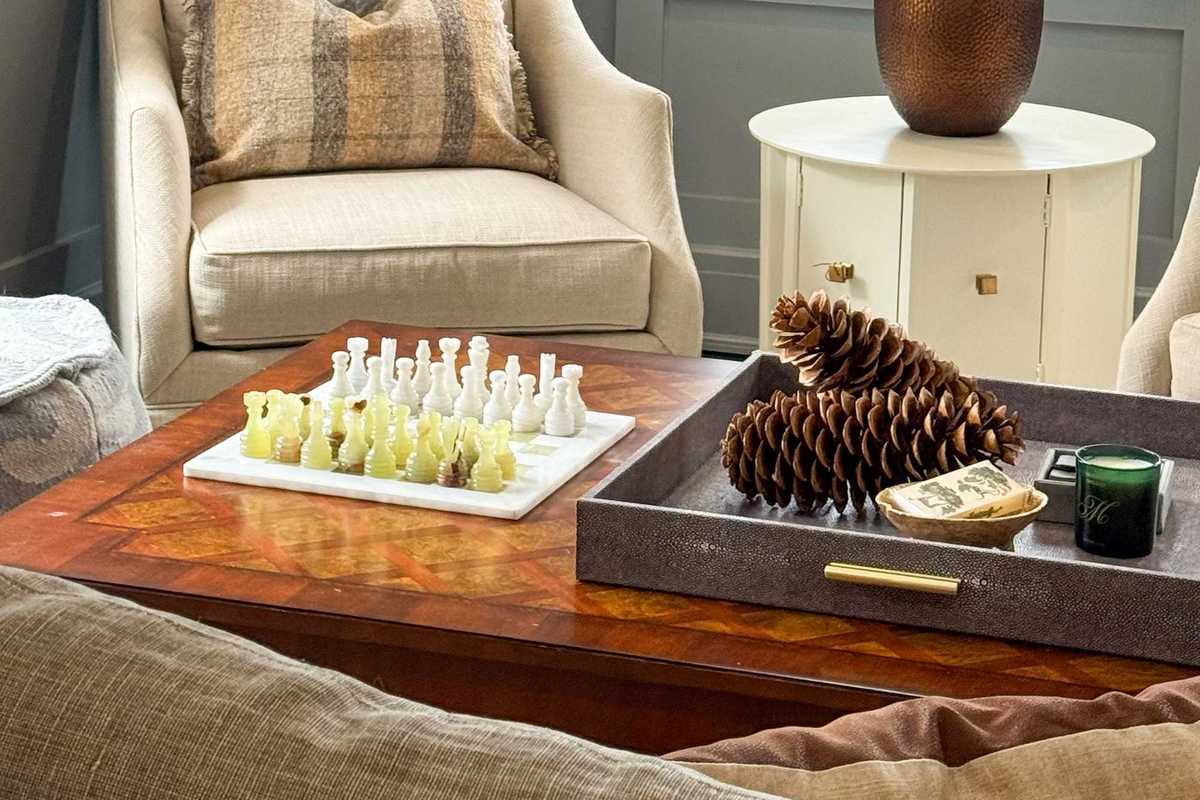
A tray can help group items in a way that looks and feels thoughtful and intentional.
Kerri-Lee Mayland
A tray creates a moment. It gives the eye a place to land and turns everyday objects into something intentional. More importantly, it’s approachable. There’s no measuring, no commitment, no pressure to get it “right.” It’s a small, easy project — affordable, functional and even a little fun — that can be tailored entirely to you.
One of the things I love most about styling trays is that your cozy “moment” becomes mobile. Everything you love is gathered in one place and can be easily moved from room to room as your day unfolds. A tray that starts on an entry table can later migrate to a coffee table or kitchen counter, adapting to how you’re actually living in your home.
In one client’s entryway, we styled a tray that sets the tone the moment you walk in. A simple pair of brass candlesticks adds warmth, a blue-and-white chinoiserie vase brings character, and two vintage books ground the arrangement. It’s not decorative for decoration’s sake — it feels collected, welcoming and personal, all while keeping the surface from becoming cluttered.
In another home, a coffee table tray became the quiet anchor of the living room. We included a strand of wooden beads for texture, the TV remote tucked neatly into a small vintage box, and a plant nestled in a pottery bowl. The tray keeps everyday necessities close at hand while making the space feel relaxed and lived-in rather than chaotic.
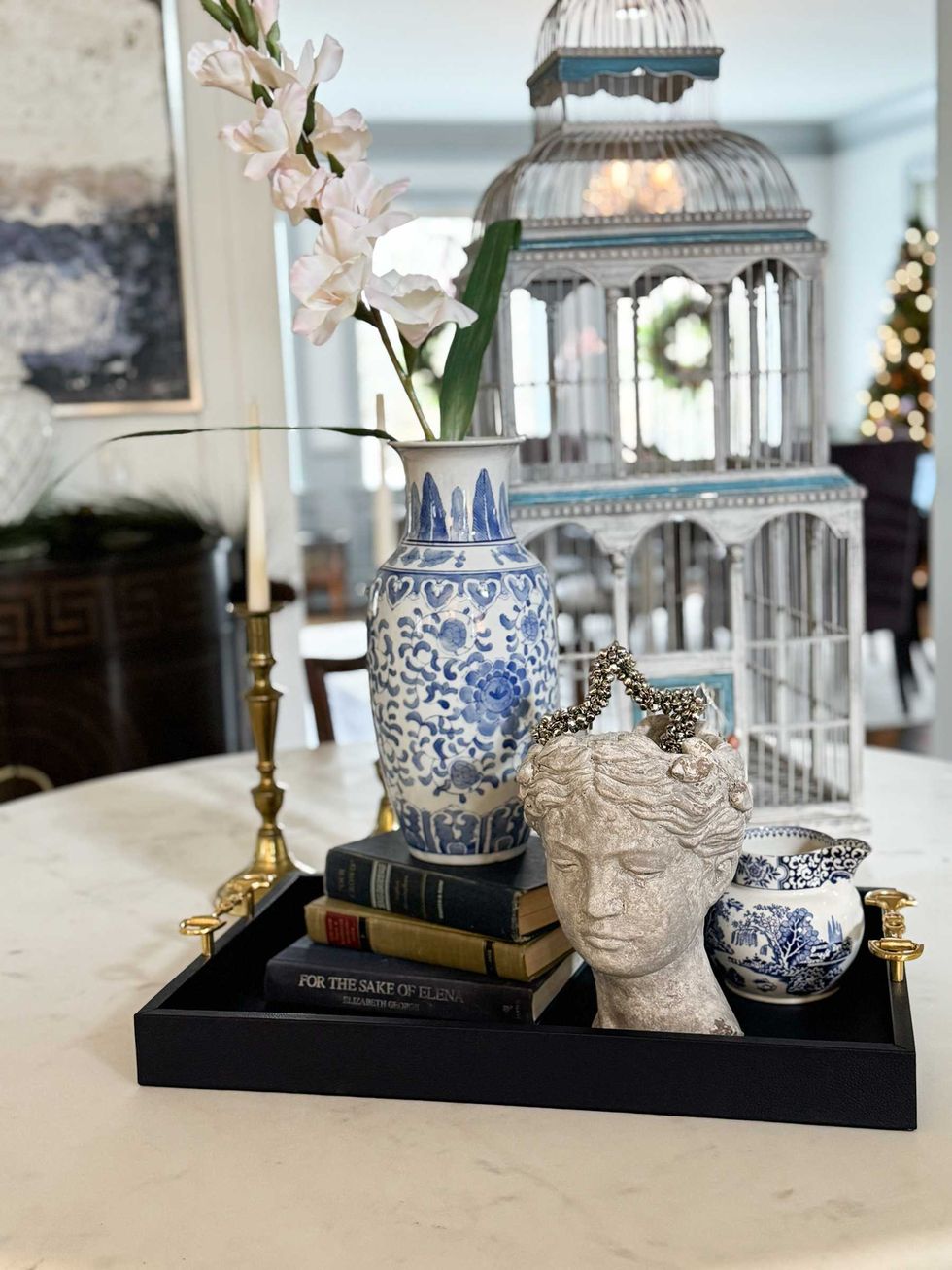 Styling a tray can give a home or room a re-fresh.Kerri-Lee Mayland
Kitchens may be where trays work hardest, especially in winter when we’re cooking inside more and gathering more casually. For one client, we styled a tray with a pepper mill; a shallow bowl for garlic, shallots and onions; and a white Italian ceramic container filled with olive oil. It’s practical and beautiful, and it makes cooking feel intentional instead of rushed. The tray warms up the counter while keeping essentials within reach.
Another version I often create is the cocktail, mocktail or tea-and-coffee tray — endlessly useful for friends popping over to say hello. A few cups, a teapot or carafe, honey or sugar, and a candle create an inviting setup that’s ready at a moment’s notice. It says, “Stay a while,” without any fuss.
What makes trays so effective this time of year is that they respond to winter’s quieter rhythm. Winter decorating isn’t about bold color or dramatic statements — it’s about texture, warmth and restraint: wood, stone, ceramic, linen, candlelight. A tray helps you edit rather than add, grouping items so they feel thoughtful instead of scattered.
When the seasons shift, the same tray evolves with you. Heavier elements can be swapped for lighter ones — fresh flowers, glass, pale ceramics — without starting over. One tray, styled seasonally, becomes a constant that gently changes rather than something that has to be replaced.
Remember, good design doesn’t have to come from big gestures. Often it comes from small moments done well — a surface that feels intentional, a corner that feels cared for. In winter’s stillness, creating a simple tray may be just enough to make your home feel calm, personal and complete.
Want more of our stories on Google? Click here to make us a Preferred Source.