Shernoff, Bidart and Echeverria: lawyers for the people

I first heard about William M. Shernoff in the mid-1970s when he was pioneering a field of law known as insurance bad faith litigation. That bad faith occurs when insurance companies deny legitimate claims or try to use deceptive fine print clauses to escape policy coverage. He was starting to collect both compensation for his clients and large punitive damages when the evidence showed insurance companies were imposing these abuses on many thousands of their customers.

One day, I called Attorney Shernoff and said that if he would match my $25,000 donation, we could start the National Insurance Consumer Organization (NICO) headed by former Federal Insurance Commissioner J. Robert Hunter, the pro-consumer actuary who served under both Presidents Ford and Carter.

NICO’s Bob Hunter thereafter became the single greatest advocate for consumers against the insurance giants that they have ever encountered. He knew their fraudulent complexities, translated those complexities into plain English, and brought his expertise and pleasing personality to legislatures, courtrooms and agencies in all 50 states. During the mid-1980s he visited all the states in a little over one year, rebutting the savage industry attack on wrongfully injured persons’ right to have their day in court. The insurance lobbyists have never seen such a whirlwind for justice who defeated them time and time again.

Bill Shernoff was instrumental in putting Bob Hunter, a force of nature, in motion. But this low-key attorney from Claremont, Calif., was just getting underway. He blazed the trail for rejected insurance consumers and became a feared private regulator of insurers denying claims by winning cases before judges and juries. He won multi-million dollar verdicts for a roofer whose disability payments were cut off, for a Samoan government involving hurricane damage, and for a paraplegic Marine whose insurance company rejected his physician on the medical necessity of his 109-day hospital stay. He secured a bad faith settlement on behalf of Northridge, Calif., earthquake victims and even a $50 million settlement in 1981 for Southern California Physicians over a malpractice insurance policy that overcharged on premiums.  

Not wanting to be a lone ranger, Shernoff went around the country conducting seminars training attorneys to bring insurance bad faith lawsuits. It became a movement of sort, filling in for the notoriously weak state regulation of insurance.

But, Shernoff was interested in more than representing specific aggrieved clients. He was an educational leader who furthered consumer education by writing, lecturing and appearing in mass media. 

One day he called me up and said he wanted to start a Consumer Law Clinic at his alma mater — the University of Wisconsin Law School. The Clinic is in its 27th year and has trained scores of students in consumer advocacy law. Its students represent real clients fighting unfair debt collection, repossession, home improvement fraud, credit fraud, and other unscrupulous business practices. 

This small law firm of Shernoff, Bidart and Echeverria welcome their responsibilities as “officers of the court” as well as their broader duties to build institutions that provide powerless people ever more access to justice. They are major contributors to Consumer Watchdog, a leading California advocacy association, and to Public Justice, a large public-interest, non-profit law firm. They are also major contributors to the American Museum of Tort Law, which as a volunteer I established as an educational institution dedicated to informing the public about the law of wrongful injuries.

Whenever there are insurance industry-indentured legislators — state or federal — pressing for cruel laws to stifle wronged Americans from their day in court or before regulatory agencies, chances are this firm is there either in person or with donations to fight them or overrule them with statewide referendums. One victory was Prop. 103 in California that regulated the property/casualty insurance companies 30 years ago, which saved California consumers over $100 billion since that voter revolt.

Of course, there are still many obstacles to the exercise of consumer rights and remedies, such as the Federal ERISA pension law’s massive preemption of tort claims. But if there were more firms doing what Shernoff’s firm does, millions of people would be receiving judicial or regulatory justice for their costly injuries or illnesses.

My best guess is that not more than 25 plaintiff personal injury firms are sharing, training and helping to build consumer protection institutions either in their state or nationally. However, proportionate to their relative size, few of them have packed the continual wallop of Shernoff’s law firm.

How does Shernoff, Bidart, and Echeverria do it? For starters, they have the right sensitive and generous values that are necessary for the work. Moreover, they recognize that they have to be both attorneys for clients and lawyers for the broader institutional advances of justice so that more people can use the laws meant for them.

How do they get underway? They make calls and above all return calls — a practice over 90 percent of their peers have not deigned to do when citizen groups want to initiate ways and means for a more just rule of law, as if people matter first.

Around the country plaintiff lawyers vary in their resolve to push back the corporate predators who want to repeal the American Revolution and its subsequent Bill of Rights for the people, especially the Constitution’s Seventh Amendment securing the right of trial by jury. For instance, the repeated failure of the major Texas trial lawyers to ward off the tort “deformers” contrasts with efforts by their counterparts in New York to hold the fort in Albany.

Years ago Dr. Sidney Wolfe of Public Citizen’s Health Research Group published the popular, widely used book, “Worst Pills, Best Pills.” All these drugs were licensed by the Food and Drug Administration, but some had bad side effects and others were much safer. 

Maybe it is time to have a list of the “Worst Lawyers, Best Lawyers.” All of these lawyers would be licensed to practice, but widely differ in their commitment to defend, preserve, and expand the civil justice system, under relentless attack by the corporate lobbies, that they and their forebears built.


Consumer advocate and former presidential candidate Ralph Nader grew up in Winsted and is a graduate of The Gilbert School. He is the founder of the American Museum of Tort Law in Winsted.

Latest News

Living art takes center stage in the Berkshires

Contemporary chamber musicians, HUB, performing at The Clark.

D.H. Callahan

Northwestern Massachusetts may sometimes feel remote, but last weekend it felt like the center of the contemporary art world.

Within 15 miles of each other, MASS MoCA in North Adams and the Clark Art Institute in Williamstown showcased not only their renowned historic collections, but an impressive range of living artists pushing boundaries in technology, identity and sound.

Keep ReadingShow less
Persistently amplifying women’s voices

Francesca Donner, founder and editor of The Persistent. Subscribe at thepersistent.com.

Aly Morrissey

Francesca Donner pours a cup of tea in the cozy library of Troutbeck’s Manor House in Amenia, likely a habit she picked up during her formative years in the United Kingdom. Flanked by old books and a roaring fire, Donner feels at home in the quiet room, where she spends much of her time working as founder, editor and CEO of The Persistent, a journalism platform created to amplify women’s voices.

Although her parents are American and she spent her earliest years in New York City and Litchfield County — even attending Washington Montessori School as a preschooler — Donner moved to England at around five years old and completed most of her education there. Her accent still bears the imprint of what she describes as a traditional English schooling.

Keep ReadingShow less
Jarrett Porter on the enduring power of Schubert’s ‘Winterreise’
Baritone Jarrett Porter to perform Schubert’s “Winterreise”
Tim Gersten

On March 7, Berkshire Opera Festival will bring “Winterreise” to Studio E at Tanglewood’s Linde Center for Music and Learning, with baritone Jarrett Porter and BOF Artistic Director and pianist Brian Garman performing Franz Schubert’s haunting 24-song setting of poems by Wilhelm Müller.

A rejected lover. A frozen landscape. A mind unraveling in real time. Nearly 200 years after its premiere, “Winterreise” remains unnervingly current in its psychological portrait of isolation, heartbreak and existential drift.

Keep ReadingShow less
google preferred source

Want more of our stories on Google? Click here to make us a Preferred Source.

A grand finale for Crescendo’s 22nd season

Christine Gevert, artistic director, brings together international and local musicians for a season of rare works.

Stephen Potter

Crescendo, the Lakeville-based nonprofit specializing in early and rarely performed classical music, will close its 22nd season with a slate of spring concerts featuring international performers, local musicians and works by pioneering composers from the Baroque era to the 20th century.

Christine Gevert, the organization’s artistic director, has gathered international vocal and instrumental talent, blending it with local voices to provide Berkshire audiences with rare musical treats.

Keep ReadingShow less

Leopold Week honors land and legacy

Leopold Week honors land and legacy

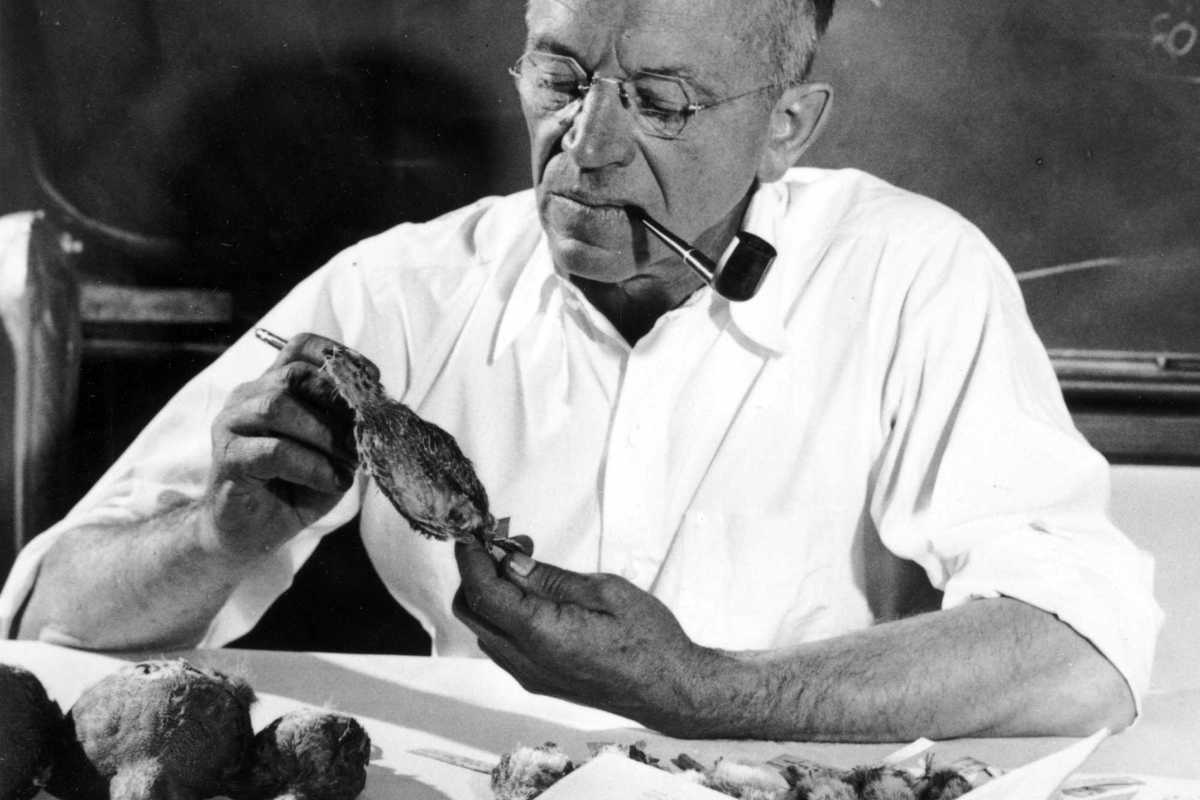
Aldo Leopold in 1942, seated at his desk examining a gray partridge specimen.

Robert C. Oetking

In his 1949 seminal work, “A Sand County Almanac,” Aldo Leopold, regarded by many conservationists as the father of wildlife ecology and modern conservation, wrote, “There are some who can live without wild things and some who cannot.” Leopold was a forester, philosopher, conservationist, educator, writer and outdoor enthusiast.

Originally published by Oxford University Press, “A Sand County Almanac” has sold 2 million copies and been translated into 15 languages. On Sunday, March 8, from 3 to 5 p.m. in the Great Hall of the Norfolk Library, the public is invited to a community reading of selections from the book followed by a moderated discussion with Steve Dunsky, director of “Green Fire,” an Emmy Award-winning documentary film exploring the origins of Leopold’s “land ethic.” Similar reading events take place each year across the country during “Leopold Week” in early March. Planning for this Litchfield County reading began when the Norfolk Library received a grant from the Aldo Leopold Foundation, which provided copies of “A Sand County Almanac” to distribute during the event.

Keep ReadingShow less

Erica Child Prud’homme

Erica Child Prud’homme

WEST CORNWALL — Erica Child Prud’homme died peacefully in her sleep on Jan. 9, 2026, at home in West Cornwall, Connecticut, at 93.

Erica was born on April 27, 1932, in Doylestown, Pennsylvania, the eldest of three children of Charles and Fredericka Child. With her siblings Rachel and Jonathan, Erica was raised in Lumberville, a town in the creative enclave of Bucks County where she began to sketch and paint as a child.

Keep ReadingShow less
google preferred source

Want more of our stories on Google? Click here to make us a Preferred Source.
google preferred source

Want more of our stories on Google? Click here to make us a Preferred Source.