SALISBURY — Chris George, executive director of Integrated Refugee and Immigrant Services (IRIS) in New Haven, said that the U.S. government’s vetting process for refugees is the “most rigorous” in the world.
George spoke to an audience at the Scoville Memorial Library in Salisbury on Saturday, April 13.
He made the distinction between “refugees” and other categories of immigrants.
By international law, refugees are those forced to flee their home countries because they face persecution on the basis of race, religion, nationality, social group or politics.
George said there are some 60 million people who meet these criteria, and 23 million of them have crossed an international border.
And that is when the United Nations, governments around the world, and organizations such as IRIS get involved.
George said that when refugees leave one country for another, they register with the U.N. and are usually housed in large camps.
And then they wait.
They wait to see if the situation at home changes enough to make it safe to return.
Or they try to build a life in the host country.
Or they stay in bureaucratic limbo.
George said of the 23 million refugees worldwide, five million are Syrians.
The other “durable solution” is resettlement. George said the U.S. has historically had the largest resettlement program in the world.
Over the last 30 years America has resettled more refugees than all other countries combined — some 85,000 to 100,000 per year, he continued. IRIS handled 230 cases in 2015 and 500 in 2016.
But the Trump administration has cut those numbers dramatically, he said, to 22,000 in 2018 and probably about 20,000 this year.
“We have given up our leadership role,” he said, which makes it difficult to persuade other governments to step up their efforts.
The reason for this? Security concerns, George said.
Using audience members to play the roles of a U.N. official, an FBI agent, and a Syrian baker, his wife (training to be a teacher), and their 5-year-old daughter, George demonstrated the refugee vetting process. (He played the American State Department official.)
First the State Department official asks the U.N. person for a list of the most vulnerable — in terms of being at risk for persecution — families in the refugee camp.
They talk at cross-purposes, with the U.N. person offering the best-educated families, or the ones who speak the best English.
Eventually a list is produced.
On the list are the Syrian baker and family. They are interviewed several times by the time the State Department gets to them.
“So I have a fat file.”
Then begins a series of interviews stretching out over a two or three year period. The interviews get more and more detailed, asking for names and contact information of friends, colleagues and others who can corroborate the events that caused the family to flee.
The family members are fingerprinted. Their documents — birth certificates, driver’s licenses, etc. — are sent to the FBI for forensic testing.
The interviews continue.
And months elapse between stages of vetting.
Finally they are approved and allowed to come to the U.S. — but not before they undergo a health screening and sign a promissory note promising to repay the air fare.
“They get the message,” said George. “This is not going to be a walk in the park.”
He said the American refugee vetting process “is the hardest way to get into the U.S. — by far.
“Terrorists don’t go through it.”
Thousands are screened out, he added.
IRIS and similar organizations take over when the refugees arrive. The immediate priority is to address any health care needs.
Next is to get the family into an apartment, get the children in school, learn English, and find jobs — all as soon as possible.
It’s a tall order, but it gets done.
“This is happening all over the country,” said George. “It’s one of the oldest and most noble American traditions.
“Why on earth would anyone want to mess with it?”

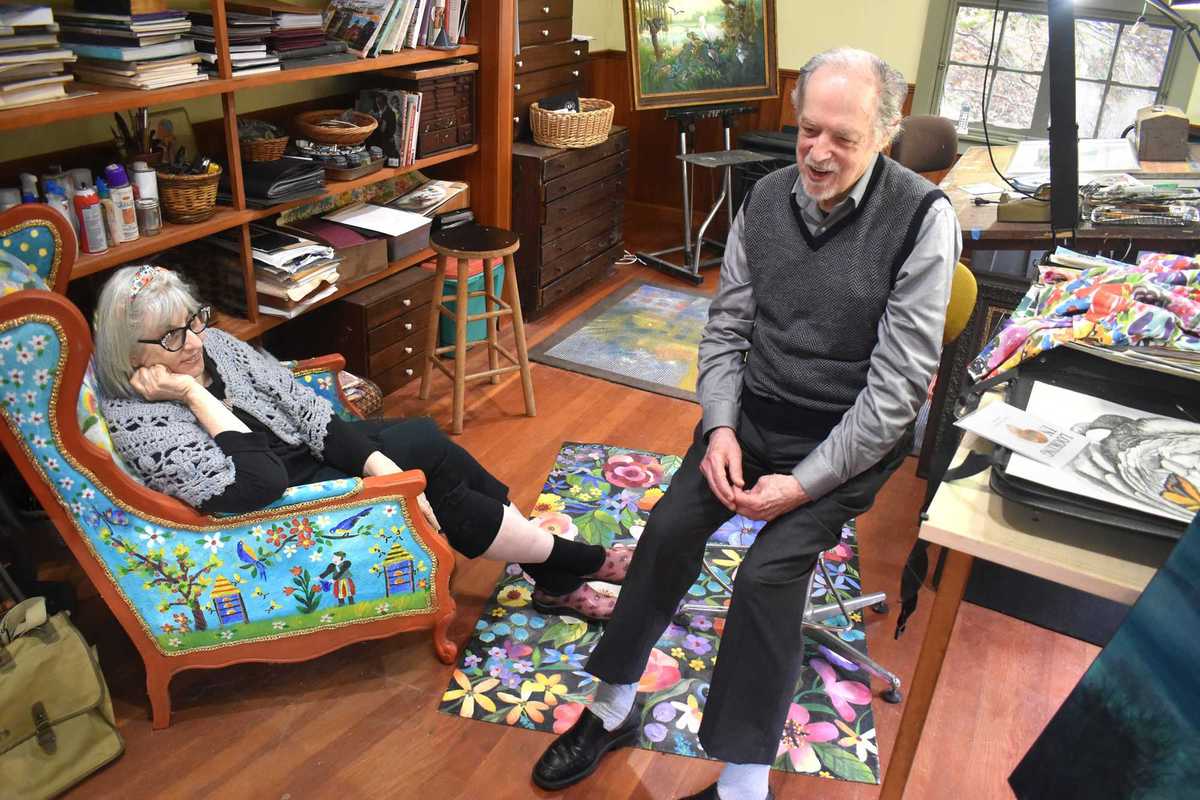
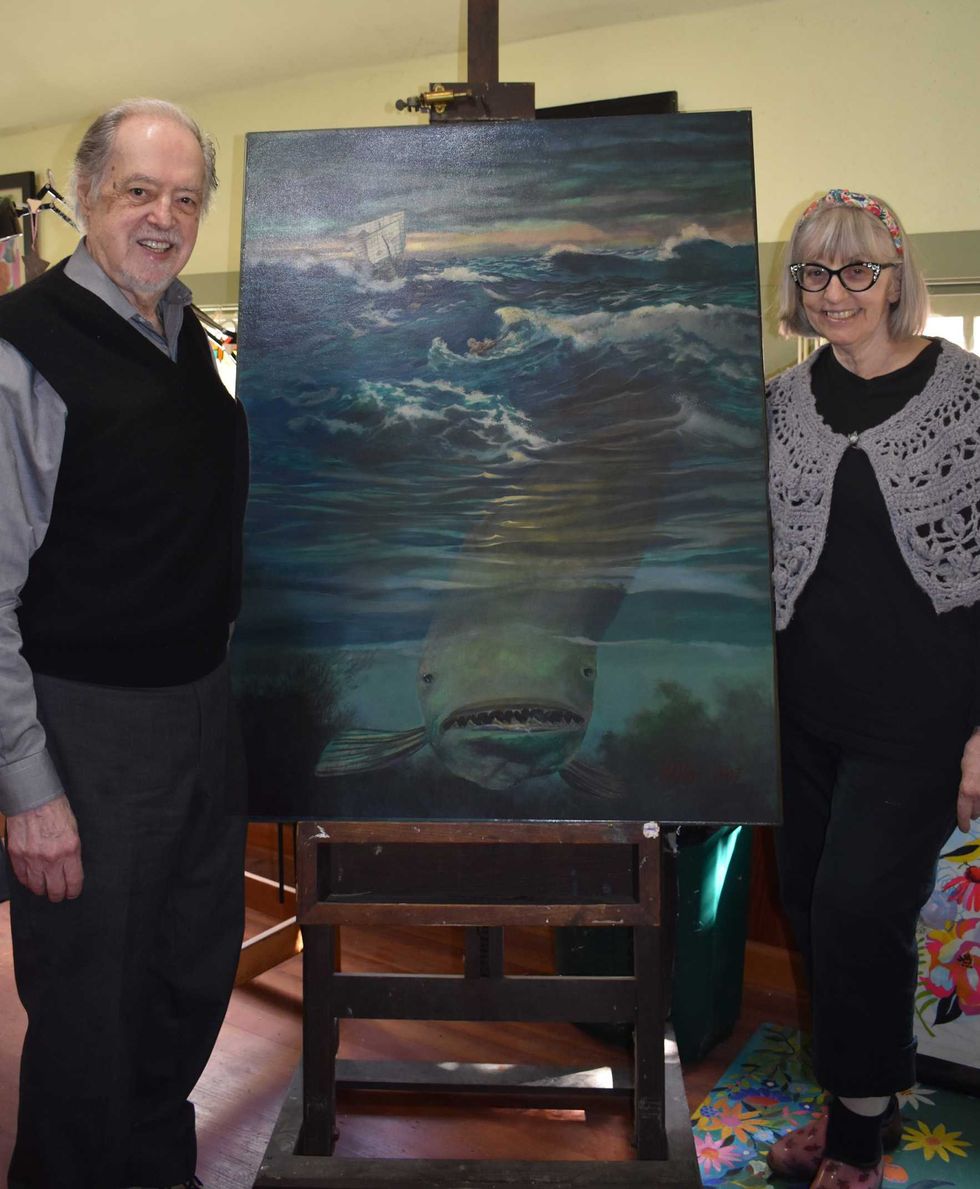 Justine and Victor Valla in their studio with a painting of Victor’s,”Jonah and the Whale.” Robin Roraback


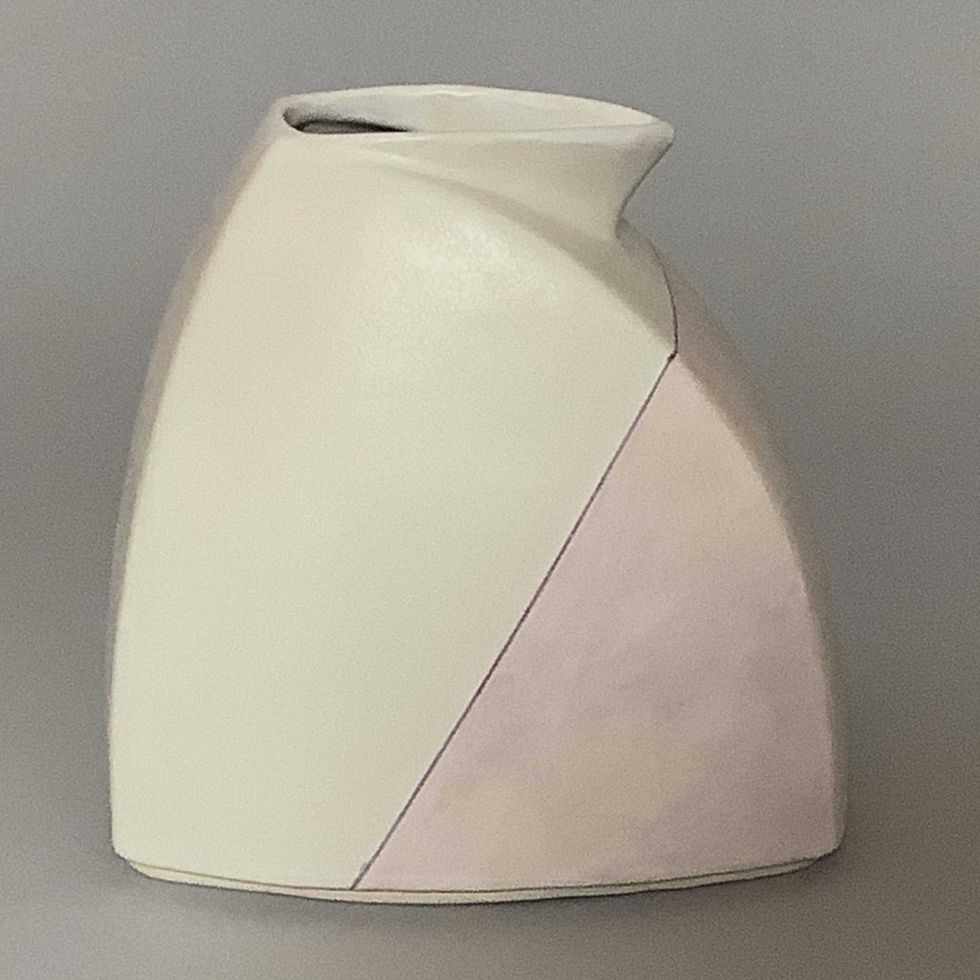 A ceramic vase by Kathleen Heidemann.Provided
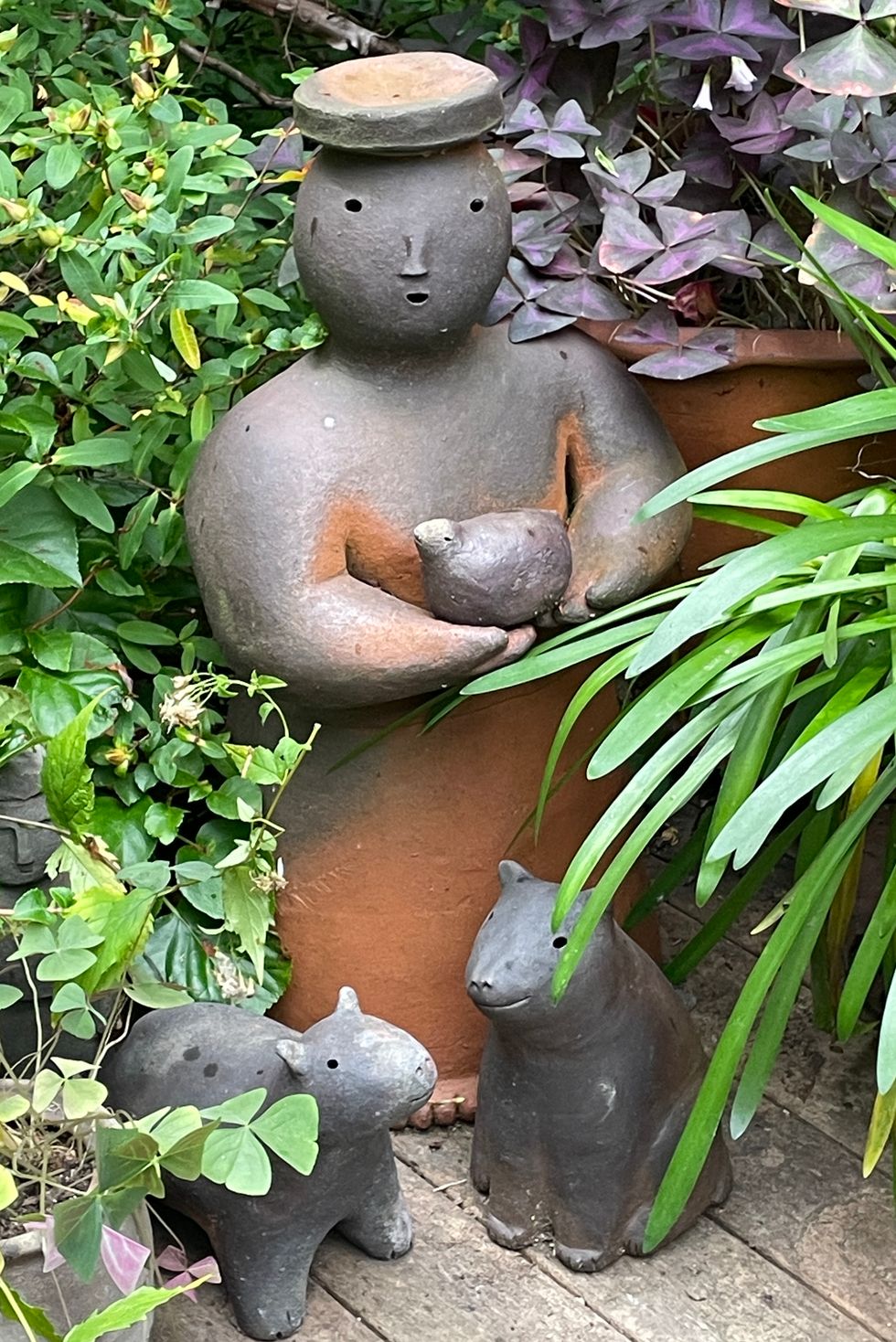 Joy Brown’s delightful ceramic sculptures.Provided