The more that the $567 million bus highway project between Hartford and New Britain is touted for the construction jobs it will produce, the more you can be sure that its nominal justification — transportation between the two struggling cities — isn’t very persuasive. Most Connecticut Republicans are against the project now that it has been brought to fruition by the state’s new Democratic governor, Dannel P. Malloy. But as Paul Hughes of the Waterbury Republican-American reported, the bus highway would not have gotten this far except for the long support in planning that was provided by the administrations of the two Republicans who preceded Malloy, John G. Rowland and Jodi Rell. The project seems to have been a way for those Republicans to pose as supporters of “mass transit” without having to spend much.Meanwhile, transportation systems of the greatest practical use to Connecticut — roads and bridges and the Metro-North commuter railroad from New Haven to New York — are falling apart for lack of maintenance funds. And the Hartford Courant’s Matthew Kauffman reported that while the accident-plagued junction of routes 9 and 17 in Middletown has been identified by the state Transportation Department as the most dangerous spot in Connecticut’s highway system for five years running, there is no money to fix it; though fixing it along with other roads, bridges and Metro-North might employ a lot of people, too.Instead, state government has found the money for another white elephant that will require huge operating subsidies every year.Participation in this month’s municipal elections in Connecticut fell below 31 percent of registered voters. Since a quarter or so of people eligible to vote don’t register, perhaps only 23 percent of Connecticut’s adults showed up on municipal government’s big day.Of course, the strain imposed by the freak and damaging snowstorm Oct. 29 may have reduced participation. But two years ago participation was only 37 percent of registered voters, and the percentage of all adults participating was probably already below 25.Connecticut has seen a long decline in civic virtue, and it is not likely to be reversed by legislating same-day voter registration and voting by mail or over the Internet. Though local government performed spectacularly after the recent snowstorm, most people in Connecticut seem to think it’s not important. Are they so wrong? While there are always personal popularity issues in municipal elections, there are seldom issues of policy anymore, not even issues of taxes. Most candidates and voters themselves seem resigned to rising property taxes just to maintain the status quo. Campaigns consist of little more than candidates pledging themselves to a few meaningless pieties. Indeed, many local elections can’t be competitive at all because the law arranges offices and nominations so that nearly everyone nominated is elected.Even where there is serious competition it may be hard to extract meaning. East Haven’s new mayor, Joseph Maturo Jr., a former mayor, may get Connecticut’s political candor award for acknowledging as much. Having just defeated Mayor April Capone by 30 votes out of 7,500 cast after losing to her by 25 votes four years ago, Maturo remarked at his victory party: “I don’t know what the people said four years ago with 25 votes, so I don’t what the people said this time with 30 votes.”Connecticut Light & Power Co. is now nearly unanimously certified as a bunch of idiots because it needed 10 days to restore electricity to all its customers after the Oct. 29 snowstorm. But now roadsides in the northern and western parts of the state are cluttered with fallen branches stacked up by property owners for eventual collection by road crews, and it may be months before all the mess is taken away. To finance the debris removal work, town governments are appropriating millions of dollars they don’t have, in the hope that the federal government will reimburse them, as state government is too committed to the Hartford-New Britain bus highway and other things to help financially. And despite winter’s approach, Bradley International Airport, having needed seven hours to disembark passengers on a flight diverted there during the storm, and five hours to disembark passengers on a diverted flight last year, does not yet have a plan to prevent more outrageous and humiliating incidents.If the power company is contemptible for having been unprepared to fix its problem in less than 10 days, what does all this make government three weeks later? Chris Powell is managing editor of the Journal Inquirer in Manchester.
Latest News
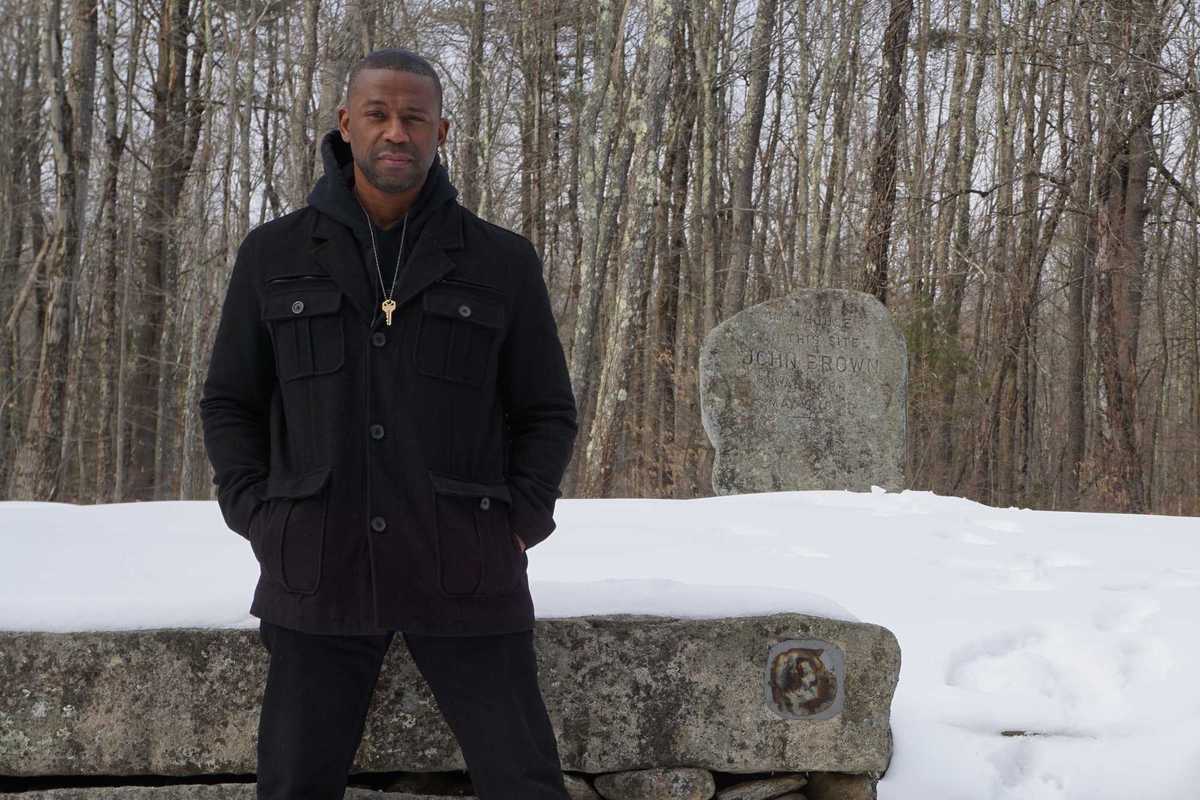
One systemic consequence of slavery is the loss and obscuring of the histories of those who were enslaved. Records were often not kept about where Africans had been stolen from or who they were related to. Families were torn apart, leaving nothing but the faintest traces of the past. The delineation point, where genealogists can no longer trace histories back, is refered to this as the “document wall.”
Today, 250 years after the signing of the Declaration of Independence and more than 160 years since the Emancipation Proclamation, there is a growing effort to restore some of the history stripped from enslaved people and their descendants. Among the leaders of these efforts is Mills, president of the Alex Breanne Corporation, a nonprofit organization that works to identify previously anonymous Black Americans from history and connect them with their living relatives.
The work began with Mills’ sister, who started digging into their family’s past in the 1990’s and introduced him to this emerging world of genealogy. Through that process, the Mills family discovered their great-great-grandfather, Ned Mills, who had been enslaved in Texas. His last name came from his final enslaver and remains the family surname. Through their research, they found that the document wall directly affected their ancestor, who learned of his liberation on June 19, 1865, now commemorated as Juneteenth.
“For the first time,” Mills writes on his website, “American slavery wasn’t something that had happened to anonymous people in a history book. It had happened to my family.”
The discovery gave Mills a familial pride he had been missing for years. That pride fueled his desire to help others find their own history. In 2023, Mills received his certificate in genealogical research from Boston University. He has used his expertise to help descendants of enslaved people uncover histories they never dreamed of learning.
To do this, he uses a process called “reverse genealogy,” identifying a person from the past and working forward to discover their descendants. Along the way, Mills has found some remarkable people who fought for freedom on American soil, some of whom were never freed.
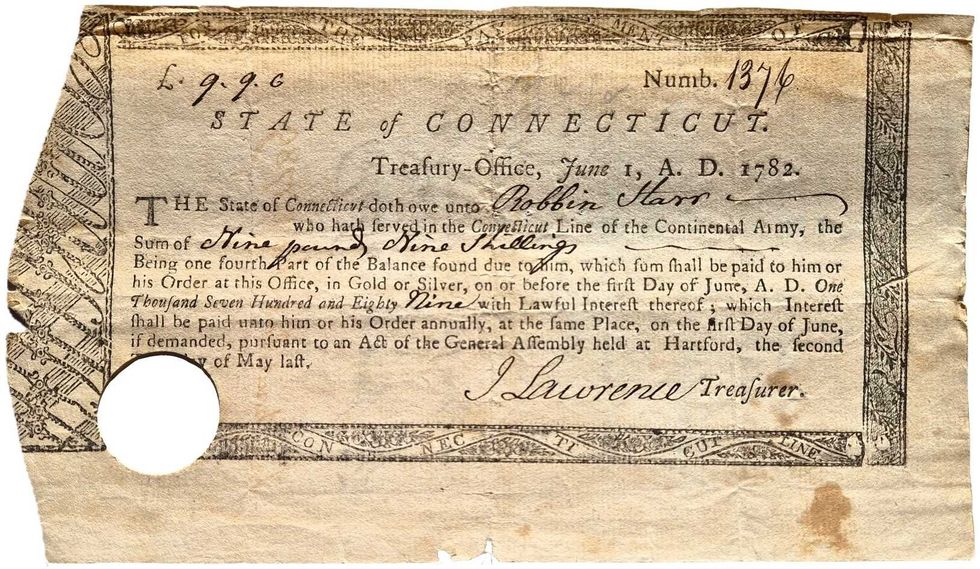 Pay Bill for Robin Starr’s service in the Continental Army.Courtesy the Alex Breanne Corporation
At the Cornwall Historical Society event, Mills will present the stories of four Connecticut families: Job Lathrop of Norwich, the son of Pirmus Armes, about whom Mills has published a book; Prince Mortimer of Middletown, also the subject of a book by Mills;, the three sons of London Wallace of Simsbury; and Robert “Robin” Starr of Danbury, who later lived in Cornwall and Sharon.
A few years ago, Cornwall Consolidated School social studies teacher Will Vincent reached out to Mills for research guidance on a local history project his students were undertaking. Together, they learned about Naomi Freeman of Cornwall. After purchasing an acre of land on Great Hollow Road in 1828, Naomi Freeman became the first Black female landowner in Cornwall.
The students petitioned the town to rename a road after the historic Cornwall resident In April 2025, Great Hollow Road was officially renamed Naomi Freeman Historic Road. U.S. Rep. Jahana Hayes joined Mills and the Cornwall Consildated School students for a presentation of their research.
Since then, Mills has guided the students in their quest to learn more about Starr’s story. Starr was a Revolutionary War soldier who joined the Continental Army to earn enough money to buy his own freedom, receiving the Badge of Merit in the process. The stories of his descendents’ services are equally worthy of their own books.
In recognition of Mills and the students’ work, First Selectman Gordon Ridgway proclaimed Feb. 8 as Robin Starr Day.
Preregistration is required for the event at the Cornwall Historical Society. To learn more about Mills’ work, visit
alexbreanne.org.
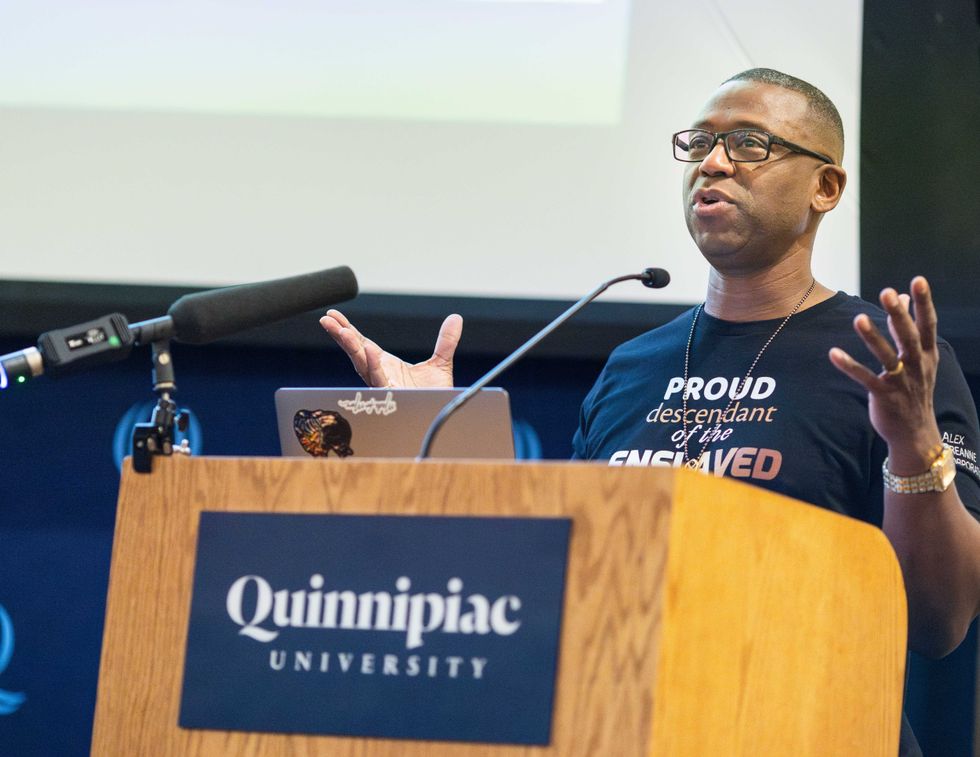 John Mills speaking at Quinnipiac University.Courtesy the Alex Breanne Corporation
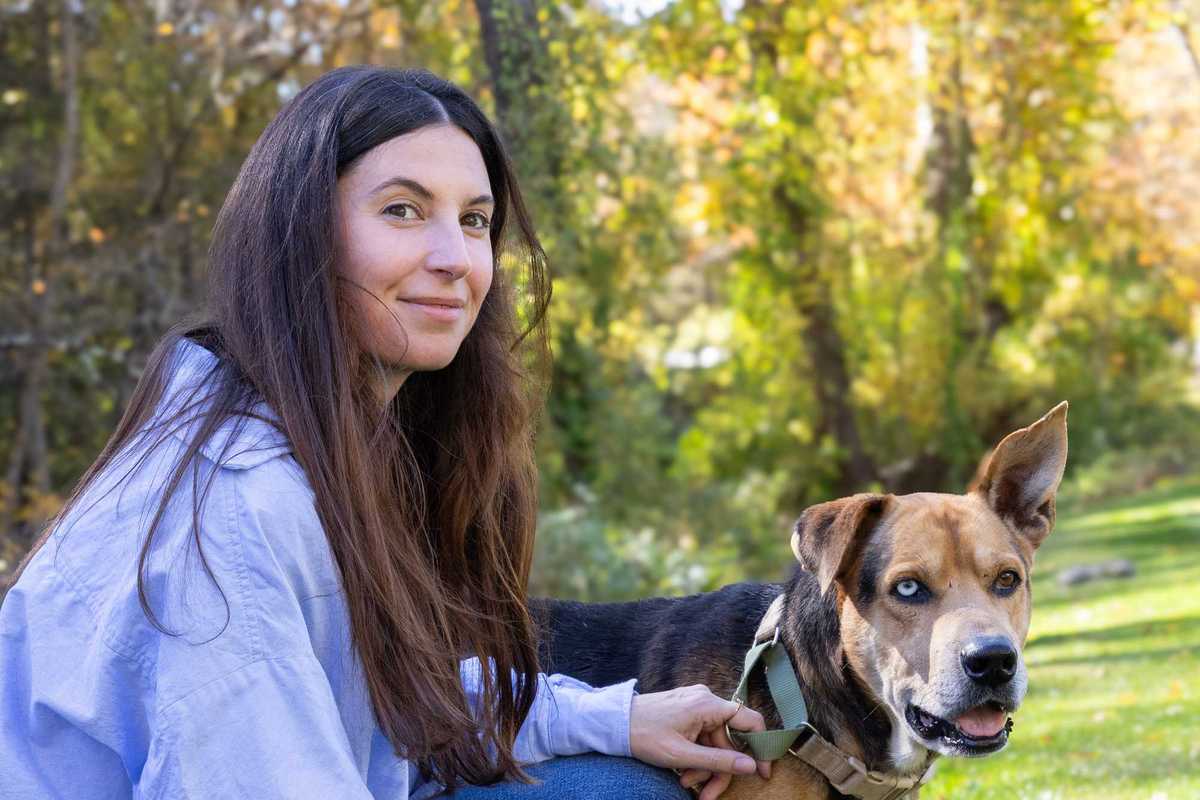
Stephanie Saetta runs Charlie Chicken Bones, a sanctuary in Salisbury.
Dogs have been at the center of Saetta’s life since childhood. She remembers going to the library to research different breeds and trying to convince her parents the family needed a dog. She had her heart set on an Irish Wolfhound, but she was more than happy when her mom brought home a West Highland terrier.
After college, she adopted Charlie as a puppy from a rescue on Long Island. He was a hound-shepherd-Rottweiler mix who suffered from intense seizures. Some veterinarians recommended euthanasia, but Saetta wasn’t ready to give up on him.
When Charlie would have an episode, she would sit with him, nose to nose, talking him through it. She learned to look for the moment he began to come around — when he could smell her again and his tail started to wag.
“You only get one or two of these soul connection dogs, so I do this in his honor,” Saetta said. “I like to think that all the dogs that come through are going to have that person that they connect with just the same.”
Through a network of women working to rescue animals in Texas, she learned about the desperate situations facing many dogs.
With limited space, some public pounds euthanize even healthy animals to make room. Limited access to veterinary care leaves sick dogs or unvaccinated puppies especially vulnerable.
Saetta saw that reality firsthand with a puppy named Gus, a Labrador mix she fostered who has since been adopted. Gus and his sisters had been dumped beside a road, where they were living under an abandoned car. People would leave food for them, but no one would take them to the pound.
“Even the people who rescue animals down there were like, ‘sadly, the best place for them to be is on the side of the road,’” she said. “That’s safer. Someone might actually help them that way.”
Saetta knows that there are far more dogs than any one person can save, but she also knows that helping one dog means one fewer on the street.
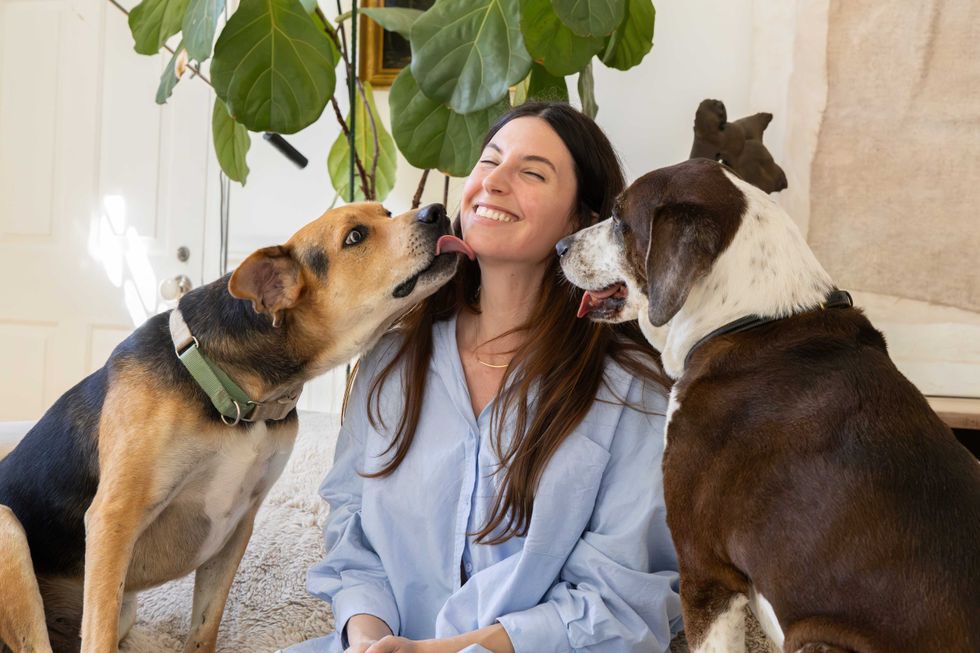 Stephanie Saetta,with her rescue dog George and Blue (left), a shepherd mix awaiting his forever home.Madi Long
Charlie Chicken Bone Sanctuary operates entirely through foster homes, a model that Saetta believes is best for the dogs and the humans hoping to adopt them.
Rather than moving directly from a difficult environment into a permanent home, the dogs have a chance to settle into a quieter setting. They can learn what it’s like to live with a family, sleep somewhere comfortable and receive affection without fighting for attention. Fostering also allows the rescue to really get to know each dog.
“As fosters, we’re honest,” said Saetta. We’ll tell you everything that’s been bad, everything that’s been good. What their temperament is and how they’ve responded to all the things they’ve experienced.”
A successful adoption is not just about finding a dog a home; it’s about finding the right home where the dog and family can thrive together.
Saetta is looking for more people willing to open their homes to foster dogs. She understands that the thought of growing attached and eventually saying goodbye can feel daunting. But she sees that goodbye a little differently.
Fostering means being part of a dog’s journey, even if only for a short time. It gives dogs a safe place to rest, the chance to trust again and the love they have gone without for much of their lives. And when the time comes for them to leave, it is not really a loss. It is the reward of knowing they are moving on to a forever home.
Blue, Saetta’s current foster, is hoping to find his perfect home.
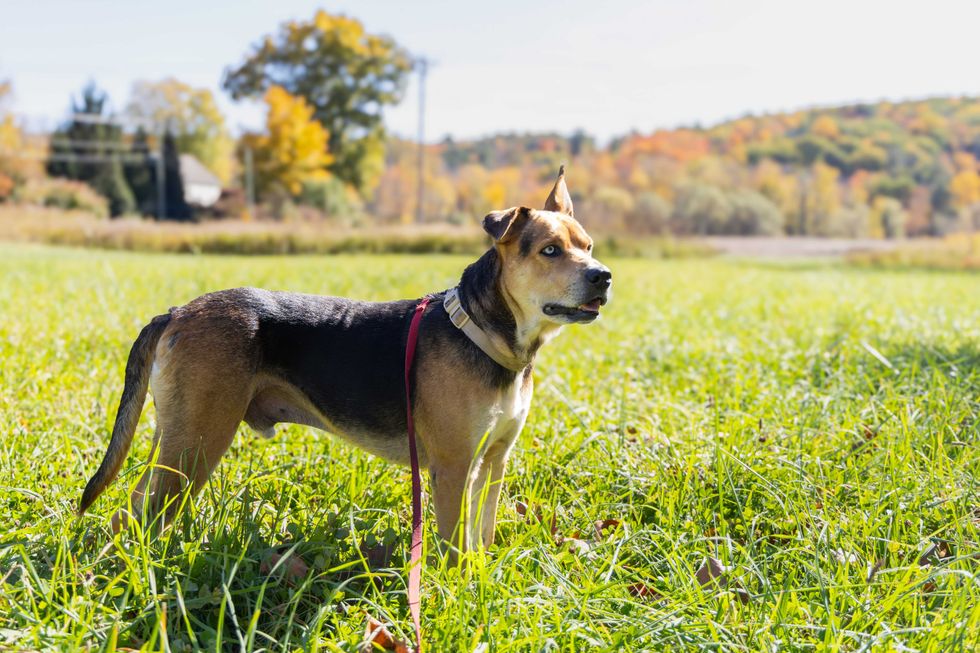 Blue, a 7 year-old Shepard mix, is waiting for his forever home. Madi Long
Now around 7 years old, Blue spent most of his life wandering the streets of Texas. People sometimes left food out for him, but his mangy, dirty coat kept them from stopping to pet him. Today, he has a chance to experience something different.
Blue is still waiting for his forever home. Saetta believes he would do best as the only dog in a household or alongside another senior dog. He will need someone willing to continue working with him on his training and understand that a dog with his history needs patience.
But what he gives in return is a whole lot of love.
“He’s so enthusiastic, he’s so excited for life, he’s so friendly, and he’s got such a good heart, and he loves to cuddle,” Saetta said. “He’s a good, good, good dog.”
For more information on adopting Blue or how to foster, visit ccbsanctuary.org.

Want more of our stories on Google? Click here to make us a Preferred Source.