Study says Medicaid cuts put Sharon Hospital at risk of possible closure

Sharon Hospital
Archive photo

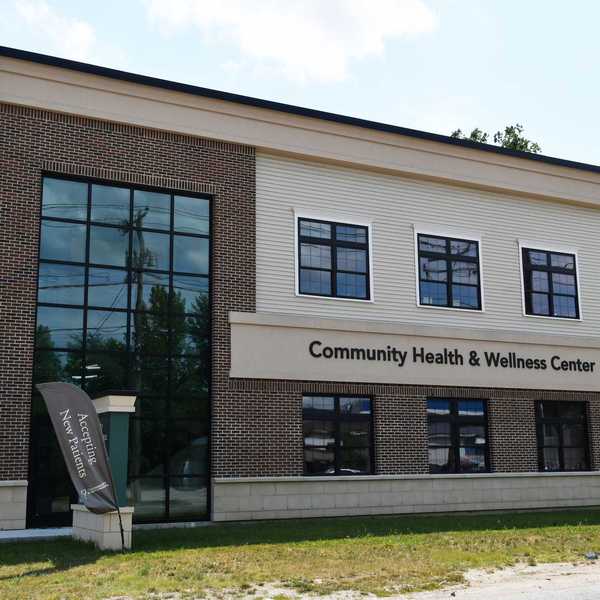
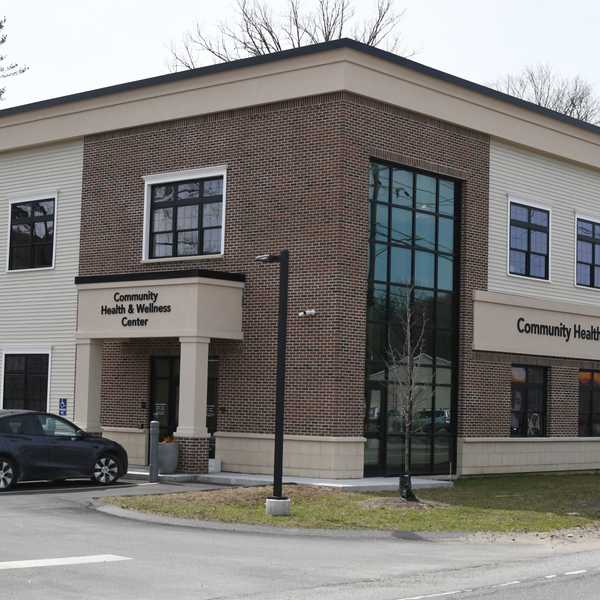
SHARON — A University of North Carolina study listed Sharon Hospital among rural hospitals endangered by potential funding cuts to Medicaid.
The study by The Cecil G. Sheps Center for Health Services Research at UNC identified 338 rural hospitals nationwide where care could be adversely impacted by cutbacks in the “One Big Beautiful Bill Act.” Sharon Hospital was the sole Connecticut facility in the list.
Two criteria were considered: hospitals in the top 10% of Medicaid payer mix of rural hospitals across the country; and hospitals that experienced three consecutive years of negative margins. Sharon Hospital was included in the latter.
“This means these rural hospitals face greater risk of being forced to stop providing some services, converting, or closing,” the study stated.
A group of U.S. senators shared the data with President Donald Trump (R) in the form of a letter dated June 12. Senators Edward Markey (D-Mass.), Charles Schumer (D-N.Y.), Jeffrey Merkley (D-Ore.) and Ron Wyden (D-Ore.) signed the letter, which states, “Rural hospitals will not get paid for the services they are required by law to provide to patients. In turn, rural hospitals will face deeper financial strain that could lead to negative health outcomes for the communities they serve.”
Following several years of financial struggle, Sharon Hospital’s parent company, Nuvance Health, completed a merger with Northwell Health in 2025. Northwell is the largest private health care provider in New York State.
“We appreciate elected officials shining a light on this report as it relates to new legislation and cuts that would be devastating to rural hospitals. It is no secret that Sharon Hospital has been struggling financially for some time – largely due to underpayment from government and other payers. These new cuts only exacerbate the situation. We are hopeful that the benefits of our recent affiliation with Northwell Health will provide some stability as we weather this latest storm.” Daniel DeBarba, chief financial officer of Nuvance Health, part of Northwell.
Sharon Hospital President Christina McCulloch said although the cuts would “add strain to our financial stability,” she clarified, “The hospital is here to serve the community. I don’t want the community to not use our services that we have for fear that the hospital is closing. All of our services are open.”
Since 2018, the community organization Save Sharon Hospital has advocated to maintain full-service medical care in the Northwest Corner.
SSH President Lydia Kruge Moore shared, “It is deeply troubling that vital health care services remain at risk in rural communities like ours. Save Sharon Hospital is incredibly grateful that Northwell Health has recognized the importance of rural health care and has committed to maintaining all services at Sharon Hospital.”

Berlin High School’s football team rejoices after a last-minute win in the Class M championship game Saturday, Dec. 13.
In December’s deep freeze, football players showed their grit in state playoff tournaments.
Connecticut Interscholastic Athletic Conference named six state champions in football. The divisions are based on school size: Class LL included schools with enrollment greater than 786; Class L was 613 to 785; Class MM was 508 to 612; Class M was 405 to 507; Class SS was 337 to 404; and Class S was fewer than 336.
Eight teams qualified for each tournament and all championship games were played on Saturday, Dec. 13.
Class LL was won by Greenwich High School for the second straight year. Greenwich beat Southington High School 45-6 to win the tournament. Jack Kelly rushed in three touchdowns for the Cardinals and caught a fourth.
Class L was won by New Canaan High School, which completed an undefeated season. New Canaan beat Cheshire High School 34-13 for the school’s fourth-straight state title. In the regular season, New Canaan defeated Greenwich 14-7.
Class MM was won by Windsor High School, which defeated Bunnell High School 23-13. Windsor quarterback A.J. Robinson threw for 140 yards with a passing touchdown and two rushing touchdowns.
Class M was won in the final minute by Berlin High School 20-15 over Brookfield High School. The thriller came down to the wire. Brookfield went ahead with a late touchdown. Then on the kickoff that followed, Berlin’s Eli Rice ran it 80-yards to the house to take the lead with 33 seconds remaining and secure the state trophy.
Class SS was won by Daniel Hand High School, marking its 15th state title in school history. Hand defeated reigning champion Killingly High School 37-13. Killingly was previously on a 25-game win streak that stretched over two seasons.
Class S was won by Sheehan High School, defeating Northwest Catholic High School 21-7. Running back Joshua Durant ran for 215 yards and three touchdowns in the win for Sheehan, which was the first state title since 2019 for the school.
Details and photos from each championship game can be found at ciac.fpsports.org
Volunteers scan snowy treetops during the Trixie Strauss Christmas Bird Count in Sharon. Teams identified more than 11,400 birds across 66 species.
SHARON — Birdwatching and holiday cheer went hand in hand for the Trixie Strauss Christmas Bird Count on Sunday, Dec. 14, with hobbyists and professionals alike braving the chill to turn their sights skyward and join the world’s longest running citizen science effort.
The Christmas Bird Count is a national initiative from the Audubon Society, a globally renowned bird protection nonprofit, that sees tens of thousands of volunteers across the country joining up with their local Audubon chapters in December and January to count birds.
This wintry avian census, which is now in its 126th year, is very effective at amassing bird quantity and species diversity data, especially in colder climates where seasonal populations of birds are highly variable. These datasets, Audubon has upheld, provide vital snapshots of population health and trends, which then informs conservation strategy.
Sharon Audubon helped to host the Trixie Strauss count, the formal name of the regional count that covers an area centering on The Hotchkiss School, with staff members aiding 24 volunteers spread out over eight teams that each surveyed a unique 15-mile loop.
According to the total tally, the volunteers had identified over 11,400 birds spanning 66 species, just one less than last year’s total of 67 species.
While the number is similar, Bethany Sheffer, volunteer coordinator and naturalist at Sharon Audubon, said the species that are present are subject to change based on a number of factors. The early freeze of lakes and ponds in the Northwest Corner meant that there were fewer species that prefer open water tallied this December, Sheffer explained.
Belted kingfishers, for example, were entirely absent from the count.
The data also found no northern mockingbirds or gray catbirds. Several groups noticed an abundance of the dark-eyed junco, though Sheffer noted that the reasons for these changes from previous years are as of yet unclear.
However murky the causes, Sheffer noted that the amassing of this data lays the foundation for vital observations surrounding species trends. Citizen science observations enabled scientists to discover that the range of the northern cardinal was expanding, for example, and that the Cooper’s Hawk is becoming more common in the wintertime New England forest as it’s been staying behind to prey on smaller songbirds that congregate at bird feeders when the ground is snow-covered.
Sheffer noted, though, that it’s not all about the data.
“The history of the Christmas Bird Count is really moving,” she said, explaining that its origins lie in a Victorian tradition of a Christmas “hunt,” where groups would scour the hillsides and treetops to kill, not count.
Since ornithologist Frank M. Chapman declared the first count in 1900 as a direct opposition to the hunt, the tradition has stuck. Sheffer said it’s a valuable example of how humans’ relationship to the natural world can be reframed.
"It’s important for us now more than ever to be serving birds” as stewards, she said, noting that many species face threats due to climate change and habitat degradation and loss. And another plus, Sheffer said, is the spirit of community, bringing people of all experience levels with birds together for what she described as a truly joyous day: “It’s become an event that brings people together in a really moving way.”
The Trixie Strauss count is just one of 20 in Connecticut. Several, including one just over the border in Pawling, New York, have yet to occur. For a list of each upcoming count, and who to contact with inquiries, visit ctbirding.org/cbc-2025-2026/.
John and Diane Degnan plan to convert the warehouse at the back of the property into their primary residence, while leaving the four-unit building in the front available for long-term rentals.
KENT — A proposal to convert an old warehouse into a residence on Lane Street in downtown Kent has become more complicated than anticipated, as the Planning and Zoning Commission considers potential unintended consequences of the plan, including a proposed amendment to Village Residential zoning regulations.
During a special meeting Wednesday, Dec. 10, attorney Jay Klein of Carmody, Torrance, Sandak and Hennessey presented the proposal on behalf of John and Diane Degnan, who have lived at 13 Lane St. since 2022.
The Degnans are seeking to convert an industrial structure at the rear of their property, currently used for storage, into their primary residence, while keeping a four-unit building at the front of the lot available as affordable rental housing.
What appears to be a straightforward proposal has been complicated by a murky zoning history and regulatory constraints tied to the property’s designation.
Neighbors, however, say the review process has dragged on unnecessarily and are urging the commission to move forward with a project they believe would benefit the street.
“Is it normal for zoning to go this far?” asked Lane Street neighbor Lili Mason during the public comment period at the Dec. 10 meeting. “This is all ridiculous as far as I’m concerned.”
Mason’s frustrations were echoed by other testifiers, who voiced unified support for the Degnans’ project and praised the couple’s character:
“[They’ve] changed the neighborhood for the better,” said Ed Raftery. “Don’t penalize people who are trying to make improvements,” said Tamara Potter, another Lane Street resident, who recalled overpowering shellac fumes drifting through the neighborhood when the warehouse was used to store pleasure boats.
According to Land Use Office records, the structure has previously housed an auto body repair shop, an aquarium store, a mail-order book business, sign production and a skin care mail-order operation, among other uses.
“A commercial building on this street just doesn’t fit,” Potter emphasized, alluding to the fact that the conversion of the warehouse to a residence would essentially prohibit the possibility of a future industrial use on the property.
Commission members largely agreed with residents that the proposal — combining a new residence with affordable rentals — would be a positive change. Several commissioners, however, raised concerns about the applicant’s approach, particularly a proposed amendment to the section of regulations governing special permits in the Village Residential zone.
With guidance from zoning expert Glenn Chalder and town attorney Michael Ziska, the commission pushed back on aspects of the amendment, which would add a new section specifically addressing conversions of industrial or commercial buildings to residences. The proposed language included specialized rules related to density, parking and discretionary waivers of certain zoning requirements.
New commission member Donna Hayes, who was once the town’s land use director, explained that regulations designed for a particular project can have unintended effects elsewhere in town:
“One of the things that [residents] need to understand is that a regulation is written not for a specific piece of property but for a complete zone. And it’s written not for any particular person, but it’s written for the future as well.”
Ziska offered a similar warning: “Once regulations are changed, things happen. Things happen that nobody can expect.”
He expressed doubts about several aspects of the applicant’s proposal, though indicated general support for the concept and suggested there might be a simpler and safer way forward.
Klein said the Degnans’ goal is to improve the property “utilizing existing site resources” while bringing the entire parcel into zoning compliance. Ziska noted that the four-unit building at the front of the lot was never formally approved by a zoning officer — an issue that will need to be resolved if the units are to be used as affordable rentals. Chalder and several commissioners recommended that the applicant work with Kent Affordable Housing in coming up with a plan for the units, which Klein said would be priced between $950 and $1,800.
Klein, Chalder and Ziska ultimately agreed to meet later in the month to come up with a path forward agreeable to both the Degnans and the town. The hearing was left open, and will continue at P&Z’s next regular meeting on Jan. 8.
Students of Salisbury Central School watch ski jumpers soar during an assembly with Salisbury Winter Sports Association Wednesday, Dec. 17.
SALISBURY — Representatives of Salisbury Winter Sports Association gave a presentation at Salisbury Central School Wednesday, Dec. 17.
Former U.S. Olympic coach Larry Stone explained the fundamentals of the unique sport of ski jumping and its long history in Salisbury, where he learned to jump.
“When I was growing up here there were actually eight ski jumps just in this town in addition to the three down at Satre Hill,” he said. He noted that this winter will be the 100th year of Jumpfest at Satre Hill, named for the Satre brothers who moved from Norway in the 1920s. “They brought their sport with them and the first ski jump was actually when one of the Satres skied off of a barn roof in the center of Salisbury to show people how to do it.”
Mentioning the upcoming Winter Olympics in Cortina/Milan, Italy, Stone spoke of legendary Salisbury ski jumper Roy Sherwood who competed at Cortina in the 1956 Olympics.

Students at SCS saw videos of ski jumpers training and competing. Stone invited up students who had jumped at Satre Hill and 14 stepped forward.
One student was Aerin Sheil, who was asked what it feels like to jump: “It kind of feels like you’re flying. It’s a really good feeling.”
Gus Tripler, another student, said, “It’s like you’re suspended in the air and can see everything.”
He said his record distance of 18 meters was set in Vermont.
The student remarks gave way to closing comments that emphasized the school’s partnership with the Salisbury Winter Sports Association.
“Our partnership with SWSA is one of the most incredible things about Salisbury Central School,” Principal John Conklin said as he closed the assembly. He encouraged the students to attend Jumpfest Feb. 6 to 8.