Books & Blooms returns for ninth year

Four distinctive Cornwall gardens will be open for self-guided tours Saturday, June 22.
Photo Provided


Four distinctive Cornwall gardens will be open for self-guided tours Saturday, June 22.
On Friday, June 21 and Saturday, June 22, the ninth annual Books & Blooms event will take place, benefiting the Cornwall Library. This two-day garden-related event has become a cherished highlight, offering an enriching experience for garden enthusiasts and art lovers alike.
Friday evening will begin at 6 p.m. with a presentation by Ann Temkin, the distinguished Marie-Josée and Henry Kravis Chief Curator of Painting and Sculpture at the Museum of Modern Art (MoMA). Temkin will explore the deep connection between Claude Monet’s passion for gardening and his renowned paintings of water lilies. Her talk will reveal how Monet’s extensive gardens at Giverny were not just a source of inspiration but a vital part of his artistic process. Despite the current acclaim of the water lilies series, they were initially met with significant criticism in the early 20th century. Temkin will discuss the transformation in public perception that eventually led to their recognition as pioneering works of 20th century art.
Ms. Temkin, who was born in Torrington and weekends in Cornwall, is the first woman to hold the premier curatorial position at MoMA. This insightful lecture will be held at the United Church of Christ, 8 Bolton Hill Road in Cornwall Village, and will be followed by a cocktail reception.
The event continues Saturday with self-guided tours of four distinctive Cornwall gardens, beginning at 10 a.m. Each garden offers a unique and enchanting experience, including an unfussy, low-maintenance perennial garden with specimen trees, a garden featuring a waterfall and millpond, a dramatic hillside garden with a plunging ravine, and a charming cottage garden with extensive plantings.
Tickets are priced at $40 for the Friday talk, $30 for the Saturday garden tours, or $65 for both events. Registration and ticket purchases can be made through cornwalllibrary.org/events. Tickets and maps for the garden tours will be available for pickup at the Cornwall Library (30 Pine Street, Cornwall) on Friday, June 21, between noon and 6 p.m., or on Saturday, June 22, from 10 a.m. on.

Allison Gollenberg
CORNWALL — Cornwall will end the fiscal year with a roughly $70,000 surplus after approving a series of year-end budget transfers to cover unexpected expenses, including higher student transportation and legal costs for the Board of Education.
The Board of Selectmen approved the transfers at its July 21 meeting. First Selectman Gordon Ridgway said the town remains on solid financial footing despite budget pressures across several departments.
“We are in good shape ending this year, I believe there’s still about $70,000 in surplus after this to go back to the general fund,” Ridgway said. “So we ended up in the black, as we have to. But as you can see, there are cost pressures across the town budget.”
Ridgway said a long, harsh winter placed additional strain on highway equipment, contributing to higher maintenance costs. At the same time, he said, the town saved roughly $80,000 because the highway department was not fully staffed.
“Next year is going to be a challenge,” Ridgway said. “We can increase the budget somewhat, but we will not have that until we have completed the complement of highway workers. So we will not have that cushion of having a reserve at the highway department. But anyway, one year at a time.”
The transfers were approved by the Board of Finance on July 16, Ridgway said.
“Our goal is to try to hit this sweet spot where we don’t have extra money in the budget-- so that we don’t overtax-- but we have enough to do everything,” Ridgway said. “Especially dealing with some of the unforeseen things that can pop up, like utility rate increases or legal fees or transportation costs or bad weather. So, I think we’re in a very good spot.”
In other business, the board awarded a $114,265 paving contract to LB Corporation, the lowest of four bids submitted for the work by about $14,000. The bid covers paving two new pickleball courts on Foote Field and repaving of Hall Road, Great Hollow Road and Town Street South.
Before closing the meeting, Ridgway also highlighted several August community events, including a book talk and signing by author, artist, and Yale professor Adam Van Doren, the Cornwall Historical Society auction, and the Rose Algrant Art Show.
Patrick L. Sullivan
The Hunt Library could receive automatic doors thanks to a $10,000 grant from the American Library Association.
FALLS VILLAGE — Patrons of the David M. Hunt Library gathered Saturday, July 25, to help decide how a $10,000 grant from the American Library Association should be spent, with automatic entrance doors emerging as a leading proposal.
The grant is part of an ALA program, “Libraries Transforming Communities: Accessible Small and Rural Communities,” that offers grants to small and rural libraries to increase the accessibility of facilities, services, and programs to better serve people with disabilities.
The grant requires recipients to hold at least one community conversation before the funds are used. During the discussion, Library Director Meg Sher proposed installing automatic door-opening buttons at the library’s main entrance. She said the entrance’s two separate doors, with a small vestibule between them, can be difficult for patrons using wheelchairs, walkers or canes to navigate.
“I’ve watched people struggle with the doors for 13 years,” Sher said.
Her proposal would add one automatic door-opening button outside the entrance and another inside the vestibule, allowing patrons to open each door without assistance.
Sher said the improvements would benefit not only people with mobility challenges, but also parents pushing strollers and delivery drivers bringing boxes of books into the library.
Ellery “Woods” Sinclair, a library patron who uses a wheelchair, asked whether there was enough demand to justify the project.
“I think so,” Sher replied. “The median age in town is getting older, and I see more patrons who need assistance.”
Other ideas discussed during the meeting included purchasing shopping baskets to make it easier for patrons to carry books while browsing, and adding display shelving to better showcase library materials.
Sher emphasized that installing an elevator is not under consideration.
“We’re not talking about an elevator,” she said, noting that such a project would cost far more than the grant and would require a substantial fundraising campaign.
No decisions were made during the meeting. Sher said her next step is to seek cost estimates for the proposed automatic doors by consulting Salisbury Comptroller Joe Cleaveland about a similar project completed at the Grove building in Lakeville.
Allison Gollenberg
Residents perform to the commands of Rachel Gall, who helped organize a Colonial-era dance party in Cornwall July 25. A contra group met in Cornwall for about 15 years up until the start of the COVID-19 pandemic.
CORNWALL — Foote Field was transformed into a Colonial-era dance hall on July 25, as residents gathered for a picnic and an afternoon of dancing as part of the town’s America 250 celebration.
Rachel Gall, known as the Falls Village Fiddler, led the group through several dances set to period music. People of all ages joined in on the fun, with some members of the band even donning Revolutionary-era garb.
Gall said First Selectman Gordon Ridgway suggested the idea for the dance. She drew on her experience as a fiddler, caller and contra dancer to bring the event to life.
Contra dancing is a type of traditional American folk dance in which a caller, in this case Gall, leads participants through a series of moves known as figures. These sorts of dances have a long history, Gall said, but experienced a strong revival in the 1960s. That’s when her collaborator, Tom Scott, became involved with a dancing group in nearby Sheffield, Massachusetts, which he said has been dancing “right on through from colonial times.”

Scott said there was a contra group that met in Cornwall for about 15 years up until the start of the COVID-19 pandemic. Gall and Scott said they’d love to bring the activity back to the area.
“We’re having a problem getting new dancers,” Scott said. “The older ones are getting older, dropping out. And the new generation coming up doesn’t seem to be as excited about going out and dancing. Which is too bad. It’s a lot of fun.”
Scott added that he met his wife at a contra dancing event. Gall said connection is the whole point of the activity.
“It’s a very social dance,” she said. “I always say that all of you grandparents and ancestors did this and that’s why you’re here – because somebody went up to dance with somebody else.”

Want more of our stories on Google? Click here to make us a Preferred Source.
Lakeville Journal
This Week
Some of the best places in our community aren’t the ones you’ll find on a map —they’re the quiet trails, family-owned businesses, scenic overlooks, and local favorites that residents know and love. This week, we want to celebrate the hidden gems that make our corner of the world unique.
What’s your favorite hidden gem in our community, and why should others check it out?
Send your responses to social@lakevillejournal.com by Monday, Aug. 3 at 10 a.m. or comment on Facebook or Instagram.
We’ll publish a selection in next week’s paper.
Last Week’s Question
What is one local issue or topic you wish you knew more about?
“Would love to know the status of the improvement plan for Century Boulevard in Millerton — including parking and landscaping. AND, what is the status of getting sewer system along Main Street.”
— Lori Coats, Millerton
Lakeville Journal
A crisis in affordable housing
In 1968 the world population was 3.5 billion, today it is over 8.3 billion. No wonder affordable housing is a world-wide problem. But in Washington the administration cut 13% of the Department of Housing and Urban Development.
Purchasing a house is the most important investment people can make, and it helps them start accumulating wealth. A homeowner becomes a part of a community and meets his neighbors. As the owner pays property tax, he becomes aware of the town government, schools, fire and ambulance service. Home ownership is an important part of the American Dream, and it is important for our towns and suburbs.
Young people used to be able to buy their first home in their twenties, now the average age of first-time buyers is thirty-eight. The medium price of a family home in the US is $440 000.
The 21st Century ROAD to Housing Act was passed as bipartisan legislation despite the President refusing to sign it. Among its benefits is to stop institutional investors from purchasing small family homes and reselling them at a higher price. The Act gives renters credit for purchasing a home. It encourages building factory-built modular homes to reduce prices and it creates a pilot program to make available small mortgage grants to pay for down payments and closing costs. It is time for the young people working at Walmart and other low-entry jobs to afford to buy a home too.
The administration with the legislature in Connecticut is doing its part, they built twenty-one thousand new units of housing for rentals and built ten thousand new starter homes. We need affordable housing to convince young people to stay in Connecticut. There are just not enough houses available for the demand.
The National Low Income Housing Coalition says there is no state in the country with adequate affordable rental housing.
Lizbeth Piel
Sharon
This year, how you vote matters
Starting with August’s Democratic gubernatorial primary, Connecticut’s voters will have an option they’ve never had before: to cast a mail (aka “absentee”) ballot with no excuse required. Here’s why all voters should cast a mail ballot.
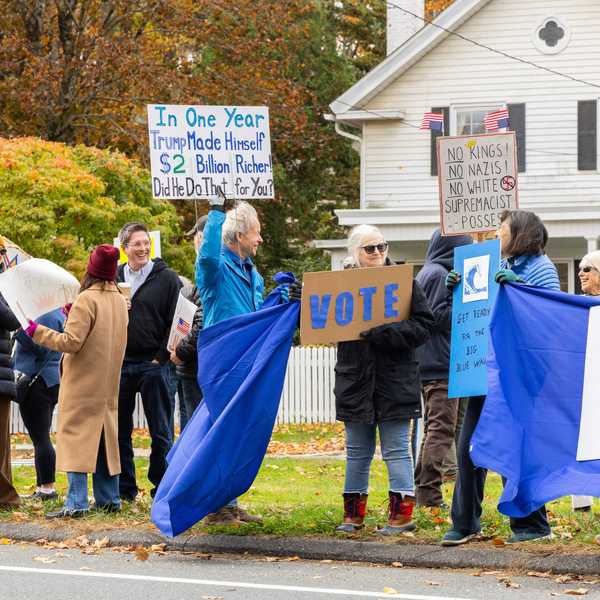
Mail voting is under attack by those who want to make voting harder. Donald Trump and his allies keep insisting it can’t be trusted, even though it has been used safely and securely for decades in thousands of elections with tens of millions of ballots cast, in red and blue states alike. Mail voting is convenient and makes voting more accessible for everyone — especially people juggling work and family responsibilities, caregivers, students, older voters, younger voters, and people with disabilities. Choosing to vote by mail is a way of pushing back against Trump’s fearmongering and standing up for voting rights.
There’s a practical reason, too. Connecticut only recently gained no-excuse absentee voting, after voters approved a constitutional amendment in 2024 and the legislature followed up this year with the law needed to implement it. But lawmakers kept the existing schedule of in-person early voting intact — 14 days before general elections and 7 days before primaries — meaning every town, large or small, must still fully staff polling operations for that entire stretch, even on days when barely anyone shows up.
That made sense back when early voting was the only alternative to voting in person on Election Day itself. It makes little sense now. A mail ballot is, in effect, early voting, but without requiring a trip to a polling place, and it opens up a longer window: 31 days before a general election and 21 days before a primary.
It is also considerably cheaper for municipalities to administer than staffing an early-voting site. That’s why town clerks and voter registrars across the state, Republicans and Democrats alike, have pushed for the legislature to scale back early voting days. Skeptics of that idea argue we don’t yet have enough experience with the new absentee system to justify the change. The best way to prove them wrong is for voters to actually use it. Every mail ballot cast this year makes the case that Connecticut doesn’t need to keep running expensive early-voting operations alongside a mail option that does the job better.
And remember: despite the name, a “mail ballot” doesn’t have to go through the mail at all. You can drop it off in person at your town clerk’s office, use the secure drop box outside your town hall, or send it by U.S. mail — whichever is easiest. To get an application, reach out to your town clerk or visit the Secretary of the State’s online portal.
Voting is always important. But this year, how you vote matters, too.
Lee Greenhouse
Salisbury

Want more of our stories on Google? Click here to make us a Preferred Source.

Want more of our stories on Google? Click here to make us a Preferred Source.