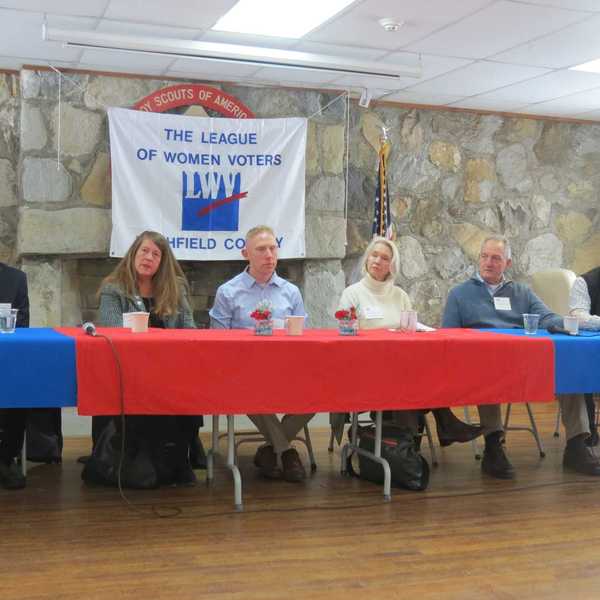
Terrified Republicans; Malloy intent on secrecy

Alcoholic beverage price competition, proposed by Gov. Malloy, is dead in the current session of the General Assembly. Since Sunday openings of liquor stores were legalized last year, most legislators are said to feel that liquor retailers have sacrificed enough already. The sacrifice of Connecticut’s public, which pays the highest beer, wine and liquor prices in the country on account of the state’s minimum-pricing law, is, as usual, taken for granted. The policy here is that government should drive up alcohol prices to subsidize small stores in the name of preserving jobs there, a sort of tax whose proceeds go not to the government itself but to a special interest. Of course no one would dare apply this principle anywhere else in the state’s economy. Just think of the jobs that could be created if Connecticut outlawed price competition in everything — food, gasoline, clothing — jobs created, that is, in other states.Maybe the small liquor stores can’t be blamed for defending their historic privilege; most would be out of business otherwise. And maybe Democratic legislators can’t be blamed too much either, their party being the parasitic party, the party of the government and welfare classes and everyone else with his hand out, the party determined to turn every aspect of life into political patronage. But strangely the most ardent defenders of forbidding liquor price competition seem to be Republican legislators, making a mockery of their party’s supposed belief in free markets. Here is an issue where 10,000 people are exploited for every person who benefits and still most Republican legislators are terrified of articulating the public interest.Connecticut is full of issues like that — and full of silent Republicans or Republicans whose contribution to debate is only to complain that state government spends too much before they go silent about exactly where to reduce spending and about identifying the policies that drive up costs to taxpayers only to subsidize special interests that support Democratic campaigns.This lack of intelligent opposition doesn’t just leave the Republicans as an irrelevant minority in Connecticut. It leaves Connecticut with the impression that there is no alternative to its decline — and thus it makes the Republicans most responsible for that decline.• • •While Gov. Malloy is the first Connecticut governor to champion competition in alcohol pricing, he has become the biggest opponent of the public’s right to know since the state adopted its Freedom of Information Act in 1975. The governor has weakened state government’s three watchdog agencies — the freedom of information, ethics, and elections commissions — reducing their staffs and putting them under direct control by his office. He has withheld the identities of state employees caught misappropriating food stamps. He seeks to exempt the parole board from disclosure requirements even as two prisoners given parole during his administration have been charged with murder. He opposes state Comptroller Kevin Lembo’s legislation to disclose most information relating to state financial grants and loans to corporations, grants and loans that under the Malloy administration have become a vast program of corporate welfare.The governor says reducing the staffs of the watchdog agencies is a matter of efficiency. But the financial savings here are tiny — and laughable amid the wild abandon with the corporate welfare the governor wants to conceal.Besides, the best efficiency is completely open government. It diminishes fraud and costly mistakes, and with completely open government Connecticut would not need its Freedom of Information Commission at all, since most of the commission’s work is just adjudicating complaints about information withheld in the name of the many exemptions from disclosure that have been put into the law by special interests and their tools in government.Chris Powell is managing editor of the Journal Inquirer in Manchester.

Latest News

Living art takes center stage in the Berkshires

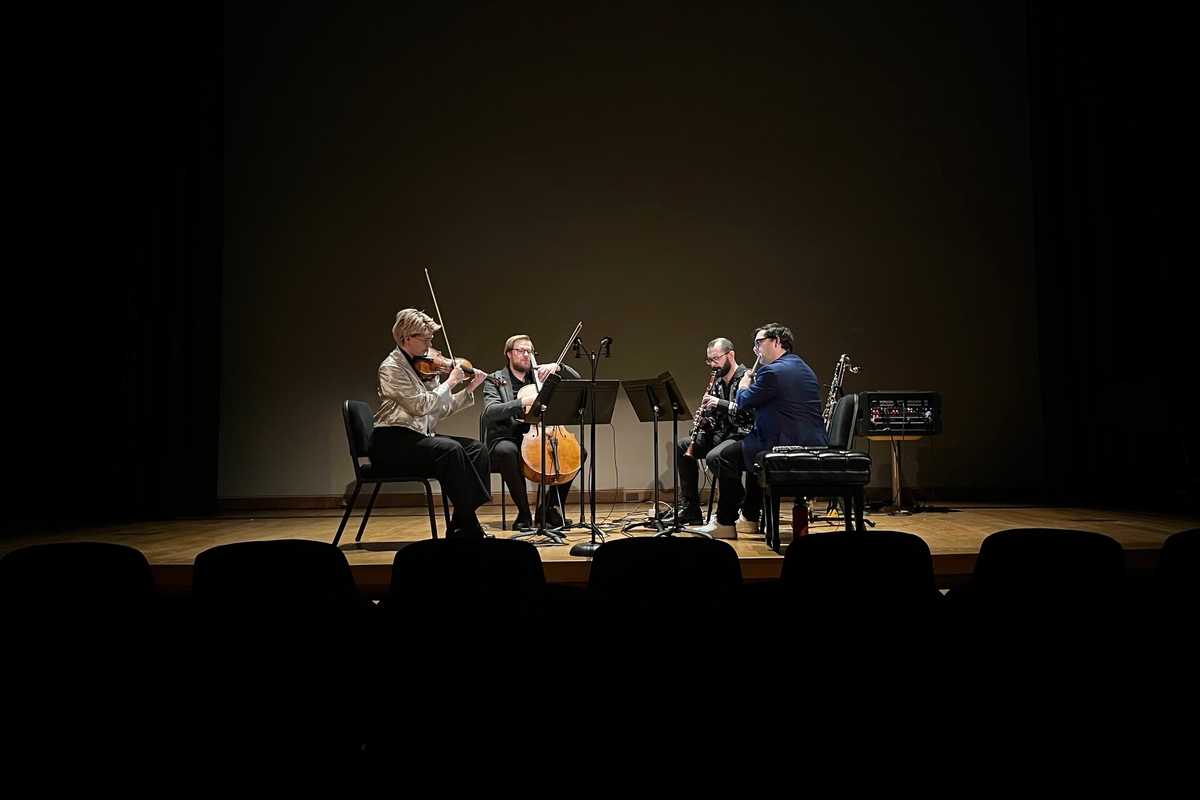
Contemporary chamber musicians, HUB, performing at The Clark.

D.H. Callahan

Northwestern Massachusetts may sometimes feel remote, but last weekend it felt like the center of the contemporary art world.

Within 15 miles of each other, MASS MoCA in North Adams and the Clark Art Institute in Williamstown showcased not only their renowned historic collections, but an impressive range of living artists pushing boundaries in technology, identity and sound.

Keep ReadingShow less
Persistently amplifying women’s voices

Francesca Donner, founder and editor of The Persistent. Subscribe at thepersistent.com.

Aly Morrissey

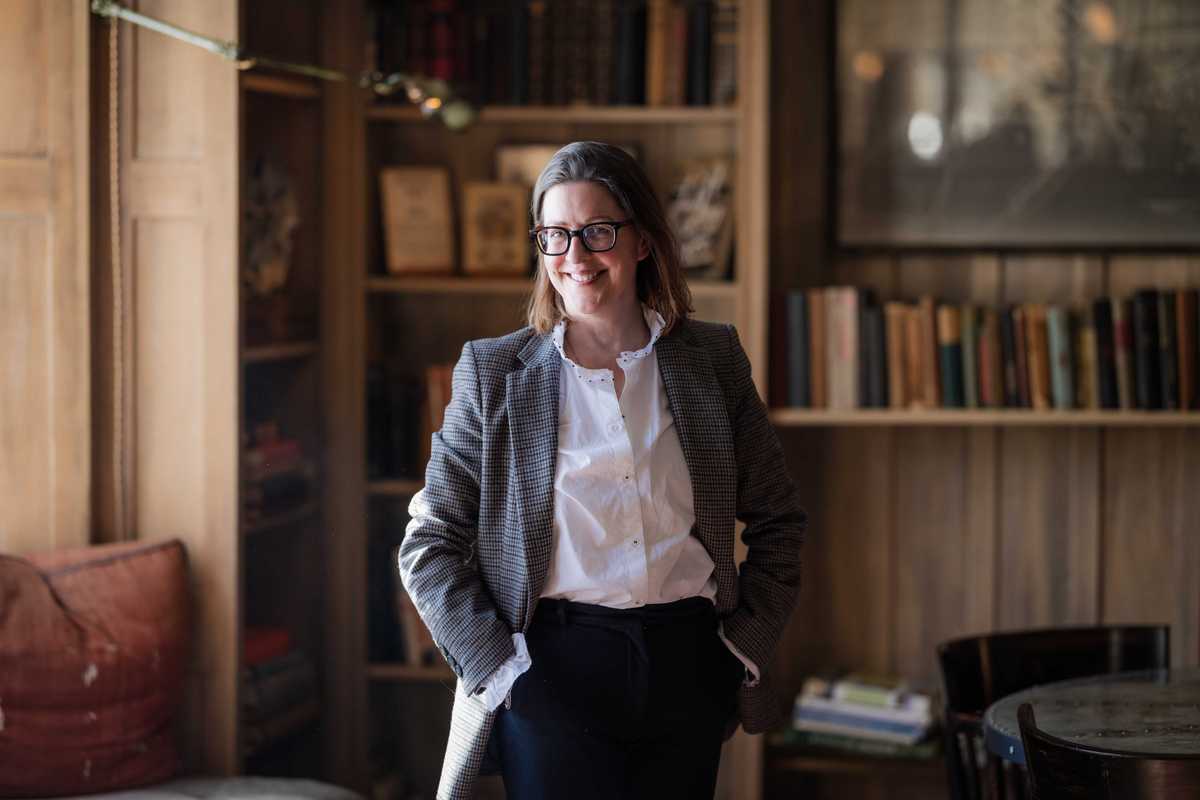
Francesca Donner pours a cup of tea in the cozy library of Troutbeck’s Manor House in Amenia, likely a habit she picked up during her formative years in the United Kingdom. Flanked by old books and a roaring fire, Donner feels at home in the quiet room, where she spends much of her time working as founder, editor and CEO of The Persistent, a journalism platform created to amplify women’s voices.

Although her parents are American and she spent her earliest years in New York City and Litchfield County — even attending Washington Montessori School as a preschooler — Donner moved to England at around five years old and completed most of her education there. Her accent still bears the imprint of what she describes as a traditional English schooling.

Keep ReadingShow less
Jarrett Porter on the enduring power of Schubert’s ‘Winterreise’
Baritone Jarrett Porter to perform Schubert’s “Winterreise”
Tim Gersten

On March 7, Berkshire Opera Festival will bring “Winterreise” to Studio E at Tanglewood’s Linde Center for Music and Learning, with baritone Jarrett Porter and BOF Artistic Director and pianist Brian Garman performing Franz Schubert’s haunting 24-song setting of poems by Wilhelm Müller.

A rejected lover. A frozen landscape. A mind unraveling in real time. Nearly 200 years after its premiere, “Winterreise” remains unnervingly current in its psychological portrait of isolation, heartbreak and existential drift.

Keep ReadingShow less
google preferred source

Want more of our stories on Google? Click here to make us a Preferred Source.
A grand finale for Crescendo’s 22nd season

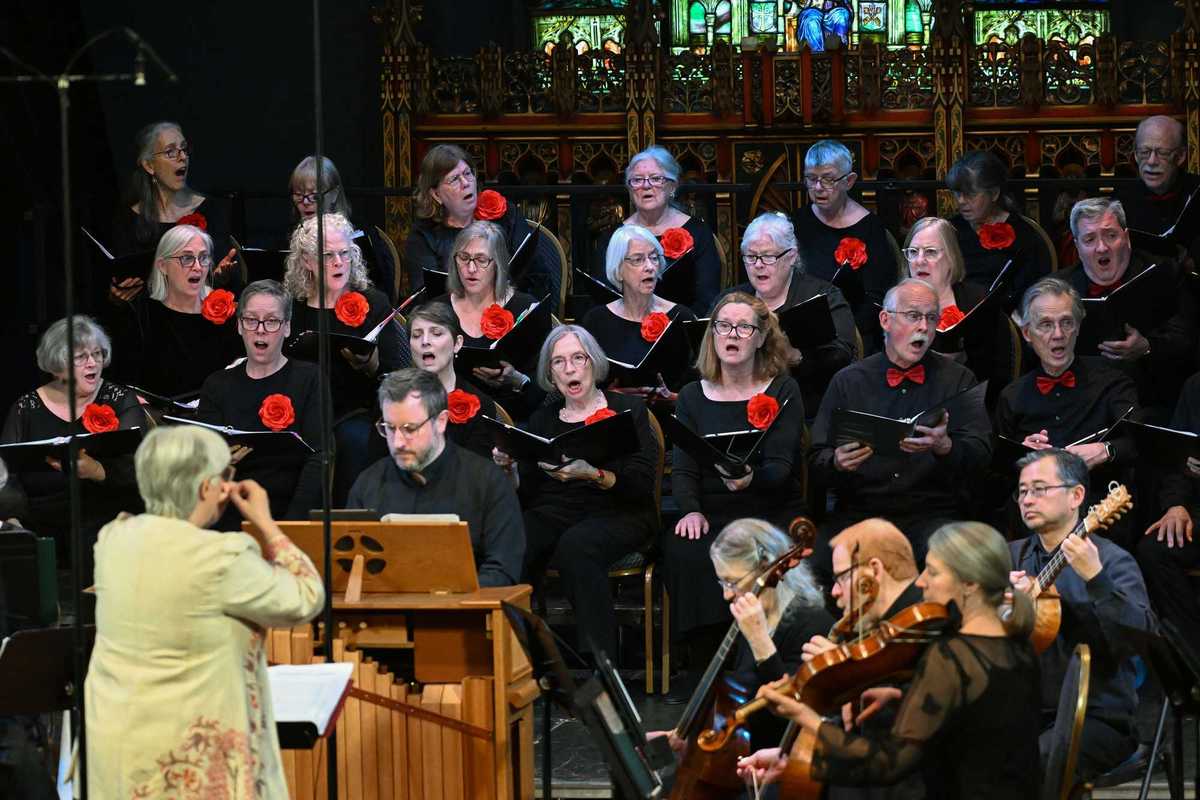
Christine Gevert, artistic director, brings together international and local musicians for a season of rare works.

Stephen Potter

Crescendo, the Lakeville-based nonprofit specializing in early and rarely performed classical music, will close its 22nd season with a slate of spring concerts featuring international performers, local musicians and works by pioneering composers from the Baroque era to the 20th century.

Christine Gevert, the organization’s artistic director, has gathered international vocal and instrumental talent, blending it with local voices to provide Berkshire audiences with rare musical treats.

Keep ReadingShow less

Leopold Week honors land and legacy

Leopold Week honors land and legacy

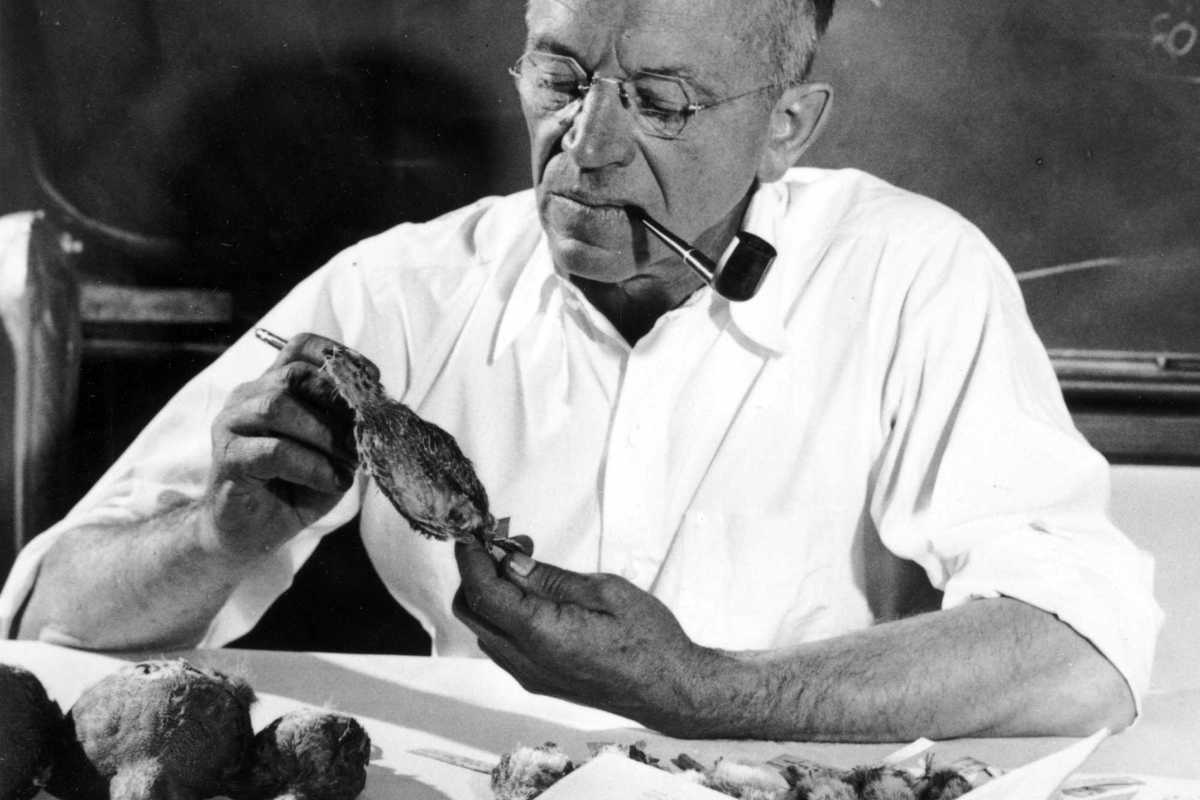
Aldo Leopold in 1942, seated at his desk examining a gray partridge specimen.

Robert C. Oetking

In his 1949 seminal work, “A Sand County Almanac,” Aldo Leopold, regarded by many conservationists as the father of wildlife ecology and modern conservation, wrote, “There are some who can live without wild things and some who cannot.” Leopold was a forester, philosopher, conservationist, educator, writer and outdoor enthusiast.

Originally published by Oxford University Press, “A Sand County Almanac” has sold 2 million copies and been translated into 15 languages. On Sunday, March 8, from 3 to 5 p.m. in the Great Hall of the Norfolk Library, the public is invited to a community reading of selections from the book followed by a moderated discussion with Steve Dunsky, director of “Green Fire,” an Emmy Award-winning documentary film exploring the origins of Leopold’s “land ethic.” Similar reading events take place each year across the country during “Leopold Week” in early March. Planning for this Litchfield County reading began when the Norfolk Library received a grant from the Aldo Leopold Foundation, which provided copies of “A Sand County Almanac” to distribute during the event.

Keep ReadingShow less

Erica Child Prud’homme

Erica Child Prud’homme

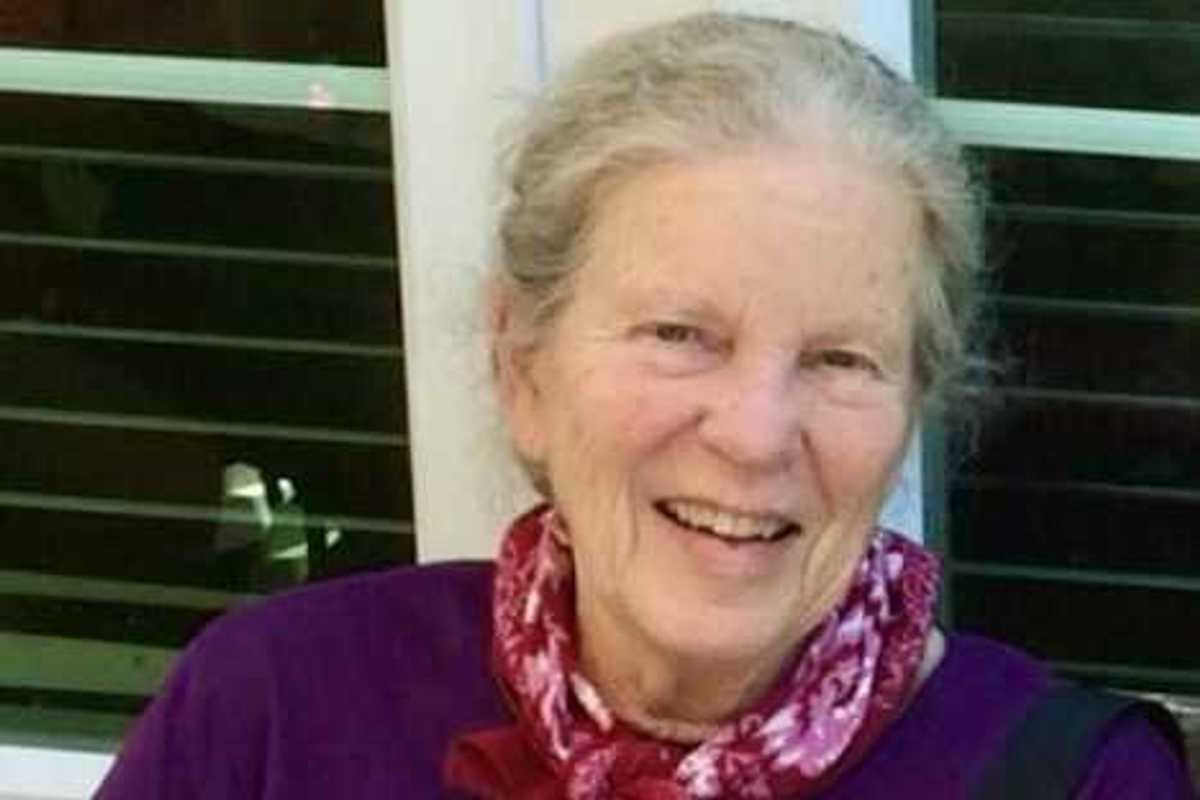
WEST CORNWALL — Erica Child Prud’homme died peacefully in her sleep on Jan. 9, 2026, at home in West Cornwall, Connecticut, at 93.

Erica was born on April 27, 1932, in Doylestown, Pennsylvania, the eldest of three children of Charles and Fredericka Child. With her siblings Rachel and Jonathan, Erica was raised in Lumberville, a town in the creative enclave of Bucks County where she began to sketch and paint as a child.

Keep ReadingShow less
google preferred source

Want more of our stories on Google? Click here to make us a Preferred Source.
google preferred source

Want more of our stories on Google? Click here to make us a Preferred Source.