NORFOLK — Botelle Elementary School librarian Maryann Beauchene has a lot to celebrate this year. Chosen as the Norfolk School District’s 2012 Teacher of the Year, she has also gained recognition for her extensive work with therapy dogs, brightening the lives of both children and adults with her friendly poodles Remington and Buddy.During a morning session at the school Thursday, Jan. 19, Beauchene brought the father-and-son dog duo for a weekly appointment with special-needs students in the Shared Services Bridges I autism program. Remington, nicknamed Remi, has a curly white-and-gray coat. He is the father of Buddy, his darker gray counterpart. The friendly canines walked together calmly in unison, requiring a minimum of commands, and had no qualms about stepping on and off an elevator to get to the school library.Beauchene explained that therapy dogs help students develop social skills that are required for learning in other classes.“The job of the dogs is continuously changing,” Beauchene said. “Originally, as a librarian, I would have the students come to the library and read to the dogs. The dogs are non-judgmental, and they’re always paying attention to what the kids are doing. So we started off with reading therapy. Now the ideal thing to do with therapy dogs is to have a goal-oriented program.”Beauchene said students learn to calm down around Remi and Buddy and are offered the reward of free time with the dogs if they learn to control their behavior. Simple tasks such as hooking a leash to a dog’s collar can be difficult for autistic children, and the development of motor skills required to walk the dogs up and down the school hallways is considered a significant achievement.“We had one student who came in as a pre-kindergarten student. When the dogs walked in, he headed toward the door, screaming. Now that kid is in fifth grade and he’ll actually come up and touch the dogs,” she said. “For someone to go through life being that afraid of dogs and then being able to overcome that is a big deal. He may not love dogs, but at least he’s not having a panic attack.”Students who came to see Remi and Buddy last Thursday had a range of autism-related issues, most often exhibited through hyperactivity. Beauchene had them sit with the dogs for reading time, and even had one student lie down next to the dogs with a blanket for some quiet time.“It’s animal-assisted therapy,” she said. “And it doesn’t have to be dogs.”In fact, sitting in a cage across the room was Chicago, a golden tabby with an unmistakably mellow demeanor. A couple of the students found time to visit quietly with Chicago and read with him in a corner of the room. After visiting with the dogs, reading to them and walking them through the school hallways, the students had all visibly settled down, which Beauchene said would hopefully make it easier for them to learn in the academic classes.“Most of these kids can read,” Beauchene said. “And if they can read, think of how much of the world that opens up for them. Most kids with autism are not low-functioning, and when I look at them, sometimes we have little accomplishments, and I think to myself, ‘that opened up the world for them.’” Now in her 18th year as the Botelle librarian, Beauchene has chosen to retire at the end of this year, but she is finishing on a high note. She took home the Norfolk School District’s 2012 Teacher of the Year award for her years of work at the school and said she is looking forward to building a new career with animal therapy. She brings Remi and Buddy to visit adult residents at Community Residences Inc. on Willow Street and to another adult living facility in East Hartford. Beauchene said she believes special-needs students in Norfolk are in good hands at Botelle Elementary School and that her animal therapy with Remi and Buddy has served to complement an already successful program.“These are students who will probably always have special needs, but their condition will improve,” she said. “I think that because Botelle School is such a small school and all the teachers know all the students, I couldn’t think of a better place to put kids with special needs. They make a lot of progress.”
Latest News

The Census Bureau is shutting out local data experts
Sarah Eisele-Dyrli & Michelle Riordan-Nold

Every ten years, the federal decennial census data informs two things that shape Connecticut’s future: how many seats we get in Congress and how many dollars go to our schools, roads and transit systems, and healthcare programs.
Right now, the U.S. Census Bureau is quietly rewriting the rules for how people will be counted in 2030. These rules will change 250 years of precedent and will disadvantage Connecticut. But instead of working with state leaders to get it right, federal officials have done something alarming: They have stopped talking to us altogether .
Our elected leaders in Hartford and Washington cannot afford to sit on the sidelines. If Gov. Ned Lamont, Lt. Gov. Susan Bysiewicz, Attorney General William Tong, and our congressional delegation do not step in immediately to demand answers and transparency, Connecticut risks getting shortchanged for an entire decade.
Here is what is happening behind closed doors. On Sept. 10, the Census Bureau published a proposal in the Federal Register that could fundamentally alter “residence criteria” for the 2030 count. These rules decide where snowbirds, college students, incarcerated individuals, military members, and immigrants are counted.
Shift a definition by a few words, and you shift millions of dollars from Connecticut towns to other states.
When data experts from state data centers across the country gathered at Census headquarters in Maryland recently to ask standard technical questions, they were read a pre-scripted statement: Bureau staff were forbidden from answering any questions about the new residency rules.
Days later, regional meetings between Census officials and Northeast state representatives were abruptly canceled, with local experts told that Census Bureau staff are now banned from meeting with external partners to discuss Census 2030 preparations.
This is not routine administrative noise. It is a directive to silence the local partners tasked with making sure every Connecticut resident is counted once, only once, and in the right place. It is a deliberate assault on government transparency.
This is where our state’s political leadership must step in. Federal bureaucrats should not be allowed to freeze out state partners while altering the rules that dictate Connecticut’s budget and representation.
We need our congressional delegation, Sens. Richard Blumenthal and Chris Murphy, alongside U.S. Reps. Rosa DeLauro, Jim Himes, John Larson, Joe Courtney, and Jahana Hayes, to demand that the Census Bureau lift this communication ban and answer basic questions about the 2030 count.
We also need immediate state action. Gov. Lamont and Attorney General Tong should join other states in filing formal objections before the federal public comment window closes on Nov. 3. [Changed from Oct. 13 — Ed]
We also need residents, advocacy organizations, and community-based organizations to respond to the FRN and voice your concerns. (See ctdata.org for instructions on how to do it.)
The math is simple: if Connecticut is undercounted because the rules were changed without local input, our state budget takes the hit. Local taxpayers end up footing the bill for health care, special education, housing programs, and roads that federal funding should have covered.
Our leaders regularly promise to fight for Connecticut’s fair share. Right now, that fight is not in a high-profile courtroom; it is in the fine print of federal notices, and time is running out.
The comment deadline is Nov. 3 [Changed from Oct. 13 — Ed]. That leaves our politicians with little time to make noise, demand accountability, and submit formal objections. The Census Bureau may have chosen to go silent, but Connecticut’s elected officials cannot.
It is time for our leaders to step up and defend our state’s count before the window closes.
Sarah Eisele-Dyrli is Assistant Director and Michelle Riordan-Nold is Executive Director at the CTData Collaborative, Connecticut’s lead organization in the Census State Data Center network.
Turning Back the Pages - October 15, 2026
Norma Bosworth
125 years ago — October 1901
The New York Condensed Milk Co. are building an ice house and constructing a pond for their factory at Canaan.
An unsuccessful attempt was made to burglarize the Norfolk bank early Wednesday morning. The safe proved too much for the knights of the jimmy, and was a case where the burglars failed burgle.
Last Saturday night there came a break in the Sharon Co.’s line of pipe on New Street, and Sunday morning the residents of that street awoke to find quite a formidable brook coursing down the gutter. The break was found to be serious and necessitated employing a force of men all day Sunday to make the needed repairs, and the water takers were without a supply in their faucets until the work was finished.
Farmers want $2.00 a barrel for apples and one dollar a bushel for potatoes. Grain and hay are high. Every kind of meat is expensive. Coal $7.00 per ton here and no license in Falls Village. If things continue thus the average poor cuss will begin to enjoy what he eats and drinks, that is, when he does so. He will wonder if, after all, Jefferson wasn’t joking when he said “We never repent having eaten too little.”
100 years ago — October 1926
LIME ROCK — Mr. Belter has installed a radio in his home.
The Lakeville Water Co. is making some notable improvements to their reservoir. New retaining walls are being constructed, and new screens being placed over all outlets. In fact everything is being done to put the reservoirs in first class sanitary condition.
Edward Webb Sr., while loading a saddle horse from the Bartle Farm onto the freight train at Millerton recently, was thrown from the car door, falling upon his head. He was unconscious for about an hour and has since been feeling the effects of the shock and shake-up, but fortunately no bones were broken.
50 years ago — October 1976
Tongue lodged firmly in cheek and hard hat firmly on her head, Salisbury’s spritely town clerk Lila Nash stepped gingerly over debris from a collapsed ceiling at the Town Hall. The acoustical tile and plaster fell from a large portion of the ceiling sometime Sunday evening.
The Housatonic River study bill passed its last hurdle Tuesday, when President Ford signed the measure authorizing a federal survey to determine the feasibility of including the river in the national Wild and Scenic Rivers.
William Schneebeli, owner of Valley Kennels in Falls Village, harvested a mammoth pumpkin from his garden this year. The pumpkin, which measures 23 high and 19 inches wide, is estimated to weigh about 85 pounds. Schneebeli produces much of his own food, filling two freezers with garden produce, drinking goat milk and raising some livestock.
The North Canaan Volunteer Ambulance Corps is seeking a home for its ambulance. The corps currently houses its vehicle in the former firehouse, now owned by the Canaan National Bank. Corps spokesman Mickey Madow said this week “we don’t want to give the impression that the bank is throwing us out — they have been very, very nice to us. But we are looking for a garage to keep the ambulance.”
25 years ago — October 2001
In a world of choices, what is more confusing than choosing long distance or wireless phone service? It would seem, at least, that the choice of carriers would be a forthright list. That is hardly the case. The question that prompted an investigation was simple enough: Does our little corner of Connecticut finally have wireless phone service? The answer is “Yes,” sort of. Residents should not run out and buy a cellular telephone assuming that any model will work anywhere. And they shouldn’t start comparing rates until they are sure the carrier can provide the services needed.
CANAAN — A traffic signal that has been plagued recently by operational problems is slated by the Department of Transportation for an upgrade. It is routine equipment replacement that has put the light at the intersection of routes 7, 44 and North Elm Street on the list of 10 the DOT will upgrade as part of a grouped design project.
These items were taken from The Lakeville Journal archives at Salisbury’s Scoville Memorial Library, keeping the original wording intact as possible.

Want more of our stories on Google? Click here to make us a Preferred Source.
Kent’s 80-unit housing proposal enters site plan review
Alec Linden
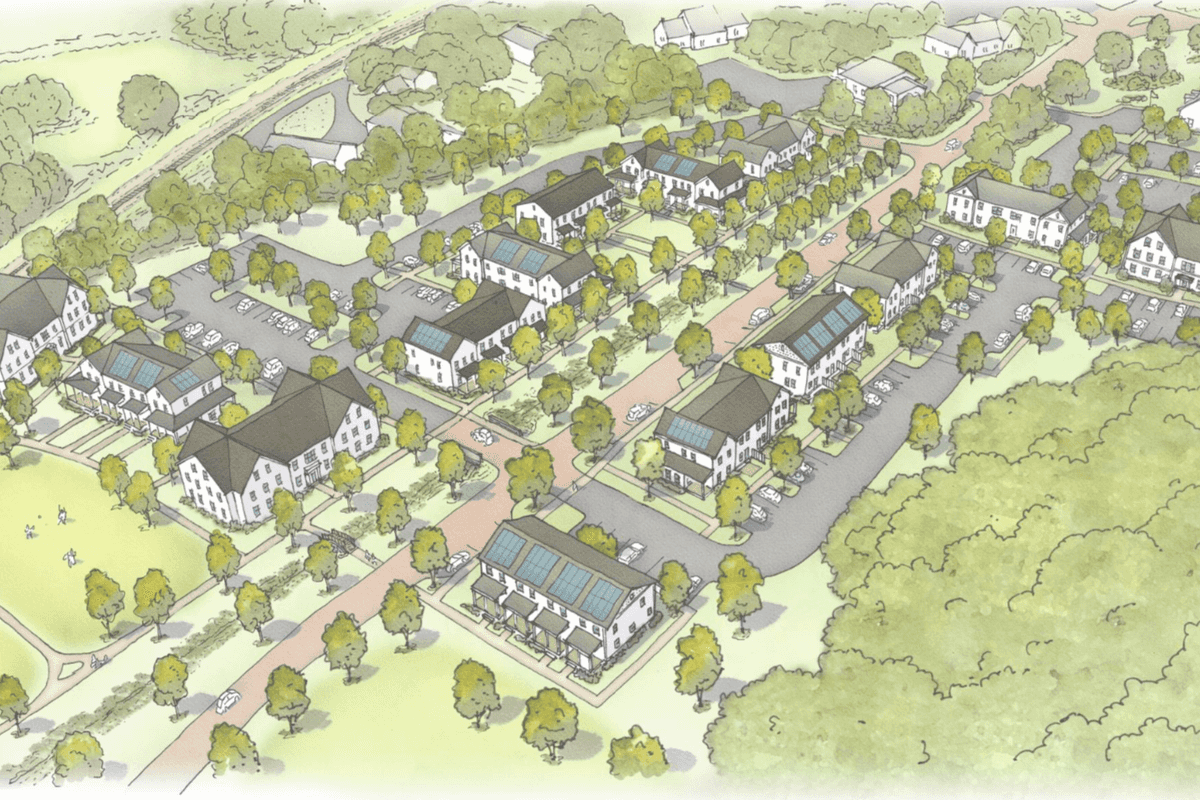
KENT — The Planning and Zoning Commission began reviewing a site plan application for a long-anticipated 80-unit downtown housing development on Thursday night, Oct. 8, marking another step forward for the proposal.
While the application is new, the project is familiar to P&Z and many residents after the commission held a two-session public hearing in March and April on establishing a Planned Development District for the proposed development.
That process, which drew generally favorable responses from the public and commissioners, ultimately resulted in the establishment of a Planned Development District, referred to as a PDD, allowing the project to proceed within the framework of an 80-unit mixed-income neighborhood with at least 20% of units designated as affordable.
While the PDD restricts use of the 12.5-acre parcel of meadowland between Town Hall and Maple Street Extension to the proposed project, it does not constitute final site plan approval, which is why the project is back before P&Z.
The plans are also under consideration by the Inland Wetlands Commission, which is considering holding a public hearing as part of its review. The project was approved by the town’s Architectural Review Board (ARB) on Oct. 5 following several changes to building facades and ornamentation recommended by the board during a series of meetings with the developer this past summer.
For Thursday’s meeting, Jim Millstein, managing partner of Kent Housing Development Associates, brought a full team of architects and engineers to present the latest plans.
Jeremy Lake, architect and community designer with Union Studio, said the proposal has changed little since the PDD approval in April, aside from modifications to the stormwater management system and aesthetic alterations to the larger buildings in response to feedback from the ARB to “add a few more pieces of flair on top of what we had previously.”
The layout calls for three 12-unit apartment buildings containing one- and two-bedroom units and 11 townhouse buildings containing two- and three-bedroom units, arranged around a central roadway connecting Kent Green Boulevard south of Town Hall with Maple Street Extension.
The roadway would run parallel to an existing drainage channel that bisects the property and is the focus of the IWC’s pending review. As in previous meetings, the development team said Thursday that the channel would remain in place and be landscaped with native plantings along its edges.
The entire property is meant to retain a natural feel, explained landscape architect Barbara Constable of A2 Land Consulting, with a tree and shrub planting plan that would produce “significantly enhanced ecological value on the site.”
The native trees listed include red and sugar maple, river birch, sycamore, eastern red cedar, white oak and pin oak. Shrubs include chokeberry, swamp azalea, spicebush, buttonbush and viburnum.
Of the property’s 12.5 acres, five acres at the southern end would be left as open space featuring a meadow crossed by regularly mowed pathways.
As the site is relatively flat and low-lying, some have questioned the drainage implications of placing a large-scale development on the property.
Engineer Dainius Virbickas of Artel Engineering Group reported that soil tests showed the meadow’s soils to be generally well drained. He said the “beefed up” stormwater management plan, featuring catch basins, swales and subsurface infiltration systems, would improve drainage conditions at the site.
After the developers finished presenting, P&Z Chair Karen Casey announced that Bonnie Bevans, a neighbor to the southern end of the property who has been an outspoken opponent of the development, had formally entered the application process as an intervenor.
Kent’s Land Use Administrator Tai Kern explained that an outside party may petition to intervene on environmental or historic grounds only, and “there must be evidence that harm of a specific nature and magnitude is likely to occur.”
As her consulting expert, Bevans introduced Joe Quaranta, who identified himself as director of the Connecticut Clean Water Coalition, a water-protection advocacy group. He suggested that the project could place an undue load on the town’s sewer system, which he described as outdated and “a glorified residential septic on a much larger scale.”
Kent’s wastewater treatment system, which is slated for an upgrade, allows treated effluent to infiltrate the soil rather than discharging it directly into the river. Quaranta raised concerns that the discharge could contaminate groundwater used by Aquarion Water Company to supply drinking water in Kent.
“Once you contaminate the groundwater, it’s virtually impossible to remediate,” he said.
Millstein and several commissioners questioned whether the concerns should be addressed by the Sewer Commission rather than P&Z.
Millstein noted that the Sewer Commission had already indicated the increased load from the development would remain well within the system’s daily capacity.
“Aquarion indicated they could serve these 80 units,” Millstein said. “The Sewer Commission has said they could serve these 80 units.”
Quaranta ultimately said that a “will serve” letter from both Aquarion and the Sewer Commission should satisfy the issue from a zoning standpoint, and noted that the sewer system issues themselves are more of a “town of Kent issue.”
P&Z tabled the discussion until its next regular meeting on Nov. 12. Unless an extension is granted, a decision is due by the commission’s Dec. 10 meeting.
Sharon to host free Repair Café Oct. 24
Ruth Epstein
SHARON — Residents can bring broken household items to Hotchkiss Library for free repairs at Sharon’s first Reuse and Repair Café Saturday, Oct. 24, from 10 a.m. to 2 p.m.
There will be volunteers available to help with sewing, jewelry repair, bike repair, iron works, small furniture and appliance repair, as well as knife sharpening. No appointment is needed.
The Reuse and Repair Café phenomenon began in Amsterdam in 2009 by Martine Postma, who grew concerned about Western throw-away culture and the rapid accumulation of household waste. It was originally intended to be a community event bringing people together to fix household goods. It was a great success and today there are over 3,500 Reuse and Repair Cafes worldwide.
As a result of this worldwide success, the Reuse and Repair Café Foundation was founded with core goals including preserving practical skills, promoting a circular economy and fostering a sense of community while encouraging sustainability and saving the environment.
Falls Village to celebrate ‘Autumn at the Town Farm’
Patrick L. Sullivan
FALLS VILLAGE — Families and community members are invited to celebrate the season at “Autumn at the Town Farm” on Saturday, Oct. 17, from 1 p.m. to 4 p.m. at the Town Farm, located at 108 Route 63 in Falls Village.
The event is sponsored by the Falls Village Recreation Commission.
This family-friendly event will offer an afternoon of fall fun for all ages, featuring demonstrations, live music, hayrides, food, and activities for the whole family.
Attendees are invited to enjoy the Town Farm while celebrating the fall season and connecting with friends, neighbors, and the surrounding community.
Admission is free.
Want more of our stories on Google? Click here to make us a Preferred Source.