SALISBURY — The Planning and Zoning Commission unanimously approved the Town Plan of Conservation and Development at a meeting Tuesday, June 26, that followed a public hearing that same night.The new plan is an update of the town plan that was approved in 1999. Town plans are documents required by the state. They must be updated at least once every 10 years or the state can deny funding and grants to the town. The town plan forms the basis of a town’s planning and zoning regulations and is considered a roadmap to how a town will develop over the course of the coming decade. Because the town plan was approved before the end of June, Salisbury will meet its obligations to the grant that the town received from the state’s Office of Policy and Management to prepare the plan. About 25 people were in the audience at the start of the public hearing, which began at 6:30. By the time the public hearing was closed at 7:50, about 10 people were left.Planning consultant Glenn Chalder of the firm Planimetrics in Avon, Conn., worked with the Planning and Zoning commissioners on the update of the plan over the past year. He was introduced at the beginning of the public hearing by P&Z Chairman Michael Klemens. Chalder explained that a town-wide meeting was held last fall and Salisbury residents were asked to vote on what they are most proud of in their town, and what they are least proud of. The top three items on the list of “prouds” were the beauty and character of the town; the community’s facilities; and local assets such as the schools and cultural opportunities. Things that residents are most concerned about are the risk of changes to the fabric of the community; changes to the villages; and responsiveness to community needs. In a PowerPoint presentation, Chalder shared a summary of the proposed town plan, which includes maps, lists of assets to protect and suggestions for implementing the goals in the plan. He said that the town plan is meant to be “a guideline to how the town residents want to approach the future.”Affordable housingAbout a half dozen people came before the commissioners to make comments on the proposed plan. A majority of their comments concerned affordable housing.Kathy Lauretano was the first to speak. “I have a couple of concerns but not such that I’m opposed to passing this tonight,” she said. First she referred to a section of the proposal that said municipal funds could be used to buy land and protect it from development.“Additional taxation expenditures such as that have to be approached very carefully,” she warned.She also warned against a section that suggests using “green” building materials to construct affordable housing, noting that “I’m seeing and hearing a difference of opinion on the durability and worth of some green materials, you need to look at that very carefully.”A section describing plans for creating Incentive Housing Zones as a way to increase affordable housing in town elicited comments from Lauretano and several other people at the meeting. Lauretano’s request was that any regulations and guidelines on affordable housing be written clearly, so that “one person doesn’t get short shrift while another gets carte blanche.”Discussion of Incentive Housing Zones continued as a sort of leitmotif of the evening. Audience members learned that the state has a program that specifies what can and can not be considered Incentive Housing Zones, and that its guidelines are very specific. Commission members also expressed a desire to create “homegrown” versions of affordable housing rules, that can be better suited to Salisbury and its residents.Cindy Smith came before the commissioners and asked what exactly affordable housing is. Chalder explained that, according to state law, affordable housing is housing that doesn’t cost more than 30 percent of a person’s income when that income is 80 percent of the median income for an area or less. Smith pointed out that the state includes Torrington when it sets the annual median income figure. For a person who makes $1,000 a month, she said, it’s become impossible to live in town.Language of the planKlemens also read aloud a letter from Dan McGuinness, executive director of the Northwestern Connecticut Council of Governments (COG), an organization made up of the first selectmen from nine Litchfield County towns, including all six towns in the Region One School District. All town plan proposals are submitted to COG for approval because each town’s plan can impact its neighboring towns. McGuinness advised in his letter that the Salisbury town plan relied too heavily on the word “consider” rather than more forcefully using words that would require action or compliance.Klemens spoke for the commission in saying that they had specifically chosen to advise rather than require out of respect for the many people who work hard as volunteers on town boards and commissions. “These are recommendations, not commandments,” he said. He also noted that the commission was seeking a balance of public interest versus private rights.Discussion of details of the language of the plan continued until 7:50, when the public hearing was closed. Chalder then went through a list of 17 amendments that would be made to the plan based on that evening’s discussion. Many of the changes were cosmetic and had to do with the choice of photographs to be used as illustrations, but other changes included reworking a section on affordable housing and adding Lime Rock in several areas of the plan that discussed village centers. The commission then voted unanimously to pass the plan, which goes into effect on Saturday, June 30. Paper copies of the final, approved Town Plan of Conservation and Development will be available by the end of July, but an electronic version will be online at the town of Salisbury website by June 30, at https://salisburyct.us/offices/planningandzoning.The plan includes a virtual snapshot of Salisbury today, with maps and data. During his presentation, Chalder called out three notable statistics. The population of Salisbury is decreasing, after peaking in 1990 when there were 4,090 town residents. The town is on track to have the same population it had in the 1800s. But the number of housing units in town has increased. More than 25 percent of the housing units are for part-time residents, he said. One consequence of that change is that there are fewer people in town to support village businesses.He also noted that Salisbury has the oldest median age demographic in the state, with a median age of 57 — compared to a median age of 43 in the rest of Connecticut.
Latest News
Kent’s 80-unit housing proposal enters site plan review
Alec Linden
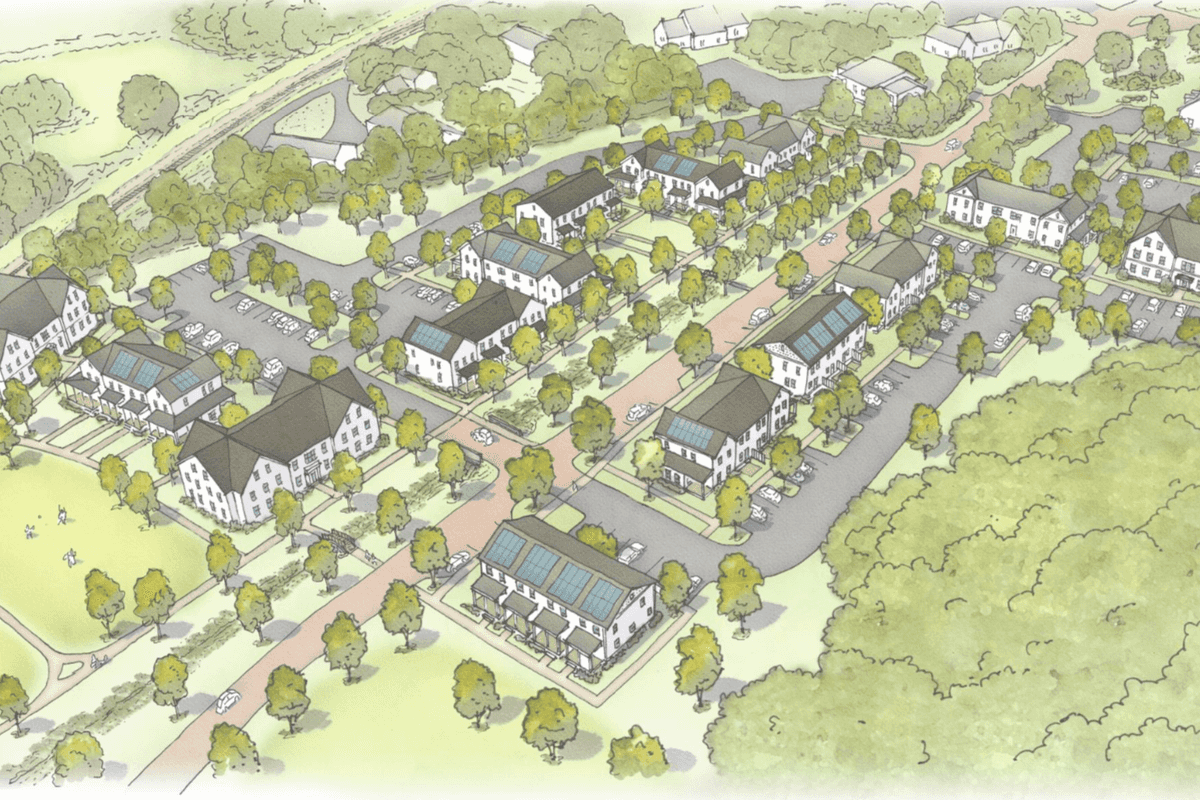
KENT — The Planning and Zoning Commission began reviewing a site plan application for a long-anticipated 80-unit downtown housing development on Thursday night, Oct. 8, marking another step forward for the proposal.
While the application is new, the project is familiar to P&Z and many residents after the commission held a two-session public hearing in March and April on establishing a Planned Development District for the proposed development.
That process, which drew generally favorable responses from the public and commissioners, ultimately resulted in the establishment of a Planned Development District, referred to as a PDD, allowing the project to proceed within the framework of an 80-unit mixed-income neighborhood with at least 20% of units designated as affordable.
While the PDD restricts use of the 12.5-acre parcel of meadowland between Town Hall and Maple Street Extension to the proposed project, it does not constitute final site plan approval, which is why the project is back before P&Z.
The plans are also under consideration by the Inland Wetlands Commission, which is considering holding a public hearing as part of its review. The project was approved by the town’s Architectural Review Board (ARB) on Oct. 5 following several changes to building facades and ornamentation recommended by the board during a series of meetings with the developer this past summer.
For Thursday’s meeting, Jim Millstein, managing partner of Kent Housing Development Associates, brought a full team of architects and engineers to present the latest plans.
Jeremy Lake, architect and community designer with Union Studio, said the proposal has changed little since the PDD approval in April, aside from modifications to the stormwater management system and aesthetic alterations to the larger buildings in response to feedback from the ARB to “add a few more pieces of flair on top of what we had previously.”
The layout calls for three 12-unit apartment buildings containing one- and two-bedroom units and 11 townhouse buildings containing two- and three-bedroom units, arranged around a central roadway connecting Kent Green Boulevard south of Town Hall with Maple Street Extension.
The roadway would run parallel to an existing drainage channel that bisects the property and is the focus of the IWC’s pending review. As in previous meetings, the development team said Thursday that the channel would remain in place and be landscaped with native plantings along its edges.
The entire property is meant to retain a natural feel, explained landscape architect Barbara Constable of A2 Land Consulting, with a tree and shrub planting plan that would produce “significantly enhanced ecological value on the site.”
The native trees listed include red and sugar maple, river birch, sycamore, eastern red cedar, white oak and pin oak. Shrubs include chokeberry, swamp azalea, spicebush, buttonbush and viburnum.
Of the property’s 12.5 acres, five acres at the southern end would be left as open space featuring a meadow crossed by regularly mowed pathways.
As the site is relatively flat and low-lying, some have questioned the drainage implications of placing a large-scale development on the property.
Engineer Dainius Virbickas of Artel Engineering Group reported that soil tests showed the meadow’s soils to be generally well drained. He said the “beefed up” stormwater management plan, featuring catch basins, swales and subsurface infiltration systems, would improve drainage conditions at the site.
After the developers finished presenting, P&Z Chair Karen Casey announced that Bonnie Bevans, a neighbor to the southern end of the property who has been an outspoken opponent of the development, had formally entered the application process as an intervenor.
Kent’s Land Use Administrator Tai Kern explained that an outside party may petition to intervene on environmental or historic grounds only, and “there must be evidence that harm of a specific nature and magnitude is likely to occur.”
As her consulting expert, Bevans introduced Joe Quaranta, who identified himself as director of the Connecticut Clean Water Coalition, a water-protection advocacy group. He suggested that the project could place an undue load on the town’s sewer system, which he described as outdated and “a glorified residential septic on a much larger scale.”
Kent’s wastewater treatment system, which is slated for an upgrade, allows treated effluent to infiltrate the soil rather than discharging it directly into the river. Quaranta raised concerns that the discharge could contaminate groundwater used by Aquarion Water Company to supply drinking water in Kent.
“Once you contaminate the groundwater, it’s virtually impossible to remediate,” he said.
Millstein and several commissioners questioned whether the concerns should be addressed by the Sewer Commission rather than P&Z.
Millstein noted that the Sewer Commission had already indicated the increased load from the development would remain well within the system’s daily capacity.
“Aquarion indicated they could serve these 80 units,” Millstein said. “The Sewer Commission has said they could serve these 80 units.”
Quaranta ultimately said that a “will serve” letter from both Aquarion and the Sewer Commission should satisfy the issue from a zoning standpoint, and noted that the sewer system issues themselves are more of a “town of Kent issue.”
P&Z tabled the discussion until its next regular meeting on Nov. 12. Unless an extension is granted, a decision is due by the commission’s Dec. 10 meeting.
Sharon to host free Repair Café Oct. 24
Ruth Epstein

SHARON — Residents can bring broken household items to Hotchkiss Library for free repairs at Sharon’s first Reuse and Repair Café Saturday, Oct. 24, from 10 a.m. to 2 p.m.
There will be volunteers available to help with sewing, jewelry repair, bike repair, iron works, small furniture and appliance repair, as well as knife sharpening. No appointment is needed.
The Reuse and Repair Café phenomenon began in Amsterdam in 2009 by Martine Postma, who grew concerned about Western throw-away culture and the rapid accumulation of household waste. It was originally intended to be a community event bringing people together to fix household goods. It was a great success and today there are over 3,500 Reuse and Repair Cafes worldwide.
As a result of this worldwide success, the Reuse and Repair Café Foundation was founded with core goals including preserving practical skills, promoting a circular economy and fostering a sense of community while encouraging sustainability and saving the environment.
Falls Village to celebrate ‘Autumn at the Town Farm’
Patrick L. Sullivan
FALLS VILLAGE — Families and community members are invited to celebrate the season at “Autumn at the Town Farm” on Saturday, Oct. 17, from 1 p.m. to 4 p.m. at the Town Farm, located at 108 Route 63 in Falls Village.
The event is sponsored by the Falls Village Recreation Commission.
This family-friendly event will offer an afternoon of fall fun for all ages, featuring demonstrations, live music, hayrides, food, and activities for the whole family.
Attendees are invited to enjoy the Town Farm while celebrating the fall season and connecting with friends, neighbors, and the surrounding community.
Admission is free.

Want more of our stories on Google? Click here to make us a Preferred Source.
Cardiac arrest survivor marks 10 years with free CPR class
Ruth Epstein

North Canaan resident Ashlee Baldwin, who survived sudden cardiac arrest in 2016, is offering a free CPR/AED training class on Oct. 25 in Falls Village.
FALLS VILLAGE — Ashlee Baldwin’s life was saved by the quick action of those trained in emergency medical situations. Now she wants to be sure others may be as fortunate, so she and her family are offering a free class in lifesaving measures.
It was 2016 and Baldwin, a student at Quinnipiac University, had just finished playing in the pep band at a hockey game when she collapsed.
“My memory ends there,” said the North Canaan resident who was 18 at the time.
The teen had gone into sudden cardiac arrest suffering from ventricular tachycardia. Fortunately, there were paramedics stationed at the hockey arena who immediately began CPR.
As part of the immediate intervention they shocked her with an AED (automated external defibrillator) twice. She was then transported to Yale New Haven Hospital where she spent two days in an induced coma.
After being awakened, she underwent surgery to install a subcutaneous internal cardiac defibrillator, which continues to live in her heart today. She had the surgery on Halloween and was back at school a week later.
The defibrillator is different from a pacemaker, Baldwin explained, in that it monitors the heartbeat.
The cause of the incident has never been determined. She was an athlete at Housatonic Valley Regional High School and had not been doing anything strenuous beforehand.
To mark the 10-year milestone, the Baldwins are holding a free CPR/AED training class on Sunday, Oct. 25, from 10 a.m. to 1 p.m. at the Falls Village Emergency Services Center, 188 Route 7 South. It is open to all residents of the Northwest Corner, as well as the surrounding area.
To register, contact Baldwin at ashleebaldwinqu@gmail.com.
‘Plot twist’: Jam Food Shop to open Sharon location
Patrick Stachniak
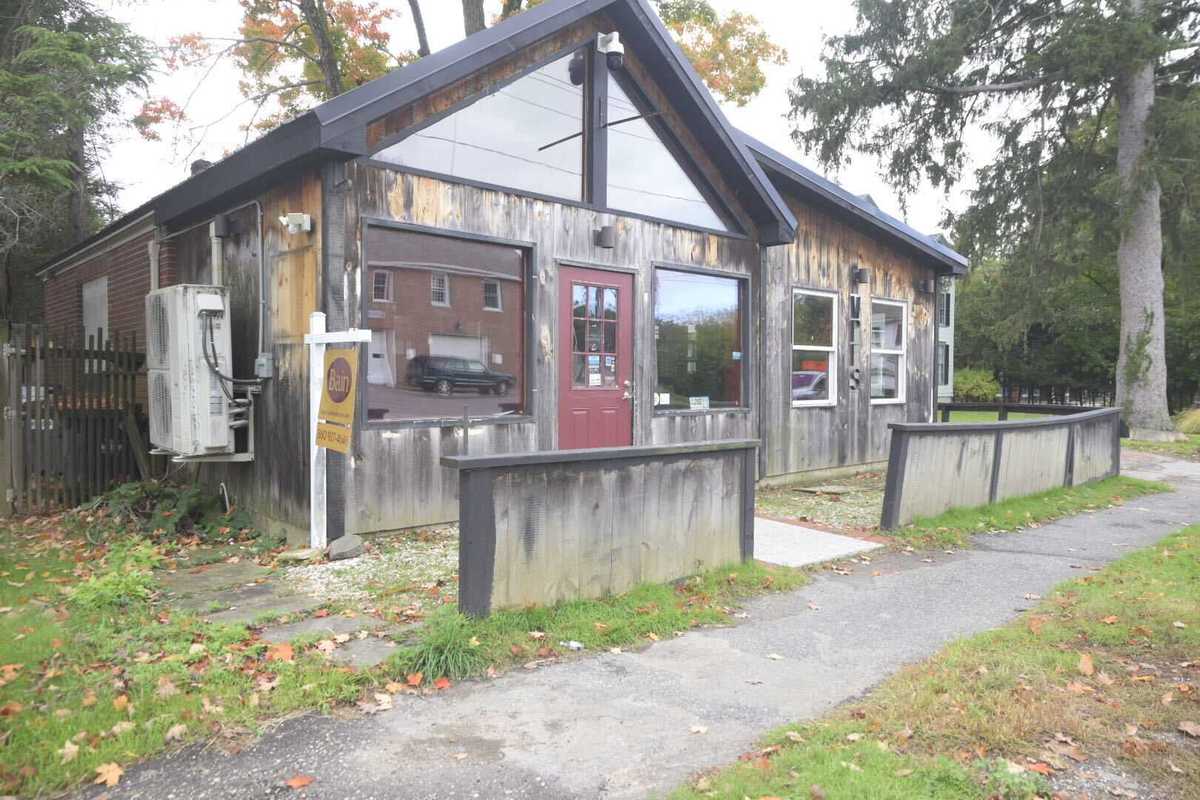
Jam Food Shop plans to open a new Sharon location at 29 W. Main St.
SHARON — After closing its counter at Sharon Farm Market on Oct. 3, Jam Food Shop announced it will open a new location in Sharon as well as a shop in Salisbury.
Owner Colin Kennedy described the announcement as a “plot twist.” He had previously said the popular local deli would leave Sharon and move to Salisbury, but now plans to operate a shop in each town.
“We understand the importance of convenience, so why not give that to Sharon if we can?” Kennedy said.
The Sharon Jam Food Shop will be located at 29 W Main St. in the former building of When Pigs Fly, a BBQ restaurant that closed down mid-July. Though it will be smaller than its Salisbury counterpart, the store will still offer Sharon residents the same food, just with more limited seating.
Kennedy is actively renovating the former Neo Bar and Restaurant at 19 Main St. in Salisbury to become Jam’s primary location, including a whole new seating area.
At the Salisbury Fall Festival, Kennedy hosted a raffle for attendees to guess the opening date of the new storefront, which he previously estimated to be sometime in October. As of now, Kennedy has no official start date for either location, but said both will be open ASAP.
“Our family always dreamed of expanding and opening a second location. While we are beyond excited to open our doors in Salisbury, it was difficult to see and hear the disappointment from the locals that have supported us for so long,” Kennedy said. “ This is a new, exciting chapter for us that will allow us to be creative beyond the confines of the Sharon Farm Market and we can’t wait to serve you all!”
Pedestrian bridge planned for safer walk into Salisbury
Patrick Stachniak

The narrow Route 44 bridge north of downtown Salisbury requires pedestrians to share the roadway with motorists.
SALISBURY — The Selectmen’s Pathways Committee secured a state grant to build a new pedestrian bridge alongside Route 44, aiming to make the walk between the Lions Head condominium development, the Appalachian Trail and downtown Salisbury safer.
Just north of Route 44, lies the Lions Head Development and an opening to the Appalachian Trail. Lions Head, a condominium developed in 1984, contains 52 units of housing.
For more than 40 years, residents walking downtown have had to share a narrow highway bridge with motorists to cross a brook on the north side.
The new pedestrian bridge is a part of a larger plan to build new sidewalks across town and improve overall walkability. It will run parallel to the existing Route 44 bridge on its east side and will enable residents of Lions Head and trail hikers to more safely walk the quarter mile into Salisbury by eliminating the need to cross the busy road.
The existing bridge narrows to slow traffic entering town, making it difficult for pedestrians to cross safely.
“Trying to make pedestrians feel safe so that more and more people move around on foot is the whole mission,” said Selectman Katherine Keifer.
In the Oct. 5 Board of Selectmen meeting, the Pathways Committee announced it secured $180,000 from the 26th Connecticut Regional Trails Grant to begin permitting, design and bidding process. According to committee member Gerry Stanton, the total project will cost about $680,000, though the state program could eventually cover up to 80% of the total price tag.
“There’s already enough speed coming into the village, and that, these bridges which are a hundred years old, they should hopefully stay narrow as they are,” said First Selectman Curtis Rand.
“So if there’s a reason to get bicycles or hikers over it, let’s do a footbridge over the brook.”
The idea came from a Department of Transportation (DOT) audit in 2025 to identify safety concerns and find solutions. No official timeline for the project exists, although the trail managers, the Appalachian Mountain Club, and Lions Head Resident/Representative Charlie Vail support the project.
“I’d just like to endorse the plan and thank those who’ve worked on it, because I think it’s very positive,” Vail said. “Every time I exit, you see a lot of hikers, so this will help the safety of those people, and the local residents as well… We’re very happy to cooperate in any way we can.”
Want more of our stories on Google? Click here to make us a Preferred Source.