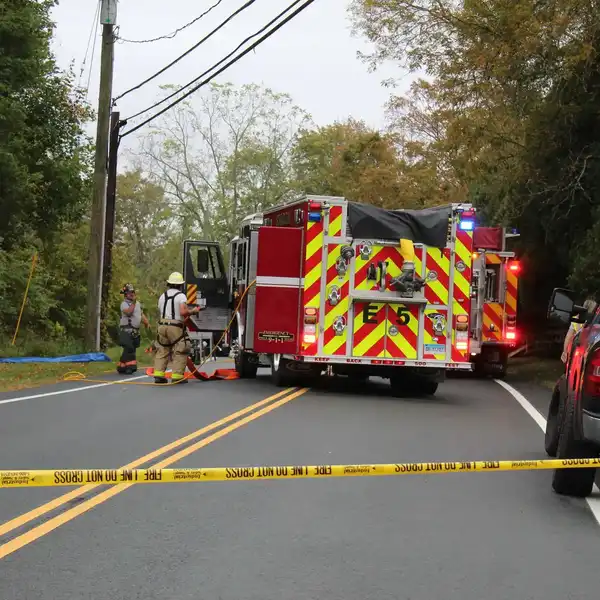
The covered bridge in West Cornwall was closed the morning of Thursday, April 3, when an oversized truck got stuck attempting to cross. The incident prevented bridge crossings for approximately two hours until the truck was removed.


Latest News
Winding down in Fall? Think again.
Dee Salomon
Nov 10, 2026
Winding down in Fall? Think again.
Winding down in Fall? Think again.
Putting the garden to bed is not just a metaphor; some blanket trees and shrubs with mulch and burlap. Think of leaves as nature’s blanket, giving precious caterpillars and other insects food, shelter and warmth during the winter. Gentle treatment of leaves now will give insects the best chance of surviving and feeding baby birds in the spring. A gentle blow or rake to move leaves from footpaths into woodland margins or under trees will work. But do not shred or mulch leaves or pile them up too densely, as this will kill the life overwintering there.
For me, fall, especially late fall, is an opportune time for action rather than winding down. Poison ivy has disappeared and, as the days get colder, tick numbers decline (still, no complacency on ticks!). Most of all, now is when the major invasive offenders are easiest to see and eradicate.
Norway maple, Acer platanoides, stands out with its five-lobed, yellow leaves and red stems that are still attached; native maples lost their leaves weeks ago. This invasive tree has a straight, vertical trunk that, combined with its large leaves, can resemble a child’s drawing. Instead of the sugary sap from which we make maple syrup, Norway maple oozes a milky liquid that does not provide nutrition to our native wildlife.
You can see the dominance of Norway maple along many of our roads, where it deftly outcompetes native trees and plants with a trifecta of superpowers characteristic of many invasives: its leaves cast dense shade, blocking sunlight from reaching the forest floor and preventing the growth of other plants; its leaves emerge earlier in spring and fall later in autumn than those of most native plants, giving it a longer growing season; and, finally, it disperses far more seeds than native species.
These trees grow as tall as 90 feet and, as with all large trees, benefit the Earth by storing carbon and producing oxygen. But this alone does not give these maples a pass; our native oaks do the same while supporting hundreds of species of caterpillars, insects, birds and small mammals. And I challenge anyone to defend the visual appeal of the Norway maple over, say, a mature scarlet oak, especially in the fall.
As with any large tree, mature Norway maples are best cut down by a professional, but a tree under 10 feet tall is easier to tackle yourself. If it is shorter than a couple of feet, try pulling it out by its base; the roots are shallow. Young trees have soft wood trunks that can be easily cut with pruning shears or loppers or, if larger, with a hand saw. You can then apply an appropriate herbicide to the cut surface of the trunk, following label directions. If you do not have an herbicide handy or are opposed to using one, repeated cutting over several seasons can work, but this can be tedious, especially as there likely to be many trees where there is even one.
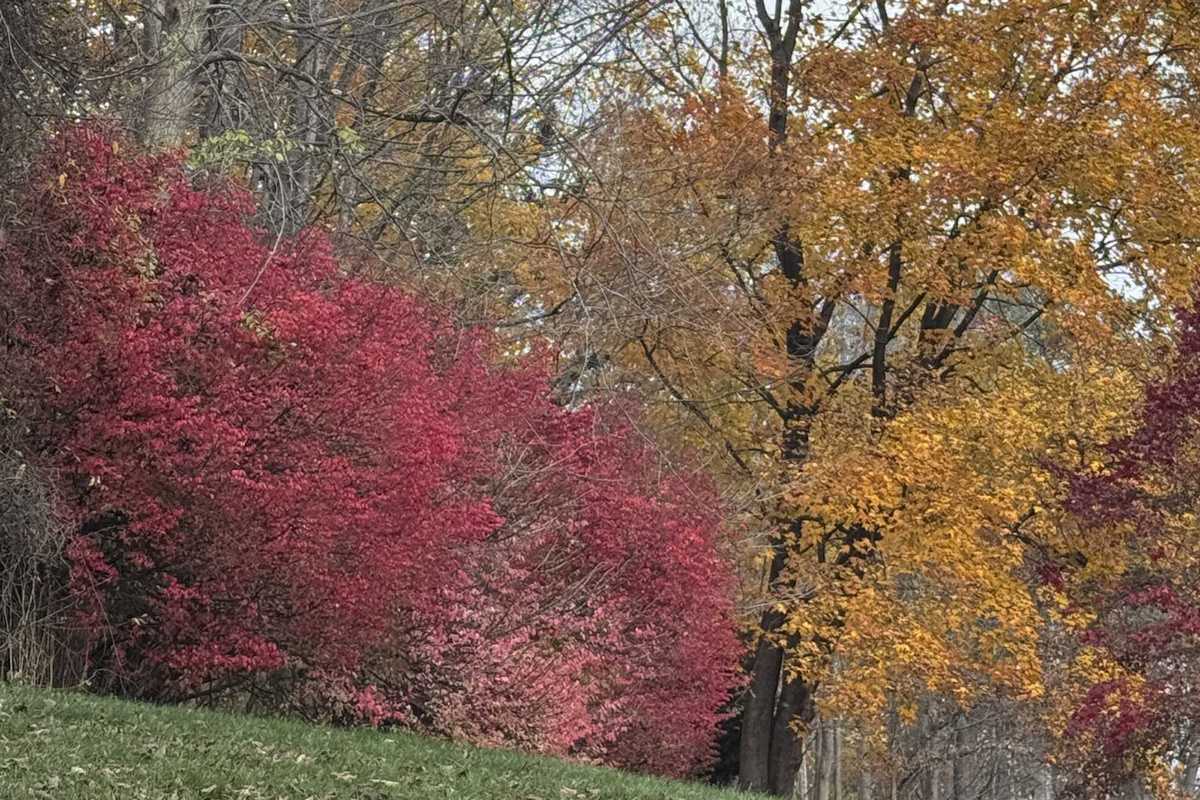
Burning bush, Euonymous alatus, is like a blinking red light along just about every road this time of year. It is a noxious invasive that alters soil chemistry with its leaf litter, turning soil alkaline so that natives cannot germinate and grow. There are some who cannot let go of this notorious invasive, which is restricted or prohibited for sale in several Eastern states. The fact that it no longer can be bought in some nurseries is a moot point, as it long ago jumped the garden fence and is now running rampant, damaging our native habitats.
Some laud its leaf color in fall; to my eye, it’s blue-red shade is a sore thumb among the orangey russets and scarlets of the native oaks and the brilliant red of our sumac varieties or the Nyssa sylvatica, the tree known as tupelo or black gum. By the time you are reading this, burning bush leaves will have mellowed to a pale purplish pink. Native Mapleleaf viburnum has a similar pale leaf color in fall, along with a sweet lacy white flower in spring, and is a sensible replacement in wooded environments.
I have been steadily working on about an acre of a dense burning bush infestation behind our house. As with Norway maple, the small ones are easily seen and pulled this time of year. The larger ones can be cut with loppers or a hand saw and then treat with herbicide — always closely following label directions. A nice last effort before the winter cold sets in.
Dee Salomon ungardens in Litchfield county.
Keep ReadingShow less
A dinosaur is coming to Cornwall
D.H. Callahan
Nov 10, 2026
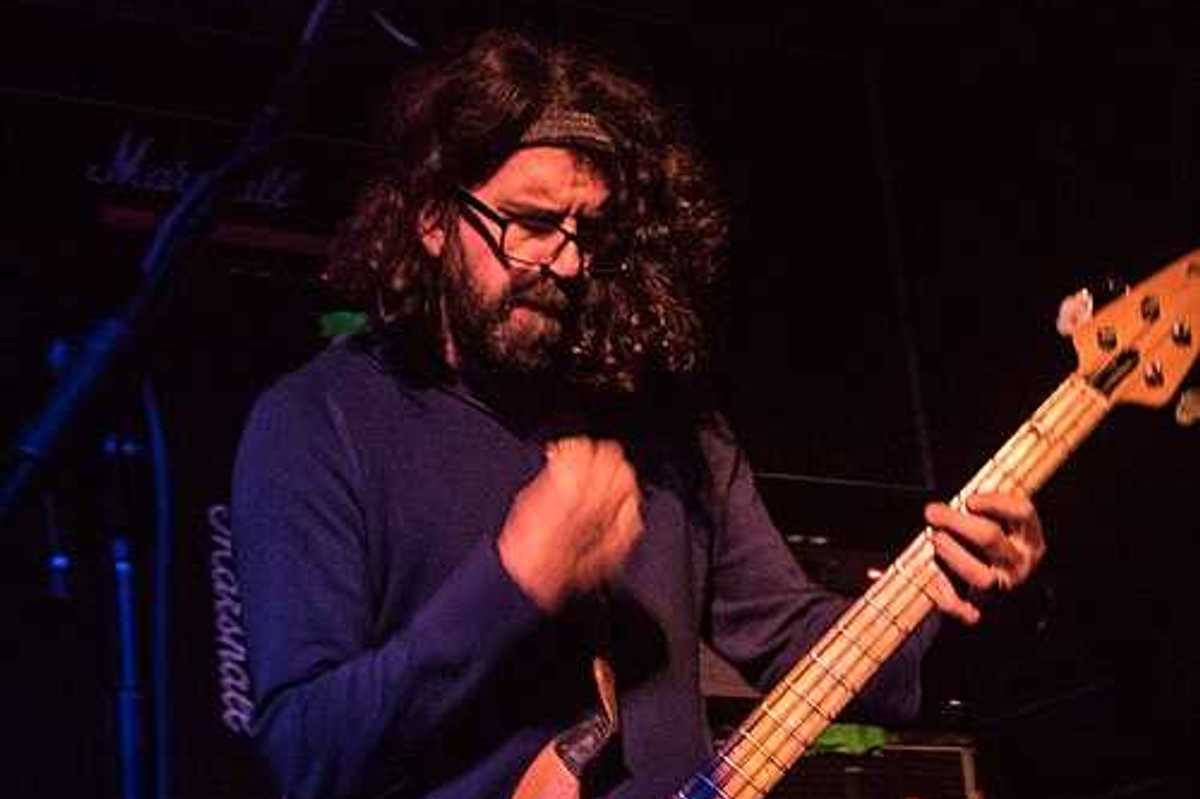
Lou Barlow performing with Dinosaur Jr.
Photo by Roberta Osmers of illuminated scene
On Saturday, Nov. 14, Cornwall Town Hall will be the coolest place in the county. Lou Barlow, of the rock bands Dinosaur Jr., the Folk Implosion and Sebadoh, will be joined by Attawalpa’s Luis Felber and hauntingly raw singer-songwriter Amelia Jackie as they transform the official administrative building into a rockin’ music venue.
Lou Barlow rarely gets the credit he deserves. As bassist for 1980s pre-grunge indie sensation Dinosaur Jr., he influenced a whole generation of bass players. Barlow started his music career by playing guitar in a hardcore punk band called Deep Wound out of Central Massachusetts.
When Barlow and the band’s drummer, J Mascis, left to form their own band, Dinosaur, Mascis took over on guitar and asked Barlow to join him on bass. As this was long before widespread public access to the internet, there was no easy way to find out that there was already a band called Dinosaur. Like the Warlocks before them, who eventually changed their name to the Grateful Dead, Dinosaur needed its own identity. Their solution? Simply add a Jr.
Barlow took his hard-playing guitar method and transferred it to the electric bass. By playing chords and using a guitar pick instead of the standard bare fingers, he gave his bass a richer, fuller sound, allowing Mascis to play with his guitar and litany of pedals. Along with their drummer, Murph, the band was rising to uncharted levels of popularity.
This was all happening in the late 1980s, when MTV was starting to take over the airwaves and commanded an outsized influence on the music industry as a whole. Eventually, the pressures of the road and the band’s creative struggles led to a famously fractured relationship between Mascis and Barlow. In 1989, Barlow was kicked out of Dinosaur Jr.
Because Mascis didn’t like sharing the band’s creative direction, Barlow had already been writing his own material. On a four-track cassette recorder, he cobbled together songs in bedrooms and living rooms while still touring with Dinosaur Jr. Many of those songs were about the tensions between Barlow and Mascis and the way he had been treated in the later days of his tenure with the band.
Barlow teamed up with Northampton-based musicians Eric Gaffney and Jason Loewenstein to form Sebadoh. Together with bands like Pavement and Guided by Voices, Sebadoh was instrumental in pioneering the lo-fi sound that would eventually be inextricable from shoegaze and other forms of indie rock in the late 1990s and early 2000s. While Sebadoh’s albums rarely garnered the kind of popularity they deserved upon release, music critics and record collectors would eventually look back and lavish praise on the band for setting trends that the industry couldn’t see as they were happening.
Popular success finally came for Barlow with another project, the Folk Imposition. Formed with multi-instrumentalist John Davis, the band was heavily featured on the soundtrack to Harmony Korine and Larry Clark’s independent blockbuster “Kids.” The movie became a generational touchstone, due in no small part to its use of music.
Barlow, Mascis and Murph seemed to use the 1990s as a way to grow up and work out their creative demons. In 2005, Dinosaur Jr. reunited with a lot less baggage and a greater willingness to work together as a band. Since the reunion, the band has released several new albums and achieved egendary status, with a new generation of music fans obsessing over the ahead-of-its-time albums released 30 to 40 years ago.
At Cornwall Town Hall, Barlow will perform solo. The show offers a series of ticket tiers, from general admission to a post-show wine-and-cheese soirée.
Tickets are available at dice.fm.
Keep ReadingShow less
Jaimoe keeps the Allman Brother’s sound alive at Infinity Hall
D.H. Callahan
Nov 10, 2026
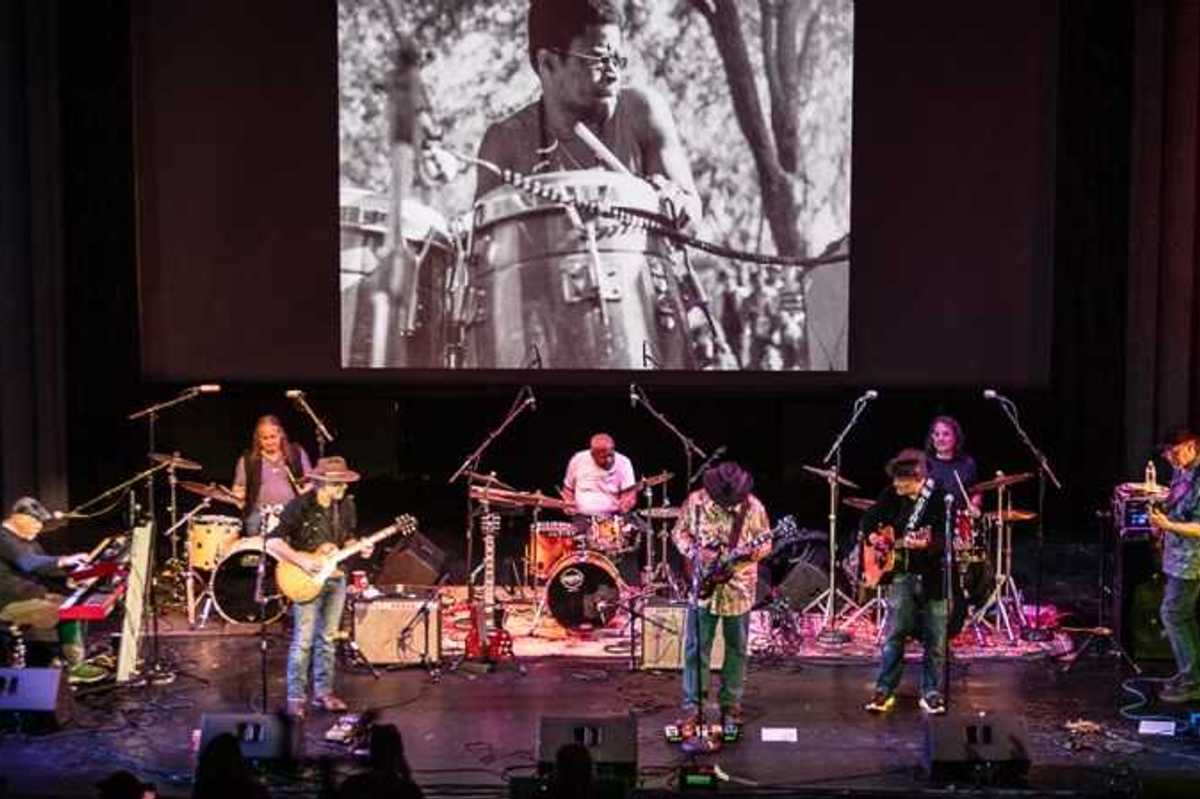
Jaimoe performs with Friends of the Brothers.
Derek McCabe
The Allman Brothers Band has a wild history that involves more than its share of death, drugs, booze and blues. The band played through several iterations from 1969 until 2014. For most of that time, it was powered by the rhythm and texture of its two drummers, Butch Trucks and the enigmatic Jaimoe. On Thursday, Nov. 12, Jaimoe will get back behind the drums to bring the music of the Allman Brothers to life with Friends of the Brothers at Norfolk’s Infinity Hall.
Jaimoe, born in 1944 as John Lee Johnson and also performed under the name Jai Johanny Johanson, was already an accomplished drummer before he met guitarist Duane Allman in 1967. Trained as a soul and jazz drummer, he started playing R&B at a young age and eventually made his way to Otis Redding’s band before Redding died in a plane crash at age 26. Jaimoe had an effortless texture to his drumming that set him apart from most drummers of the day, who were frequently enlisted to hold the beat rather than contribute to a bands’ musicality.
Though the Grateful Dead had already been playing with two drummers for a couple of years, it was still a highly unusual arrangement. When Duane Allman put his band together, he was looking for something similarly unconventional. The harmonizing guitars that the Allman Brothers Band would eventually be known for demanded another layer of sound to really set it apart from traditional blues. To give it that undefined X factor, the band paired the straight-ahead rock and blues drumming of Butch Trucks with Jaimoe’s more rhythmically intricate jazz and R&B style. The result was an unmitigated success. Jaimoe provided that intangible texture for that classic Allman Brothers Band sound.
While his contribution was integral to the music, his presence was not always welcome at Southern venues. As a Black man playing in a band with a bunch of long-haired white boys, the group was forced to sign “race waivers” stating that it had a black man in the band and that the white members would take responsibility for his actions. When told Jaimoe wouldn’t be permitted onstage in Florida, the band famously responded, “if he doesn’t play, we ain’t gonna play.” It’s partly due to the racist attitudes in the south that Gregg Allman rejected the term “Southern rock” for the more appropriate “progressive blues.”
Throughout the Allman Brothers Band’s 45-year history, Jaimoe played with the band for extended periods but was absent for most of the 1980s. He rejoined the band in 1989 and remained through its final performance in 2014. That break in the 1980s gave him time to develop Jaimoe’s Jasssz Band, which takes a more R&B-influenced approach to the progressive blues sound of the Allman Brothers Band.
In 2017, Jaimoe’s Allman Brothers Band drummer, Butch Trucks, died. To commemorate Trucks’ life, friend, writer and musician Alan Paul, who wrote a best-selling book about the Allman Brothers Band, gathered a group of musicians with deep connections to the band for a tribute concert. These were musicians who’d played with original members of the band in their many side projects. Among them were Junior Mack from Jaimoe’s Jasssz Band; guitarist Andy Aledort, who played with Allman Brothers Band guitarist Dickey Betts for 12 years; and keyboardist Peter Levin, who had played with Gregg Allman’s solo band.
The shows were so successful that Paul knew he had to keep it going, and formed Friends of the Brothers. More than a tribute band, Paul sees the act as a way to preserve the music of the historic band. With a lineup of seasoned musicians steeped in the Allman Brothers tradition, they have mastered that progressive blues sound.
Paul had spent countless hours talking to and playing with Jaimoe before asking if he’d like to join the project. For the past two years, Jaimoe, now in his 80s, has been adding the signature texture that helped set the Allman Brothers Band apart from everyone else who simply played Southern rock.
For tickets, visit www.
infinityhall.com.
Keep ReadingShow less

Want more of our stories on Google? Click here to make us a Preferred Source.
Is it a concert or a play? “Yes, Darling.” It is.
D.H. Callahan
Nov 10, 2026

Ryan Montbleau and Hayley Jane bring “Yes, Darling” to the Berkshire Theatre Group’s Colonial Theatre in Pittsfield on Nov. 13.
Provided
On Friday, Nov. 13, a truly unique performance will hit the stage of the Berkshire Theatre Group’s Colonial Theatre in Pittsfield, Massachusetts. “Yes, Darling” is the musical culmination of a longtime collaboration between musicians Hayley Jane and Ryan Montbleau. What sets this performance apart from a traditional musical or a regular concert is that the writers of the songs are the actors and performers themselves.
Though “Yes, Darling” is their first official album and subsequent show together, Jane and Montbleau share a number of compatible traits that work together marvelously in this project.
First, both musicians are leaders of their own bands with their own names on the marquee. The Hayley Jane Band out of Vermont feels like a jam band fronted by a Broadway performer. Live audiences dance along to her original tunes as Jane’s backing band noodles away behind her expressive vocals that seem ripped out of a smokey nightclub from the 1930s. The Ryan Montbleau Band leans a little more on the jazz-influenced side of the singer-songwriter spectrum. Like Jane, Montbleau develops intimate connections with his audience, matching and elevating the energy of any room he plays.
Next, both artists write very narrative songs, where the lyrics are just as important as the notes played. Their songs often feel like vehicles used to drive a story right into the hearts of their listeners.
Finally, both Montbleau and Jane are just about as funny as they are talented.
Mix it all together, and you’ve got a recipe for something toe-tappingly different that can make you think, make you laugh and have you swelling with emotion.
When the duo decided to dedicate some writing time together, they didn’t know just what the project would evolve into. As their songs took shape, each one seemed to deal with similar topics involving the often funny and frequently combative intricacies of romantic relationships. The songs feel both nostalgic and new as the “couple” explores the familiar nuances of vulnerability, infatuation and past baggage through a series of folk, jazz, pop and even ska sounds.
Montbleau reflected, “It was immediately apparent that we had two strong ‘sides of a relationship’ points of view going on. It naturally lent itself to writing these kind of timeless love songs with classic style but where we could also fight and drop f-bombs and bring modern situations into the songs.”
During the process, the pair focused on those notions and ended up with a series of songs that worked as a cohesive album. But Jane, who has a background in drama, had some bigger ideas. The pair connected with Chicago-based director Dorian Weinzimmer, who had a distinct vision of bringing the songs to life through a series of music videos. Once they saw how naturally it all lent itself to a visual format, they knew they had to keep going and bring the stories from the songs and videos to live audiences.
The “Yes, Darling” stage show is a real playhouse production. The musicians play versions of themselves, and their chemistry feels so natural that you’ll question whether or not they’re a real-life couple. They have set pieces, use props and costumes and explore the stage like it’s their own little world. Unlike a traditional play, however, the members of the band are right up there with them, as though they were playing a regular old-fashioned concert.
For tickets to “Yes, Darling” visit berkshiretheatregroup.org.
Keep ReadingShow less
Local favorites among Destination Dutchess tourism award finalists
Natalia Zukerman
Nov 10, 2026
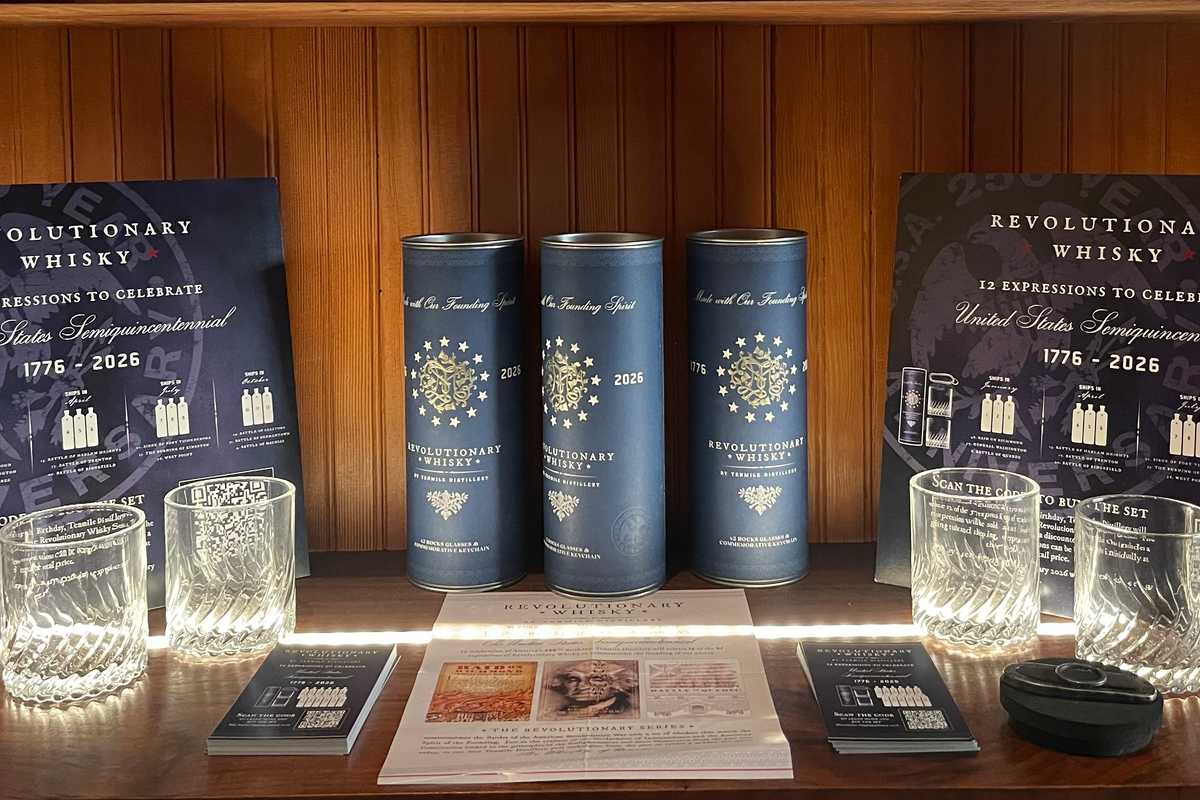
Tenmile Distillery in Wassaic is a finalist for a Destination Dutchess 2026 Tourism Award of Distinction for its Revolutionary Whisky.
D.H. Callahn
Three familiar names from eastern Dutchess County are among the finalists for Destination Dutchess’ 2026 Tourism Awards of Distinction, recognizing the people, businesses and organizations that make the county a vibrant destination for visitors.
House of Stefas in Millbrook is a finalist for the Newcomer Award of Distinction, which celebrates tourism-related businesses that opened in 2025 and have already made an impression on visitors and residents alike.
Tenmile Distillery in Wassaic is nominated for the Storytelling Award of Distinction for its Revolutionary Whisky, recognizing creative efforts to bring Dutchess County’s history, heritage and culture to life.
And in Pine Plains, Marie Stewart of The Stissing Center for Arts and Culture is a finalist for the Hospitality Service Award of Distinction, honoring front-line staff members who go above and beyond to create exceptional experiences for visitors.
The three are among 21 finalists across seven categories in the 13th annual awards, which celebrate everything from cultural attractions and special events to hospitality and community collaboration.
Winners were scheduled to be announced Tuesday, Nov. 10, at a breakfast ceremony at the Henry A. Wallace Center at the Franklin D. Roosevelt Presidential Library and Home in Hyde Park. Elaine Hayes, longtime executive director of Mount Gulian Historic Site in Beacon, will also receive the Mary Kay Vrba Spirit Award for her decades of leadership and dedication to preserving local history.
For more information and a complete list of finalists, visit destinationdutchess.com/awards.
Keep ReadingShow less
Robin Wall Kimmerer at Hudson Hall
Lakeville Journal
Nov 10, 2026
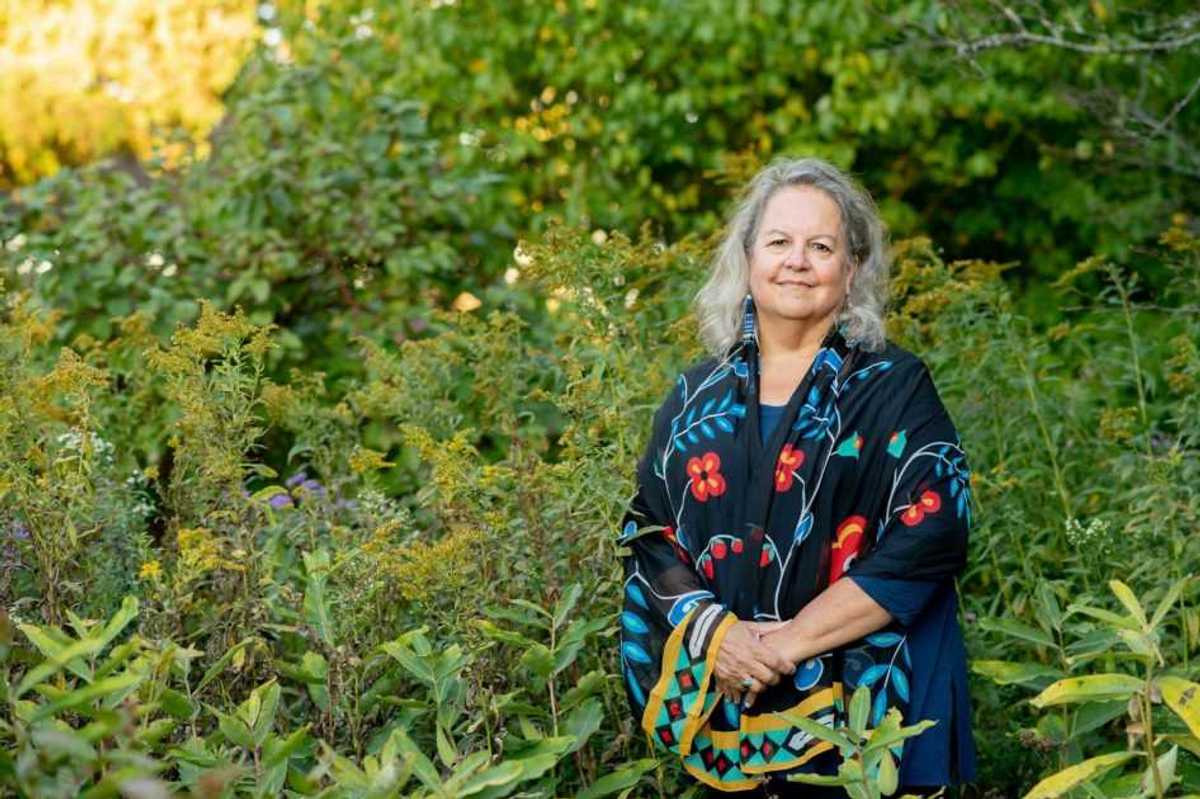
Robin Wall Kimmerer
photo courtesy the John D. and Catherine T. MacArthur Foundation
Robin Wall Kimmerer, acclaimed author of “Braiding Sweetgrass” and “The Serviceberry,” comes to Hudson Hall on Tuesday, Nov. 17, at 6 p.m. for a talk and conversation with garden writer Margaret Roach, followed by a book signing. The in-person event is sold out, but a free livestream is available. Visit hudsonhall.org.
Want more of our stories on Google? Click here to make us a Preferred Source.
loading