Understanding health-care legislation

While everyone seems to have an opinion about health-insurance reform, it is likely that a very small percentage of Americans have read the somewhat infamous bill passed by the House of Representatives and now under consideration in the Senate. Most sane people probably wouldn’t want to read the 1,990-page document, but it certainly doesn’t hurt to read a summary of the legislation to develop an informed opinion.

Right now, Democrats in the Senate are deciding whether they will use the so-called “nuclear option� of budget reconciliation to pass this legislation, meaning they will need only 51 votes and there can be no filibuster. The Senate will be required to reconcile its health-care bill with one approved last year by the House of Representatives in order to proceed with a vote. A summary of the originally proposed legislation is as follows:

Public health insurance option

The goal of health-care reform is to provide quality, affordable health care for every American while preserving what works in today’s system, expanding choice and containing costs. The Affordable Health Care for America Act creates a public health insurance option that would compete on a level playing field with private insurers within the Health Insurance Exchange.

Overview

The public health-insurance option is available in the new Health Insurance Exchange (Exchange) along with all of the private health-insurance plans (including health co-ops). The public option will add choice to the health-insurance market; participation will be completely voluntary.

Increasing choice,  competition and accountability

Today, many areas of the country are dominated by only one or two insurance companies. Establishing a public health-insurance option will create a new choice for individuals and families.Competition in consolidated markets, driven by the introduction of a more efficient and transparent plan, will help lower premiums for all plans as the private market is forced to compete on a level playing field for the first time.

By creating an alternative in the market, both public and private plans will be accountable for their actions because people can leave one for the other during enrollment periods. For example, if the public option fails to maintain an adequate provider network, people will not enroll. Likewise, if the private plans inappropriately restrict access to care, people may choose the public option.

Level playing field

The public health-insurance option must meet the same benefit requirements and comply with the same insurance market reforms as private plans.Like private plans, premiums for the public health-insurance option will be established for the local market areas that are designated by the exchange and will vary by region. Individuals in the exchange can choose freely among the private carriers and the public option. Employers who participate in the exchange cannot dictate employees’ participation in a particular plan.

Affordability credits can be used for any plan in the exchange — public or private.

To ensure independence of the exchange, the public health-insurance option will be run by the Department of Health and Human Services, not the exchange.

Self-sufficiency

Like private plans, the public health-insurance option must be financially self-sustaining and maintain its operations using premium revenue.The public health insurance option will be required to build start-up costs and contingency funds into its rates and adjust premiums over time to assure its financial viability. The start-up costs are a loan and must be repaid.

Innovation and cost containment

The public health-insurance option will have lower administrative costs than private plans, and it will be accountable to its enrollees and taxpayers, not shareholders or highly paid executives. The new option institutes new payment structures and incentives to promote primary care, encourage coordinated care and shared accountability and improve quality.

Provider payments and participation

Provider participation is voluntary and providers are permitted to opt out.The Secretary of Health and Human Services will negotiate provider payment rates, which can be no higher than the average private plan rates and no lower than Medicare.

It allows immediate integration of delivery reforms also contained in the bill.

House-senate comparison of key provisions

 The House- and Senate-passed health reform bills are based on the plan set out by President Obama in his campaign and shaped during the legislative process. As a result, they have substantial similarities that will greatly facilitate the final step of developing an agreement on a bill for the president’s signature.  Both bills:

Provide a comprehensive set of “early deliverables,â€� starting in 2010, which include (1) initial insurance reforms and consumer protections, (2) a new insurance pool to make coverage available to individuals with pre-existing conditions or chronic illnesses who can’t get coverage today, and (3) disclosure, review and justification of insurance rate increases.  

Both bills also contain additional early investments in community health centers and the workforce, which are essential both to ensure access when the coverage reforms are implemented and to begin to improve both personal and community health and wellness immediately. Additional Medicare improvements, including beginning to close the donut hole, also begin in 2010.

Improve insurance coverage by implementing major coverage reforms (2013 in House bill, 2014 in Senate) and providing financial assistance to lower- and middle-income families and small businesses. Those provisions include:

Insurance reforms, minimum benefit standards and creation of a new health insurance marketplace called an “exchange� where health plans compete based on price and quality for individual and small employer business. Increases in Medicaid eligibility levels for those with the lowest income, and new funding for critical safety net services through community health centers. Sliding scale financial credits to ensure affordable premiums and cost-sharing assistance for households with income above new Medicaid income levels but below 400 percent of the federal poverty level.

Individual responsibility to purchase insurance within this new framework.

Employer responsibility to offer coverage or provide financial contributions to help pay for coverage.

Improve Medicare coverage for prescription drugs and preventive services, and implement major Medicare delivery system and payment reforms to make Medicare more efficient and restrain future spending growth. Both bills institute numerous long-term reforms that experts have called for to enhance quality and value for Medicare beneficiaries and the entire health-care system.

Provide revenues that, coupled with the program savings above, meet the commitment of the president, the speaker and the leaders of the House and Senate that the bill be fully paid for.  In fact, both bills actually reduce the deficit by more than $100 billion over the first 10 years, and are projected to yield savings in the second 10 years.

These similarities provide a strong platform for discussions to lead to a final agreement. However, especially on a topic as historic and sweeping as health-insurance reform, there are differences between the chambers that will need to be resolved.  

Source: House Committee on Energy and Commerce

Latest News

Living art takes center stage in the Berkshires

Contemporary chamber musicians, HUB, performing at The Clark.

D.H. Callahan

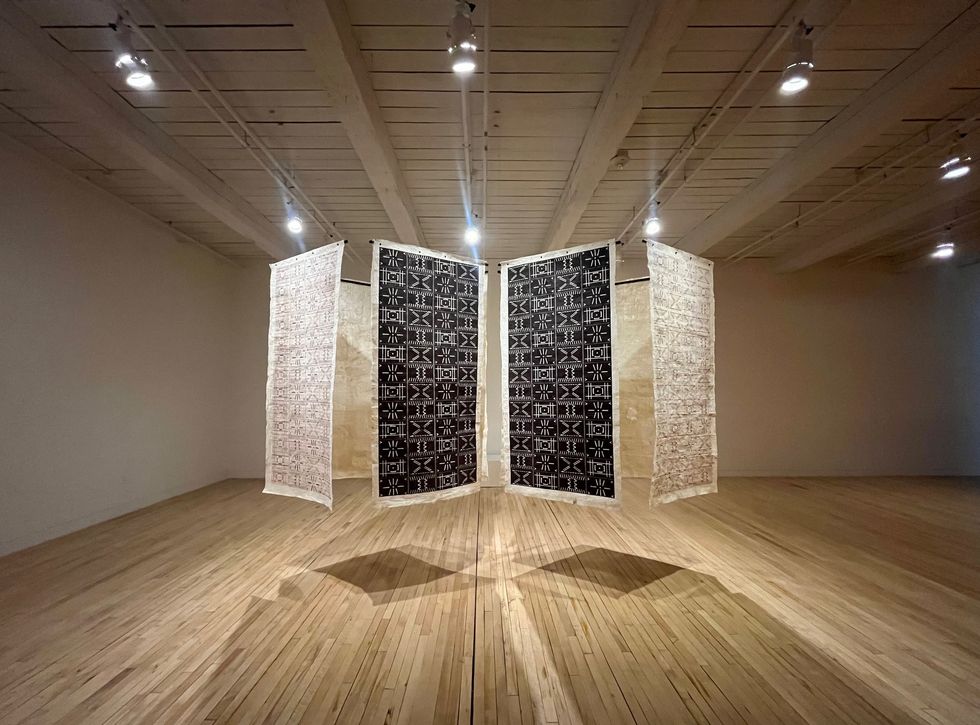
Northwestern Massachusetts may sometimes feel remote, but last weekend it felt like the center of the contemporary art world.

Within 15 miles of each other, MASS MoCA in North Adams and the Clark Art Institute in Williamstown showcased not only their renowned historic collections, but an impressive range of living artists pushing boundaries in technology, identity and sound.

Keep ReadingShow less
Persistently amplifying women’s voices

Francesca Donner, founder and editor of The Persistent. Subscribe at thepersistent.com.

Aly Morrissey

Francesca Donner pours a cup of tea in the cozy library of Troutbeck’s Manor House in Amenia, likely a habit she picked up during her formative years in the United Kingdom. Flanked by old books and a roaring fire, Donner feels at home in the quiet room, where she spends much of her time working as founder, editor and CEO of The Persistent, a journalism platform created to amplify women’s voices.

Although her parents are American and she spent her earliest years in New York City and Litchfield County — even attending Washington Montessori School as a preschooler — Donner moved to England at around five years old and completed most of her education there. Her accent still bears the imprint of what she describes as a traditional English schooling.

Keep ReadingShow less
Jarrett Porter on the enduring power of Schubert’s ‘Winterreise’
Baritone Jarrett Porter to perform Schubert’s “Winterreise”
Tim Gersten

On March 7, Berkshire Opera Festival will bring “Winterreise” to Studio E at Tanglewood’s Linde Center for Music and Learning, with baritone Jarrett Porter and BOF Artistic Director and pianist Brian Garman performing Franz Schubert’s haunting 24-song setting of poems by Wilhelm Müller.

A rejected lover. A frozen landscape. A mind unraveling in real time. Nearly 200 years after its premiere, “Winterreise” remains unnervingly current in its psychological portrait of isolation, heartbreak and existential drift.

Keep ReadingShow less
google preferred source

Want more of our stories on Google? Click here to make us a Preferred Source.

A grand finale for Crescendo’s 22nd season

Christine Gevert, artistic director, brings together international and local musicians for a season of rare works.

Stephen Potter

Crescendo, the Lakeville-based nonprofit specializing in early and rarely performed classical music, will close its 22nd season with a slate of spring concerts featuring international performers, local musicians and works by pioneering composers from the Baroque era to the 20th century.

Christine Gevert, the organization’s artistic director, has gathered international vocal and instrumental talent, blending it with local voices to provide Berkshire audiences with rare musical treats.

Keep ReadingShow less

Leopold Week honors land and legacy

Leopold Week honors land and legacy

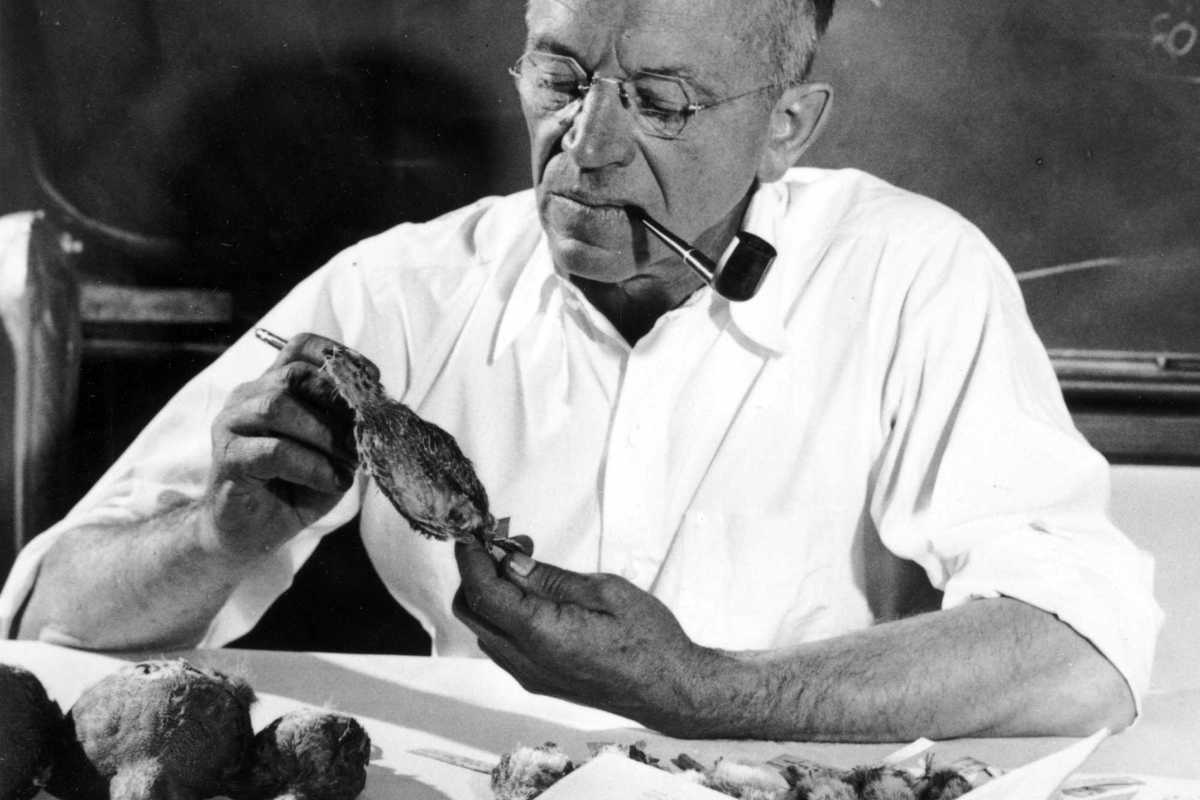
Aldo Leopold in 1942, seated at his desk examining a gray partridge specimen.

Robert C. Oetking

In his 1949 seminal work, “A Sand County Almanac,” Aldo Leopold, regarded by many conservationists as the father of wildlife ecology and modern conservation, wrote, “There are some who can live without wild things and some who cannot.” Leopold was a forester, philosopher, conservationist, educator, writer and outdoor enthusiast.

Originally published by Oxford University Press, “A Sand County Almanac” has sold 2 million copies and been translated into 15 languages. On Sunday, March 8, from 3 to 5 p.m. in the Great Hall of the Norfolk Library, the public is invited to a community reading of selections from the book followed by a moderated discussion with Steve Dunsky, director of “Green Fire,” an Emmy Award-winning documentary film exploring the origins of Leopold’s “land ethic.” Similar reading events take place each year across the country during “Leopold Week” in early March. Planning for this Litchfield County reading began when the Norfolk Library received a grant from the Aldo Leopold Foundation, which provided copies of “A Sand County Almanac” to distribute during the event.

Keep ReadingShow less

Erica Child Prud’homme

Erica Child Prud’homme

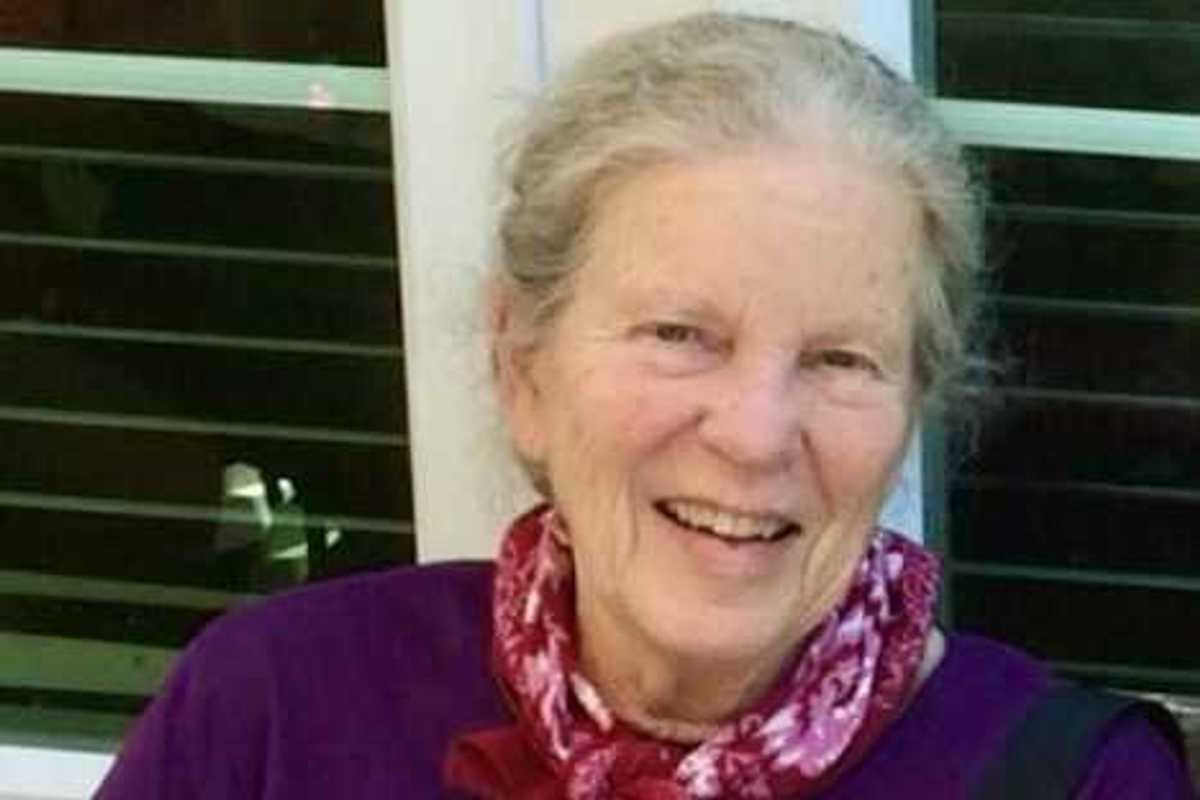
WEST CORNWALL — Erica Child Prud’homme died peacefully in her sleep on Jan. 9, 2026, at home in West Cornwall, Connecticut, at 93.

Erica was born on April 27, 1932, in Doylestown, Pennsylvania, the eldest of three children of Charles and Fredericka Child. With her siblings Rachel and Jonathan, Erica was raised in Lumberville, a town in the creative enclave of Bucks County where she began to sketch and paint as a child.

Keep ReadingShow less
google preferred source

Want more of our stories on Google? Click here to make us a Preferred Source.
google preferred source

Want more of our stories on Google? Click here to make us a Preferred Source.