A Vision of Hell

We will have to wait another 50 weeks until the next Oscars, but the German-Australian masterpiece “Lore” will certainly be in any discussion of best foreign-language picture, if not best picture, period. It could well be the finest war movie ever made — not like a “Patton” or “The Hurt Locker,” but rather as a depiction of the horrors of war visited on ordinary people, families and children. The title character (pronounced “LAW-ruh,” short for her name, Hannalore) is the eldest of five children of Nazi parents at the close of World War II. Hitler has killed himself, and the Allies have begun the occupation of Germany. Anticipating their punishment as Nazis, Lore’s parents (Ursina Lardi, Hans-Jochen Wagner) bring the children to a mountain hideaway. When they realize their capture is imminent, they are forced to abandon the children, including an infant, Peter (Nick Holaschke), twin boys, Günther and Jürgen (André Frid, Mika Seidel), and 13-year-old Liesel (Nele Trebs), into the care of Lore (Saskia Rosendahl). What follows is more than just a struggle for survival, as the children set out on a trek to find their grandmother’s house in Hamburg. It is a journey through a Dante-like vision of the circles of hell, a death-pocked, war-ravaged landscape and a people reduced to penury and near-animal status. We are witnesses to a living nightmare. Do not think that “Lore” sugarcoats German responsibility or pleads for pure victimhood. Lore herself must struggle with the family beliefs she has inherited, especially when she is befriended and protected by a young Jewish man, Thomas (Kai Malina), recently released from a concentration camp. Lore’s enforced, accelerated passage to maturity is fraught with guilt, fear, danger and uncertainty; her coming of age is attended by the awakening to her own childhood and innocence shattered to pieces. The astonishing and spectacularly beautiful newcomer, Rosendahl, makes this transformation grippingly, profoundly real and deeply felt. She is surrounded by a cast of equal excellence, especially Trebs as her younger sister and Lardi as her mother. The Australian director and co-screenwriter Cate Shortland understands the power of movies as a visual medium in a way that few American directors do. “Lore” plays out as a continuing series of brief, quick-cutting vignettes, thus acquiring a kind of steady visual rhythm. The accumulation of these hundreds of images, from the terrifying (dead bodies, bombed out homes) to the mundane (a seemingly random object) to the sublime (a trusting glance, a nursing baby), tells us nearly everything we need to know about the characters and their irreparably damaged lives. “Lore” perhaps has more in common with “Gone with the Wind” than any other film. But befitting our postmodern times, it is enacted with far less artifice, and far more verisimilitude. We are invited to experience the loss of innocence as our own. And as the “war on terror” continues unabated, “Lore” allows us to reflect on the ineluctable truth that war really is hell. “Lore” is not rated. It contains much disturbing imagery and a few sexual situations. It is playing in the new Screening Room at The Moviehouse in Millerton, NY.

Latest News

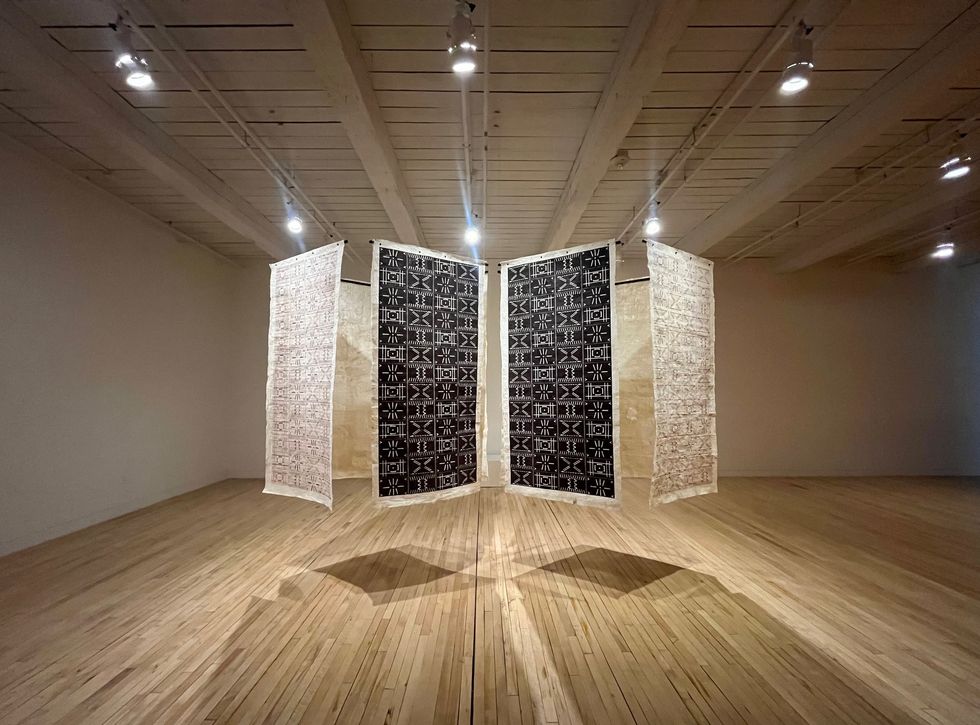
Living art takes center stage in the Berkshires

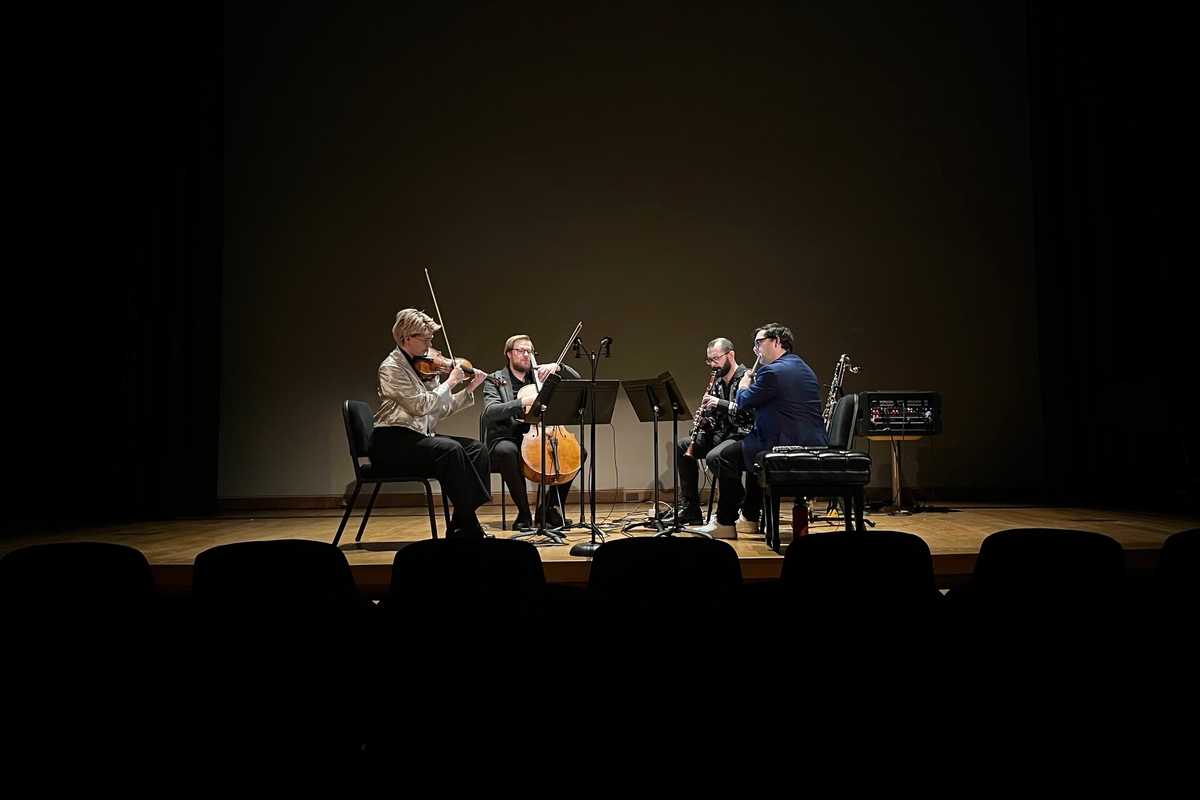
Contemporary chamber musicians, HUB, performing at The Clark.

D.H. Callahan

Northwestern Massachusetts may sometimes feel remote, but last weekend it felt like the center of the contemporary art world.

Within 15 miles of each other, MASS MoCA in North Adams and the Clark Art Institute in Williamstown showcased not only their renowned historic collections, but an impressive range of living artists pushing boundaries in technology, identity and sound.

Keep ReadingShow less
Persistently amplifying women’s voices

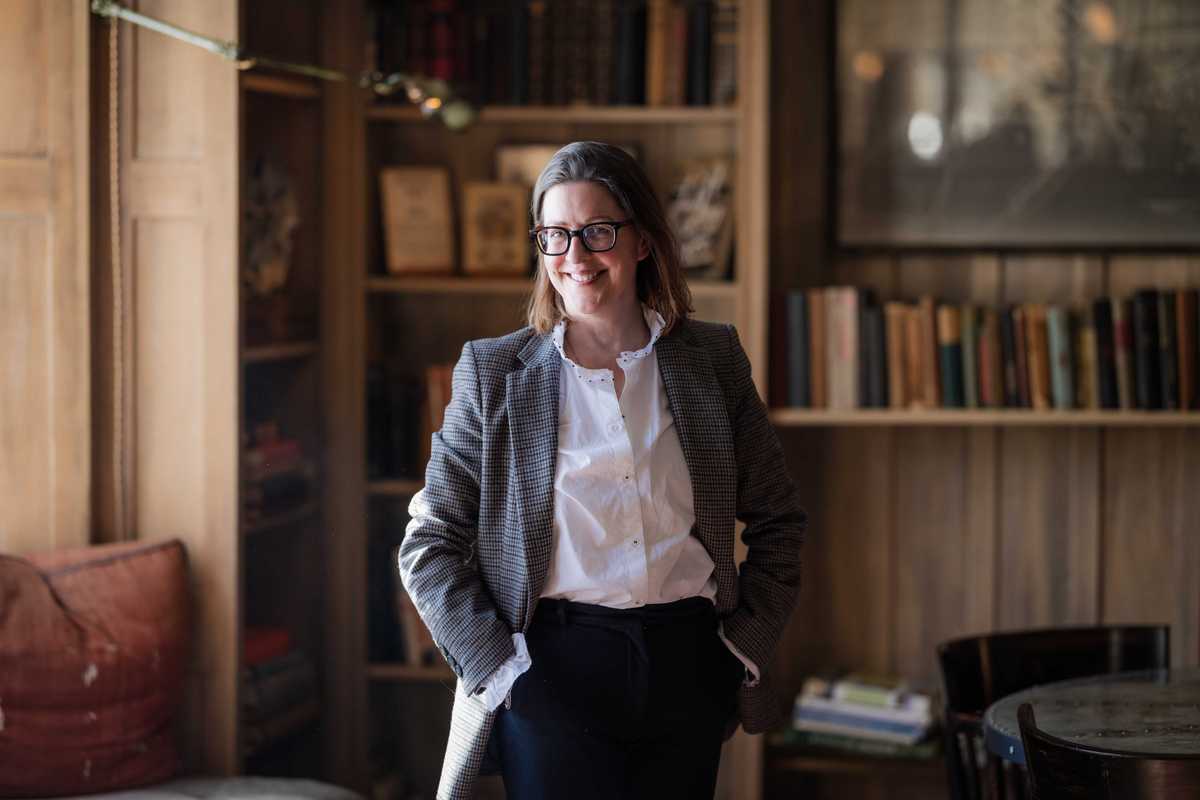
Francesca Donner, founder and editor of The Persistent. Subscribe at thepersistent.com.

Aly Morrissey

Francesca Donner pours a cup of tea in the cozy library of Troutbeck’s Manor House in Amenia, likely a habit she picked up during her formative years in the United Kingdom. Flanked by old books and a roaring fire, Donner feels at home in the quiet room, where she spends much of her time working as founder, editor and CEO of The Persistent, a journalism platform created to amplify women’s voices.

Although her parents are American and she spent her earliest years in New York City and Litchfield County — even attending Washington Montessori School as a preschooler — Donner moved to England at around five years old and completed most of her education there. Her accent still bears the imprint of what she describes as a traditional English schooling.

Keep ReadingShow less
Jarrett Porter on the enduring power of Schubert’s ‘Winterreise’
Baritone Jarrett Porter to perform Schubert’s “Winterreise”
Tim Gersten

On March 7, Berkshire Opera Festival will bring “Winterreise” to Studio E at Tanglewood’s Linde Center for Music and Learning, with baritone Jarrett Porter and BOF Artistic Director and pianist Brian Garman performing Franz Schubert’s haunting 24-song setting of poems by Wilhelm Müller.

A rejected lover. A frozen landscape. A mind unraveling in real time. Nearly 200 years after its premiere, “Winterreise” remains unnervingly current in its psychological portrait of isolation, heartbreak and existential drift.

Keep ReadingShow less
google preferred source

Want more of our stories on Google? Click here to make us a Preferred Source.
A grand finale for Crescendo’s 22nd season

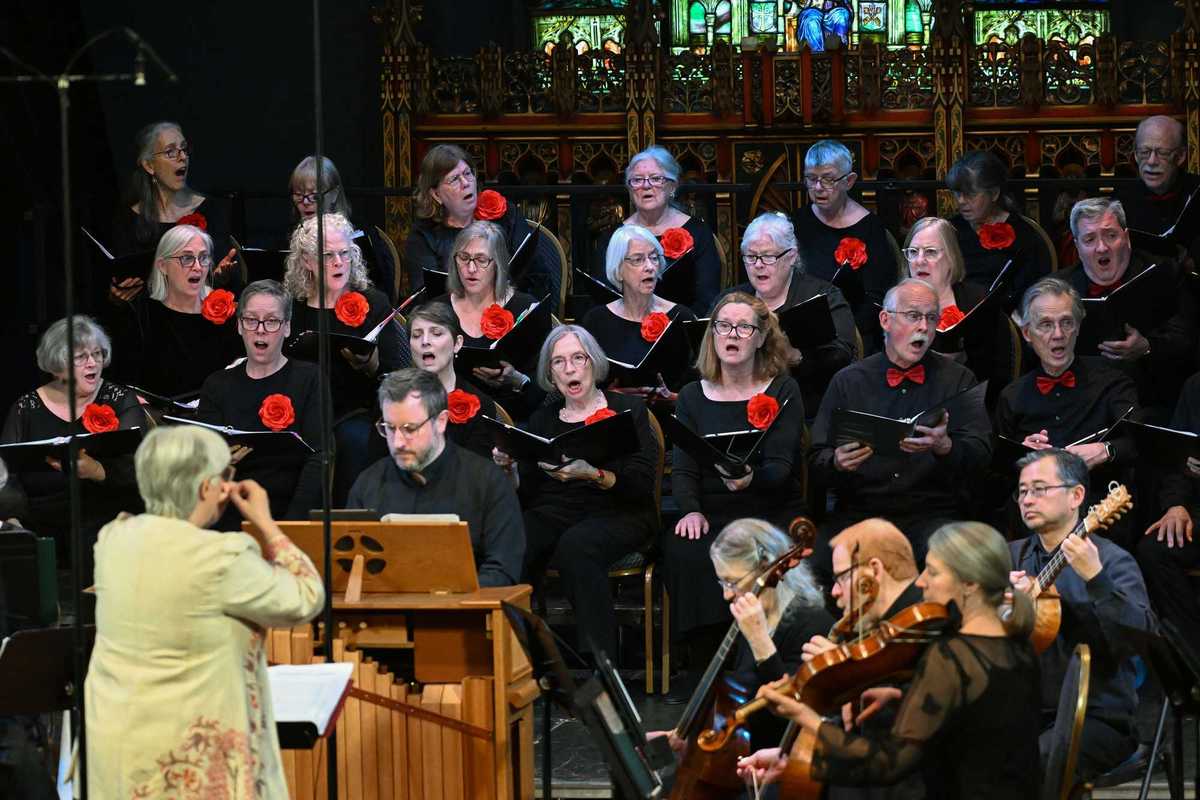
Christine Gevert, artistic director, brings together international and local musicians for a season of rare works.

Stephen Potter

Crescendo, the Lakeville-based nonprofit specializing in early and rarely performed classical music, will close its 22nd season with a slate of spring concerts featuring international performers, local musicians and works by pioneering composers from the Baroque era to the 20th century.

Christine Gevert, the organization’s artistic director, has gathered international vocal and instrumental talent, blending it with local voices to provide Berkshire audiences with rare musical treats.

Keep ReadingShow less

Leopold Week honors land and legacy

Leopold Week honors land and legacy

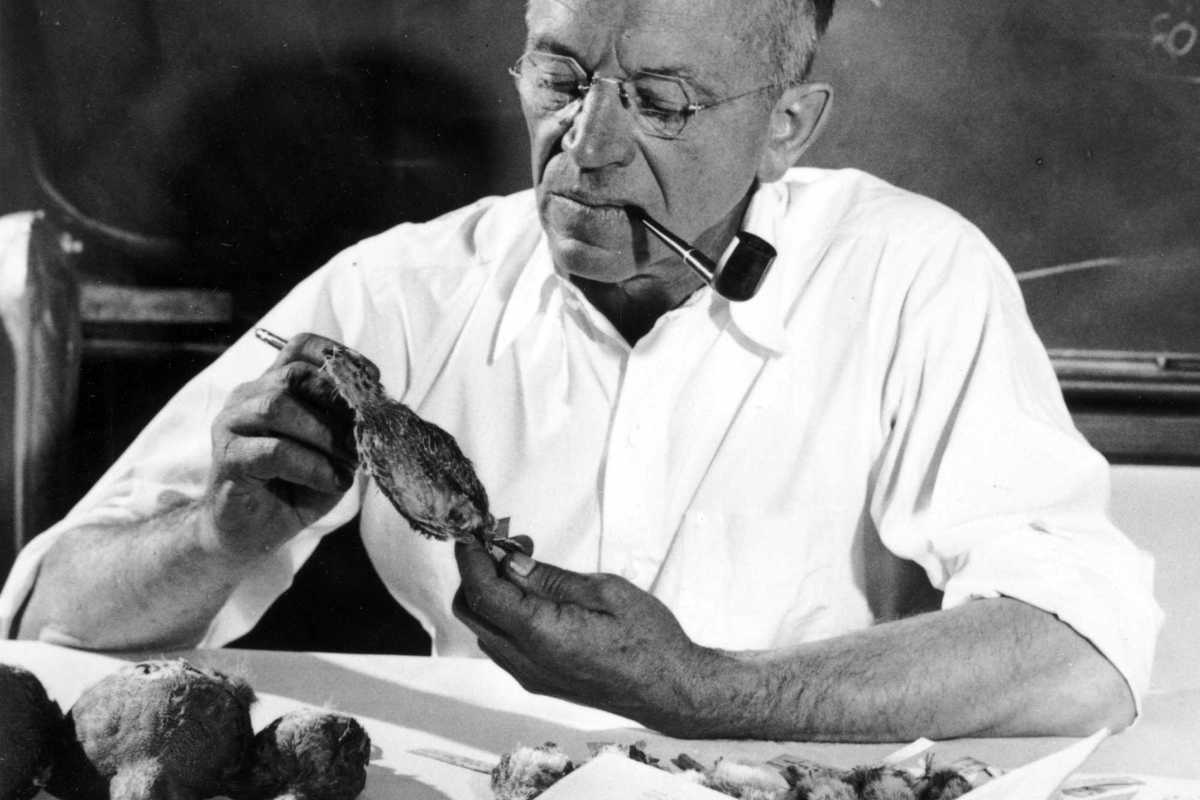
Aldo Leopold in 1942, seated at his desk examining a gray partridge specimen.

Robert C. Oetking

In his 1949 seminal work, “A Sand County Almanac,” Aldo Leopold, regarded by many conservationists as the father of wildlife ecology and modern conservation, wrote, “There are some who can live without wild things and some who cannot.” Leopold was a forester, philosopher, conservationist, educator, writer and outdoor enthusiast.

Originally published by Oxford University Press, “A Sand County Almanac” has sold 2 million copies and been translated into 15 languages. On Sunday, March 8, from 3 to 5 p.m. in the Great Hall of the Norfolk Library, the public is invited to a community reading of selections from the book followed by a moderated discussion with Steve Dunsky, director of “Green Fire,” an Emmy Award-winning documentary film exploring the origins of Leopold’s “land ethic.” Similar reading events take place each year across the country during “Leopold Week” in early March. Planning for this Litchfield County reading began when the Norfolk Library received a grant from the Aldo Leopold Foundation, which provided copies of “A Sand County Almanac” to distribute during the event.

Keep ReadingShow less

Erica Child Prud’homme

Erica Child Prud’homme

WEST CORNWALL — Erica Child Prud’homme died peacefully in her sleep on Jan. 9, 2026, at home in West Cornwall, Connecticut, at 93.

Erica was born on April 27, 1932, in Doylestown, Pennsylvania, the eldest of three children of Charles and Fredericka Child. With her siblings Rachel and Jonathan, Erica was raised in Lumberville, a town in the creative enclave of Bucks County where she began to sketch and paint as a child.

Keep ReadingShow less
google preferred source

Want more of our stories on Google? Click here to make us a Preferred Source.
google preferred source

Want more of our stories on Google? Click here to make us a Preferred Source.