Part 2 of 2
Note from the author: This series is based on a long face-to-face interview with Sharon resident Abby Nathanson, clarifications she provided in response to emailed questions, as well as photos, statistics, and several articles Abby sent to enrich my piece. Finally, my understanding of the asylum process was augmented by news articles on Tijuana and immigration at the southern border.
Abby Nathanson, who directs a leadership program for Latino high school students and a residential fellowship year for college graduates at Grace Episcopal Church in Millbrook, N.Y., spent her Christmas holiday in Tijuana. As described in the first part of this series, Abby is fluent in Spanish and French, and made herself most useful by preparing migrants for the “credible fear” interviews, their first step of the asylum-seeking process.
However, as Abby made clear, the U.S. Customs and Border Patrol is placing obstacles in the way of migrants moving forward at every step of the asylum process. To slow down immigration, the CBP has instituted arbitrary “metering” of the number of migrants who can enter the asylum-seeking process. In Tijuana, migrants applying for asylum are given numbers by CBP, and the plaza at El Chaparrel is filled with migrants standing by every morning, waiting to hear their number. To avoid direct contact between CBP agents and potentially angry or upset migrants waiting for their number to be called, a migrant woman calls out the day’s numbers. According to statistics Abby passed onto me, over 2,700 migrants waited for their number to be called each day in January of 2019, with an expected wait time of 22 days simply to enter the system.
Although migrants must respond to their number within an hour or two of its being called, no effort is made to inform migrants dispersed across Tijuana about the numbers being called on a given day. Since those staying in tents in El Barratel, 10 miles south of the border, must take a bus into central Tijuana, and many have jobs, responsibility for childcare and other reasons for not spending useless hours at El Chaparrel, migrants often take communication into their own hands, texting friends back in the camp or shelter the day’s beginning number. Migrants in the warehouse where Abby spent a few days posted the beginning number on the warehouse wall each day, and an anonymous webside has been created within the past month to inform migrants of the numbers being called. Nevertheless, on an average day in January, only about a third of the migrants whose numbers were called actually entered the process.
Once the migrants respond to their number, they become invisible from the Mexican side. Taken across the Mexico-U.S. border, they are detained for as long as a month, either in “temporary holding cells” recently built in San Ysidro, or in more permanent detention facilities, until they are given the initial credible fear interview, often by phone.
As late as December, some migrants were apparently still being separated from their children during detention. The anguish of this separation is exacerbated by the fact that migrants have their cell phones taken from them and lose whatever ID they may have brought from their home countries. Al Otro Lado, the organization for which Abby helped prepare migrants for their “credible fear” interviews, makes sure that migrants’ documents are scanned before they enter detention, and that the migrants receive a secure password to retrieve them once they are free.
Because the detention facilities in San Ysidro are famously cold, another of Abby’s tasks was to make pregnant women, mothers of babies and young children, as well as migrants in precarious health aware of the risks of entering the asylum process, even if this meant losing their place in line. Not surprisingly, border patrol agents pay periodic visits to the detention facilities to suggest that the migrants might want to be sent back to their home country.
The situation appears to be in flux for those migrants who pass the initial credible fear interview. Until recently, they were bused to a San Diego street, where they were dropped off to find their own way while they awaited a formal court hearing. But, according to the Trump administration’s new “remain in Mexico” policy, migrants are to return to Mexico, where they wait until the date of their actual court hearing in San Diego. Mexico has apparently pushed back, and I could not corroborate whether, or to what extent, the “remain in Mexico” policy is in effect.
In late January, two U.S. attorneys working for Al Otro Lado were denied entry into Mexico. While the event makes clear that Mexico is collaborating with the U.S., it also suggests that the Trump administration is pushing back against efforts by nonprofit organizations to assist the migrants in their application for asylum.
In early March, Abby returned to Tijuana. When I asked why, she answered thoughtfully, “I’m not entirely sure. I suppose I feel it’s a historic moment, and I believe in walking the walk.”
Carol Ascher, who lives in Sharon, has published seven books of fiction and nonfiction, as well as many essays and stories. She is the guardian of a young Guatemalan. Abby Nathanson can be reached at abby@epicjustice.org.


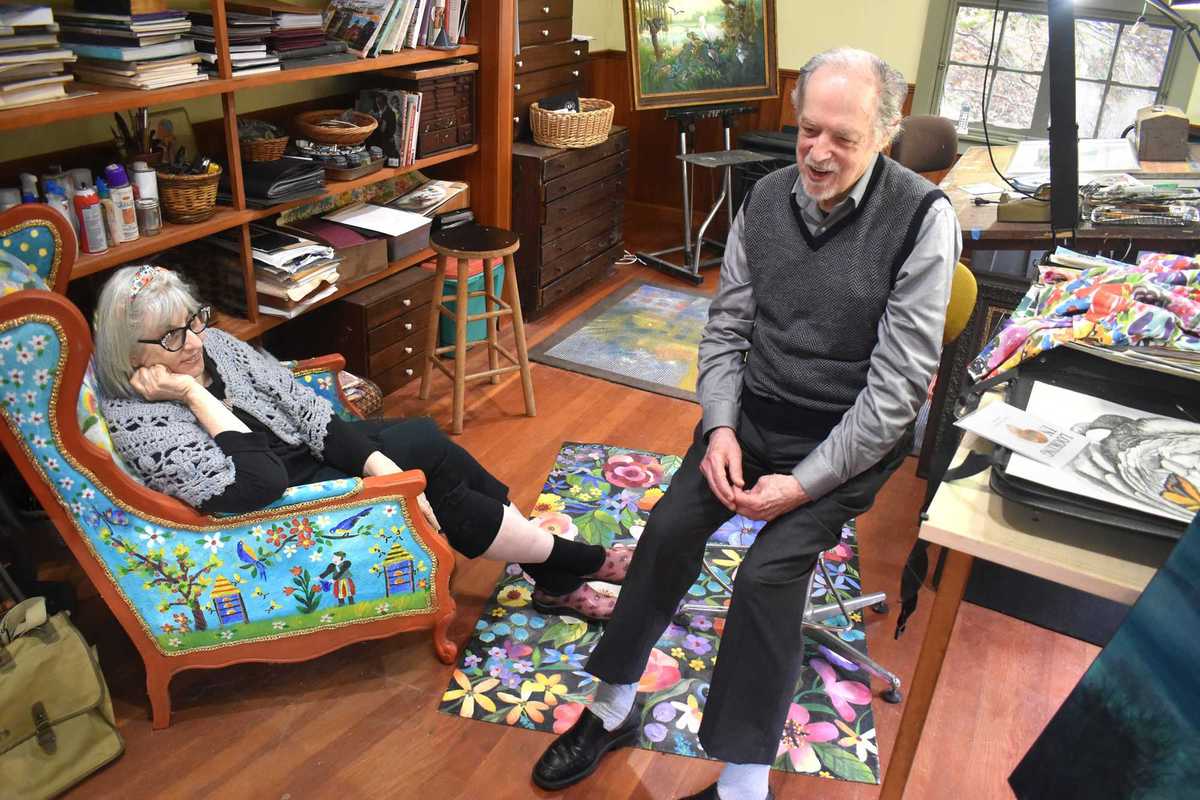
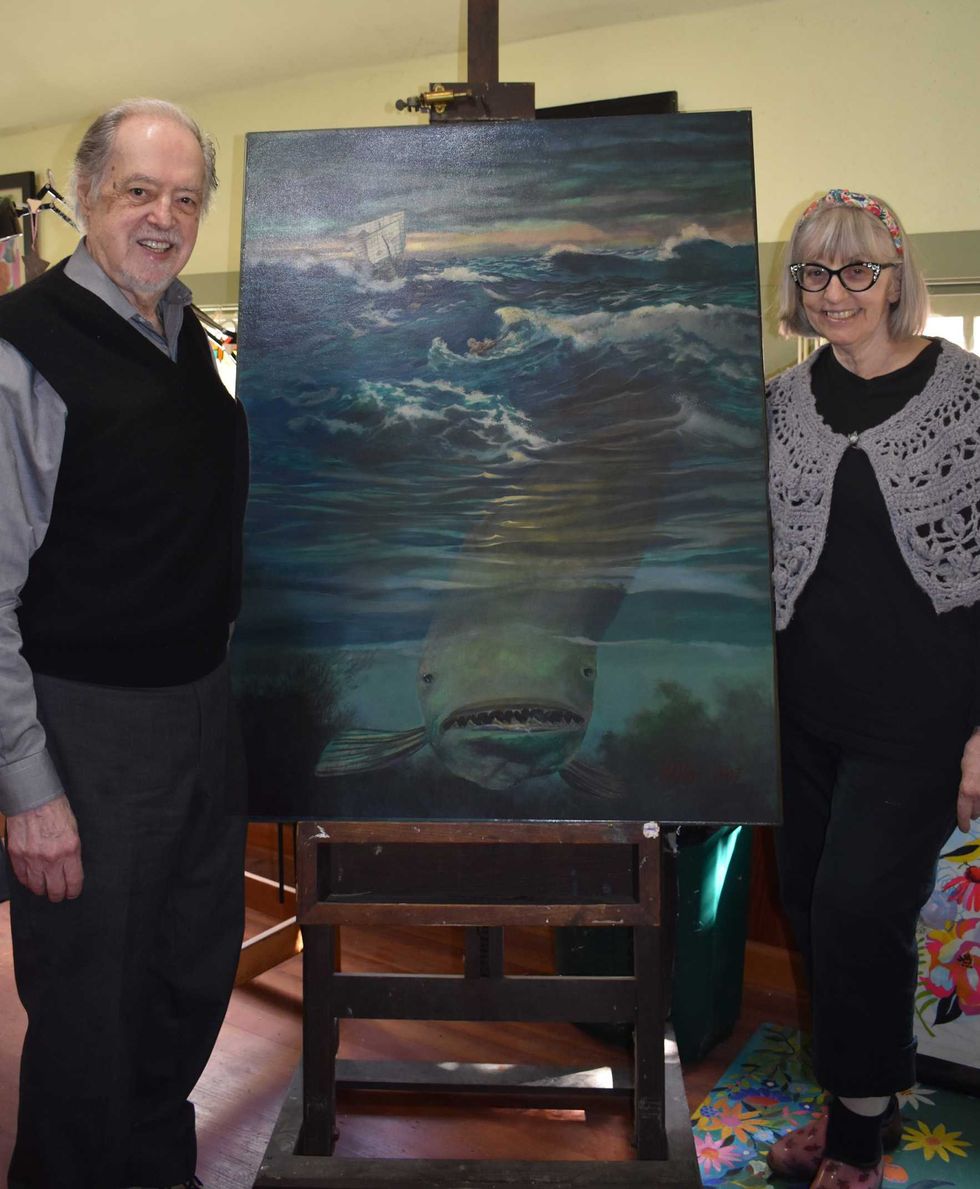 Justine and Victor Valla in their studio with a painting of Victor’s,”Jonah and the Whale.” Robin Roraback


 A ceramic vase by Kathleen Heidemann.Provided
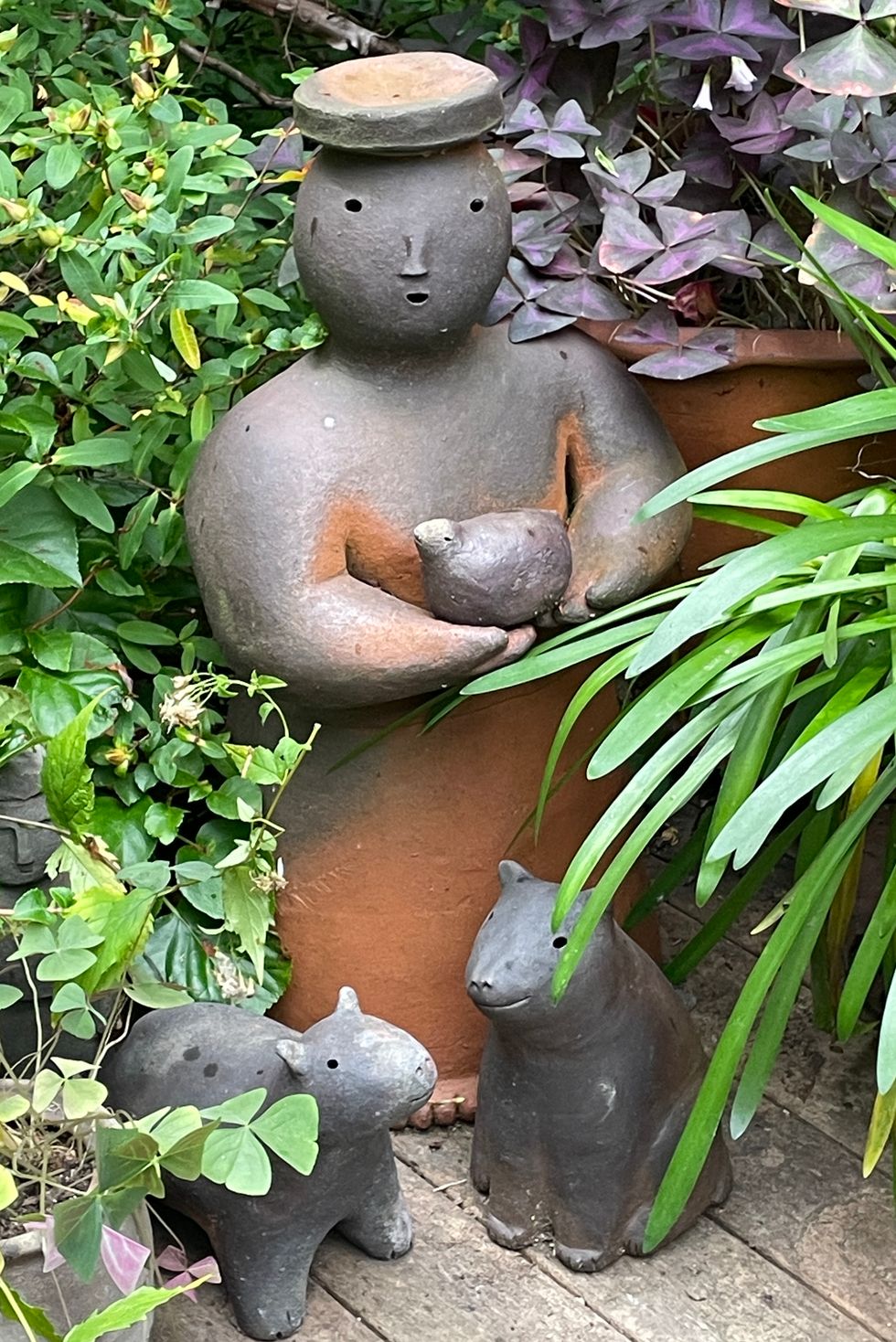 Joy Brown’s delightful ceramic sculptures.Provided