Senator McCain's complaint that Barack Obama's trip to the Middle East and Europe drew a disproportionate share of media attention exudes a strong odor of sour grapes, but there may be a modicum of justification for it. The charge reminds me of a similar complaint — that time by the Democrats — in the 1952 campaign between Dwight D. Eisenhower and Adlai Stevenson.
To the allegations of "one-party press," editors explained that in addition to telling audiences what they wanted to hear, Eisenhower simply looked better in photographs. He had what was described as a million-dollar smile, whereas too often Stevenson looked dour or was caught unconsciously displaying a hole in the sole of his shoe. The explanations were not altogether convincing, but in the end there was no arguing with the point that editors decide what they think is newsworthy. It may well be that Obama, like Ike, seems simply more attractive to news desks than his adversary, in this instance John McCain.
u u u
Among the cultural offerings that make this such an attractive area are the Tuesdays at Six lectures, sponsored by the Falls Village-Canaan Historical Society at the South Canaan Meeting House. This week Richard Grossman talked about the subject of his recent book, Ralph Waldo Emerson. On July 22 Peter Vermilyea, chairman of the History Department at the Housatonic Valley Regional High School, spoke of the three Wadhams brothers of Litchfield, all of whom were killed in the Civil War, the last at the Battle of Cold Harbor in Virginia on June 1, 1864.
This reminded me of the grossly disproportionate Connecticut casualties at Cold Harbor, the only such battle General Ulysses S. Grant said afterward he wished he had never fought. No fewer than 13 men from Salisbury were killed in that single engagement, a terrible price for a small town to pay. The monument on the green in front of the White Hart Inn attests their sacrifice.
This brings to mind other Civil War veterans from Salisbury, one of whom was Col. Edward Ball. His youngest son, William Henry Ball, lived in Winsted and corresponded frequently with The Lakeville Journal some 35 years ago. He always contended that Bald Peak, the familiar viewpoint in Salisbury, was originally known as Ball Peak after an early ancestor.
Forgive me for telling again of the experience of his father as a young private in Washington early in the Civil War. He was going on furlough and was standing in line at the Union Station waiting to buy a ticket. A burly fellow muscled him out of line, whereupon a tall, bearded figure standing nearby intervened and said, "Son, I'll get you a ticket." That fellow was Abraham Lincoln.
I never tell that story without recalling visiting my grandparents in Dayton, Ohio, in the 1920s, and riding on a streetcar past a row of Civil War veterans, many of them heavily bearded, sitting and rocking on the porch of the Soldiers' Home. It seems so long ago and yet so near.
u u u
What is happening to some of the nation’s and the region’s finest newspapers ought to prompt deep concern among our philosophical think-tanks as well as in our universities and in Congress. They are being cut and downsized into shadows of their former selves, while absentee owners insist on what a generation ago would have been regarded as an insane level of profits that often has very little to do with the local performance of the papers in question.
For example, the Hartford Courant this week began cuts in the news content and the size of the news staff, so as to meet profit levels decreed by its owner, The Chicago Tribune, to help meet debt obligations of the Zell group in Chicago. Thus many familiar names will soon no longer be at the Courant. The managing editor for news, Claude Albert has accepted a buyout after 37 years on the paper. His remaining colleagues will do their best, but under a severe handicap.
Similar changes have been taking place among other dailies in Connecticut. Robert Leeney, the distinguished former editor of The New Haven Register who died earlier this month, was the last token of independence on a paper smothered by the Journal-Register chain. James H. Smith, the outspoken editor of the Connecticut Post in Bridgeport, was summarily dismissed and the once-proud Danbury News-Times has become a sad example of the stultifying effect of chain journalism. Morgan McGinley, long editor of the editorial page of the independent Day in New London, was forced into retirement and locked out. There are similar stories from other Chicago Tribune-owned papers, the Stamford Advocate and the Greenwich Time.
u u u
Of course this is a microcosm of what has been happening nationally. The Los Angeles Times, once a monument to serious journalism, has gone through a series of editors and publishers under Tribune control. There are similar complaints from Minneapolis, Des Moines, Salt Lake City, San Francisco and so on. Even responsible papers like The New York Times, The Wall Street Journal and The Washington Post have their troubles.
I don't have any very good suggestions. I certainly wouldn't want government ownership as a guarantor of independence because I don't trust the longterm bonafides of government. Yet I fear we shall rue the day if the critical function of the press is lost as a hostage to profit-mania. A lot of our trouble started when some newspapers became public offerings to be bought and sold on the stock market as if they were mere commodities. And maybe here is part of the answer.
Maybe we have to find a way to enshrine the critical functions of an independent press as a national trust, to make sure the ownership will meet certain basic requirements, that the souls of newspapers are safeguarded from being regarded merely as properties like Trump Towers or the stockyards that are sold for the highest bid. Maybe we need a board of such persons as the chief justice, the speaker of the House and the president of Harvard or Yale to review proposed transfers of ownership. I am frightfully worried that unless we find a way soon to safeguard the public interest in an independent press we shall lose a protection of our freedom that, once lost, might never be recovered.
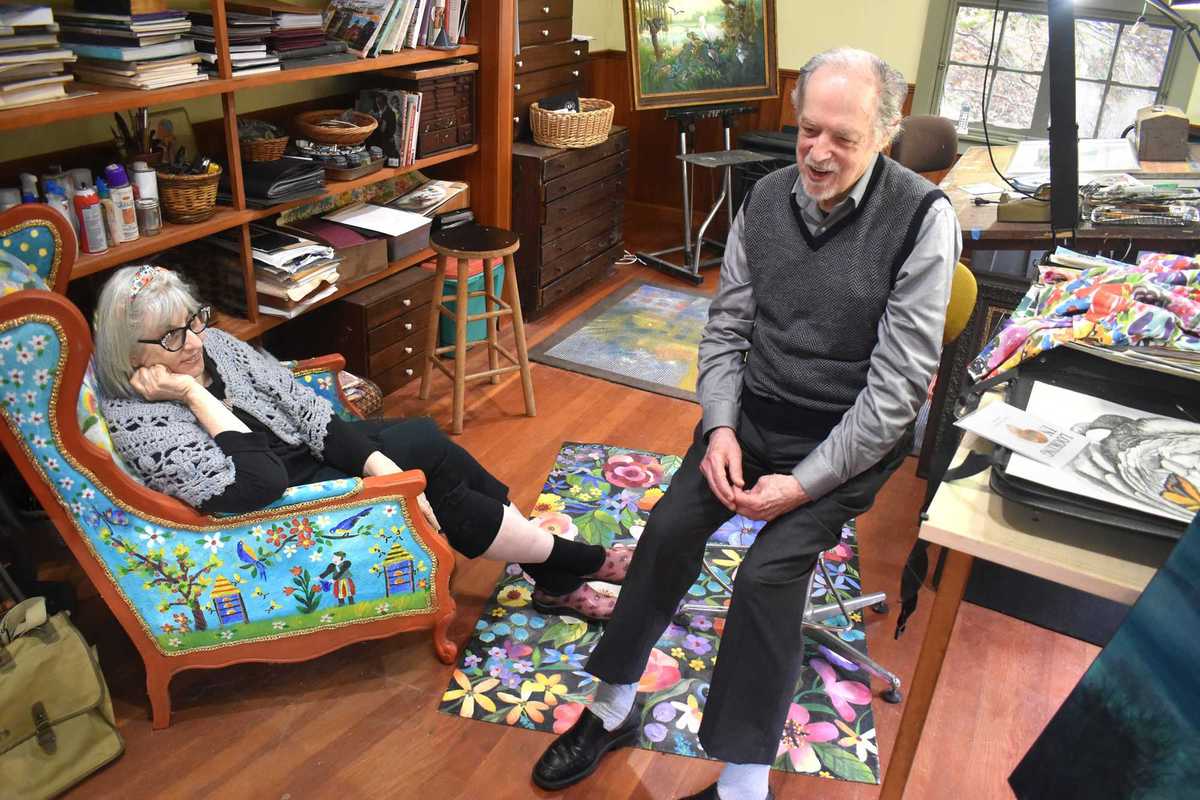
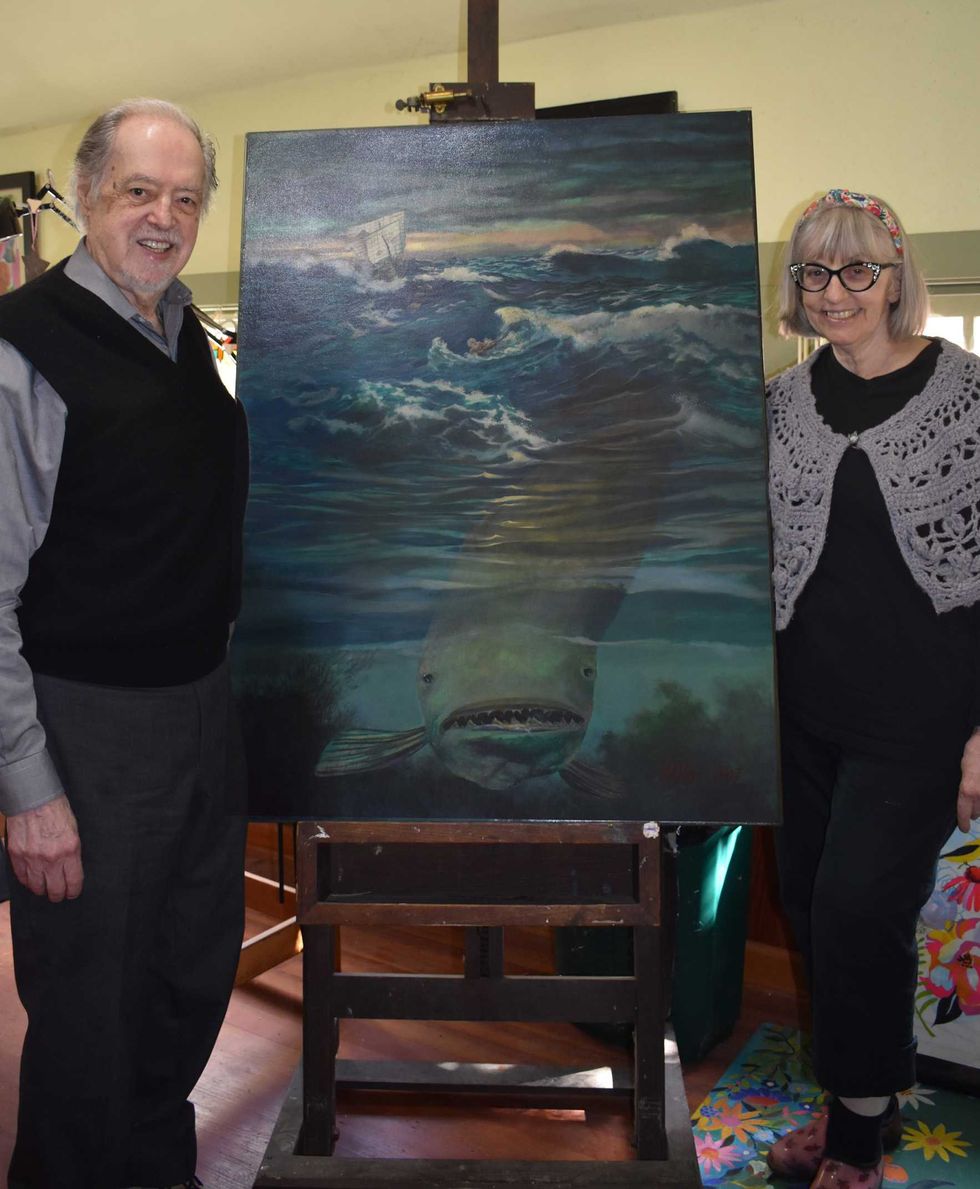 Justine and Victor Valla in their studio with a painting of Victor’s,”Jonah and the Whale.” Robin Roraback

 A ceramic vase by Kathleen Heidemann.Provided
 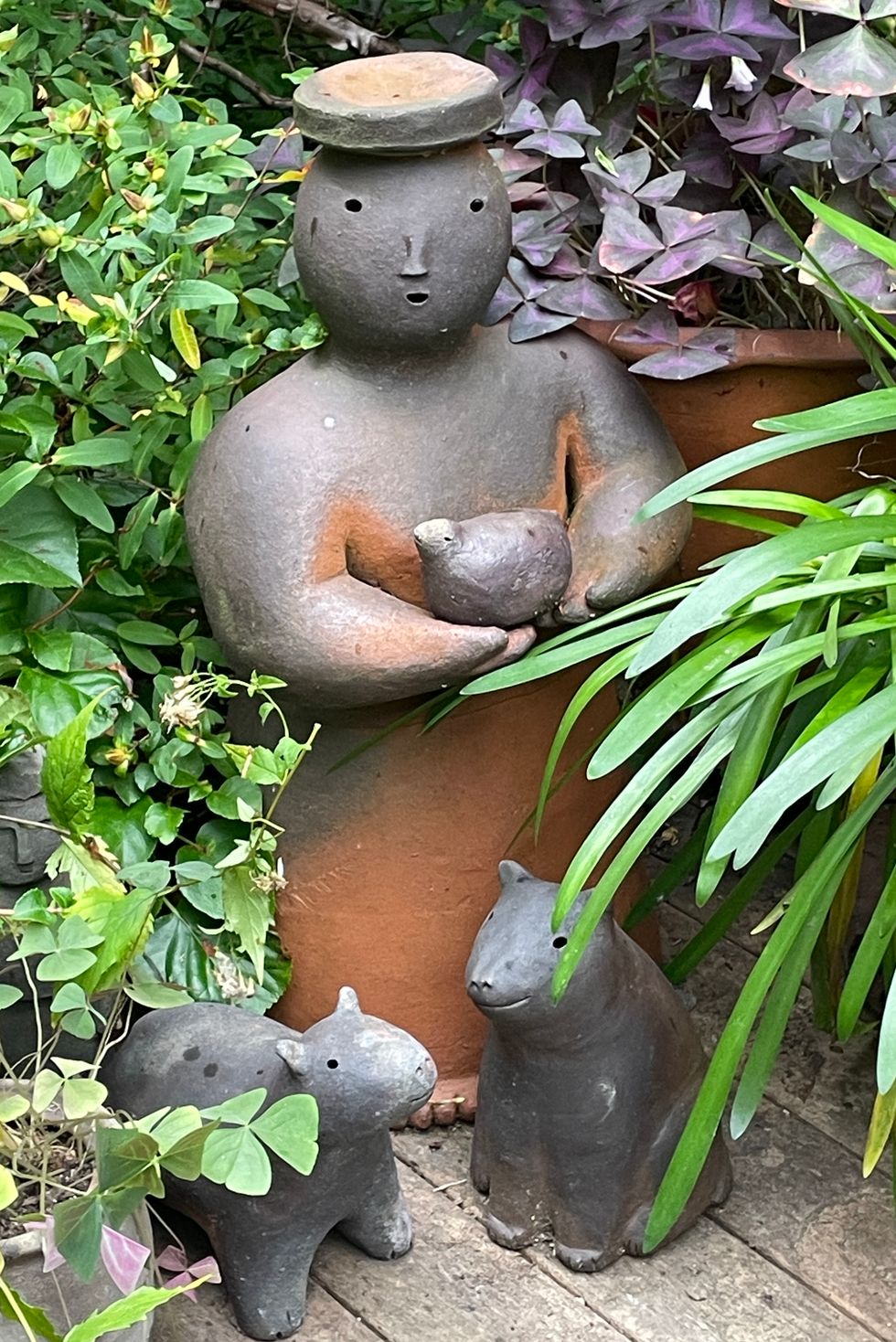 Joy Brown’s delightful ceramic sculptures.Provided