Thank you!
Your support is sustaining the future of local news in our communities.

Wheat is not the enemy, gluten is

’Tis the holiday season, the time when you need to come to terms with the food allergies and intolerances of loved ones who will be joining you for celebratory meals and cocktail parties. This column, over the course of the next few weeks, will devote itself to the feeding and care of those of us who are gluten sensitive, diabetic and vegetarian (presumably not all three at once but, hey, it could happen).In researching gluten sensitivity, I was able to talk to two of the nation’s leading experts on wheat and what it does to our bodies. It was super interesting, very surprising and could potentially improve the lives of those among us whose bodies rebel against bread and other wheat-based staples of life.A friend told me she’d heard that one reason for the rise in gluten distress and celiac disease is that wheat has become so hybridized that its chemical structure has changed. It is now so complex that our bodies can no longer process it. There is a kernel of truth to that hypothesis, but only a small kernel.All wheat that humans have consumed since the days of the pharoahs is the result of hybridization of one sort or another, according to Stephen Jones, a wheat breeder, professor and director of Washington State University- Mount Vernon Research Center, who is known to artisanal bread buffs as “Mr. Wheat.”Jones and his team grow what he described as “every variety of wheat that has been grown in the Pacific Northwest from 1840 to modern times.” In addition to growing the stuff, Jones also bakes with it. “I’m a wheat breeder, but we also have a bread lab. We look for functionality and flavor.”Jones makes all his own starter (using wheat kernels) and tests out his grain in his homemade daily bread.“There are suggestions that the older wheats, what are called heritage or heirloom wheats, are better,” Jones said. “That can be true, but it doesn’t have to be true. There is a mythology that the older ones are all good and the newer ones are all bad. In fact, there are some good modern wheats and there are plenty that are too strong; and there are also stronger and weaker older wheats.” Like swallowing gum The real problem is not in the wheat but in the glut of gluten hidden in many of the foods we eat today. As Jones explained it, in layman terms, gluten is a substance that’s like white bubble gum. If you or your child has ever swallowed gum, you know that it doesn’t really ever break down in your system, which isn’t a problem if it’s just that one piece of gum but … once you start ingesting it several times a day, your body begins to rebel.Alessio Fasano, my other wheat and gluten expert, is a professor at the University of Maryland School of Medicine, director of the Center for Celiac Research and director of the Mucosal Biology Research Center as well as a member of the Scientific/Medical Advisory Council of the National Foundation for Celiac Awareness.He said he agrees “100 percent” with Jones. The wheat is not the problem so much as it is the overuse of gluten in commercially processed foods.His research has shown that some people are born with a predisposition to have celiac disease or to be gluten sensitive. The seeds for what he describes as a type of autoimmune disease can live quietly in the body until certain triggers arise.It starts at birth. In most cases, he said, if a mother is able to tolerate gluten and she breastfeeds her infant, the baby is less likely to have problems with wheat. That’s a positive trigger.On the negative side, he said, babies who are delivered by Caesarian section are three to four times more likely to have gluten sensitivity or celiac disease.A heavy use of antibiotics is also likely to trigger a gluten disorder, he said. It’s everywhere But the biggest problem is that so many foods now sold at grocery stores are gluten enriched that the body reaches a point where “the genes can be distressed to the point where you lose the ability to tolerate gluten,” Fasano said.Gluten is now used in a stunning and surprising array of processed foods. “It’s all over the place,” Jones said. “Anytime a manufacturer wants to boost the amount of protein in a food, they add gluten. It’s also used as a thickener.”“Our grandparents knew exactly where their gluten was coming from,” Fasano said. “It was in bread, pasta, beer, cookies. We don’t have that situation now. You go into the supermarket and buy things like chicken breasts or meatballs; they should be gluten free but they aren’t.”This has led to an epidemic of gluten issues, he said. “In the timeframe of the last 50 years, the disease has doubled. Many people who ate gluten for years with no problem are suddenly unable to do so.”Obviously, the place where the gluten lurks most insidiously is in bread, especially in what Jones calls “plastic wrap” bread. Bread is supposed to sit and ferment and rise and fall and rise again over a two- or three-day period. Commercial breads are pumped up with gluten supplements so they rise faster; not only do they have an excess of gluten, they also don’t benefit from the chemical process in which the gluten is broken down into a manageable substance.“We can’t completely digest gluten,” Fasano said. “But yeast can. If you leave the dough for 16 to 18 hours, it gives the yeast time to dissolve the toxic elements.”Also, Jones said, “The flavors develop more completely in the longer rise.” And the slower breads are actually more nutritious. Homemade artisanal bread Jones said that even though it takes longer to make bread the old-fashioned way, “it’s fun to go through all the steps.”The first step, for him, is to make starter from wheat kernels, which he grinds himself. If you want to try it yourself, you can use a nice clean coffee grinder. He’ll even send you some wheat kernels if you contact him by email (joness@wsu.edu); you can grind them — or plant them and let them grow in your yard. You can also order wheat (in 1.5-pound packages or up to 50 pounds) from the Wild Hive Community Grain Project in Clinton Corners, N.Y. (orders@wildhivefarm.com or call 845-266-0660); and you can order seeds from www.sustainableseedco.com.Jones suggests that you take a half cup of ground kernels and mix them with a little less than a half cup of water (the water should be filtered, with no chlorine). Let it sit for a day, then add another half cup of wheat and another half cup of water. The third day add a half cup of white flour and a little less than half a cup of water. “The consistency throughout should be a middle-stiff dough, not runny,” Jones said. “A one-quart mason jar works very well; use a plastic top as opposed to the two-piece metal screw lid. “After it goes ape, it should be kept in the fridge and only fed with white flour. “You’ll know when it’s ready,” he added. “You can see it.”For the bread itself, you can use a heritage wheat flour from a grower such as Wild Hive; but be forewarned that these wheats can be less predictable and require some experimentation. They also tend to make bread that is very crumbly. If you’re up for the experiment, get a big bag of heritage wheat flour and have some fun. If not, Jones recommends organic flours from King Arthur.“It’s a high-quality, consistent wheat, we use it as the standard in our bread lab,” he said. “And they’re starting to get into the local wheat movement, which is nice. They appreciate the fact of local flavors, and they’re working with Vermont wheat farmers to develop lines with more local wheat.” The recipe that Jones uses for his daily bread also comes from King Arthur, or from its head baker, Jeffrey Hamelman, who wrote what is apparently the definitive guide to making your own loaf. Jones makes the Vermont sourdough, which apparently has a cult following. The recipe is simple (starter, salt, water and flour) but the technique is too complicated to share here. Hamelman’s book is called “Bread: A Baker’s Book of Techniques and Recipes.” Is there hope? For some people, choosing artisanal, slow-rise breads and avoiding supermarket products enriched with extra gluten might be enough to alleviate some of the gastric distress that wheat can cause. But of course there are many people who will simply need to avoid pasta and other wheat products.For those with a mild sensitivity, those who probably could have eaten wheat happily if they hadn’t been overexposed to it, the question is: If you cleanse your body of gluten will your body be able to tolerate it in moderate quantities someday?Probably not, unfortunately.“For wheat allergy, it has been described that people can grow out of it,” Fasano said. “As concerns gluten sensitivity, we do not know for sure if this can happen. In terms of celiac disease, we know that occasionally people who have followed a gluten-free diet for a long time can reintroduce gluten without immediate consequences. “However, it seems that most of the time these individuals will experience a relapse with celiac disease over time, sometime after years of being on a regular diet.”

Latest News

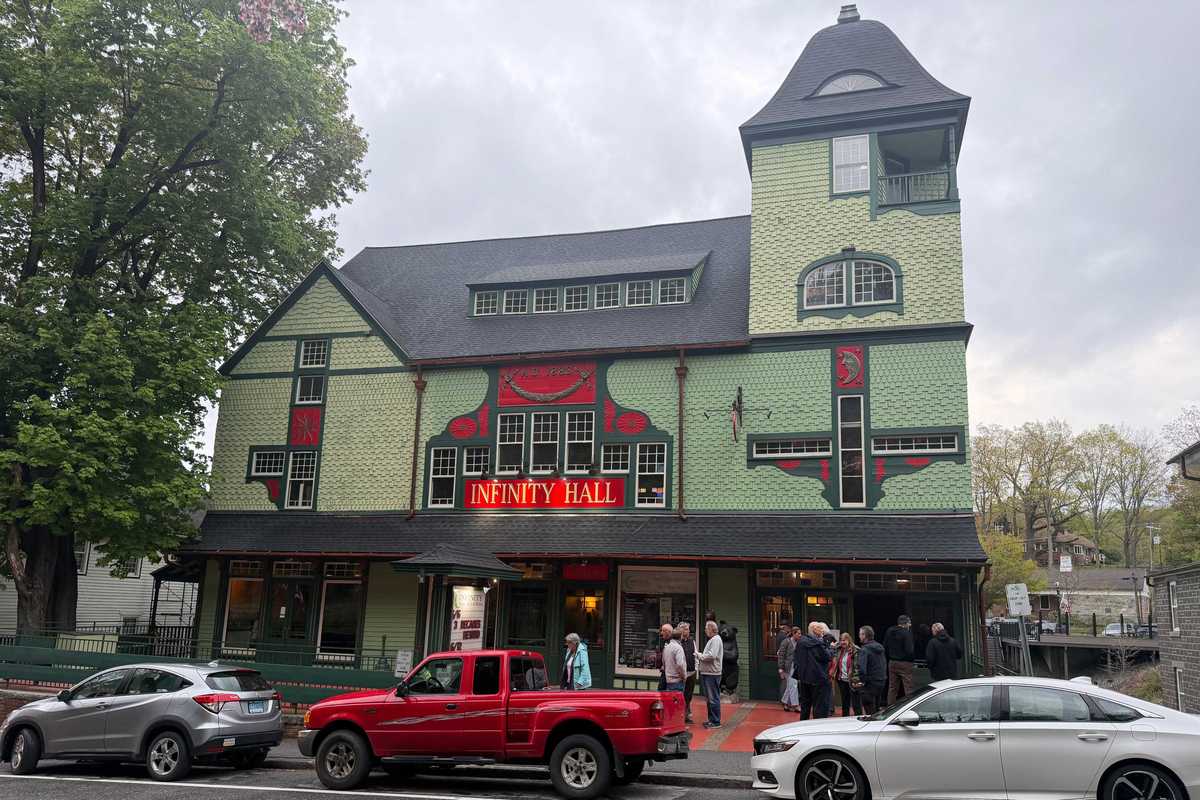
Plans to revitalize Norfolk’s Infinity Hall unveiled

Infinity Hall, built in 1883.

Jennifer Almquist

Nearly 200 people packed the wooden seats of Norfolk’s historic Infinity Hall on Thursday, May 14, as David Rosenfeld, owner and founder of Goodworks Entertainment Group, a live entertainment and venue management company, unveiled ambitious plans to restore the restaurant and bar, expand programming and reestablish the venue as a central gathering place for the community.

Since the Norfolk Pub closed on Jan. 31, 2026, the need for a restaurant and evening gathering place has become paramount, and for years residents have wanted Infinity Hall to be more engaged with the community.

Keep ReadingShow less

May Castleberry’s next chapter

May Castleberry’s next chapter

May Castleberry at home in Lakeville.

Natalia Zukerman
Castleberry’s idea of happiness is “looking at a great painting.”

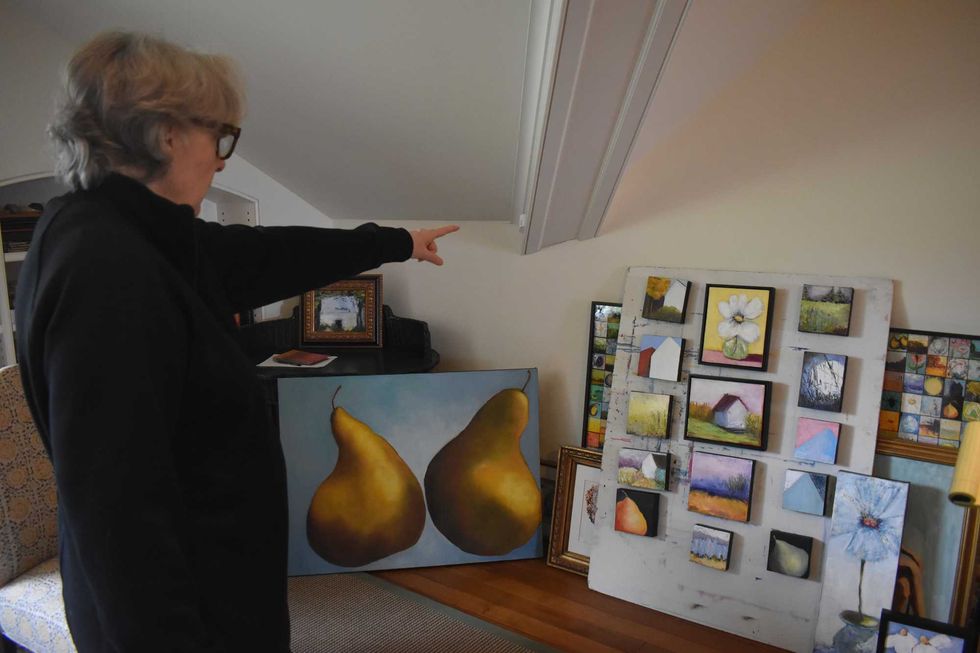
May Castleberry is a ball of sunshine and passion, though she grew up an introverted child, moving with her family from Alberta to Colorado to Texas, finding comfort in mountains, books and wide-open skies. Today, the former art book editor and museum curator has found a new home in Lakeville, where the natural beauty of the Northwest Corner continues to captivate her. Whether walking with friends, painting, reading or visiting beloved local libraries in Salisbury, Norfolk and Cornwall, Castleberry has embraced the region since making her move permanent in 2022, bringing with her a remarkable career shaped by a lifelong love of books and art.

Castleberry grew up in the world of books, and especially art books, and she credits her artist mother, an avid art book collector, with igniting her passions. Castleberry’s high school art teacher in Dallas understood how to teach students to channel their imaginations into books and art.

Keep ReadingShow less
Hoarding 
With Style: Sarah Blodgett’s art of collecting

Sarah Blodgett has turned her passion for collecting into “something larger.”

Photo by Sarah Blodgett

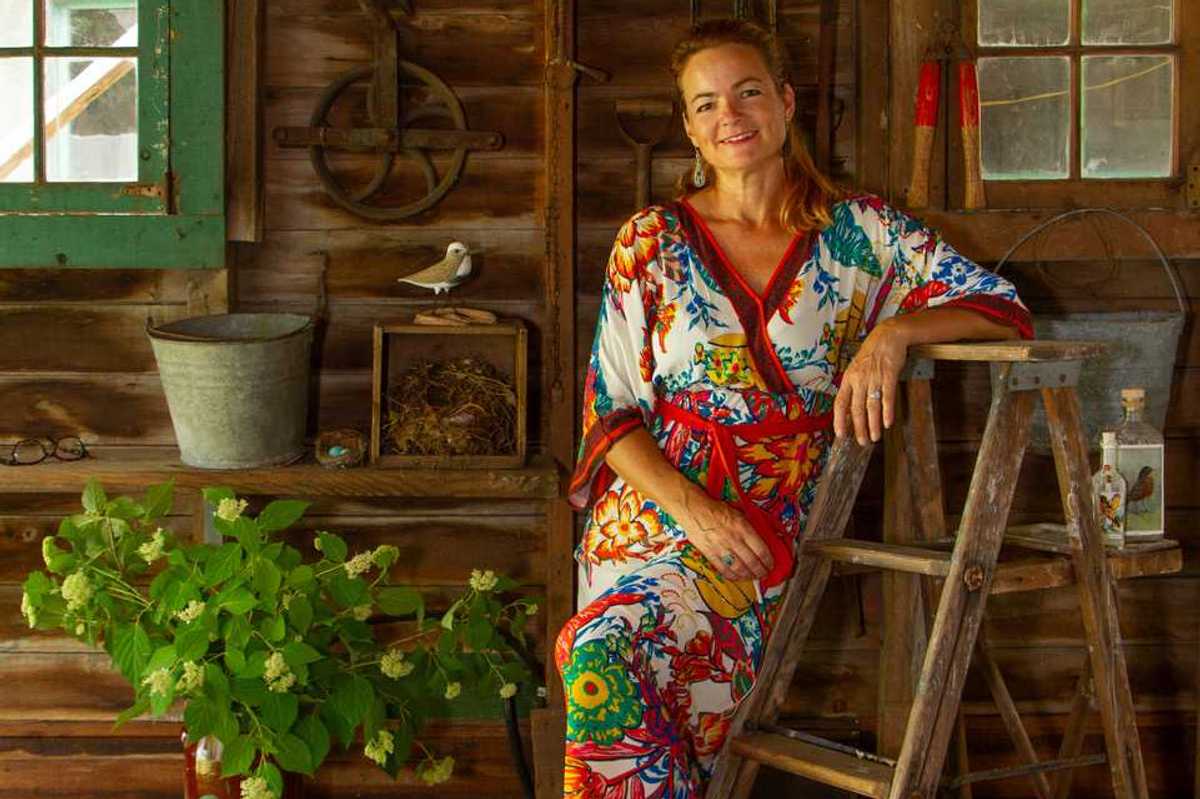
There is something wonderfully disarming about walking into a space where nothing feels overly polished, overly planned or pulled from a catalog — a place where history lingers in the corners, where color is fearless, where the objects on the shelves have stories to tell and where, if you are lucky, a cat named Cinnamon may be supervising the entire operation.

That is the world of Sarah Blodgett.

Keep ReadingShow less
google preferred source

Want more of our stories on Google? Click here to make us a Preferred Source.

Dr. Paul J. Fasano

Dr. Paul J. Fasano

SHARON — Dr. Paul J. Fasano DDS, of Brewster, Massachusetts, passed away peacefully after a long illness on May 10, 2026, in Boston.

Born in Boston to Philip and Laura (Stolarsky) Fasano on Dec. 13, 1946, he grew up in Dorchester with his two brothers Philip and William.Paul attended the Boston Latin School and graduated from Boston College in 1968.He later completed Dental School at New York University in 1972.

Keep ReadingShow less

David Niles Parker

David Niles Parker

KENT — David Niles Parker, 88, of Middletown, Connecticut, passed away at home on May 6, 2026.

Born January 20, 1938, in Wellesley, Massachusetts, the first child to Franklin and Katharine Niles Parker, David graduated from Wellesley High School, received his undergraduate degree from Wesleyan University, studied at the University of Chicago Divinity School, and earned his master’s in education from Harvard.

Keep ReadingShow less
Janet Andre Block is ‘Catching Light’

Artist Janet Andre Block in her studio in Salisbury.

L. Tomaino

What do Johann Sebastian Bach’s Goldberg Variations, Richard Wagner’s Ring Cycle, Wolfgang Amadeus Mozart’s piano concertos and a quiet room have to do with Janet Andre Block’s work? They are among the many elements that shape how she paints, helping guide her into the layered, luminous worlds she creates on canvas.

Block makes layered oil paintings in rich, deep, misty colors, reflecting her study of technique at the Boston Museum School and her work at New York University, including time studying studio art in Venice.

Keep ReadingShow less
google preferred source

Want more of our stories on Google? Click here to make us a Preferred Source.

google preferred source

Want more of our stories on Google? Click here to make us a Preferred Source.