Thank you!
Your support is sustaining the future of local news in our communities.

When you could hear a pin drop in the forest

SALISBURY — A discussion of the Great Mountain Forest in Norfolk and Falls Village and its history would be incomplete without noting the man who was for many years the town of Salisbury’s tree warden: George Kiefer. 

And in fact on Jan. 17, when the new GMF Director, Hans Carlson, gave a talk at the Norfolk Library, Kiefer’s name came up as he talked about how GMF developed before and after World War II under the direction of Ted Childs.

This reporter visited Kiefer on Thursday, Jan. 22, at his home on Selleck Hill Road.

Kiefer sat in his kitchen, wood stove blazing, and talked about his days at GMF, where he worked from 1948 to 1952 as a forester.

He described the job by season. In the winter, the crew would walk to wherever the job site was, with their axes and crosscut saws.

A constant task was simply thinning the forest out.

“We chopped and sawed and split and piled” 4-foot lengths of wood, for firewood.

“We’d knock off for lunch, make a little fire maybe, have a bottle of water and a sandwich.”

In the spring, Kiefer planted conifers in seed beds and moved the previous crop to transplant beds for eventual transplanting into designated sites in the forest.

“We’d plant them wherever Ted [Childs] wanted.”

Other duties included tending the sugar shack, where maple syrup was made, and delivering firewood to a dozen or so customers.

Kiefer said that Childs tried to take some of the firewood to his Manhattan apartment, only to run into difficulties in getting it unloaded.

“You had to be a union man to unload it,” said Keifer. “It was another world down there.”

In the summer, the crew worked on forest roads. One of Kiefer’s jobs was to set out stakes to indicate culverts.

“I cut chestnut poles. We had a 55-gallon drum with one end knocked out and creosote in the bottom. We’d build a fire and cook the posts so they wouldn’t rot.”

Bugs were a problem in the summer, and insecticides were not an option. There was one particular species of insect that was getting fat on the red pine plantation.

Kiefer said he found a truly hands-on method for getting rid of the bugs.

“If you waved your hand at them, they all stood up. The easiest way to kill them, then, was to just run your hand down the branch and squash them.

“It was the simplest and cheapest way to do it.”

The deer of the GMF were fond of the terminal buds on Norway spruce that were between 4 and 6 feet.

If the deer ate the buds, the subsidiary buds “took over,” and the tree would have a crook in it.

This was undesirable, since the goal was straight trees for lumber.

“Ted figured out a mixture of cow manure and lime. It was the consistency of apple sauce. We’d dab it on the buds in the fall, and it repelled the deer.

“That was ‘wildlife control.’”

Old pastures in the forest were full of blueberries. The crew spent time girdling or cutting trees — usually gray birch or red maple — that threatened to “shade out” the blueberries.

And the crew spent time pruning lateral branches for access. “There were about 1,200 trees per acre in some places,” Kiefer said. “It got pretty crowded in there.”

And all this work was done by hand. Kiefer said there were no chain saws or other power tools at GMF until his third and final year.

“Before chain saws, working in the woods was quiet. A saw and an axe. It was just pleasant.

“There’s so damn much noise in the woods now. It’s a shame.”

The GMF sugar shack in those days worked with sap from between 200 and 400 buckets, Kiefer said. “Pipelines hadn’t been invented.”

Kiefer still makes syrup, with his son, Mat, at the family property on Selleck Hill Road.

He said he’s been making syrup for at least 60 years, and while his son handles the evaporator, Kiefer still does the bottling.

“It’s a lot of work. But it’s good work, and goes with the season.”
Latest News

Doug Tallamy’s work in progress: saving the planet one backyard at a time

Windacre, a 25-acre property in Millerton will be the site of “Work in Progress,” an afternoon with acclaimed entomologist, New York Times bestselling author and Homegrown National Park co-founder Doug Tallamy.

Provided

For nearly three decades, Doug Tallamy, a professor at the University of Delaware and co-founder of Homegrown National Park, has studied the intricate relationships between native plants, insects, birds and the ecosystems that sustain them. His books, including “Bringing Nature Home” and “Nature’s Best Hope,” have helped shift the conversation about conservation from something that happens primarily in parks and preserves to something ordinary people can practice on the land around them.

On Sunday, Oct. 4, Tallamy will bring that conversation to Windacre in Millerton for “Work in Progress: Toward Native Fields,” an outdoor gathering exploring both the possibilities and the complications of restoring private land for biodiversity.

Keep ReadingShow less
Celebrating Dick Hermans’ life built around community

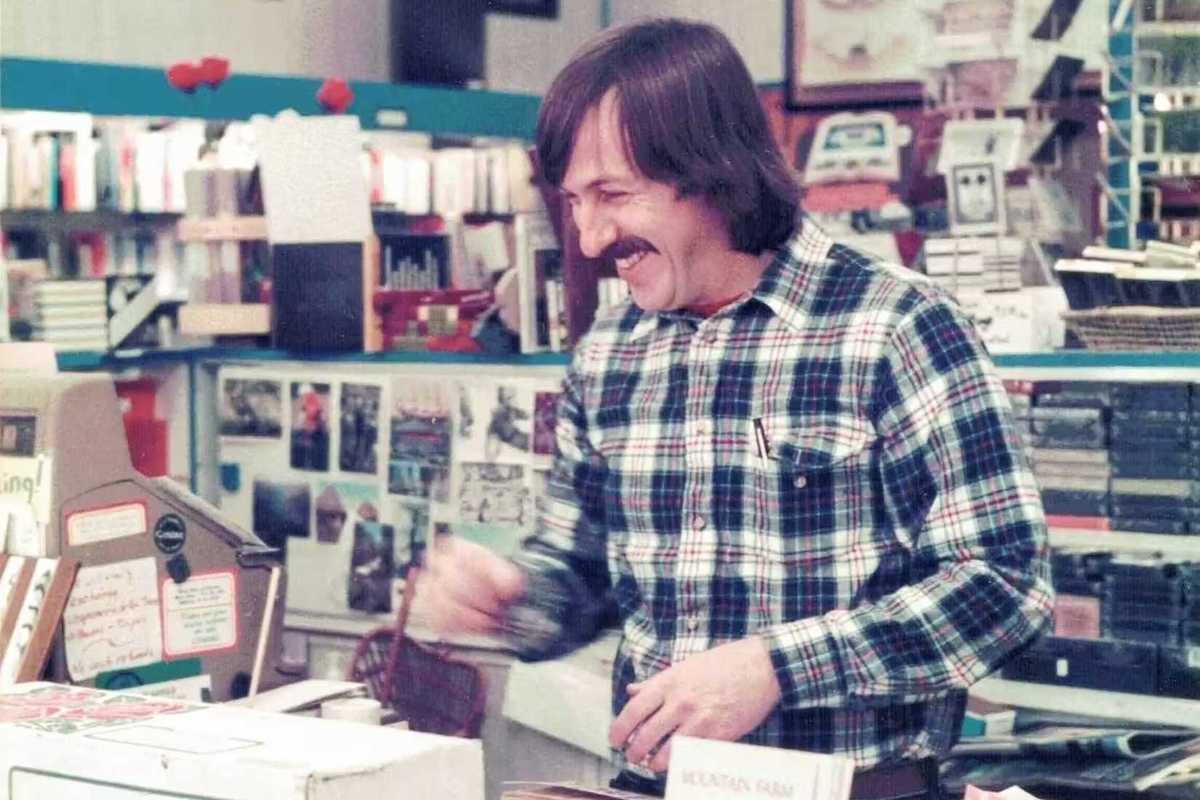
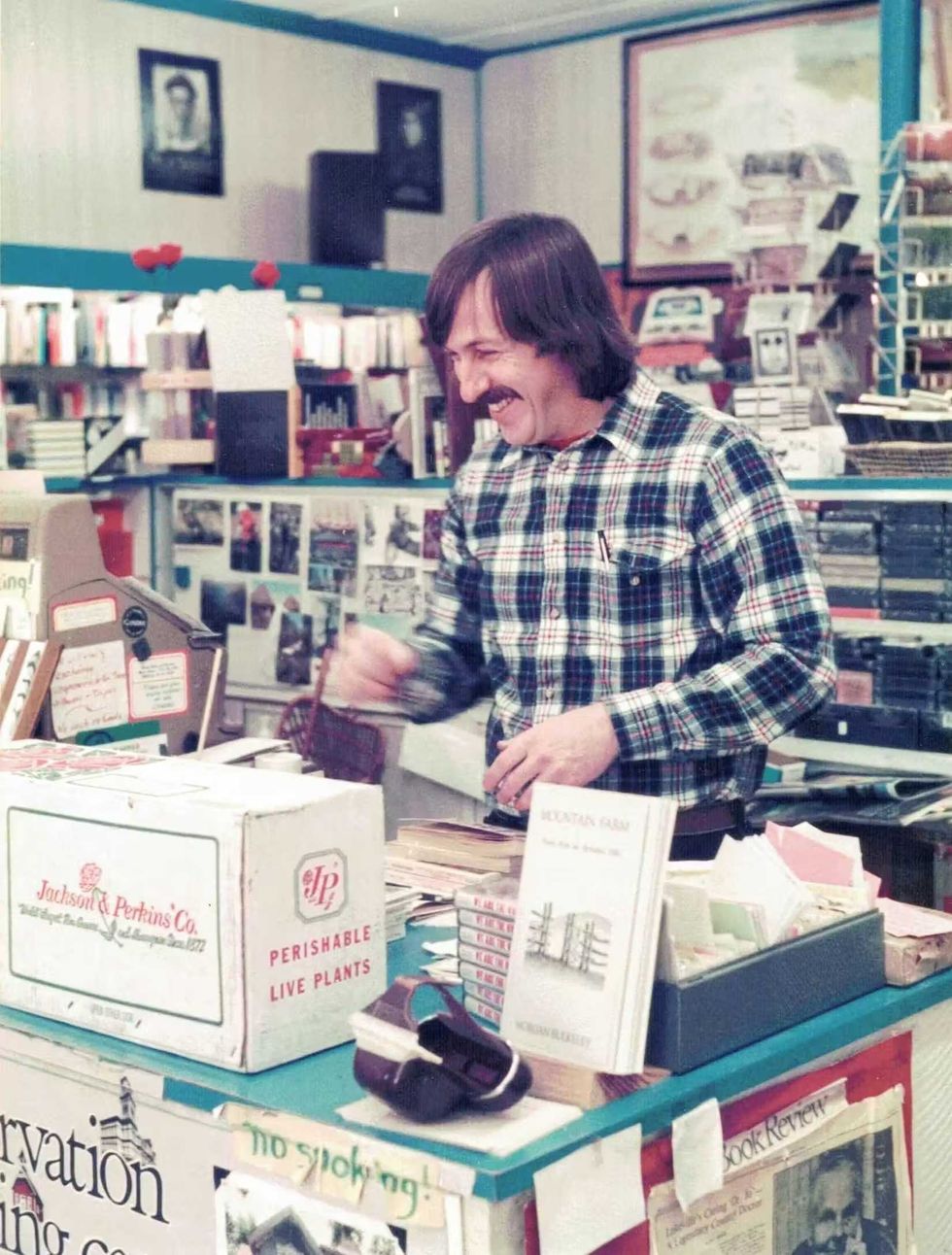
Dick Hermans in the Oblong Bookstore on Millerton\u2019s Main Street in 1985.

Provided
No matter what I’ve done, I’m trying to be useful to the communities I’m associated with.
— Dick Hermans

When Dick Hermans receives the Estabrook Community Leadership Award on Oct. 11, he will accept it for a lifetime of work that has taken many forms: bookseller, radio host, school board member, advocate for the Harlem Valley Rail Trail, business owner, volunteer and, perhaps most importantly, a person who has consistently looked for ways to be useful to the communities around him.

The Lakeville Journal and The Millerton News will present Hermans with the 2026 award at the annual Jubilee celebration at the Sharon Playhouse. The award honors outstanding leadership in community service and was inspired by Mary Lou and Robert Estabrook, former owners of the newspapers who believed that strengthening a community extended well beyond the work of publishing a newspaper.

Keep ReadingShow less
Tending the Fire: Homelands PowWow brings Mohican culture home to the Berkshires

Members of the Stockbridge-Munsee tribe at Homelands PowWow in 2025.

Joeseph Plante New Media Storytellers
Our goal is to continue building an annual gathering that honors the history, culture and traditions of the Stockbridge-Munsee Band of Mohicans in their original Homelands.


For the Stockbridge-Munsee Mohican people, the Berkshires are not simply a place to visit. They are ancestral homelands.

Keep ReadingShow less
google preferred source

Want more of our stories on Google? Click here to make us a Preferred Source.

Ancram Center’s “A Number” doubles questions of identity
Ledbetter (left) and Wojda (right) on the set of “A Number” at Ancram Center for the Arts.
Jeff Mousseau

How would you feel if you found out you weren’t the only you — if there was an exact replica of you? What if you found out that you’d been cloned? Would you believe that you’re the real you? Would you suspect you might be a copy of the original? How could you be sure anything about your life was real? These are some of the questions posed in Caryl Churchill’s play “A Number,” opening at the Ancram Center for the Artson Oct. 1.

Churchill was born in London in 1938 and has been hailed by the theaterl world as one of the strongest voices of her time to take on sexual politics and feminist themes. Her works garner pointedly considered analysis from the highest levels of theatrical intellectualism. Basically, it’s about as far from “The Lion King” as you can get. While she’s experimented with dance theater in the past, “A Number” is much more stripped down, highlighting Churchill’s chosen themes and the skills of both actors on stage.

Keep ReadingShow less

Dispatches from the Farm

Dispatches from the Farm

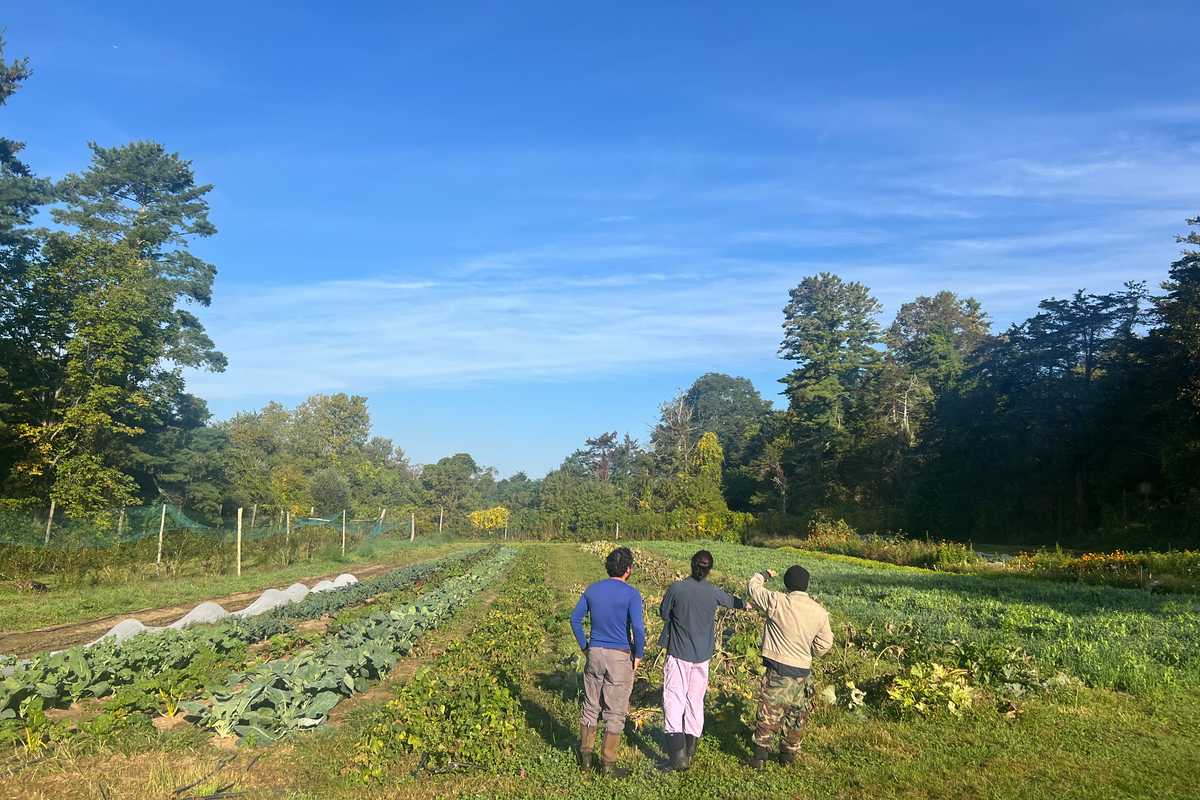
Adamah Farm crew members planning out the day’s tasks on a late September day.

Janna Siller

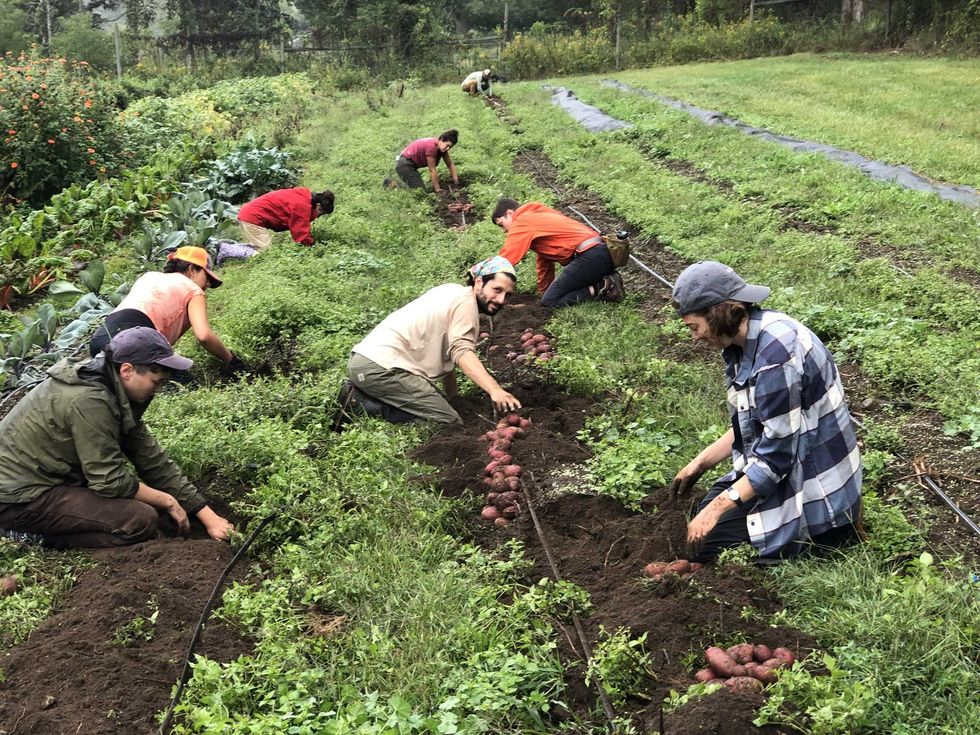
“Dispatches from the farm” is a new, periodic column offering a firsthand look at the rhythms, challenges and rewards of farming through the eyes of a local farmer.

The thing about plants is that they can’t get up and move. When a storm like last weekend’s nor’easter threatens to roll through, you can’t just round everybody up and settle them safely on the sofa for movie night.

Keep ReadingShow less
Pinchas Zukerman brings an all-Beethoven program to Hotchkiss

Pinchas Zukerman to perform at Hotchkiss Oct. 4

Cheryl Mazak

The passion, drama and energy of Beethoven will fill Katherine M. Elfers Hall at The Hotchkiss School on Oct. 4, when world-renowned violinist Pinchas Zukerman is joined by pianist Shai Wosner for a special recital.

The 4:30 p.m. program at the Esther Eastman Music Center will feature three of Beethoven’s celebrated violin sonatas: Violin Sonata No. 4 in A minor, Op. 23; Violin Sonata No. 5 in F major, Op. 24, “Spring”; and Violin Sonata No. 7 in C minor, Op. 30.

Keep ReadingShow less
google preferred source

Want more of our stories on Google? Click here to make us a Preferred Source.

google preferred source

Want more of our stories on Google? Click here to make us a Preferred Source.