It used to seem like such a good idea: It’s early in the spring, there’s nothing in the garden yet to pick and eat, so why not go out into the woods and look for edibles that are growing wild?You get to enjoy an early harvest; you get to eat something rare and exotic and delicious; and you get to feel like a serious woodsy outdoors-type person who likes to hike, even on cold wet (horrible) days.Because you really couldn’t drag me into the woods at this time of the year without some kind of serious incentive. The earliest incentive of this sort is the wild leek, known as a ramp.I went out foraging for ramps last Friday with Lawrence Davis Hollander, a Sheffield resident and ethnobotanist. This is shocking and exciting news. First of all, people who know where to find edible forest forage almost never share their favorite forage sites.And Hollander is more protective of the wild ramps than the average forager. He is on a crusade of sorts, and is determined to convince people that they are over-collecting their wild forest foods. If some restraint isn’t shown, and soon, he warns that it might not be long before the ramps, the morels, the fiddlehead ferns will go the way of wild ginger, the dodo and cheap gasoline. Americans famously do not do well with abundance. And ramps do give the impression that they are and always will be available in endless quantities.Perhaps they will be, Hollander says. But not if people tramp through the woods pulling the plants up by their roots and grabbing more than they need.If you go foraging he beseeches you to think about the health of the species: Do not cut more than, say, a quarter of the ramp leaves that you find (most of the plants have two leaves; just cut one, so the plant can still perform photosynthesis). And do not pull up the bulbs; this will allow the plants to propagate so that, in time, there will be ever more ramps, not ever fewer.Needless to say, neither Hollander nor I has any intention of saying where we found our leaks. But once you find some (and they are deliciously oniony and delicate, like very tender scallions) there are many ways you can cook them.Obviously, they are excellent in a saute (try mixing them in with some spinach). They make an exquisite substitute for scallions in any Japanese broth dishes (such as soup base for hot or cold noodles).And this wild ramp flan, adapted from a Jacques Pépin onion custard, is beautiful to look at and deliciously creamy to eat, with an oniony little kick at the end. It’s also very easy to make. You can cook it in a souffle dish instead of ramekins, if you prefer. And if you have a fully stocked bar, you can use dry vermouth to cook the ramps, instead of water.Wild ramp flan Serves four as a side dish2 tablespoons unsalted butter; 3 cups wild leeks (ramps) cleaned and cut into 1-inch pieces; 1 cup water; 3 large eggs, beaten; 1/2 cup heavy cream; 1/2 teaspoon salt; 1/4 teaspoon freshly ground pepper; very fine zest of half a lemonPreheat the oven to 325 degrees. Butter four 1/2-cup ramekins and set them in a baking dish that holds them snugly. In a large skillet, melt the butter. Add the leeks and garlic and cook over moderate heat, stirring occasionally, until softened, about five minutes. Add the water and bring to a boil. Cover and simmer over moderately low heat until the leeks are very tender, about 20 minutes. Uncover and boil over high heat until any excess liquid has evaporated, about two minutes.Whisk the eggs, cream, salt and pepper and combine with the leeks and any remaining liquid in a food processor. Puree, and then stir in the lemon zest. Pour the onion custard into the prepared ramekins. Add enough tepid water to the baking dish to reach halfway up the sides of the ramekins. Bake for 25 to 35 minutes, or until almost firm but still slightly loose in the center; if the water in the baking dish simmers, add a few ice cubes to cool it down.Remove the ramekins from the water bath and wipe the bottoms and sides dry. Run a small, sharp knife around each flan to loosen it, then invert the flans onto plates. Serve right away.
Latest News
Climber dies after fall at St. John’s Ledges in Kent
Christian Murray
Sep 10, 2026

A 30-year-old Warren man died Thursday after falling while rock climbing near the Appalachian Trail in Kent, according to state officials.
The Connecticut Department of Energy and Environmental Protection’s Environmental Conservation Police responded to the Appalachian Trail along River Road Thursday afternoon following a report of a person who had fallen.
Kent First Selectman Eric Epstein said the incident occurred around 2:30 p.m. at St. John’s Ledges. The victim was part of a group at the time of the fall.
The man was transported to New Milford Hospital, where he was pronounced dead.
The circumstances surrounding the incident remain under investigation. Authorities said the victim’s identity would be released after his next of kin had been notified.
Keep ReadingShow less
Four generations: Perotti & Sons to mark 100 years
Ruth Epstein
Sep 09, 2026
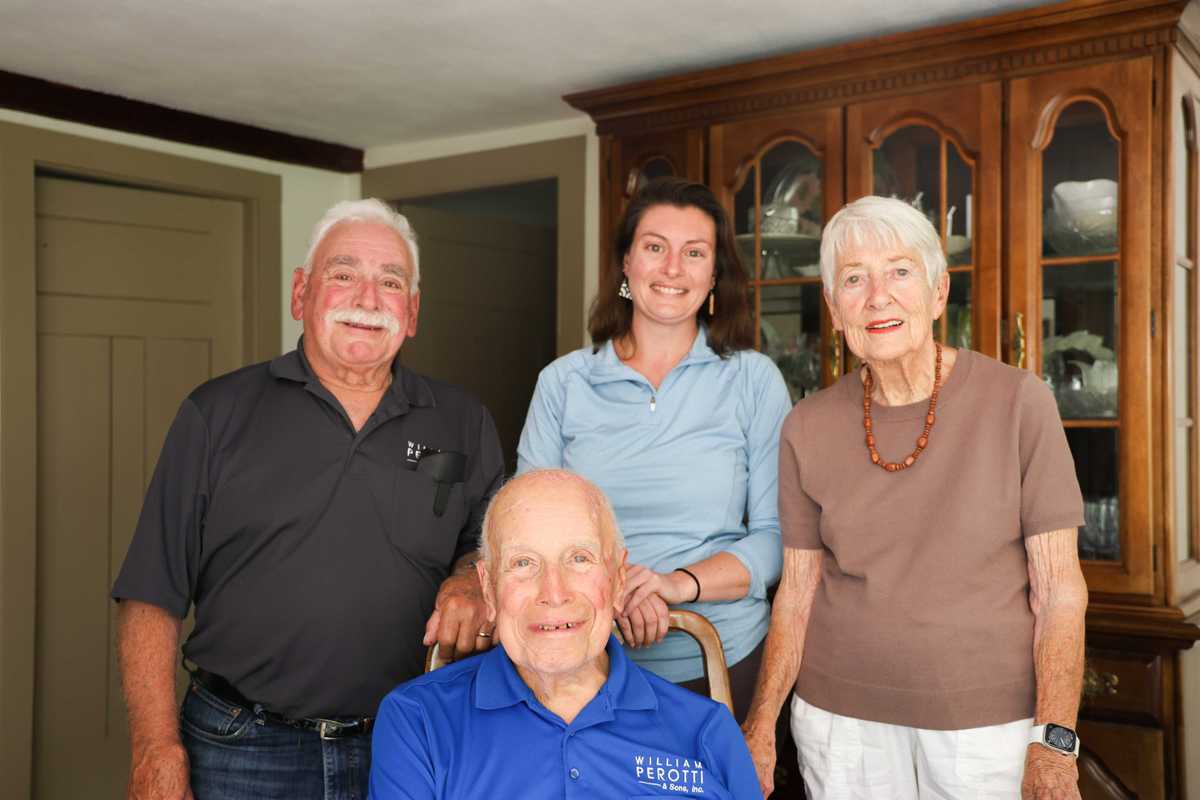
William Perotti & Sons plumbing and heating business will celebrate its 100th anniversary with a party on Sept. 18. Among the family members are Frank Perotti, seated, and Charlie, Mary and Jean Perotti standing.
Madi Long
NORTH CANAAN – It is a story that combines the realization of the American dream, the strong bonds of family, and a love of community.
It began 100 years ago, when William Perotti opened a small plumbing shop in a barn on Lower Road. A century later, William Perotti & Sons is a flourishing enterprise run by his descendants, including members of the fourth generation.
The company focuses on plumbing and heating, handling jobs that range from routine repairs to specialized projects. Today, it employs more than 40 people.
A celebration marking the milestone will be held Friday, Sept. 18, from 4 to 8 p.m. at the company’s current shop at 11 Furnace Hill Road.
Some of Perotti’s descendants gathered recently to share their memories and talk about how the business has evolved.
Founder William Perotti and his wife, Lena, had two sons and a daughter. Frank, the oldest, was called in to help his dad at an early age.
“I started when I was still in school,” Frank said. “My father said I was old enough to carry a wrench. He always had a project for me, like cutting pipe.”
Charlie Perotti, Frank’s younger brother, was also recruited while still in elementary school. “I had no choice,” he said with a grin.
Both brothers went into the business after graduating from high school; Frank in 1954 and Charlie in 1966.
Frank’s wife, Jean, took on the role of bookkeeper from her mother-in-law.
The business was incorporated in 1969 becoming William Perotti & Sons.
Frank was named president and Charlie became vice president. Jean was appointed controller.
As the business grew, so did the headquarters. It moved from the barn to a shop on Furnace Hill Road in 1954. Additions followed over several years.
In July 1996, the enlarged structure was hit by lightning and, despite valiant efforts by area volunteer fire departments, it burned to the ground.
Business continued the next day out of a trailer and other temporary spaces. Due to hard work and an outpouring of support from the community, the new facility opened in January 1997.
“I’ve never seen a community respond the way it did,” Jean said. “It was just amazing. We were up and running the next day. And none of the vehicles were damaged.”
As Frank and Charlie began phasing out of their duties, new generations came along. Charlie still does his 6 to 8 a.m. stint every weekday, checking on the materials and greeting those as they arrive for work.
In 1987, Francis “Champ” Perotti, son of Frank and Jean, graduated from college with a degree in mechanical engineering and became the third generation to come into the business. He is now president.
Champ’s interest lies in energy efficiency and designing HVAC systems, enjoying the technology that is constantly improving in that field. He is very social and loves meeting and chatting with people, his daughter said.
His two children, Mary and Will, joined the business in 2013 and 2018 respectively. Will is vice president and Mary, corporate secretary. They are both service managers.
Mary made it clear that she and her siblings were never pressured to enter the family business.
“We were told we could pursue any field. But I knew when I was 16 what I wanted to do.”
She attended college and earned a degree in environmental studies and minored in business. “But I learned a million more things in business than in college.”
Asked about the reason for its longevity and success, family members have several answers.
Frank talked about its foundation. He said his father, who died in 1974, was a very smart, no-nonsense businessman, who was also likable. “He was a hard worker who never turned down a project,” he said.
The practice of hiring local employees has been a constant. They all talked about the large number of people who have worked for more than 30 or 40 years, throwing out names like Robert Pautot and John Missagia.
Many relatives have been hired, including several grandchildren who logged in hours during school breaks.
“We’re proud of the team we’ve built,” Jean said. “William Perotti & Sons is based on service and trust.”
Mary concurred. “We have a good reputation. And we have 24-hour service. We answer all emergencies.”
Their trucks can be seen within a 30-mile radius of the shop, extending to parts of nearby New York state and Massachusetts.
There were times when, during an economic downturn, the business slumped and layoffs were necessary. They even found they’d over-extended by buying a Kent plumbing company and realized shortly after, they’d have to rein in a bit.
But now Mary talked of how busy they are, hoping the economy stays as it is.
Jean said that in any family business, there are bound to be issues. “But we still speak to each other,” she joked.
Never content with status quo, they realized they could use some business advice and have hired a family succession business planner to help with organization and keep everyone on track.
The Perottis are known not just for the business, but their civic activism as well. They have all served in a variety of volunteer capacities and are very supportive of local causes.
The family is hoping for a large turnout for the anniversary celebration, which will feature food, drinks, a bounce house, food trucks and a video about the business. The event is open to the public.
Keep ReadingShow less
Modular homes at Cornwall housing site are headed elsewhere
Ruth Epstein
Sep 09, 2026
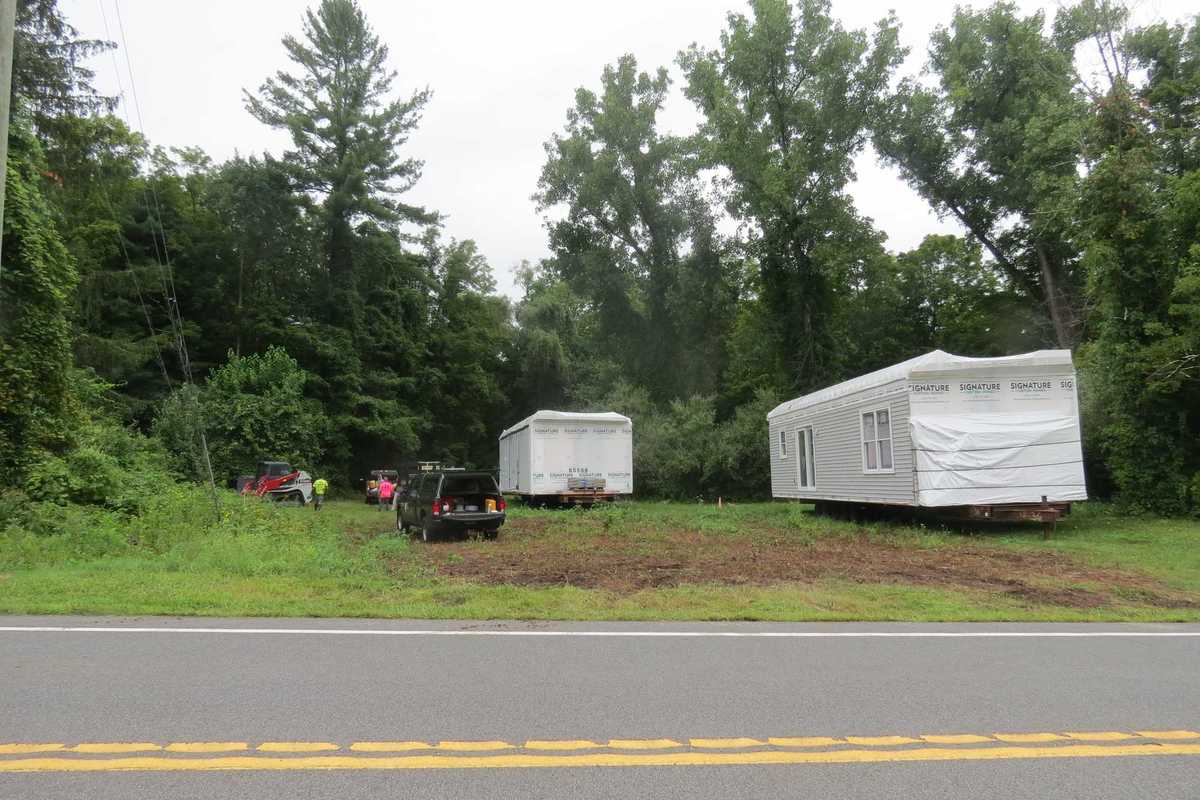
The second of two modular homes awaited relocation from the proposed Millard Brook affordable housing site on Route 7 to its permanent site on Dark Entry Road on Sept. 2.
Ruth Epstein
CORNWALL — The sight of two new modular homes at the Millard Brook property on Route 7, led some passing motorists last week to wonder whether the proposed affordable housing development on the site was becoming a reality.
But the homes, which were still wrapped, were headed elsewhere.
Ginni Block, president of the Cornwall Housing Corporation, said the homes are part of the Litchfield County Affordable Homeownership Program, an initiative of the Litchfield County Center for Housing Opportunity that is placing 10 homes on scattered sites throughout the region.
Four are in Cornwall. Two homes on Town Street have already been completed and occupied.
The two temporarily stored at Millard Brook are destined for properties on Dark Entry Road. One has three bedrooms and the other has two.
Block said the homes were placed at the Millard Brook site until they could be transported to their permanent locations. By Wednesday, Sept. 2, one had been moved and the other was about to be relocated.
The program sells homes at prices affordable to households earning below the area median income. It is funded by the Connecticut Department of Housing, along with contributions from participating towns and nonprofit organizations.
The homes are priced between $240,000 and $300,000. The homeowners will own their houses, while the Cornwall Housing Corporation will retain ownership of the land beneath them, helping preserve the properties’ long-term affordability.
The Millard Brook property itself is owned by affordable housing consultant David Berto. The housing corporation holds an option to purchase it and is considering the development of up to 24 affordable units, likely to be rentals.
The residentially-zoned property is awaiting a Phase II environmental assessment because of its industrial history. If the assessment determines the site is suitable for development, the housing corporation is expected to purchase the property and begin the town approval process.
Neoweld Corp., a metal fabricator that manufactured steel blankets used in welding, once operated at the site. The operation contaminated the soil and groundwater, according to the U.S. Environmental Protection Agency.
The property was added to the federal Superfund program in 1994. The following year, the EPA excavated approximately 300 cubic yards of contaminated soil and replaced it with clean fill before seeding the area with grass.
The property was later acquired by Richard Burkhart, whose development plans did not materialize. The town eventually took possession because of unpaid taxes, and Berto subsequently purchased it from the town.
Keep ReadingShow less

Want more of our stories on Google? Click here to make us a Preferred Source.
Camp Brook Greenway reopening likely pushed to spring 2027
Christian Murray
Sep 09, 2026
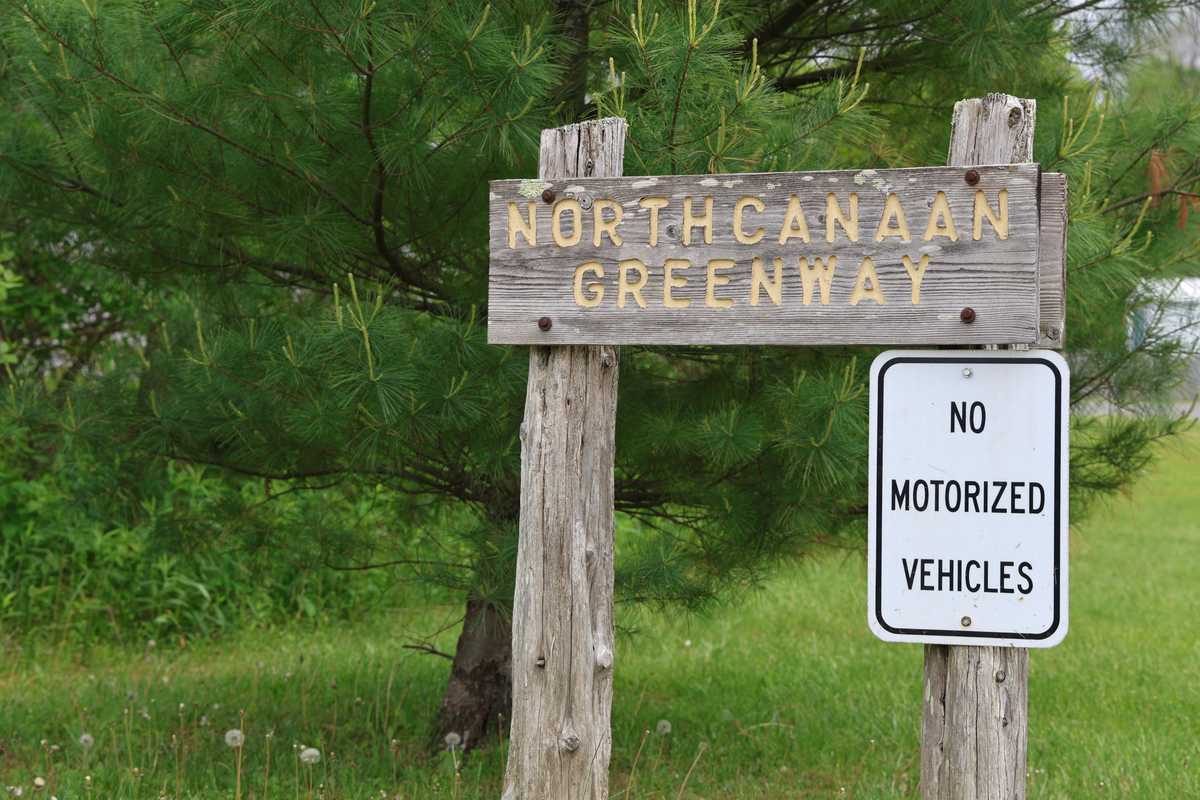
Camp Brook Greenway, where volunteers are preparing the property for a likely spring 2027 reopening.
Madi Long
NORTH CANAAN — The planned fall reopening of Camp Brook Greenway, a 27.45-acre town-owned recreation area behind Caddie Shack and State Line Pizza, will likely be postponed until spring 2027 as volunteers continue preparing the property for public use.
First Selectman Jesse Bunce said the town had hoped to reopen the greenway this fall. Volunteers, however, would like to continue working through the fall to ensure the property is ready before welcoming visitors.
“We will wait until everything is ready before we open,” Bunce said.
The town plans to open the property initially with a walking trail and an 18-hole disc golf course. Volunteers have been cutting brush and clearing both areas, with only a few disc golf holes left to complete.
The property has been surveyed, allowing the town to identify its boundaries, and officials are working on a parking area near Caddie Shack. The town is also seeking a $2,500 Eversource grant to help clear invasive plants.
A separate mountain biking trail may be added later, Bunce said, potentially with assistance from the state Department of Energy and Environmental Protection.
Bunce said the town does not want walkers and mountain bikers using the same trail, and the biking trail is unlikely to be ready when the greenway opens.
The town is also reactivating its Greenway Committee, which will help oversee the property under the supervision of the Board of Selectmen. Volunteers working at the site include disc golfers and Greenway Committee members.
Bunce said the greenway could also provide an economic benefit by bringing visitors to nearby restaurants and businesses.
North Canaan acquired the wooded property from the Connecticut Department of Transportation in May, ending an effort that spanned more than 35 years. The town paid $1,000 in administrative and transfer expenses.
Keep ReadingShow less
Three seriously injured in Lakeville cybertruck crash
Patrick L. Sullivan
Sep 09, 2026
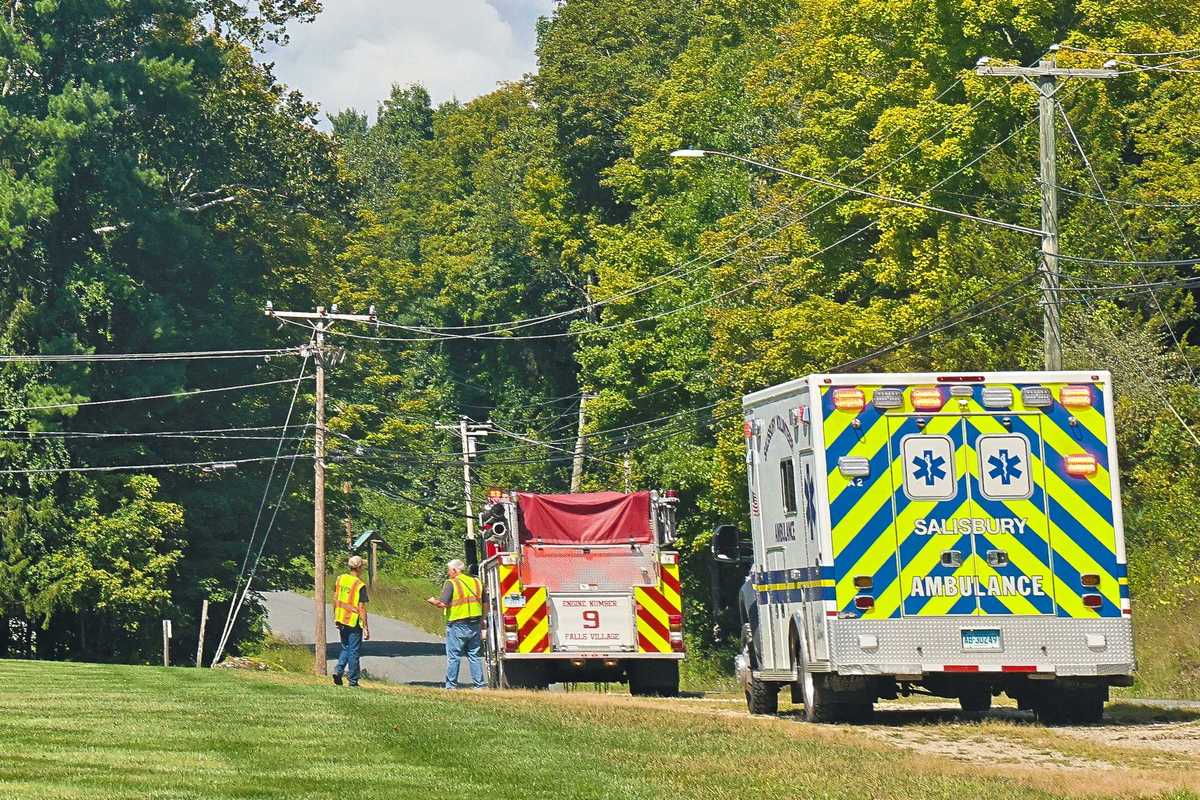
First responders prepare the landing zone for LifeStar at Housatonic Valley Regional High School on Saturday, Sept. 5.
Madi Long
LAKEVILLE — Three people were seriously injured when a Tesla Cybertruck went off Lime Rock Road about 1,000 feet west of White Hollow Road around 1 p.m. Saturday, Sept. 5, according to Lakeville Hose Company Chief Jason Wilson.
One occupant was flown by Life Star helicopter to Hartford Hospital, while another was taken by ambulance to Waterbury Trauma Center and the third to Sharon Hospital.
Wilson said no other vehicles were involved. All three occupants did not need to be extricated from the vehicle when firefighters and the Salisbury Volunteer Ambulance Service arrived.
“There was no extrication necessary,” Wilson said.
Keep ReadingShow less
Wassaic Project co-founder Eve Biddle presents her “Field Notes”
D.H. Callahan
Sep 09, 2026
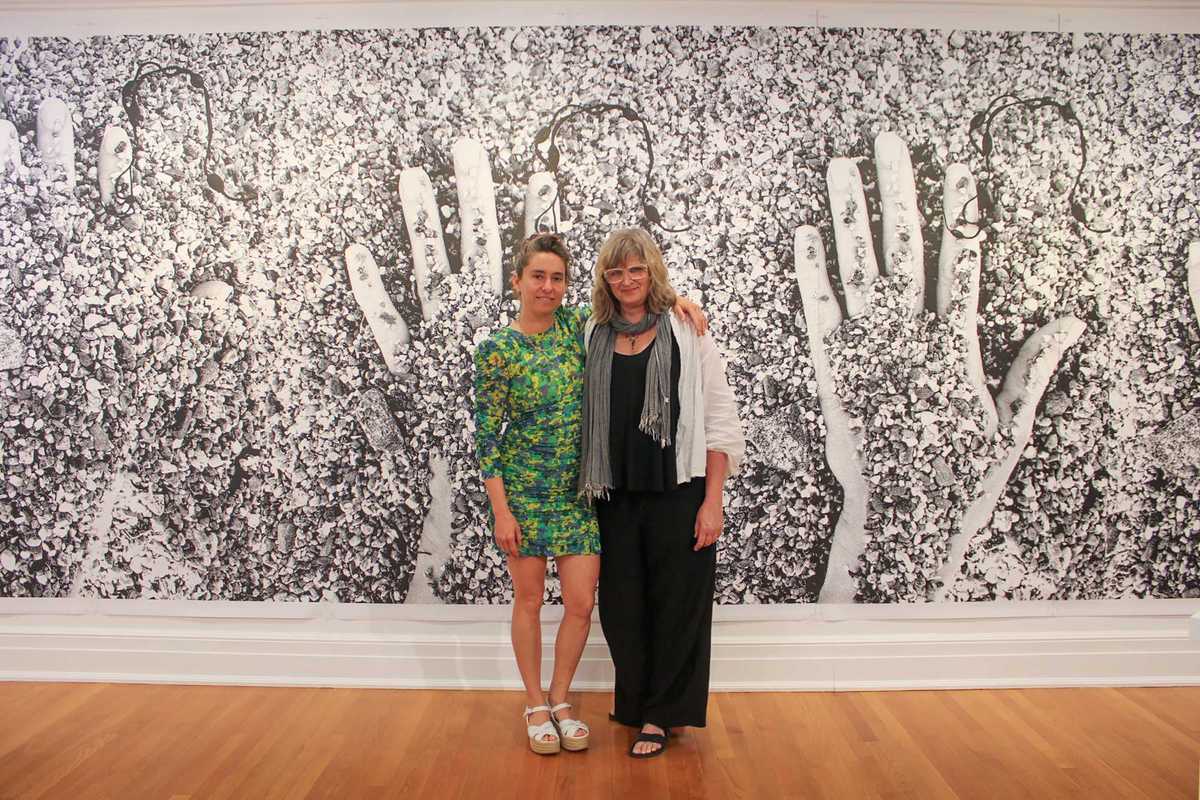
Artist Eve Biddle and Tremaine Gallery Director Terri Moore.
D.H. Callahan
On Wednesday, Sept. 2, the Tremaine Gallery at the Hotchkiss School in Lakeville opened its new show, “Field Notes,” with works by multidisciplinary artist Eve Biddle.
Biddle is best known in the area as one of the founders of the iconic Wassaic Project in the hamlet of Wassaic, New York. The project, which is part art incubator, part gallery, part studio and a whole lot of community, is housed in an old converted grain elevator right next to the Metro North train tracks. It’s credited by many as the spark that revitalized the hamlet, which now boasts a craft bakery, a curated wine and liquor store, a pizza hot spot, the Lantern.
But Biddle is not just a community builder. She’s an artist herself with a robust tool belt of skills. Of those tools, sculpture, object-making, photography, and screen printing are highlighted in “Field Notes.” It’s partially due to her robust skillset, and multiple medium pieces that she hesitates to call herself a sculptor or photographer. Biddle is an artist, and to her, that means finding ways to bring her ideas to life, independent of specific disciplines.
The ambiguity of her categorization can be seen in her work as well. She seems to focus on the space between what is natural and how the human hand, or even technology can alter it in ways that turn it into art. One piece features a picture of flowers growing in the dirt. But Biddle takes this natural, innocuous plant and processes the photo through software that allows her to use small dots to rebuild the image, then silkscreens the result onto board. Yes, it’s still a photo of flowers, but it’s been manipulated by man and machine to create something unlike its original form.
Clearly, the artist’s hands play a major role. This is sometimes implied in the imperfections of a ceramic sculpture, or in the knowledge that she held a camera to snap a shot, but it’s also literal. Multiple pieces feature her hands, and the hands of fellow artists interacting with or even manipulating nature. While just one of many apparent themes in “Field Notes,” it’s even more central in Biddle’s show at the Portland Museum of Art in Maine, which runs through January of next year.
Her hands can also be seen in the finger imprints she left on a cast of a spine. The sculpture was made of molten glass poured over a sand and silica mold at the RISD Hot Shop in Rhode Island. The thematic implications of a glass spine that resembles an amorphous jellyfish might make a Hotchkiss art student want to raise their hand, confident they have the right answer. Biddle rejects the notion of right or wrong meanings in art and doesn’t see it as the artist’s job to define it. It’s one of the reasons the show features snakes, which have been used throughout history to mean wildly different things. Are they evil incarnate, or do they represent fertility? Both can work depending on your perspective.
These are some of the intangible lessons that Biddle and Tremaine Gallery director Terri Moore want to impart to the students. Beyond Biddle’s show is a short tenure as Hotchkiss artist in residence, but she’ll be the first to point out that she is not a teacher. That’s exactly what Moore is looking for. She wants the young artists to get experience from a working professional who has not trained to teach. From Biddle, students will get a different perspective than the ones they’re used to from faculty. And thanks to her role in facilitating the growth of young artists at the Wassaic Project, she might be the perfect person for such a task.
“Field Notes” will be on view at the Tremaine Gallery through Oct. 18 with an opening reception on Saturday, Sept. 19. and an artist’s talk on Thursday, Sept. 17. To learn more about Eve Biddle, visit
evebiddle.works.
Keep ReadingShow less
Want more of our stories on Google? Click here to make us a Preferred Source.
loading