Today, medical marijuana is legal in 33 states, while recreational marijuana is legal in 10 states, plus the District of Columbia. Although there has been progress, little of the recent enthusiasm and hype over pot stocks will come to anything unless the federal government does a major about-face and legalizes the substance. What are the chances of that?
Billions of dollars’ worth of investment, stock market gains, and federal, state, and local taxes are at stake. Predicting the outcome of such a change in federal legislation is, for now, like betting all your chips on red or black in a roulette game. Nonetheless, a growing number of retail investors want to “get in” on pot stocks.
The calls and emails I get today are reminiscent of two years ago. Back then it was all about Bitcoin or some other crypto currency. As Bitcoin climbed (from a few hundred dollars to $20,000), the interest and demand to “get in” was almost hysterical. As you might imagine, most of those calls were made as Bitcoin hit new highs.
Fast-forward to today and, while no one has called about a cryptocurrency in over a year with Bitcoin now around $4,000, pot stocks are all the rage. And like Bitcoin, few callers know anything about the marijuana industry.
“What do I need to know?” said one client (an ancient hippie like me). “Smoke it, inhale, and bingo. You are high.”
But smoking it is a lot different than investing in it.
There is now a bewildering array of investment vehicles (and more coming every day) that confronts the up-and-coming pot investor. There are over 80 exchange-listed pot stocks. Most are Canadian companies (where all pot is legal), which have a listing here in the U.S. Since the federal government still deems marijuana illegal, most big major stock exchanges won’t touch them. In addition, there are well over 200 over-the-counter (OTC) securities that trade outside of the big exchanges. The question you should ask is: Which of those stocks will be a winner and how do I avoid the losers?
The short answer is you need to do your homework. Most investors I talk to are woefully uninformed when it comes to understanding this sector. They fail to realize that most (if not all) companies who engage in this business make no money at all. Part of the reason for this is their inability to borrow or obtain any kind of credit from the U.S. banking system. Until the federal government legalizes marijuana, it is a purely cash business.
To compound the problem, few investors do little more than read market research reports that project global spending on legal cannabis will grow by 230 percent and reach $32 billion by next year. Of that amount, $23 billion is expected to come from U.S. sales. But that forecast assumes that more states will legalize the drug this year and next. That’s a big “if.”
Clearly, there is a bull case for the pot industry. Readers may be aware that over 200 million Americans reside in those states that have already legalized marijuana for medical or recreational use. And over two-thirds of Americans support its legalization, according to Gallup polls.
What investors ignore is that the medical market for cannabis and the recreational market are vastly different animals. To muddy the waters further, there is the hemp industry. Hemp is another form of the versatile cannabis plant that has been used in textile production, foods and other home products for decades. There is also a growing use of Cannabidiol or CBD. CBD is a non-psychoactive cannabis compound that is being infused in products as diverse as skin care, coffee and even dog biscuits. Titus, our nine-year-old chocolate lab, who suffers from arthritis, for example, is now munching on CBD cookies several times a week. Over 40 states have already passed some kind of CBD legislation.
Each sub-sector of this marijuana industry has a different profile, profitability and future. But in the rush to make money, these realities are all but ignored by neophyte speculators. Does that mean that pot stocks will go the way of Bitcoin in a year or two?
Some will, and some won’t. Like all fledgling industries with promise, there will be some companies that make it and a whole lot that won’t. Next time I will discuss what kind of companies and what trends to look for in the months and years ahead.
Bill Schmick is registered as an investment advisor representative with Berkshire Money Management. Schmick’s forecasts and opinions are purely his own. None of the information presented here should be construed as an endorsement of BMM or a solicitation to become a client of BMM. Email him at wschmick@berkshiremm.com.

 Sharon, CTBill Wakeley
 Mill Pond, Sheffield MADeb Segalla-Watson
 New Marlborough, MAWendy Miller
 Peter Austin
 Falls Village, CTPete Sanders
 Tom Carley
 Factory Pond, Lakeville CTBarbara Peck
 Lime Rock Road, Lakeville CTKeary Hanan
 Lime Rock Road, Lakeville CTJake Marcum
 Housatonic River, Sharon, CTBill Wakeley
 Norfolk, CTTom Carley
 Reed Brook, Deans Ravine, Canaan CTBill Wakeley




 Justine and Victor Valla in their studio with a painting of Victor’s,”Jonah and the Whale.” Robin Roraback


 A ceramic vase by Kathleen Heidemann.Provided
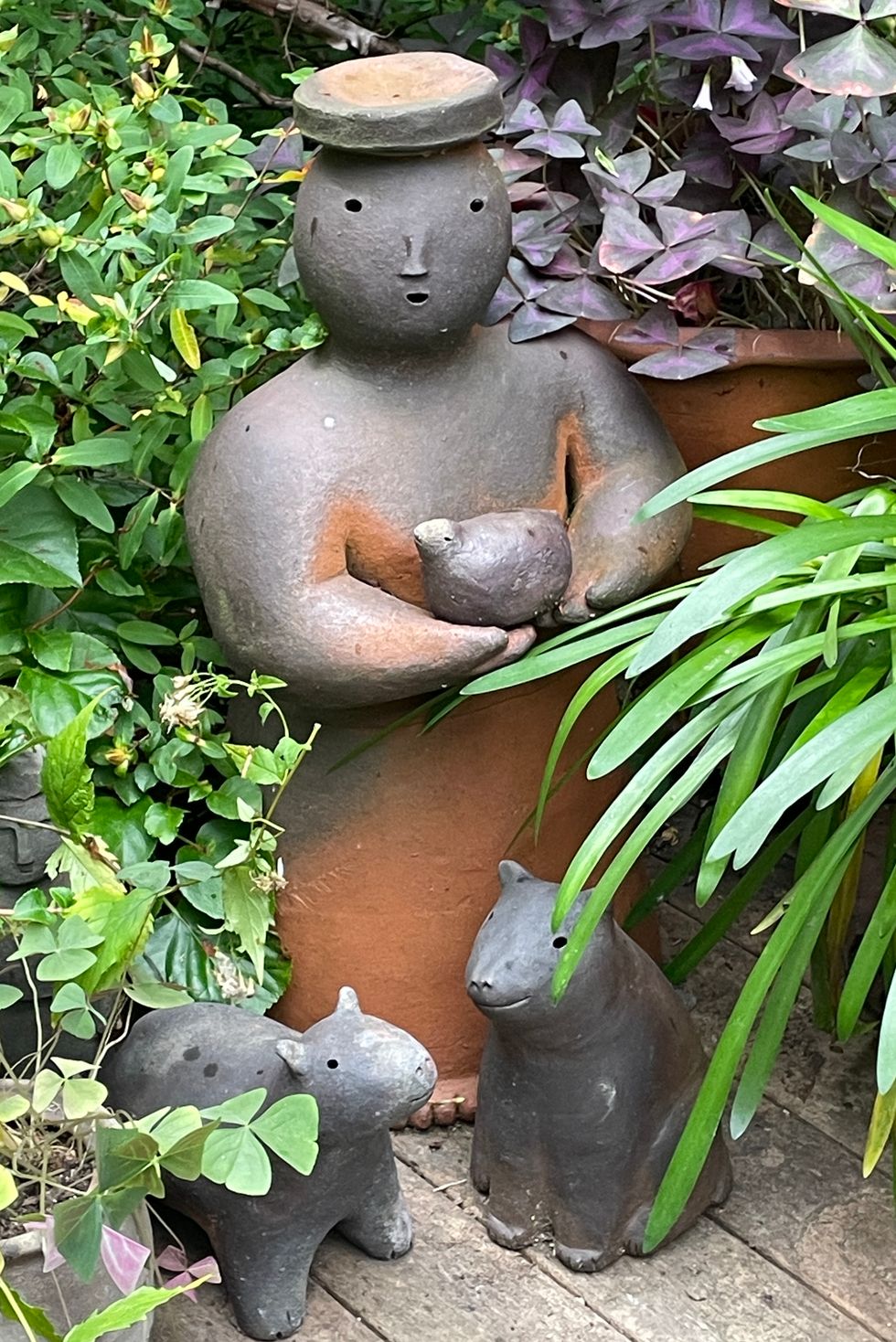 Joy Brown’s delightful ceramic sculptures.Provided