MILLBROOK — Wing’s Castle is a pastiche of imagination, inspiration, scavenging and hard work.
In the spring 40 years ago, Peter Wing and Toni Ann were married, just after he returned from Vietnam. They needed a place to live and visited Eric Sloane at his barn in Cornwall Bridge, Conn. They had no idea who the famous painter was when they knocked on his door. He welcomed the young couple into his studio, offered them sandwiches and beer, and made building seem easy and inexpensive. They decided to create their own barn, which magically and gradually turned into a castle.
“The American barn is the American castle,†observed Wing.
A simple black shield sign points to Wing’s Castle on Bangall Road off the Shunpike in Millbrook.The Wings started by building a simple, 20-foot diameter stone room heated by a wood stove, which became home to the Wings and six stray dogs the first winter. Gradually the Wings built up and out, adding swimming pools and grottos, bathrooms and a great room.
“The way I am, I let things evolve,†Peter Wing said. “Goals are for football players.â€
The castle started to fill up with flea market finds — gas masks, carousel animals, clocks, skeletons, tools, knives and swords, old signs and ammunition shells.
People were curious, and the Wings enjoyed showing off their masterpiece. They started to make their home a business with paid weekend tours given by Peter Wing, who is a bit of an impresario, starting after Memorial Day. For a $10 admission fee Wing gives visitors a personal tour of the great room, bathroom with the garden urn bathtub and vaulted brick ceiling and kitchen. He describes the history of the building and some of its many quirky objects.
Wing might say, “If you want to know about mankind, look at the gas mask made for a baby.†Asked what the oddest question was during one of these tours, Wing quickly replied, “Are your children normal?â€
Visitors often don’t realize that Wing’s Castle is not a renovation and are amazed to learn that Wing built it form the ground up without a formal education.
How did a boy raised on a farm in Millbrook without formal advanced education build a structure inspired by Romanesque cathedrals, Stokesay Castle and Barcelona architect Antonio Gaudi? He taught himself. He read union plumbing manuals, construction books and shelter magazines.
“These books showed you everything,†Wing said. “How to pour concrete steps, how to make arches.†As for the masonry work, Wing said simply, “Farmers know how to move stones.†After 40 years he is still adding on with the goal of opening a bed and breakfast very soon.
Serendipity, rural decay and urban renewal were the source of cheap construction materials. When he began his project, Wing noticed an abandoned stone railway trestle in a Salt Point farmer’s field. Twenty-nine sticks of dynamite later, Wing had an abundant supply of rocks far from his construction site. It took him seven years to remove all the rock. He would rent heavy equipment and run it for 24 hours without stopping to transport the stone to the castle.
Falling down barns everywhere supplied rustic beams. The castle contains recycled material from at least 10 area barns. The dark, glowing, foot-wide floorboards are the winnowing floor from an 18th-century barn.
Urban renewal provided more construction materials. The city of Poughkeepsie was tearing itself down in the ’70s and Wing hauled away cast iron, stones and 4,000 bricks for $40. There’s an old tavern, a Baptist church foundation and a Masonic Temple mixed in. There are recycled lightning rods and chimney pots on the roof.
And the Wings are still working and collecting. Peter Wing hopes he’s getting close to finishing the three-room bed-and-breakfast extension to the castle, which contains a rock Buddha fireplace in a circular room topped by the copper roof of the Pleasant Valley water tank. There is a hot tub inspired by Atlantis with classical columns, and a little bit of French Quarter iron work. Silo hoops and wagon wheels are incorporated into the ceiling. “The Mouth of Knowledge,†inspired by Roman fountains, greets you at the entrance.
The Wing family came to Boston in 1632 and another ancestor, Stephen Wing, was the first to die during the American Revolution. Peter Wing’s grandfather came out to a farm, which is now the Millbrook Winery, in 1876, bringing his father and 10 siblings to work the dairy farm. Born 10 hours apart, Peter and Toni met at age 13 when her father worked at nearby Millbrook School.
Peter Wing was thrown out of Millbrook High School at 17 because of uttering inappropriate quotes from Shakespeare, he says. He joined the Navy at 17, went to Vietnam and returned at age 20 to marry Toni, who was finishing college. Then they began building their dream home and family together, Toni mixing cement and shaving shingles and Peter finding rocks and reading “how to†books.
Architecture buffs might enjoy reading Jim Crisp’s blog about his tour of the castle at crisparchitects.blogspot.com.
“It is hard to describe the artistry, craftsmanship and beauty everywhere you look while walking through their home. There is nothing which has not been thought about carefully and detailed with loving care. Wing’s Castle does not fit in any neat category of art or architecture. The nearest I can come to a description is a cross between a design by the Spanish architect, Antonio Gaudi, and a wild artistic interpretation of a medieval castle.â€


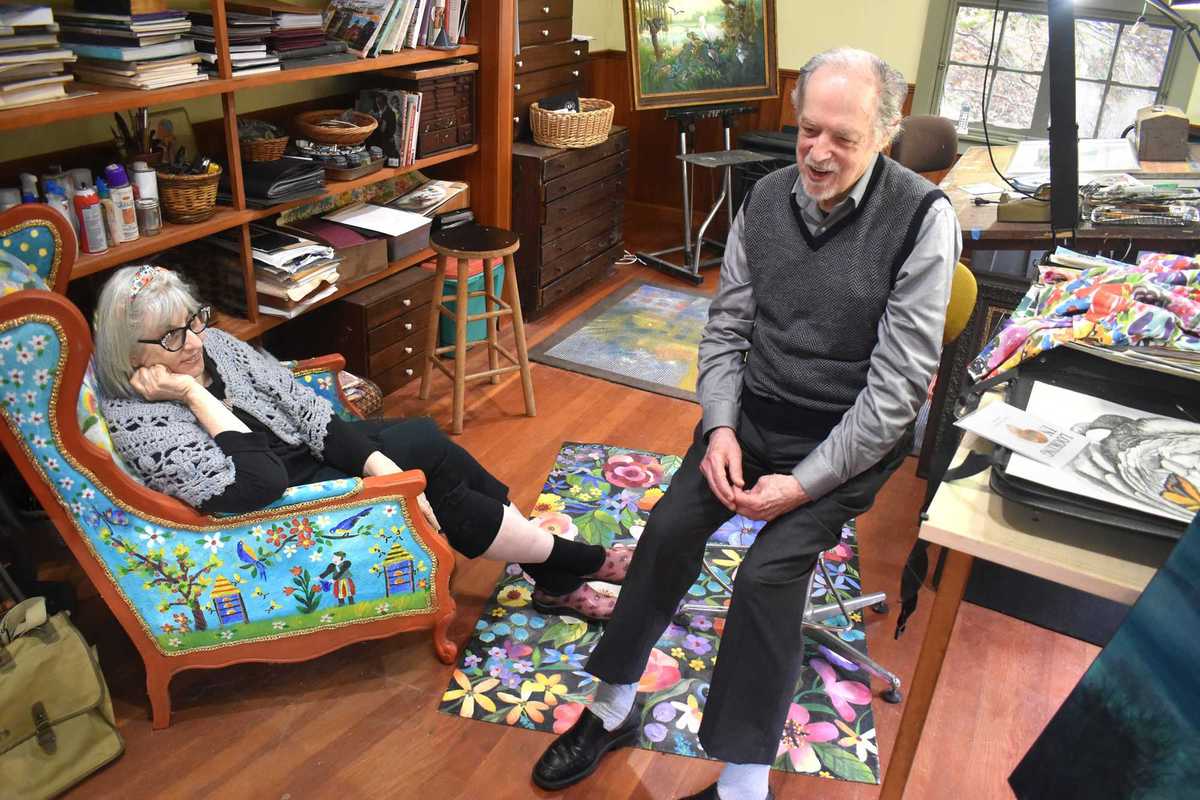
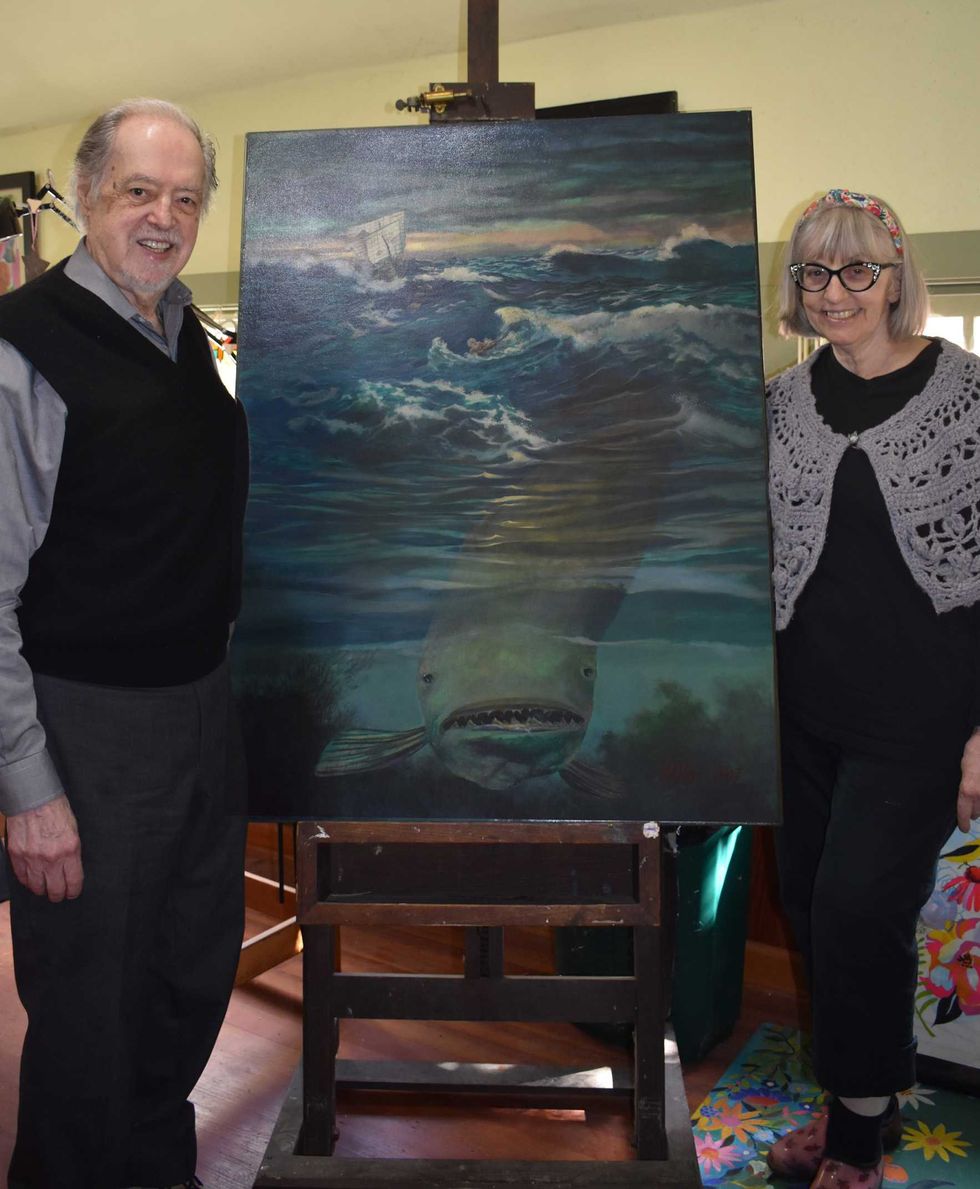 Justine and Victor Valla in their studio with a painting of Victor’s,”Jonah and the Whale.” Robin Roraback


 A ceramic vase by Kathleen Heidemann.Provided
 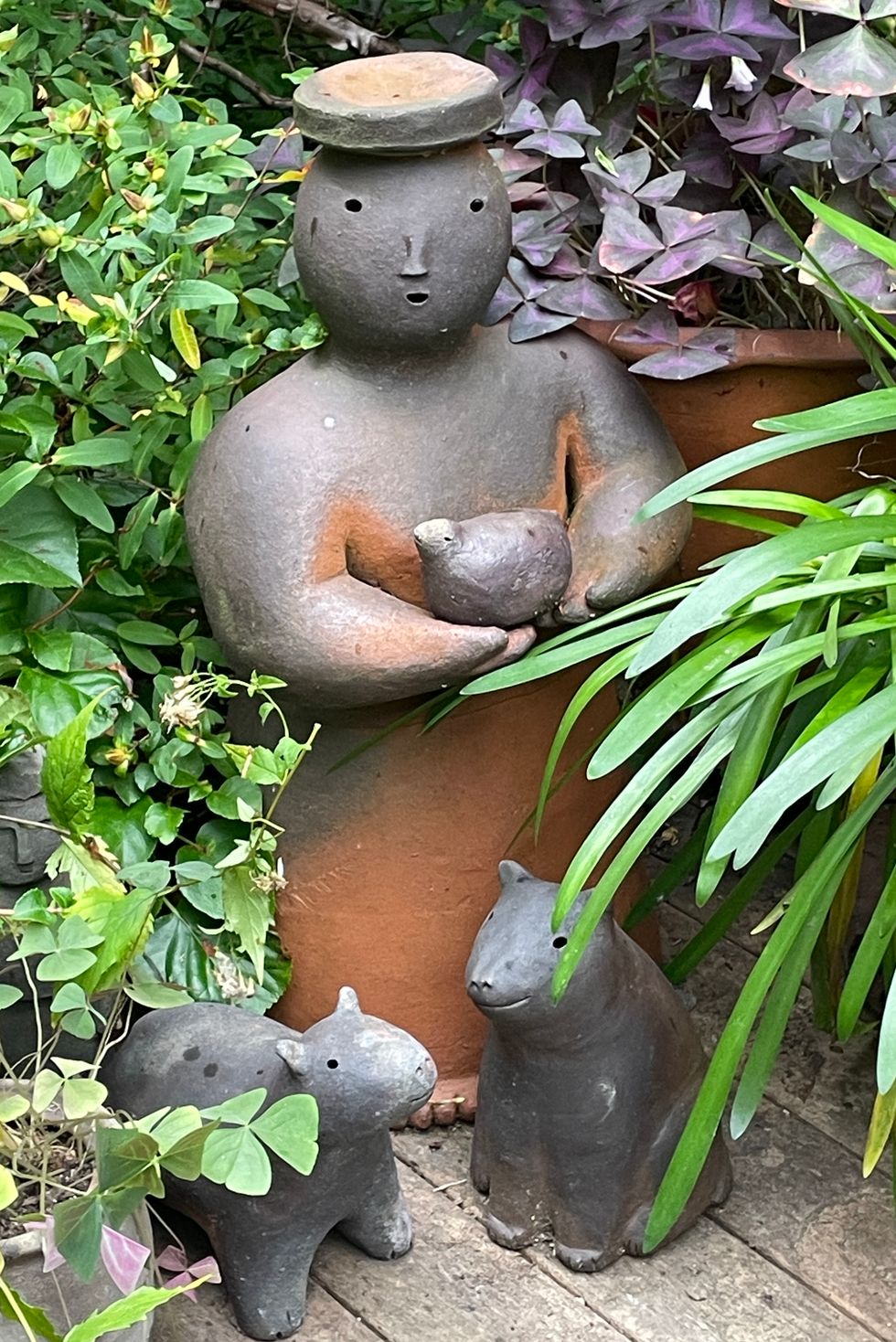 Joy Brown’s delightful ceramic sculptures.Provided