Art and entertainment in 2025

The cast of 'Once Upon a Mattress' at Sharon Playhouse.
Aly Morrissey

The cast of 'Once Upon a Mattress' at Sharon Playhouse.
In 2025, the pages of Compass tracked the steady hum of creativity across the Northwest Corner. Here’s a look at some of the highlights that shaped the year.
ART
The Hotchkiss School marked 50 years of co-education with The Art of Joy Brown, a sweeping retrospective honoring the internationally celebrated sculptor. Opening Feb. 22 in the Tremaine Art Gallery, the exhibition traced Brown’s five-decade journey from her early pottery training in Japan to the large-scale bronze figures now installed around the world — and newly on the Hotchkiss campus.
Millbrook School hosted the first-ever Firefly student artist showcase in February, bringing together young artists and bird enthusiasts from schools across New York and Connecticut.
The David M. Hunt Library’s Art Wall continued to feature local artists, including Jon Kopita, who displayed a decade of his meticulous, repetitive hand-lettering exploring order and identity.
A collaboration between The Nutmeg Fudge Company, artist Gerald Incandela, and Saint John Paul the Great Academy resulted in a vibrant student-designed mural in Torrington.
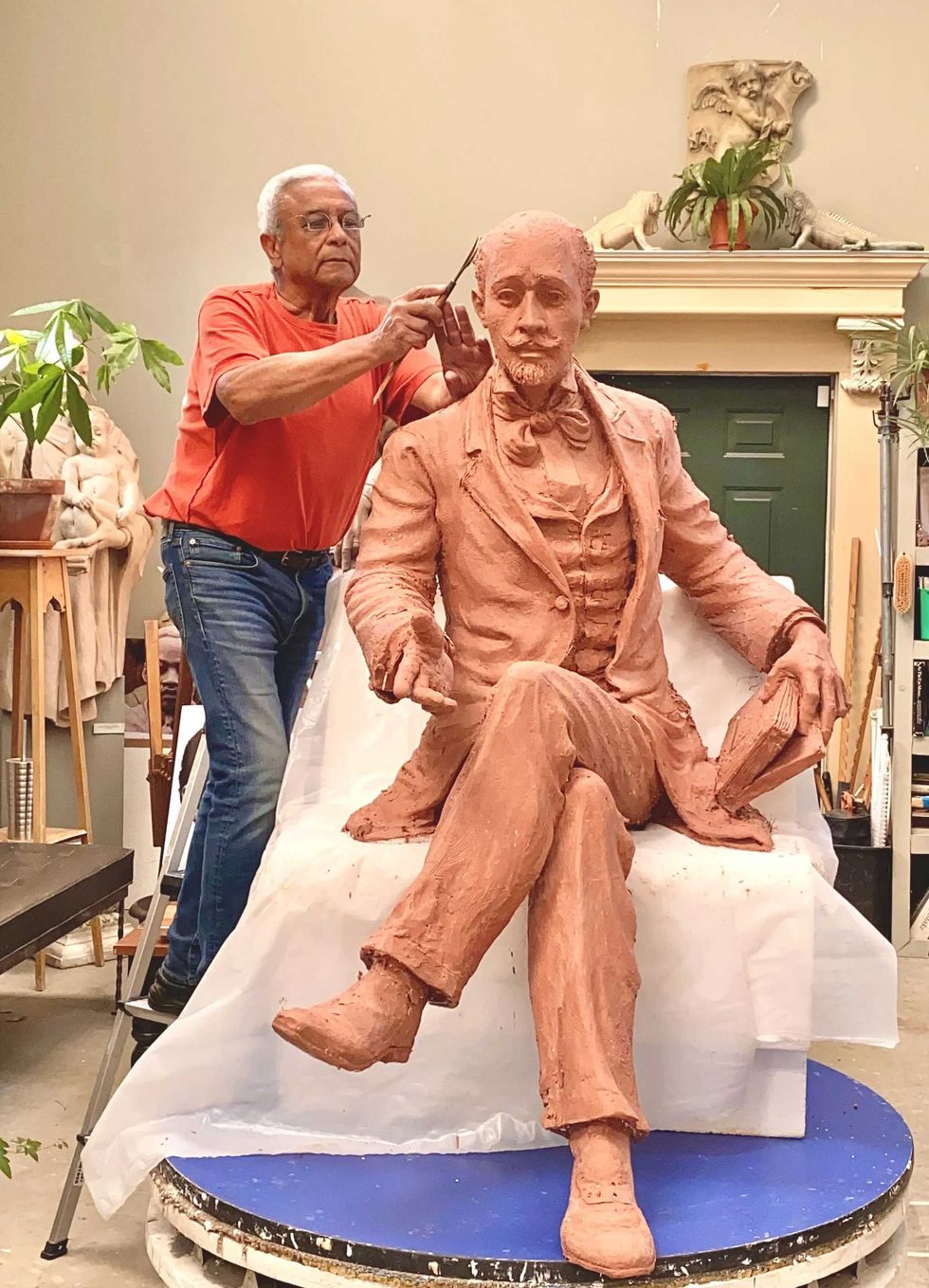
Great Barrington marked a major milestone this year with the unveiling of a life-sized bronze sculpture of W.E.B. Du Bois in front of the Mason Public Library. Created by National Sculpture Society honoree Richard Blake, the piece anchors a redesigned public plaza.
The Wassaic Project received a $100,000 multi-year operating grant from Foundations for Community Health and Amy Wynn stepped down Oct. 31 as the first executive director of the American Mural Project (AMP) in Winsted.
BOOKS
We welcomed new freelance writers Laurie Fendrich and Olivia Prager who covered the region’s robust literary scene. Highlights included Ann Temkin at Cornwall Library; Ruth Franklin at Congregation Beth David; Elias Weiss Friedman (AKA “The Dogist”) at Troutbeck; Gwen Strauss at the White Hart Speaker Series; and the return of the Haystack Book Festival in Norfolk.Books & Blooms celebrated its tenth anniversary in June with a two-day celebration of gardens, art and the rural beauty of Cornwall.
FILM
The Triplex in Great Barrington hosted screenings, festivals and conversations throughout the year, from a Bob Dylan biopic talkback with Seth Rogovoy to student screenings of “Selma,” benefit events and the launch of the Queer Cinema Club. The Stissing Center expanded film programming with a new projector and a short-film festival featuring local artists and the Moviehouse in Millerton continued its incredible programming.
Legendary civil rights activist Dolores Huerta sat down with The Journal in October in advance of the screening of “Dolores” in Norfolk, the documentary by Peter Bratt and executive producer Carlos Santana that presents an unflinching portrait of a woman whose voice, body and will shaped the political terrain of the United States.
MUSIC
From brass bands and local musicians at street fairs and green spaces to classical and chamber music series presented by organizations from Music Mountain to Tanglewood, music was a staple of the Compass calendar.
The Twelve Moons Coffeehouse in Falls Village continues its once-a-month series that consists of a robust open mic followed by a featured performer.
The American Mural Project’s live music and Happy Hour Piano Series was also a monthly anchor that featured a multitude of styles of music.
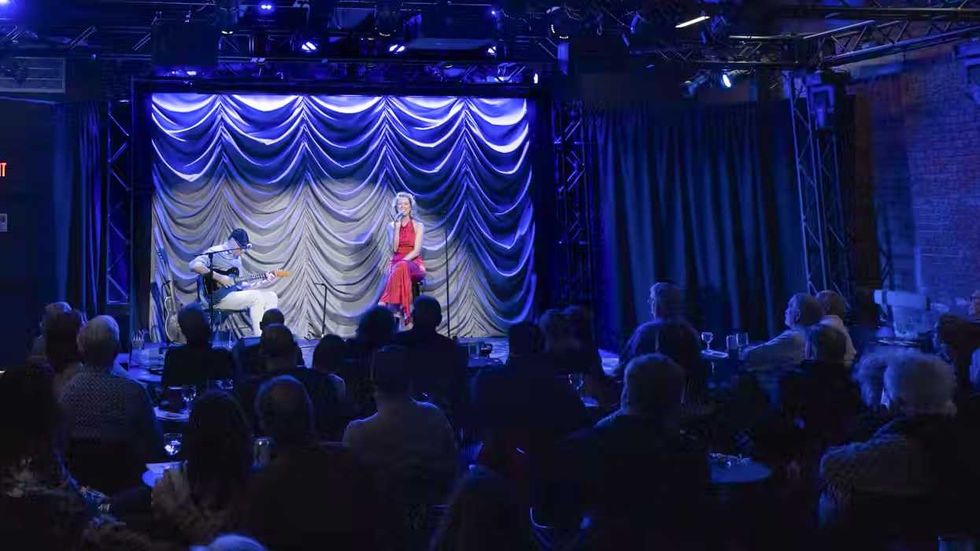
The Indigo Room, a new performance space connected to The Mahaiwe in Great Barrington, opened in the beautifully restored historic firehouse next door, offering a smaller space for intimate performances. The Mahaiwe continued to delight with programming that included greats like Old Crow Medicine Show, Paquito D’Rivera, Natalie Merchant, Roseanne Cash and many more.
Crescendo, the award-winning organization that brings works from the Renaissance and Baroque periods to new life, launched its 22nd season with performances at Saint James Place in Great Barrington and Trinity Church in Lakeville.
Rufus Wainwright performed a benefit concert for Out for Dutchess at The Stissing Center.The beloved Race Brook Lodge in Sheffield hosted its final Fall Gratitude Festival before closing its storied doors.
COMMUNITY
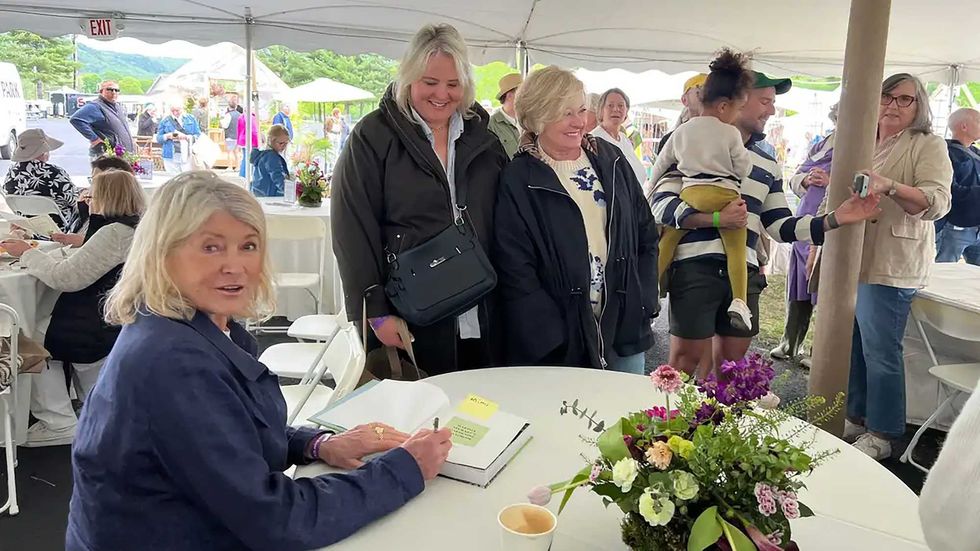
Trade Secrets celebrated its 25th anniversary with record crowds. The annual event, benefiting Project SAGE, featured over 50 vendors and special attractions like a signing of Martha Stewart’s gardening book, following a day of local garden tours.
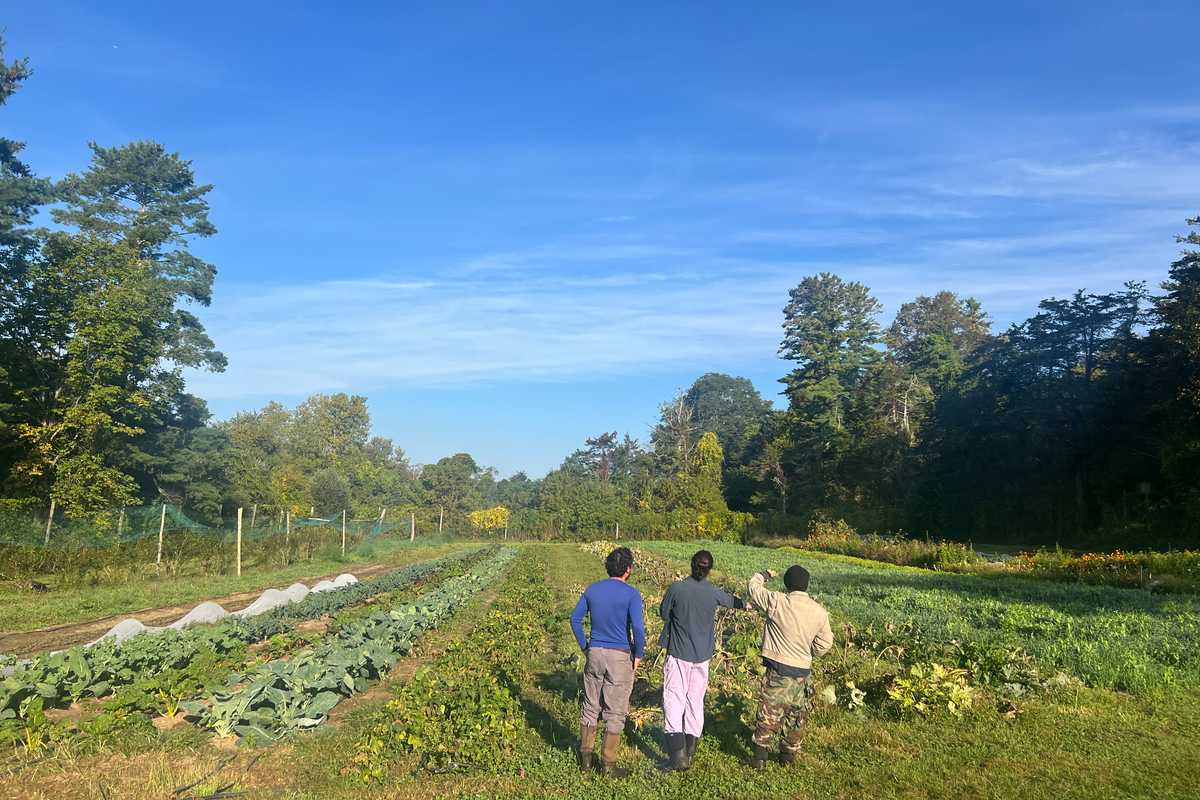
Scenic bike routes were explored in these pages and Kerri Lee Mayland’s offerings on design are a delightful new feature. Dee Salomon’s column “The Ungardener” continues to inform and delight and community events such as the Farm Fall Block Party at Rock Steady Farm in Millerton kept readers connected to local farm life.
THEATER
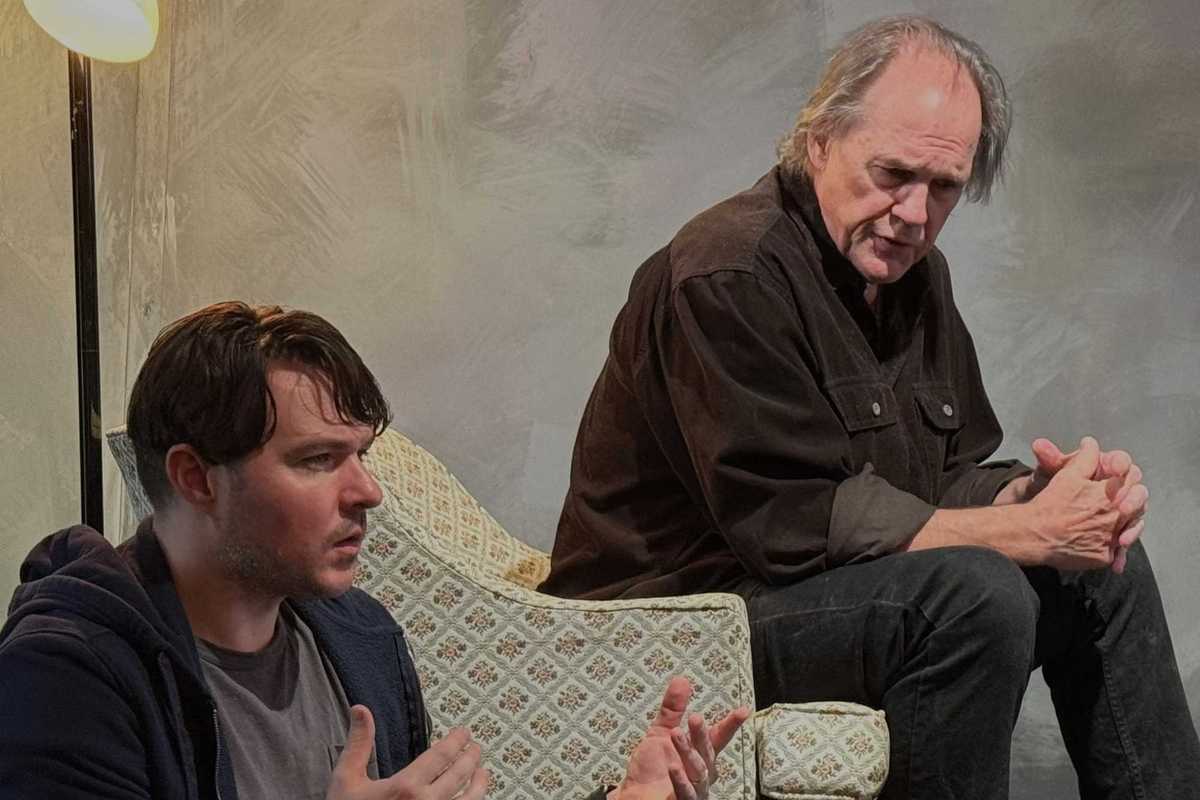
The Sharon Playhouse delivered a lively season of classic musicals, sharp comedies and community-centered work. Highlights included “Million Dollar Quartet,” a popular run of “Annie,” A.R. Gurney’s “Sylvia” and a fall staging of Agatha Christie’s “The Mousetrap.” The Writers Playground Festival championed new short plays by local writers, while the YouthStage program mounted family favorites like “Once Upon a Mattress,” “Finding Nemo Jr.” and “101 Dalmatians Kids,” giving young performers steady opportunities onstage. The Playhouse also welcomed new managing director, Meghan Flanagan.
The Ancram Center for the Arts celebrated its 10th anniversary. Highlights included the “Real People Real Stories” series, the regional premiere of “Where the Mountain Meets the Sea,” and Plein Air Plays 3.0, which brought original short plays to surprise outdoor locations. The Center also advanced new work through its Play Lab Residency, featuring David Cale’s “Blue Cowboy” and “Framed,” a new musical by Ancram local Mary Murfitt with music by Murfitt and Pam Drews Phillips.
In May, Richard Maltby Jr.’s “About Time” opened at Goodspeed’s Terris Theatre. He spoke with us about the deeply personal revue, describing it as a meditation on aging, memory and the strange clarity of life’s “third act.”
The Stissing Center continued to expand its theatrical footprint in 2025, presenting a mix of classic drama, new work and intimate staged readings. Highlights included Theatre On the Road’s atmospheric “Dracula,” a summer run of the off-Broadway musical “Kafkaesque!,” and Tangent Theatre Company’s reading of Harold Pinter’s “Betrayal.”
Highlights of theater at Hotchkiss in 2025 included a spring premiere of “R.I.P. Lunch,” an original play by alumna Mallory Jane Weiss, and a lively fall production of the musical “Pippin.” Housatonic Valley Regional High School also had a strong theater year in 2025, highlighted by a spring production of “Urinetown” that earned statewide recognition, summer performances through the Grumbling Gryphons Theater Arts Camp, and student apprenticeships at Sharon Playhouse. We also welcomed new writers Annette Stover and Richard Feiner who have beautifully expanded our theater coverage.
MILLERTON — James (Jimmy) Cookingham, 51, a lifelong local resident, passed away on Jan. 19, 2026.
James was born on April 17, 1972 in Sharon, the son of Robert Cookingham and the late Joanne Cookingham.
He attended Webutuck Central School.
Jimmy was an avid farmer since a very young age at Daisey Hill and eventually had joint ownership of Daisey Hill Farm in Millerton with his wife Jessica.
He took great pride in growing pumpkins and sweet corn.
He was very outdoorsy and besides farming, loved to ride four wheelers, fish, and deer hunt. He also loved to make a roaring bonfire.
He was a farmer, friend, husband, father, son and brother. He will be missed by many.
He is survived by his father, Robert Cookingham, wife Jessica (Ball) Cookingham, daughters, Hailey Cookingham-Loiodice (Matt), Taylor Ellis-Tanner (Jimmy) and sister Brenda Valyou, as well as many cousins, nieces and nephews.
He is predeceased by his mother, Joanne (Palmer) Cookingham.
His daughter, Hailey, will always keep his legacy alive by their father-daughter antics, such as their handshake, nicknames and making “quacking noises” at each other.
Services/Memorials will be held at a later date.
The Kenny Funeral Home has care of arrangements.
SALISBURY — Herbert Raymond Franson, 94, passed away on Jan. 18, 2026. He was the loving husband of Evelyn Hansen Franson. Better known as Ray, within his family, and Herb elsewhere.
He was born on Feb. 11, 1931 in Brooklyn, New York.
When he was three years old, he emigrated to Sweden with his mother, Amy (Larson), father Carl Herbert and sister, Ruth. He was nurtured by members of his extended family. Being owners and managers of manufacturing plants in rural Sweden, they gave this curious “nuts and bolts kind of guy” access to machinery where he could satisfy his needs to repair and build parts for his kid-style projects. At 18 he returned to relatives in Marlborough, Connecticut who encouraged him to continue high school. He met classmate Evelyn, his English tutor and future wife, at East Hampton High School and they graduated in the class of 1949.
He joined the US Navy and served in the Mediterranean aboard the USS Midway and, during the Korean conflict, aboard the USS Pine Island. Upon discharge he attended Porter School of Machine and Tool Design under the GI Bill. He then apprenticed as a tool and die maker for Pratt Whitney Aircraft, then worked for Stirling Engineering, culminating as a mold engineer with Becton Dickinson, Canaan, Connecticut; much closer to his home on Twin Lakes. At B-D he was involved in molding technology and traveled to plants worldwide overseeing production of syringes used to deliver vaccines.
Along the way, he renovated and constructed three homes in Marlborough and Salisbury and in Rangeley, Maine.
Ray and Evelyn retired to Rangeley in 1992 after living at Twin Lakes for 25 years. He joined the Rangeley Congregational Church just in time to coordinate renovation of the church’s old barn into a community center. This led to the position of “clerk of the works” when the Rangeley Region Guides and Sportsmen’s Association renovated and enlarged their clubhouse in Oquossoc. RRG&SA honored his dedication with a Lifetime Membership. He also volunteered driving the RRHAT van and coordinated meal deliveries for the Housing Development. He served on various boards of the church chairing buildings and grounds for many years. In his eighties, Ray turned to designing and building scratch built wood models including the Drottningholm (on which he had emigrated), the USS Midway and the steamship Rangeley to mention a few.
Ray leaves his wife of 72 years, Evelyn (Hansen), his sister, Astrid F. Harrison of Cromwell, Connecticut, brother, Carl B. Franson of Lime Rock, son Kenneth and wife Christine of Wolfeboro, New Hampshire and Rangeley, Maine, daughter, Jean F. Bell and husband Rick of Salisbury. Grandchildren Kayla J. (Bell) Johnson and husband Brett of Salisbury, and Cody J. Franson, wife Maria and great granddaughter Francesca Evelyn Franson of Rangeley, Maine.
In lieu of flowers, monetary remembrances may be made to the Rangeley Congregational Church, PO Box 218, Rangeley, ME, 04970.
The Kenny Funeral Home has care of arrangements.
AMENIA — Moses A. “Tony” Maillet, Sr., 78, a longtime resident of Amenia, New York, passed away on Monday, Jan. 19, 2026, at Vassar Brothers Medical Center in Poughkeepsie, New York. Tony owned and operated T & M Lawn and Landscaping in Amenia.
Born on March 9, 1947, in St. Alphonse de Clare, Nova Scotia, he was the son of the late Leonard and Cora (Poirier) Maillet. Tony proudly served in the US Army during Vietnam as a heavy equipment operator. On May 12, 1996, in Amenia, he married Mary C. Carberry who survives at home.
Tony was a life member of the Amenia Fire Company with 51 years of dedicated service, actively driving fire trucks until his illness in Nov. of 2025. He was charter member of the Red Knights Motorcycle Club NY Chapter 33 in Pleasant Valley, New York and a member of the American Legion Post # 178 in Millerton, New York.
In addition to his loving wife, Tony is survived by a son, Moses A. Maillet, Jr. of Waterbury, Connecticut, and two brothers, Mark Maillet of New Port Richie, Florida and Bernard Ross of Cambridge, Ontario. He is also survived by two grandchildren, Moses A. Maillet, III and Jacob Maillet; a great-granddaughter, Mary Lillian Maillet and several nieces and nephews. Besides his parents, Tony was predeceased by three brothers, Theodore Poirier, Donald Maillet and Edward Maillet.
A memorial Mass will be celebrated at 11 a.m. on Saturday, Jan. 31, 2026, at Immaculate Conception Church, 4 Lavelle Rd., Amenia, New York with Rev. Andrew O’Connor officiating. Military honors and firematic services will follow the memorial mass at the church. Memorial contributions may be made to the Amenia Fire Company, 36 Mechanic Street, Amenia, NY 12501. For directions or to send the family a condolence, please visit www.hufcutfuneralhome.com
Telecom Reg’s Best Kept On the Books
When Connecticut land-use commissions update their regulations, it seems like a no-brainer to jettison old telecommunications regulations adopted decades ago during a short-lived period when municipalities had authority to regulate second generation (2G) transmissions prior to the Connecticut Siting Council (CSC) being ordered by a state court in 2000 to regulate all cell tower infrastructure as “functionally equivalent” services.
It is far better to update those regs instead, especially for macro-towers given new technologies like small cells. Even though only ‘advisory’ to the CSC, the preferences of towns by law must be taken into consideration in CSC decision making. Detailed telecom regs – not just a general wish list -- are evidence that a town has put considerable thought into where they prefer such infrastructure be sited without prohibiting service that many – though not all – citizens want and that first responders rely on for public safety.
Such regs come in handy when egregious tower sites are proposed in sensitive areas, typically on private land. The regs are a town’s first line of defense, especially when cross referenced to plans of conservation and development, P&Z regulations, and wetlands setbacks. They identify how/where the town plans to intersect with the CSC process. They are also a roadmap for service providers regarding preferred sites and sometimes less neighborhood contention. In fact, to have no telecom regs can weaken a town’s rights to protect environmental, scenic, and historic assets, and serve up whole neighborhoods to unnecessary overlapping coverage and corporate overreach. Such regs are unique to every town and should not follow anyone else’s boiler plate, especially industry’s.
Connecticut is the only state that has a centralized siting entity for cell towers. The good news is that applicants must prove need for new tower sites in an evidentiary proceeding and any decisions have the weight of the state behind them. The bad news is that the CSC used to be far less industry-friendly and rote in their reviews, which now resemble a check list. There is an operative assumption at CSC that if an applicant wants a tower, they must need it, otherwise why spend significant money to run the approval gauntlet? This reflects a subtle shift over the years at CSC from sincere willingness to protect the environment toward minimal tweaking of bad applications with minor changes. The bottom line is that towns really cannot rely on the CSC to do all the work for them.
What CSC issues telecom providers is a “certificate of environmental compatibility” after an evidentiary proceeding (not unlike a court case) with intervenors, parties, expert witnesses, and the service provider’s technical pro’s sworn in and subject to cross examination. Service providers get to do the same with any opposition from intervenor/party participants – like towns and citizens -- and their experts. It’s an impressive process whose ultimate goal is the fine balancing between allowing adequate/reliable public services and protecting state ecology with minimal damage to scenic, historic, and recreational values. They unfortunately often fall short of their mandate – like approving cell towers with diesel generators over town aquifers -- evidenced by CSC only rejecting about five cell towers in the past 15-20 years.
The CSC was founded in 1972 and clarified its mission in the 1980’s to prevent the state from being carved up willy-nilly by gas pipelines, high tension corridors, and broadcast towers. With the sudden proliferation of cell towers beginning in late 1990’s, it became the most sued agency in Connecticut by both an arrogant upstart industry if applications were denied and by towns/citizens when bad sites were forced on them. CSC gradually formed a defensive posture that drives their decisions toward industry with deeper pockets and attorneys on retainer.
For citizens, nothing can wreck one’s day like the CSC. It behooves towns to protect what little toolkit they have, and understand the legal parameters of the CSC’s playing field. The CSC is not a “normal” government agency where municipal/citizen redress is based on logic and local support. Their process is largely immune to everything but specific kinds of evidence – like town regs with setbacks/fall zones, radio frequency transmission signal strengths, sensitive areas identified, and detailed wildlife inventory, among others.
There is a current cell tower fight involving two intervening towns -- Washington and Warren; both with good cell tower regs – over a tower site within 1200’ of a Montessori School, near Steep Rock’s nature preserves with comprehensive geology/wildlife databases that include endangered, threatened and special concern flora and fauna, on established federal/state migratory bird flyways, within throwing distance to a historic site capable of being listed on the Underground Railroad, and with an access road on a blind curve entering a state highway that will permanently damage wetlands, vernal pools, and core forests. There are well credentialed environmental experts, including Dr. Michael Klemens, former chair of Salisbury’s P&Z, as well as the former director of migratory bird management at the US Fish and Wildlife Service, and an RF engineer testifying to alternative approaches, plus three attorneys representing intervenors. It is the most professional challenge I have seen at CSC since Falls Village successfully mounted one that protected Robbins Swamps several years ago.
The hearing is ongoing, with uncertain results. To see what it takes today to stop an inappropriate tower siting, see Docket #543 under “Pending Matters” at https://portal.ct.gov/csc before removing local cell tower regs – the lowest hanging fruit that any town can possess in case it’s needed.
B, Blake Levitt is the Communications Director at The Berkshire-Litchfield Environmental Council. She writes about how technology affects biology.