Thank you!
Your support is sustaining the future of local news in our communities.

A big budget item: Secret and cutting-edge defense

Regular readers will know that I talked about the X-37b some eight years ago, and this paper even published photos four years ago. The space plane was really no secret. What was a secret was this comment from Air Force Public Affairs people as they showed “for the first time” the plane on CBS this week: “The X-37b was turned over to the Air Force in the early 2000s...” That’s about 10 years ago. And whose project was it before that and for how long? And does anyone, anywhere in government, know what the real cost of these planes (three known to have been built) were? And given that the project is still super-secret, how big a budget ticket item is this program, even now?The truth is, the cost is buried in “cost overruns” and “$200 hammers,” what we’re always told is horrible government waste. Yeah, sure. The real waste here is in our faith in the system of government, open, honest government. Now, I’m not saying the X-37b is a waste of time. Simply put, we elect our politicians to make sure we get a return on our tax investment (ROTI) instead of the standard MBA businessman’s catch phrase of ROI. But with all super-secret programs, we never get to assess the ROTI. And I know 90 percent plus of Congressmen and women have no access either.I saw a picture the other week of the spy plane the Iranians shot down. It wasn’t a stealth plane. I recognized it immediately, twin props, wings and all. Back in 1986, two black-suited DARPA (Defense Advanced Research Projects Agency) agents showed up at the Voyager world flight hangar in Mojave and demanded access to the Voyager plane designs. Why, we asked. “Because the capability to loiter for 10 days makes this a great spy plane.” Well, yes, so we offered to build them. No deal, Boeing had the contract for the Condor project. Later on, after the Voyager broke the last great milestone in aviation (Dec. 23, 1986), the two guys came back and congratulated us and sheepishly admitted Boeing was building the same plane for around $80 million each. No way. Much of that had to be spy equipment. Our budget had been around $2 million. On the other hand, maybe the Condor budget was hiding parts of another super-secret program.And then you come to the huge amount of time it takes to complete some of these cutting edge design programs. The stealth fighter, the F-117, was flying way back in 1984 (saw them in the skies) but were only made public for the Gulf War. And before that, the Blackbird (YF-14 to SR-17), B-1 bomber and B-2 bomber, all flew six years before anyone knew they existed publically. Where’d that tax funding appear from? No way it ever appeared as a line item in the Congressional budget.What does appear in the Congressional budget is the development and building program for a one-size-fits-all next generation fighter called the F-35 called the Joint Strike Fighter. When it was planned (and a competition was held between Boeing and Lockheed, Lockheed won) in 2001 the budget estimate was $177.1 billion (2012 dollars), with a “b.” Currently, that estimate is so shot that it has topped $330.5 billion and is still rising by $200 billion a year. How much of that cost is accountable as belonging to the actual plane? No one knows. To quote an expert at AvWeek, the budget and program has been labeled “cracked and broken....” And yet, there it is, sitting in the budget for the next six years (at least), supposed to provide us with a fifth-generation capability (when the very best of the rest of the world doesn’t have fourth-generation capability), and an engine which was developed in the late 1980s. Like the Concorde, whose airframe was great, the 1956 Rolls Royce Spey engines so out of date it could not carry enough fuel and made ten times as much noise as the designers wanted. Similarly, the F-35 is a huge compromise, old parts and new, and doesn’t seem likely to compete with existing aircraft anytime soon. So why doesn’t Congress just line-item the budget and cancel the program? Where in the budget? There is no one line, no one section. The costs are hidden everywhere and also hide the costs of other more super-secret programs. In pre-emptive retaliation, the Pentagon wants to keep this cash cow and has begun releasing super-secret spy images of Chinese planes they say they are “concerned” about. Ah, so the Chinese have replaced the Soviets as a foe in an arms race? Hardly. AvWeek and other expert aviation magazines look at the so-called Chinese stealth prototypes pictured and calculate their effectiveness as below that of existing fighters already in service across the globe, all built here in the USA.In the end, Congress has to evaluate these super-secret and wasteful programs. If they are a good ROTI, then make the decision to keep them. If they are defense industry spending as usual with no accountability, scrap them all. But to evaluate these programs, they need a really (currently absent) good detective and audit.Peter Riva, a former resident of Amenia Union, now lives in New Mexico.

Latest News

‘So Little to Do,’ so much to discover at James Barron Art

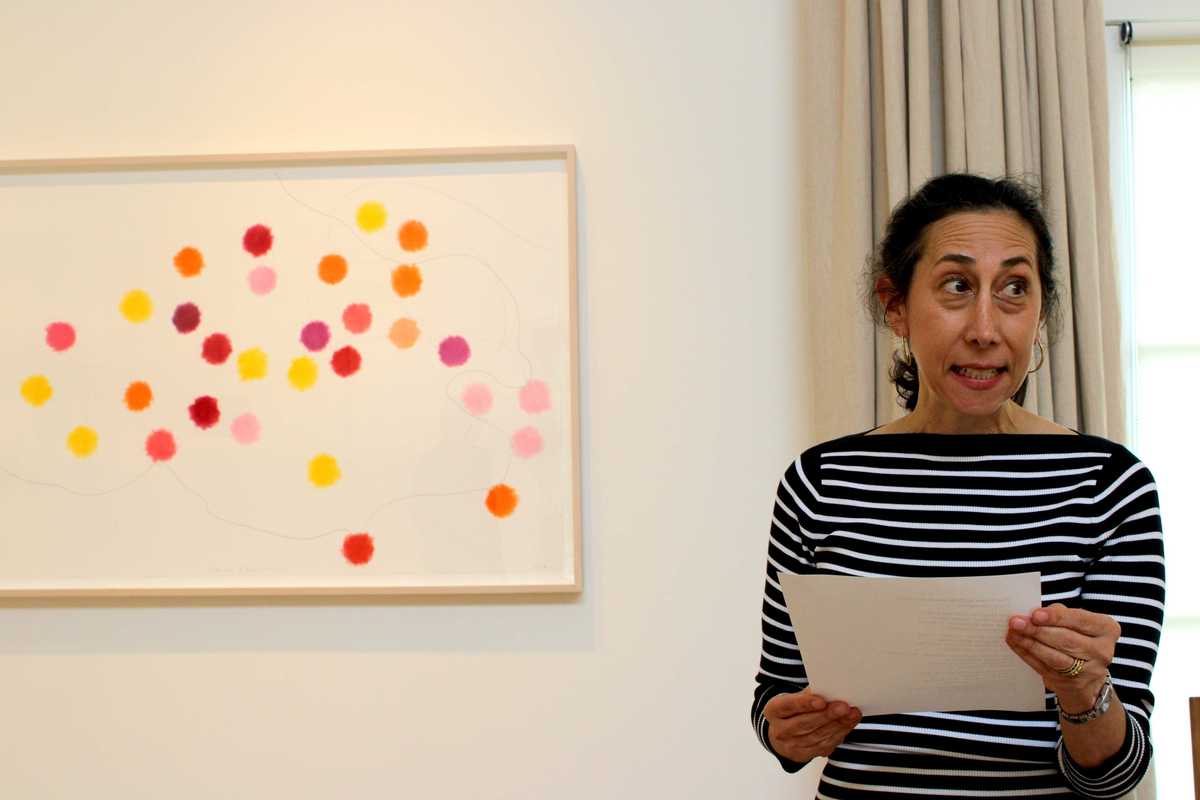
Curator Deborah Goodman Davis reads the Emily Dickinson poem “The Grass So Little Has to Do.” Spencer Finch’s “Following Three Bees (Zinnias)” buzzes in the background.

Photo by Natalia Zukerman

“The Grass Has So Little to Do,” on view at James Barron Art in Kent, takes its title from Emily Dickinson’s poem “The Grass So Little Has to Do,” written in 1862:

“The Grass so little has to do—
A Sphere of simple Green—
With only Butterflies to brood
And Bees to entertain—”

Keep ReadingShow less

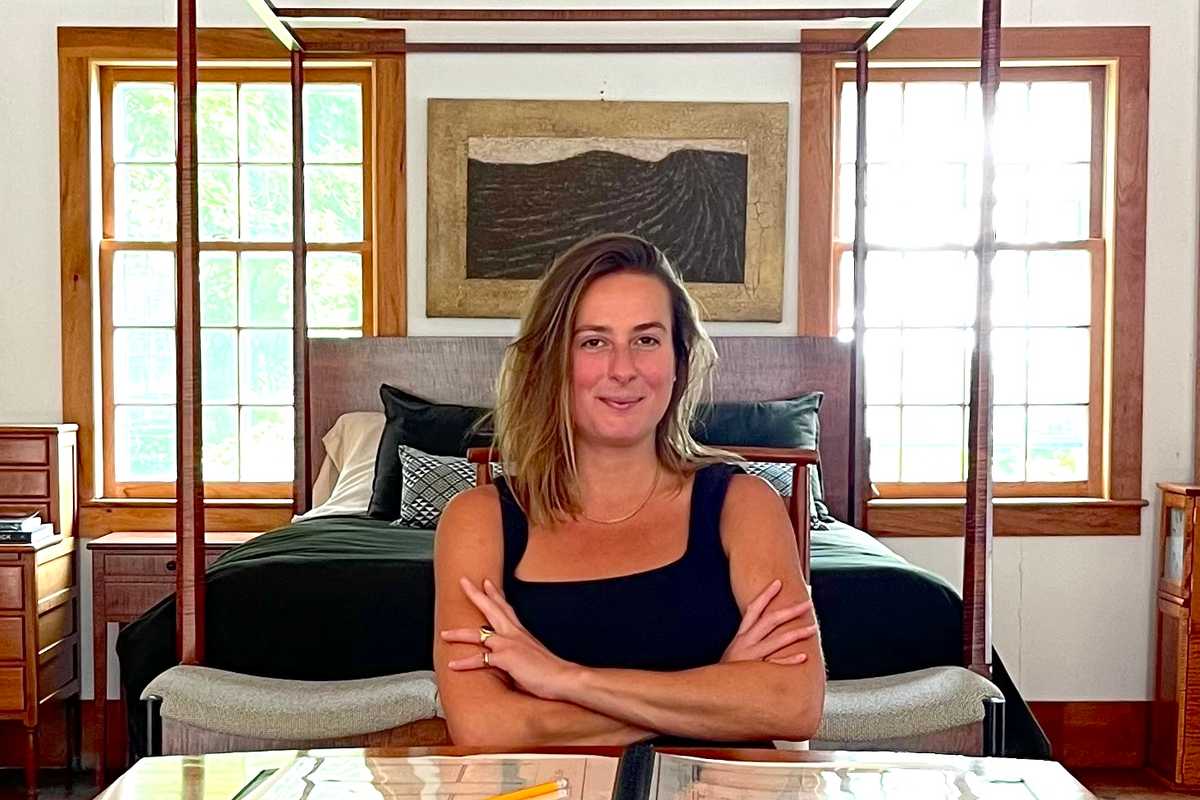
Marina Kotchoubey is not a woodworker

Marina Kotchoubey is not a woodworker

Marina Kotchoubey at the Ian Ingersoll Cabinetmakers showroom in West Cornwall.

Photo by D.H. Callahan

After 40-something years navigating the world of custom fine furniture, Ian Ingersoll was getting ready to retire. Starting off with a little dovetail stool that he sold at a shop in West Cornwall in the 1970s, he’d grown his skill and his business into something he — and the whole town — could be proud of. Shutting down that business was not an option.

Ingersoll built Ian Ingersoll Cabinetmakers, which produced mainly classical Shaker furniture, on passion: the passion he had to make a living through creative challenges and the passion of his employees, who all seem deeply in love with their craft.

Keep ReadingShow less
A legacy of giving at Norfolk Chamber Music Festival

One hundred and twenty years ago, Carl and Ellen Stoeckel commissioned New York architect E.K. Rossiter to design The Music Shed in Norfolk, Connecticut. After nearly a decade of entertaining their friends and neighbors with the finest music of the day, they built a permanent home for their beloved Litchfield County Choral Union.

The commission and full funding of the construction was not unheard of in an era when great fortunes led to public enrichment. Railroad tycoon John D. Rockefeller was instrumental in funding institutes of higher education. Steel baron Andrew Carnegie was building libraries all over the country, and famously said that a man who dies rich is a disgrace, challenging his peers to give their fortunes back to the people.

Keep ReadingShow less
google preferred source

Want more of our stories on Google? Click here to make us a Preferred Source.
Two unique exhibitions at Geary Gallery

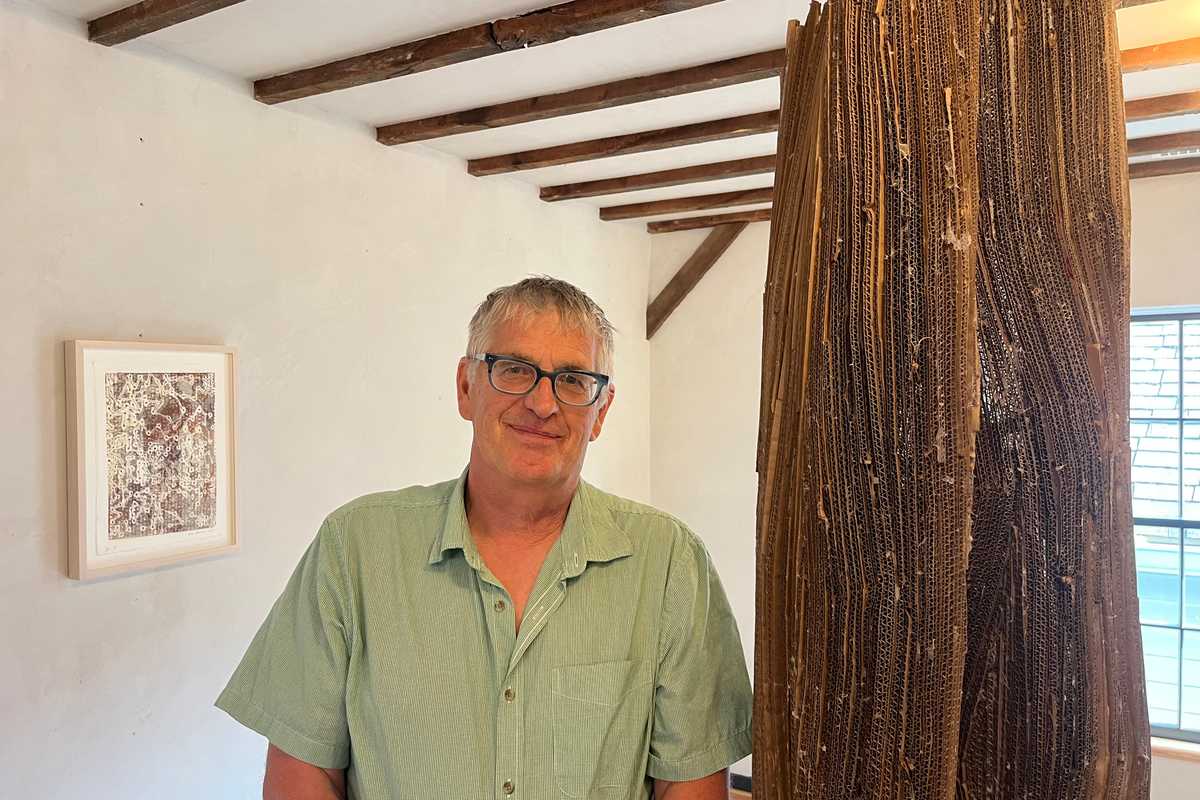
Henry Klimowicz with his sculpture, “Partial Pillar 1”

Photo by D.H. Callahan

On Saturday, Aug. 1, Geary Gallery opened its doors in Salisbury for two unique shows in its first- and second-floor gallery spaces. Art lovers flooded both floors over the course of the afternoon, giving the events a vibrant feeling that enhanced the importance of the art.

On the first floor is a show by Chicago-born, Colorado-based photographer Summers Moore, titled “Lobitos: Pueblo Fantasma,” or “Lobitos: Ghost Town.” The work centers around her daughter’s current hometown in Peru. Moore herself found a home away from home in Colorado in the mid-1980s and encouraged her children to seek out new places outside of their comfort zones.

Keep ReadingShow less

Writer’s retreat in the woods

Writer’s retreat in the woods

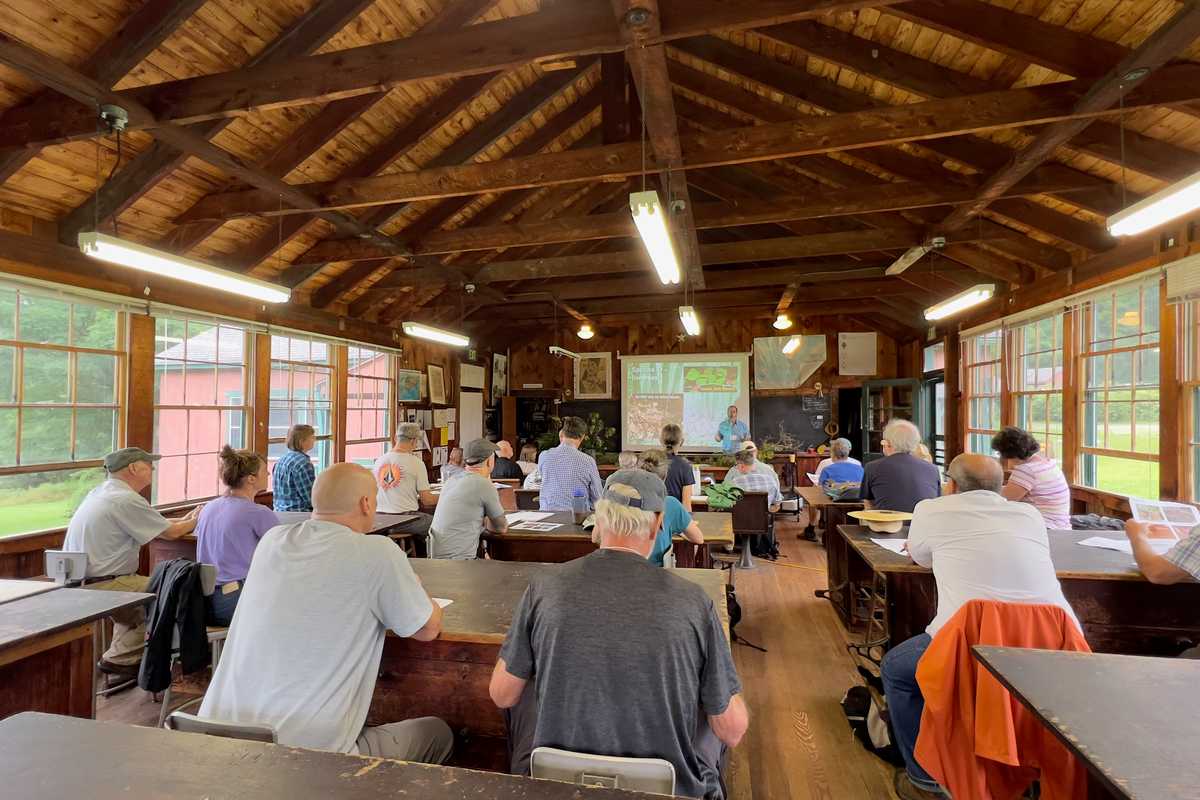
Participants in a 2024 Great Mountain Forest Woodland Academy workshop at Yale Camp.

Photo by Mike Zarfos

Great Mountain Forest (GMF) will host its first Nature Writing Retreat at the historic Yale Camp in Falls Village from Aug. 7-9, 2026. Writers of all levels are invited to draw inspiration from one of New England’s most notable forest landscapes. GMF envisions the retreat becoming an annual event celebrating writing, conservation and the relationship between people and forests.

This immersive three-day retreat reflects on the legacy of Hal Borland, the American writer and New York Times nature columnist whose work was deeply connected to this landscape. The retreat explores how wilderness shapes language, strengthens close observation and fosters environmental consciousness.

Keep ReadingShow less
From Cornwall to Rome, Adam Van Doren at Berkshire Botanical Garden

Artist Adam Van Doren and curator Donna Hassler talk to a group of visitors at the Berkshire Botanical Garden. A Stephen Proctor vessel sits to their left.

Photo by Natalia Zukerman

This summer, the Berkshire Botanical Garden in Stockbridge has hosted “Grounded in Nature: Paintings by Adam Van Doren,” an exhibition exploring the intimate relationship between architecture and the natural world.

On view for only a few more weeks in the Leonhardt Galleries, the exhibition features more than 35 watercolor and oil paintings by the New York-based artist, architect, author and Yale professor, curated by art historian Donna Hassler, director emerita of Chesterwood. The works span three distinct places that have shaped Van Doren’s artistic practice: New York City, Cornwall, Connecticut, and his travels throughout Europe.

Keep ReadingShow less
google preferred source

Want more of our stories on Google? Click here to make us a Preferred Source.
google preferred source

Want more of our stories on Google? Click here to make us a Preferred Source.