Most Region One students say they feel safe at school, have a trusted adult in their lives and are confident about their future. At the same time, significant numbers continue to report stress, anxiety and, in some cases, thoughts of self-harm, according to the 2025 Youth Voices Count Survey released Wednesday, Feb. 11.
The districtwide survey of students in grades 7 through 12 was conducted in May and June and gathered responses from 422 students — a 75.4% participation rate. The findings are used to guide prevention efforts and student support strategies.
Superintendent Melony Brady-Shanley said the results show both strong support systems and rising emotional strain among students.
“For the most part, our kids feel like they have a trusted adult in their life, whether it’s a school member, a family member…that they trust, that they can speak to,” Brady-Shanley said, noting that was a very positive finding.
However, “I think the one thing that stands out for me is, you know, the amount of anxiousness that our kids are feeling.”
Conducted by Weyland Smith Consulting, LLC, a Wethersfield-based firm specializing in youth behavioral health research, the survey measures student perceptions related to mental health, substance use, school climate, bullying, social media and other behavioral indicators.
Strong safety and support indicators
The survey found high levels of connection and safety among students.
More than 94.6% said they have at least one trusted adult they can turn to. Similarly, 94% reported feeling safe in their community, and 88.6% said they feel safe at school. More than 92.4% said they know how to get help if they need it. About 73.8% said their life is headed in a positive direction, and 79.7% reported confidence in their future.
“It is very positive, you know, I think anytime we can say that that percentage of kids have a positive outlook, and they, you know, have hope about where they’re going, that’s a great thing,” Brady-Shanley said.
Ian Strever, principal of Housatonic Valley Regional High School, said the survey remains an essential planning tool.
“This report and its predecessor, the Developmental Assets Survey, have always been incredibly useful tools for assessing not only our students’ risk-taking and social behaviors, but also how we support them through school programs and the larger community of Region 1 town services,” Strever said.
Stress, anxiety and emotional health indicators
Despite the positive indicators, emotional strain remains a concern.
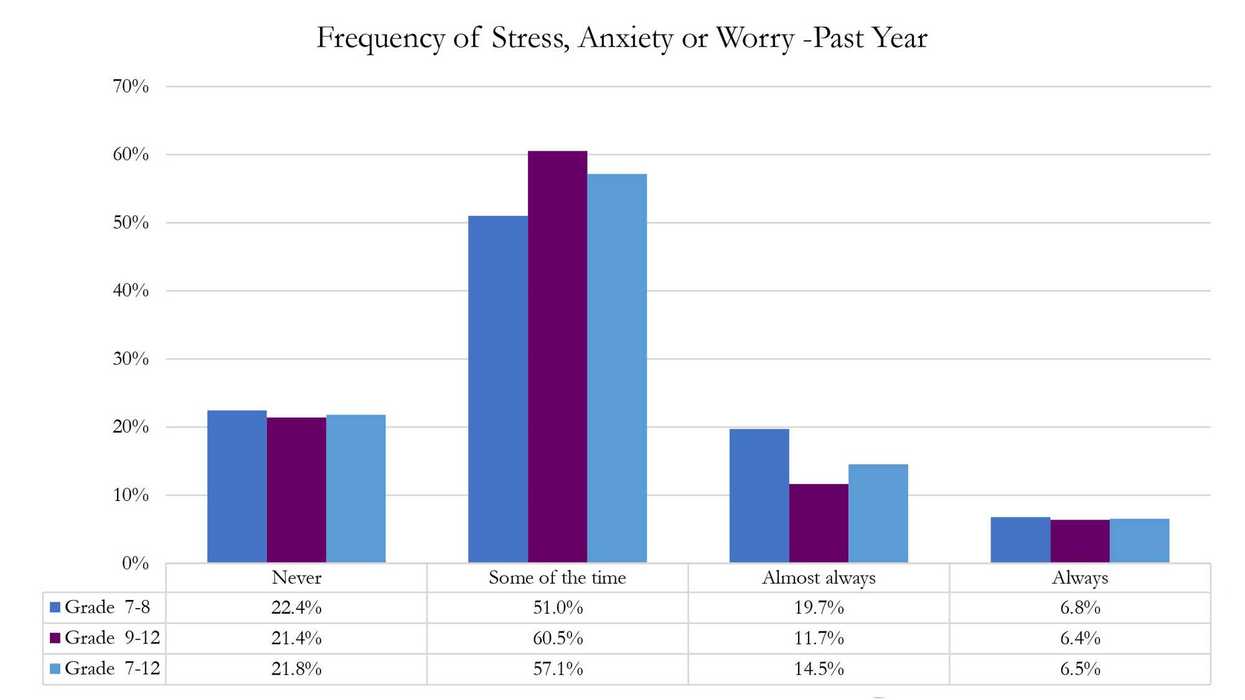
More than half of students in grades 7 to 12 — 57.1% — reported experiencing stress or anxiety “some of the time” in the past year. Another 14.5% reported feeling stress or anxious “almost always” and 6.5% reported feeling that way “always.” Only 21.8% reported feeling stress free.
About 18.3% said they felt sad or hopeless for two consecutive weeks during the past year.
Brady-Shanley said these findings reflect what teachers have been seeing in recent years.
“You know, if we were to go back 10 to 15 years, I don’t think that we would be seeing the percent of anxiety that we see right now,” she said. “I think there are two main triggers: COVID-19 that did not help anyone, with social isolation. And I think number two, social media has had a huge influence on kids’ anxiety.”
The survey also found troubling data: 15.4% reported thoughts of self-harm in the past year, 7.8% reported engaging in self-harm behavior and 9.8% reported having considered suicide in the past 12 months.
Brady-Shanley said these figures highlight the importance of support systems, and are being taken very seriously.
Speaking of the suicide figure, she said: “Any number with the exception of a zero is concerning.”
The percentage considering suicide was highest among grades 7–8, where 10.9% considered it, compared to 9.2% for grades 9–12. Among students who considered suicide, 23.1% said they made a plan, and 13.8% reported attempting suicide.
Brady-Shanley said the district has implemented annual training programs to help staff recognize and help students with mental health issues.
“Part of what we’re doing is giving staff the tools to be able to recognize when a kid is in crisis.”
She added that the district recently secured funding to continue three additional social workers at the elementary school level.
The goal, she said, is to ensure schools are prepared to respond quickly when students show signs of crisis.
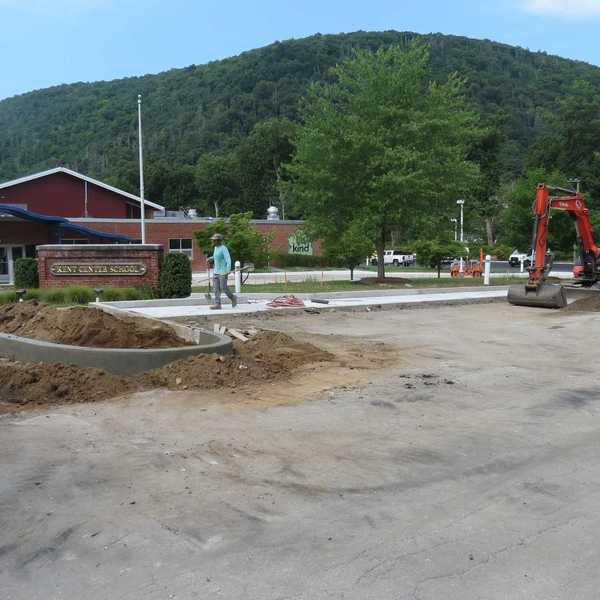
At Cornwall Consolidated School, Principal Leanne Maguire said the middle school findings are particularly concerning.
“The survey results for our 7th and 8th graders are particularly startling. When we see that 94% of middle schoolers in our region have experienced anxiety in the past year — and that [nearly] 11% have considered suicide, while 20% of those have reported self-harm, it moves beyond a ‘trend,’ and into a call for immediate action. These aren’t just statistics; they are the daily lived experiences of our students.”
Maguire said she will ask town officials to support expanding the school counselor position to full time.
Early access to smartphones and screen use
Most students receive their first smartphone between the ages of 11 and 13, with social media accounts typically beginning between 12 and 14.
“I would love to see the access to social media going to like 16 and above,” Brady-Shanley said. “I think the little brain of a 12- to 14-year-old is not ready to handle the very adult world of social media.”
Currently, more than 97% of students reported having a social media account prior to age 16, according to the study. Nearly 90% had smartphones before reaching 14 years of age.
Approximately 58% of students said social media helps them feel connected. At the same time, about one-third reported difficulty stopping scrolling, and roughly 25% said they felt left out at times because of social media.
Substance use remains below state, national levels
High school students in Region One continue to report substance use rates below Connecticut and national averages.
For the month prior to the May 2025 study, 10.7% reported drinking alcohol — roughly half the statewide rate of 21.1% and the national rate of 22.1%. Marijuana use was reported by 8.1% of students, compared with 14.7% statewide and 17% nationally. Meanwhile, 7.4% reported vaping, lower than Connecticut’s 11.5% rate and far below the 16.8% national figure. Cigarette use was low at 2.9%.
“Fantastic. I think it speaks to what parents are teaching their children at home. It speaks to what we’re, you know, encouraging from the school perspective,” Brady-Shanley said. “Kids do listen when their parents talk to them about this kind of stuff.”
Strever said the high school has seen measurable progress.
“One of the most encouraging takeaways from the 2025 report is the continued downward trend in substance use among HVRHS students. When comparing this data to the 2023 report, we observed a notable decrease in 30-day vaping rates, which dropped from 10 percent to 6.9 percent. We also saw slight declines in the reported use of alcohol and marijuana. These shifts suggest that prevention education and the healthy choices being made by our student body are trending in a positive direction.”
Bullying still present
While bullying remains present, the survey suggests it is not pervasive for most students. About 39.4% said they have never been bullied, and 43.5% reported having been bullied at some point — but not within the past 30 days.
Still, 10.3% reported occasional bullying in the week prior to the survey, and 6.8% reported frequent or near-daily bullying in the three weeks leading up to the study.
While bullying remains a concern, the vast majority of students did not report recent incidents.
“So I think 40% of our kids reporting that they’ve never been bullied is honestly … a strong number,” Brady-Shanley said.
She said adult intervention appears consistent when incidents occur.
“If adults are seeing something, they’re not just passively letting it go by,” she said. “I think you’ll see that more frequently at the younger levels. You know, high schoolers tend to be a little bit more reserved with their requests, sometimes for assistance, yeah.”
The most common forms of bullying were name-calling, rumors and social exclusion.
High school sexual behavior and communication
Among high school students, 48.4% reported having talked with a parent or guardian about birth control, sexually transmitted infections or delaying pregnancy.
Brady-Shanley said this number needs to be higher.
“Parents need to talk more to their kids and I need that number to be 100%,” she said. “We want our kids and our families having conversations about their children’s physical health and ultimately their mental health. Kids listen when their parents talk.”
Brady-Shanley said the survey ultimately reflects both progress and ongoing work.
She said the district will continue reviewing the findings with administrators and staff, using the data to guide prevention programs and student support services.
“For the most part, our kids feel like they have a trusted adult in their life,” she said. “But we still have some work to do.”
Riley Klein contributed to this article.




 Dick Hermans in the Oblong Bookstore on Millerton’s Main Street in 1985.Provided


 Fall storage crop harvests amid soil building cover crops at Adamah Farm in Falls Village. Janna Siller