

According to the Town of Sharon Board of Finance, there’s no justification to, as one member thundered at a recent meeting, raise the Sharon Center School budget “by so much as one dollar”.
Meanwhile, other schools in Region 1 proposed increases ranging from 2.69% to 6.41%. Annual inflation is up 2.5%, and Sharon’s school labor costs, which make up four-fifths of the budget, are slated to go up 3%.
So why is the Board of Finance so obdurate? Is school spending wildly extravagant and out of control? Can the town not afford the school budget?
Here are some facts:
• Actual spending at SCS over the last eight years was virtually flat: up 01.5%, while inflation rose 32% and municipal spending jumped 36%.
• Sharon spends a lower proportion of its overall budget on education than any other town in Region 1 except Kent.
• Education spending per town resident is the lowest in Region 1.
• The State of Connecticut puts Town of Sharon wealth (figured by property tax and individual income) at sixth highest out of 169 school districts. (In Region 1, the next wealthiest is Salisbury, at #12.)
• Since 2017, Sharon town taxes (Mill rates) have been consistently among the three lowest in the state.
Clearly, the town can afford its public school. As for extravagance, you don’t get savings amounting to a third of costs over an eight-year period without sustained, careful, thoughtful cuts in staffing, supplies, and in one instance, benefits. (The school is up to date on capital projects and major repairs.)
The uncompromising stance of the Board of Finance is due to one figure, and one figure only: per pupil cost, which is extraordinarily high. And the reason for this is that the student population has fallen sharply. Public school attendance in Connecticut is at a 20-year low, the US birthrate has dropped to record lows, and Sharon has been especially hard-hit by the loss of most of its middle class, traditionally a crucial support of public schools.
That drop meant that Sharon could and did make big cuts in education spending. But Sharon is a geographically large town with a large school building to maintain, and there’s a limit to how much you can cut before you begin to hurt students’ education. Sharon has reached that point.
This year, the Board of Education requested a 1.98% increase for the 2026-2027 budget, or $82,000. The Board of Finance said no. The Board of Ed found another $13,000 to take off the budget and asked the Board of Finance to consider, as an offset, the estimated $40,000 in tuition to be paid into town coffers by out-of-district SCS students. This would have reduced the real cost to the town to $29,000 out of its total budget of $11.8 million. Instead, the Board of Finance opted to keep those tuition funds for town expenses, and again said no.
So on April 8th the Board of Education authorized closing the cafeteria kitchen. There are two other small schools in the region that have cafeterias without kitchens, but this is an especially harmful option for Sharon students. The number of children who qualify for free or reduced-price school meals generally hovers around one third, sometimes rising to 40% or more; many buy breakfast as well as lunch. Now, instead of fresh, hot food prepared on site, lunch will be trucked in from the high school, two towns away. Shelf-stable breakfast items – think packaged muffins – will be delivered once a week.
And other options considered by the board were even more painful.
I believe that most Sharon residents are strong supporters of the public school. I think they would be in favor of raising spending the tiny amount needed to keep the cafeteria, or field trips, or mathematics coaching, or any of the other items that were chopping-block candidates. I also believe that the context and cause of the high per pupil cost, the ways it has been addressed, and the overall financial position of the town, are not well known and have not been an adequate part of the public discussion – which is why I have written this piece.
In one respect, I have great sympathy for the current leadership of the town of Sharon and the difficult task they now face. Over the last decade and more, the town has built up a backlog of at least $20 million in today’s dollars in capital and maintenance projects, and the need to deal with this problem has become acute. I think these efforts, too, would benefit from better understanding and broader discussion – including how to keep that from ever happening again.
But when it comes to cutting the budget, education spending has done its part, and rising costs are one of the realities of life. When you’re dealing with highly regulated education mandates, fixed building costs, a unionized workforce, and inflation, it is impossible for any budget to remain flat. Trying to do so puts an undue burden on the backs of school children – and on some of the least affluent people in town.
Anne Vance is a former member of the Sharon Board of Education. She was Vice Chair from 2023-2025.



 Tiffany Lemelin, shelter manager, brushing Marsala upon arrival.Provided
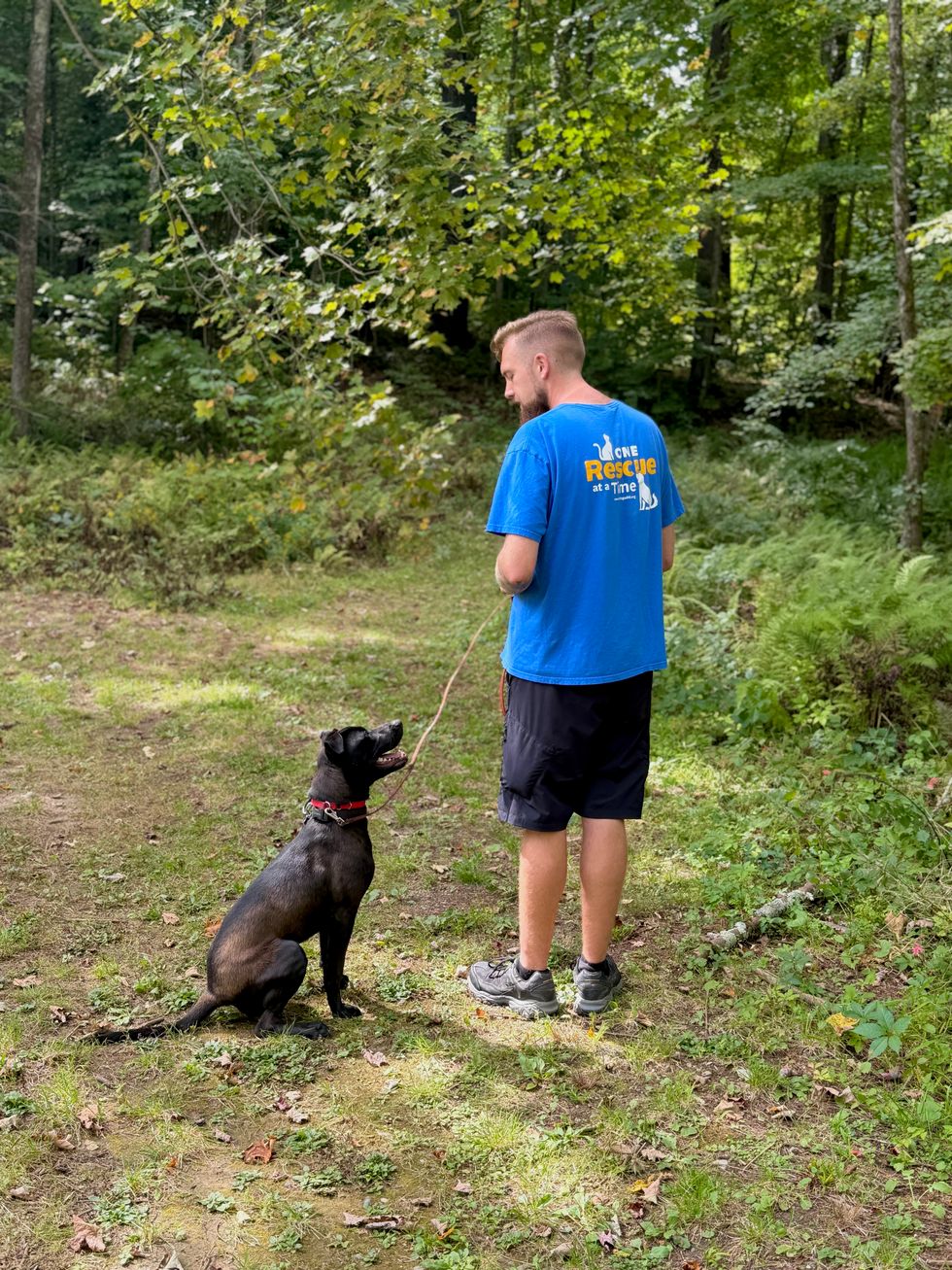 Michael DeBarba, certified dog trainer working with Marsala.Jennifer Almquist
 Marsala wins a heart.Jennifer Almquist

 Sadie, center, a Carolina dog, plays with her friend Negra, a terrier mix. Bella Linda, the small poodle, has since been adopted.L. Tomaino
 Wesley, a young, exuberant mix, is looking for an active home.L. Tomaino
 Bonnie and Clyde, an affectionate terrier pair.L. Tomaino
 Provided



Board of Ed budget places undue burden on students and least affluent