

The survival of human civilization as we know it depends in large part on widespread understanding of uncensored, detailed answers to this question.
In a recent letter to the editor on The Berkshire Edge online news site, I wrote that the U.S. mainstream corporate news media coverage of vital economic and political issues frequently distorts or entirely ignores essential, easily accessible historical and factual open-source information, from detailed, well-documented sources, information directly relevant to those issues.
Why do the editors and producers of Fox News, PBS News Hour, the CNN/PBS program ‘Amanpour & Company,’ CNN, MS NOW, NPR News, The Wall Street Journal, and The New York Times (many of whom have impressive academic credentials) all appear to be totally ignorant of these detailed, often impeccably documented sources?
Surely many, if not most, of the producers, editors, and corporate owners behind the pretty faces and mellifluous voices of the broadcast media and behind the print reporters and opinion writers in our major newspapers are aware of these easily accessible sources.
To understand how and why this form of journalistic malpractice is so widespread, I suggested that readers consult the 1988 book “The Manufacture of Consent: The Political Economy of the Mass Media” by Noam Chomsky and Edward Herman.
That suggestion was too cryptic. “The Manufacture of Consent” is a thick book, which I think few readers will be likely to have the time or the inclination to read.
Here are three short ways in which Chomsky and Herman state their central thesis:
“Especially where the issues involve substantial U.S. economic and political interests and relationships with friendly or hostile states, the mass media usually function much in the manner of state propaganda agencies.”
Their propaganda model for how U.S. corporate journalism works does not posit direct censorship or control over the news and opinion that is broadcast or printed, but explains:
“The raw material of news must pass through successive filters … that fix the premises of discourse and interpretation, and the definition of what is newsworthy in the first place …”
They add:
“The elite domination of the media and marginalization of dissidents that results from the operation of these filters occurs so naturally that media news people, frequently operating with complete integrity and goodwill, are able to convince themselves that they choose and interpret the news ‘objectively’… [but] the constraints are so powerful … that alternative bases of news choices are hardly imaginable.”
For me, Chomsky and Herman’s model explains well why mainstream corporate media coverage is so negligently incomplete about three vital current public issues, all of which have simmered for decades. Each one now threatens to erupt into a toxic boil, fatal not only to what we like to call democracy, but to human civilization as we know it.
1. The history of Israel’s actions and the United States’ lavish support for them since 1948 in Gaza and the occupied territories of the region formerly known as Palestine.
2. The history of relations between the United States and Russia since the dissolution of the Soviet Union in 1991 as essential context for understanding the development of the nearly four-year-old war between Russia and Ukraine and for international efforts to prevent its escalation into a nuclear war, which would destroy human civilization.
3. The chronically ruinous domestic economic effects of our country’s 80-year addiction to preparing for and waging war. The history of the development of this economic malignancy has been completely ignored in the mainstream corporate media that I have read regularly since 1961.
In his 1946 essay “Politics and the English Language,” George Orwell wrote “Modern English, especially written English, is full of bad habits which spread by imitation and which can be avoided if one is willing to take the necessary trouble. If one gets rid of these habits one can think more clearly, and to think clearly is a necessary first step toward political regeneration: so that the fight against bad English is not frivolous and is not the exclusive concern of professional writers.”
Substituting the word “journalism” for “English” and “journalists” for “writers” in this passage creates a fitting conclusion to this commentary.
John Breasted is a member of The Kent Center School Class of 1961 and the HVRHS Class of 1965.


 Models walk the organic runway at HVSFW. Ilan Harel
 Susan Schneider, owner of Shandell’s, creates a variety of products with marbleized surfaces in her Ashley Falls studio.L. Tomaino


 Roger McKee naming the winners with the first place entry over his left shoulder. Patrick L. Sullivan
 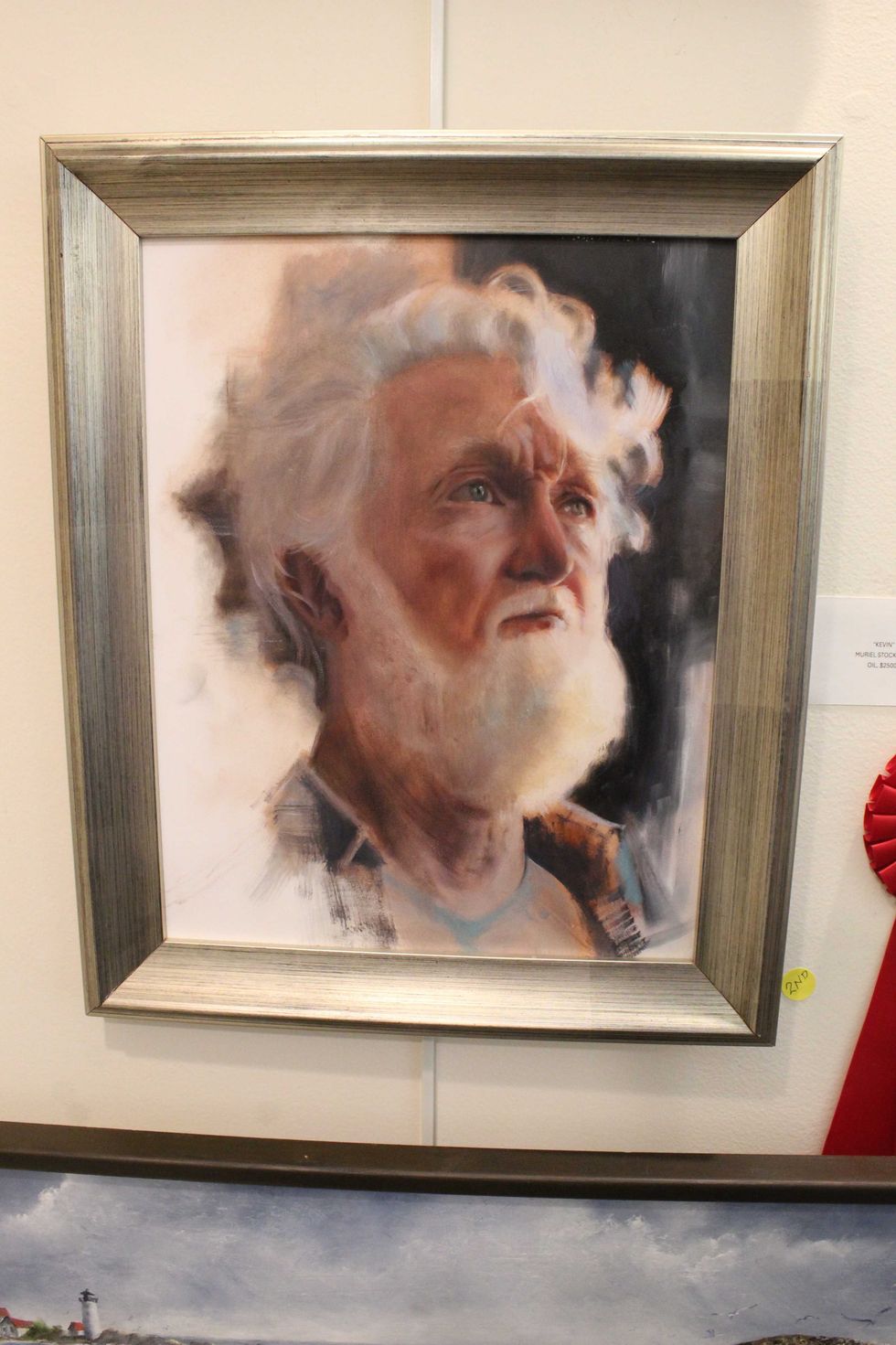 Muriel Stockdale’s “Kevin” took second place in the juried art show at Trinity Episcopal Church.Patrick L. Sullivan




A question of profound consequence: Why and how the U.S. corporate news media ignore open-source history