Latest News
In a time of fear, John Carter revives a network of “neighboring”
Sally Haver
Apr 08, 2026
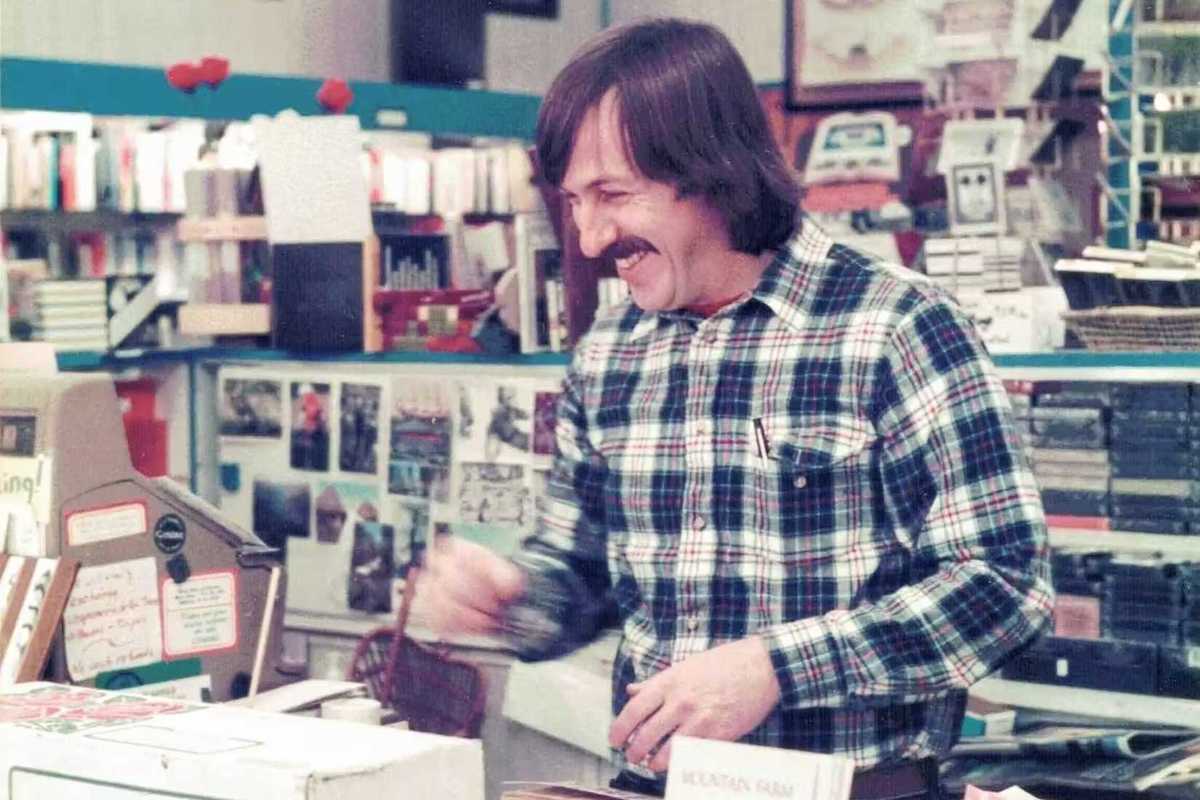
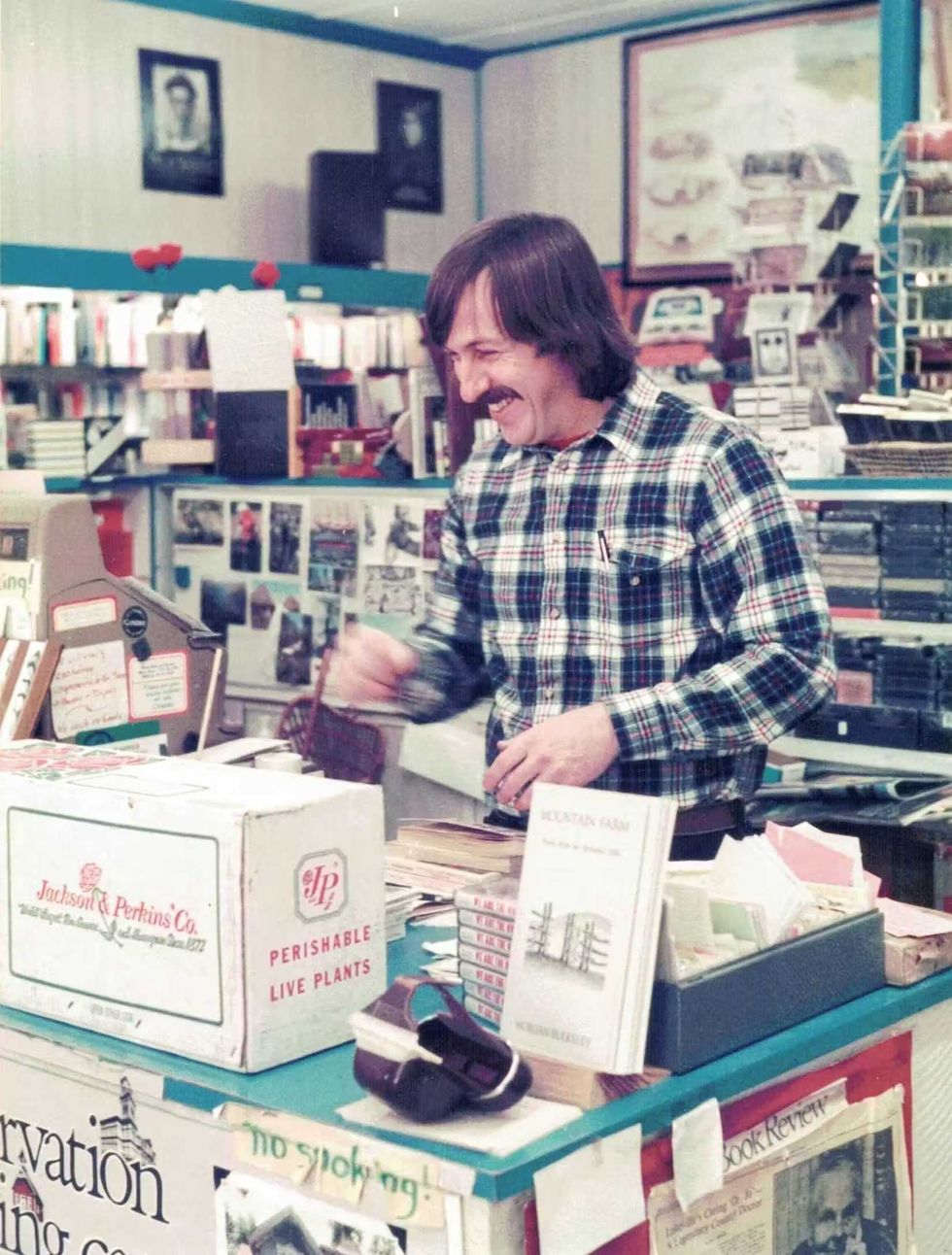
John Carter
Photo by Deborah Carter
"The human cost of current ICE practices is appallingly high."
—John carter
John Carter, who served as rector of St. John’s Episcopal Church in Salisbury from 1999 until his retirement in 2014, launched the first iteration of the nonprofit Vecinos Seguros 1 (Safe Neighbors) in 2017 by introducing a misa, a Spanish-language worship service, at Trinity Lime Rock Episcopal Church.
In December 2024, amid concerns over a renewed federal crackdown on immigrants, a group of volunteers revived the program as Vecinos Seguros 2 (VS2). According to its 2025 annual report, the initiative “created a network of trusted allies to help those who may be targeted by immigration enforcement agents,” taking a low-key approach that prioritizes in-person connections.
Carter arrived at his calling by a circuitous route. After graduating from Yale, he joined the Peace Corps, then returned to his hometown of Milton, Mass., where he founded and ran the Carter Tree Co. for seven years. After closing the business, he attended Virginia Theological Seminary, earning a Master of Divinity. During that time, he and his wife, Deborah, were involved in the hunger movement. Carter said every venture he undertook was made possible by Deborah, whom he described as his constant companion and indispensable partner in his pursuit of compassion and justice. Still, he questioned himself: “Who am I, and what should I be doing that I’m passionate about?”

In the face of new challenges, volunteers joined the effort to revive the original program, VS1. The Rev. Heidi Truax, recently retired rector of Trinity Lime Rock, has been a strong supporter of Vecinos Seguros from its inception. Glenn Formica, an immigration attorney from New Haven, gave a presentation informing the community about the second Trump administration’s amended policies. Formica also generated written materials in English and Spanish, advising private citizens and employers how to prepare in the event of a visit from ICE (U.S. Immigration and Customs Enforcement). William Tong, Connecticut’s attorney general, a proponent of many social justice issues, including the opioid crisis and fair pricing for generic drugs, has also provided support since the establishment of Vecinos Seguros.
The VS2 steering committee, which includes Carter, is led by Jill Drew, a local civic leader. Drew has worked with Judiciary Committee co-chairmen Gary Winfield and Steven Stafstrom in support of SB 91, a proposal by Connecticut Gov. Ned Lamont to limit ICE actions in “protected areas,” including schools, hospitals and religious buildings. She has also supported HB 5499, which would place limits on the use of automated license plate readers, addressing concerns that the Trust Act is being circumvented through technology deployed for other purposes. Other committee members include Amy Lake and Lee and Sophia DeBoer.
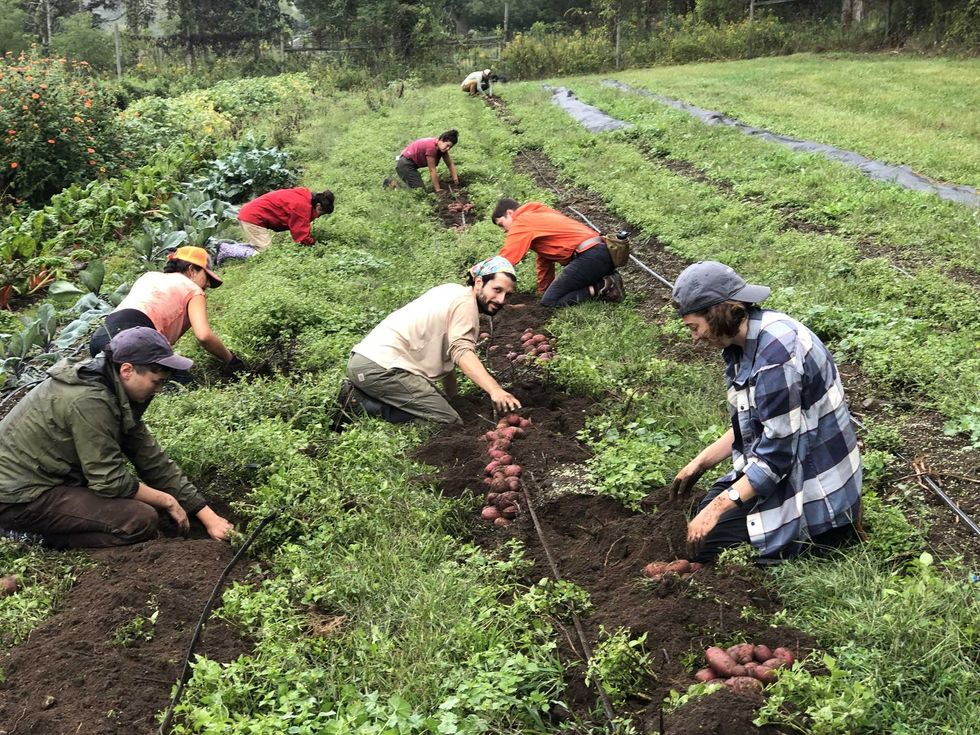
VS2 has launches a range of initiatives, including distributing “know your rights” flyers; creating an online resource with local legal and social services for immigrants; hosting in-person events to educate neighbors and train volunteers; organizing a rapid response team to verify reported immigration enforcement activity and support those affected; providing financial assistance for legal expenses, rent and utilities; and advising employers — from farms and restaurants to stores and private homes — on how to protect workers if immigration agents arrive.
As the annual report states: “We are committed to building on the powerful work of Rev. Carter, who, in the first seven years of Vecinos Seguros, assisted a significant number of individuals and families. It is our mission to continue this important work.”
Few descriptions capture the moment more clearly than Carter’s own words:
“The human cost of current ICE practices is appallingly high. Evidence of the brutality and cruelty of these practices is everywhere. Minneapolis is a recent and egregious example. ICE enforcement is doing much more than deporting individuals. It is also the systematic destruction of families. According to some reports, 90% of deportees are male. They are husbands, partners and fathers, often the primary contributors to family finances. There is heartbreak, trauma and stress experienced by the families left behind. The humanitarian response to the violence and chaos in Minneapolis is inspirational and instructive. Both citizens and immigrants came to the aid of residents living in fear and peril. It should be noted that people of color, whether their status was legal or undocumented, were also deeply shaken by what they witnessed in their communities.”
Carter also described how communities responded. That out of devastation, he said, came something else:
“A new word was born out of the compassionate response in Minneapolis: ‘neighboring.’ In caring for each other, they were ‘neighboring.’ The mission of Vecinos Seguros 2 is to ‘neighbor’ members of the immigrant community whose lives have been turned upside down by current immigration policies.”
Keep ReadingShow less
Firefly project to honor Jane Goodall
Ruth Epstein
Apr 08, 2026
Firefly project to honor Jane Goodall
Provided
Renowned primatologist Jane Goodall, who died Oct. 1, 2025, will be honored April 10 at Marvelwood School during the Firefly Environmental Arts Project, a student-driven event blending art, science and environmental action.
A talk on Goodall by author Priscilla Woolworth will anchor the program, part of a larger gathering focused on sustainability. The Firefly Environmental Arts Project is described as “a collaborative sustainability initiative engaging students and professionals in the tri-state corner to build community through shared experiences in nature and the arts.” Student environmental ambassadors from several schools are central to the effort.
Firefly was created last year by Kent residents Deborah Schlee, a nature photographer, and Carl Raab, a science educator and author. “Our goal is to try to get people engaged and involved in the environment,” Schlee said. “We knew that various schools were having their students do things about the environment, but they were not always doing it together. We wanted to build community through shared experiences.”
Friday’s event will feature an exhibit of nature-inspired artwork by students and professional artists, including sculpture, painting, photography, recycled art and poetry. Students from Housatonic Valley Regional High School and Marvelwood, Millbrook and South Kent schools will speak about their environmental efforts aligned with Goodall’s work. A video created by third grade students at Kent Center School will also be shown.
Goodall, a pioneer in primate ethology, is widely regarded as the world’s leading expert on chimpanzees, known for her decadeslong research on their social and family life in Tanzania. Woolworth, who was a friend of Goodall’s, will discuss how that relationship inspired and deepened her commitment to environmental stewardship. She has been named a Green Pioneer by Time magazine and runs an online eco-friendly store.
Woolworth is the author of “Lola Lots of Love Always,” a book for young women about living sustainably and making healthy choices for themselves and the planet.
Schlee said her environmental book club read one of Goodall’s books, further deepening her admiration.
The free event will be held at Marvelwood School Performing Arts Center, 476 Skiff Mountain Road in Kent. The art exhibit and refreshments begin at 5 p.m., followed by the keynote speaker and presentations at 6 p.m.
Keep ReadingShow less
Threads of history come to Sharon
Natalia Zukerman
Apr 08, 2026
Indigo-dyed and printed linen, probably American, Mid- to late 18th century.
Provided
In an age of fast fashion and disposable wares, Sharon resident Titi Halle, a leader in the fields of textiles and costume, has spent decades immersed in a world where clothing endures, sometimes for centuries.
“I had very little idea that 300-year-old clothes survived,” Halle said. “Or that you could make a living out of it.”
That was before she met Cora Ginsburg in 1980, one of the country’s leading dealers in historical textiles and costume. Halle took over as owner of Cora Ginsburg LLC in 1997 and has built a career around preserving and interpreting garments that tell stories far beyond their seams. The work she does spans everything from museum consulting to sourcing rare pieces through auctions, private sales and travel.
She will bring that expertise to Sharon this spring as part of a two-part series on early American textiles and clothing.
The first, “The Fabric of Early American Life: Textiles at Home in the 18th Century,” will take place Sunday, April 12 at the Hotchkiss Library of Sharon. A second program, “Dressing Up in 18th-Century New England,” follows on May 3 at the Sharon Historical Society & Museum, featuring a display of period garments including shoes, stays, petticoats, and cloaks.
“America produced very little in the 18th century,” Halle explained. “So, if you’re looking at silk and cotton, those were commodities that traveled. They were luxury goods.”
That global exchange is central to what audiences will see. Printed cottons from India, silks from Europe, and locally made wool and linen reflect a world far more interconnected than we often imagine. At the same time, they reveal the labor — mostly women’s work — behind domestic life.
“I don’t just collect complete objects,” said Halle. “I collect small pieces and documents. It’s the best way to learn — and I’m always happy to share that experience.”
That spirit of sharing will be central to the upcoming exhibits. Halle plans to bring not only rare textiles but also fragments that visitors can handle — an unusually tactile opportunity in a field where preservation often keeps objects behind glass.
The clothing itself, she noted, offers its own revelations.
“These aren’t the kinds of clothes you worked in,” she said. “You can’t lift your arms much higher than your shoulders. They’re not terribly comfortable.”
What has survived, then, are often the “best” garments — the ones reserved for public life or special occasion. Through them, a picture emerges not just of how people dressed, but how they moved, traded, and understood the world around them.
For Halle, who has lived part-time in the region since the 1980s, bringing this work to Sharon feels both professional and personal.
“These are things people can look at,” she said. “And things they can touch. They won’t crumble.”
In other words, history not as something distant, but as something tangible — woven, worn, and still very much alive.
Both events are free, but registration is required for April 12 at the Hotchkiss Library at hotchkisslibrary.libcal.com. And for May 3 at the Sharon Historical Society, rsvp at rsvp@sharonhist.org.
Keep ReadingShow less

Want more of our stories on Google? Click here to make us a Preferred Source.
Patina: the case for letting your home live a little
Kerri-Lee Mayland
Apr 08, 2026
Objects that show age over time can be beautiful treasures.
Kerri-Lee Mayland
Your home does not need to be perfect to be beautiful. In fact, the marks, softened edges, and quiet signs of daily life are not flaws to be erased, but stories to be embraced.
That idea has a name: patina. It is the natural aging of materials over time — the result of wood touched again and again, metal worn by air and use, fabrics settling into the rhythm of a lived-in space. Some may see it as damage, but it is better understood as evolution: the gentle, authentic record of a home being used as it was meant to be.
For years, design of all kinds leaned toward the pristine — homes that felt almost too perfect to settle into. But perfection, while beautiful at first glance, can create what feels like a museum or showroom. Such a space asks you to maintain it, to protect it, to exist very carefully inside it.
Patina offers the opposite.
It lets you exhale.
A dining table with a few marks from family dinners does not need to be replaced. A brass faucet that darkens over time becomes richer, not worn out. A leather chair that creases and softens becomes more inviting; these are the pieces I search for when clients want an instantly lived-in look. These changes are not signs that something is going wrong. They are signs that something is being used exactly as it should be.
This is where patina becomes more than a design choice. It becomes a mindset, a lifestyle.
It allows you to let your home live a little, too.
In practical terms, to incorporate patina, you must choose the right materials, ones that will age well. Natural wood is perhaps the most forgiving and rewarding. Look for finishes that are matte or lightly sealed rather than overly glossy. Woods with visible grain and variation will develop character over time, rather than showing wear in a way that feels damaged.
Metals are another opportunity. Unlacquered brass, bronze and copper are designed to change. Instead of resisting fingerprints or water spots, they respond to them, deepening in tone, creating variation, becoming uniquely yours. In kitchens and baths especially, these materials bring warmth that polished chrome simply cannot replicate.
Leather, too, is a favorite of designers for this reason. It softens, creases, and gains depth with use. A well-made leather chair will look better in five years than it does today. Linen and other natural textiles follow a similar path, becoming more relaxed and comfortable over time.
Vintage pieces naturally carry patina with them, which is part of their appeal. A worn wooden chest, an antique mirror with slight foxing, a set of timeworn stools—these elements anchor a space. They immediately give a room a sense of history, even if the rest of the home is newly designed.
The key, however, is balance.
A home filled entirely with aged pieces can feel heavy and old. But when patina is layered alongside clean lines and newer elements, a sense of calm emerges. The space feels both fresh and grounded. A modern sofa paired with a weathered coffee table. Crisp walls against an antique cabinet. It is this contrast that makes a home feel thoughtfully designed rather than overly styled.
And then there is the emotional shift.
When you embrace patina, you release yourself from the pressure of constant perfection. You stop noticing every small scratch or imperfection because they are no longer mistakes — they are part of the story. Your home becomes a place to live freely, not carefully, and that shift changes your mood and outlook.
It reflects a deeper understanding: that beauty is not found in preserving something exactly as it was, but in allowing it to evolve into what it becomes.
Keep ReadingShow less
Selected Shorts returns to Stissing Center
D.H. Callahan
Apr 08, 2026
This year’s line-up is (clockwise from top left) Jane Curtin, Joanna Gleason, Deborah S. Craig, Michael Emerson.
Provided
On Sunday, April 12, the long-running public radio program “Selected Shorts” returns to the Stissing Center in Pine Plains.
Whether torn from the pages of history or pulled from the ether of the imagination, short stories have the power to build entire worlds in just a few digestible pages or paragraphs. But as powerful as they can be, they are rarely given the recognition or appreciation they deserve.
In 1985, Symphony Space on Manhattan’s Upper West Side created Selected Shorts, aiming to give short-form literature a greater audience. Selected Shorts puts the words of established and emerging authors into the mouths of some of the greatest actors of the stage and screen.
Since its founding, Selected Shorts has been a regular stage show at Symphony Space, a radio program, a podcast and, in this case and others, a traveling performance.
With a rotating line of hosts and actors bringing the literature to life, attendees at the Stissing Center will be treated to performances by Joanna Gleason, Deborah S. Craig, Michael Emerson and the legendary first-season “Saturday Night Live” cast member — and original Conehead — Jane Curtin.
Tickets at thestissingcenter.org
Keep ReadingShow less
Leslie Mendelson performs at The Grace Note
Lakeville Journal
Apr 08, 2026
Provided
Singer-songwriter Leslie Mendelson performs at The Grace Note at The Stissing Center in Pine Plains on Friday, April 10 at 7:30 p.m. A Grammy Award-nominated artist, she blends folk, pop and Americana with a warm, expressive style.Tickets at thestissingcenter.org

Want more of our stories on Google? Click here to make us a Preferred Source.
loading

Jeff Holt