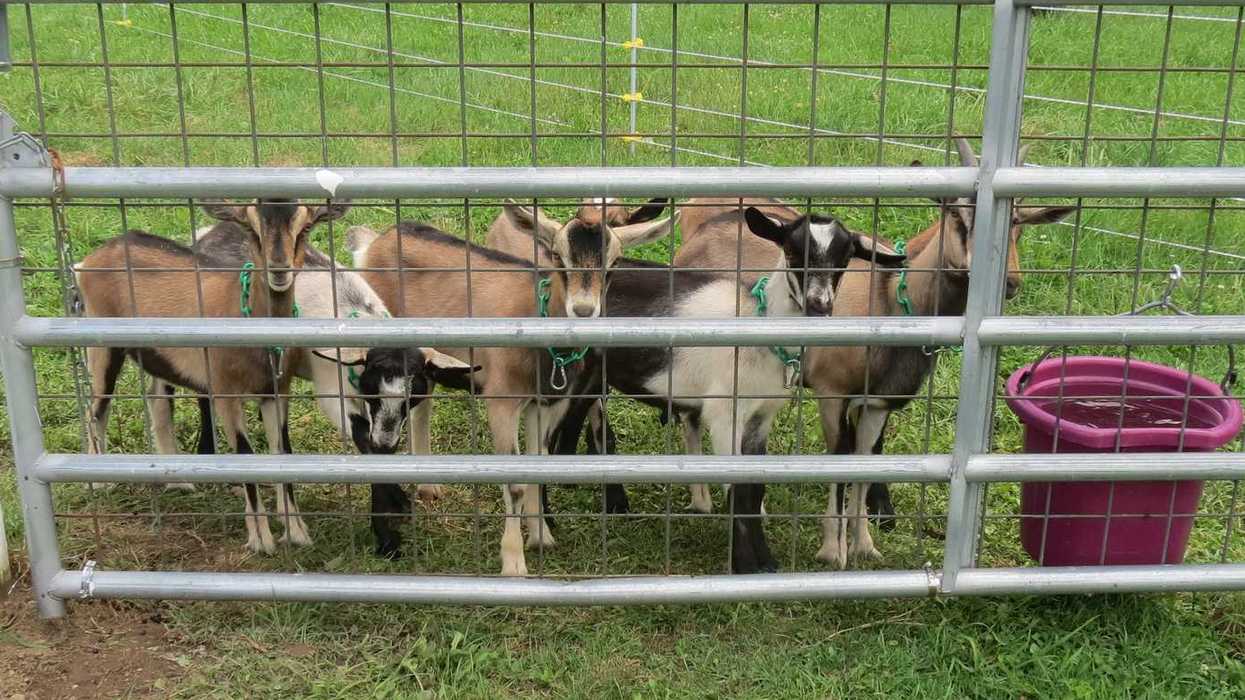
FALLS VILLAGE – Visitors driving into Clover Meadows Farm on Music Mountain Road are greeted by a frisky herd of baby goats, vying for attention as they huddle near the fence. These American Alpines will eventually provide milk for a variety of goat cheeses.
Farm owner Stephanie Baldwin speaks with great enthusiasm about the endeavor, which had been her dream for years.
Baldwin and her husband, Lee, both have degrees in agricultural-related fields. She is from Goshen and he from Salisbury, and for a long time after they were married, they lived in Canaan on a small patch of land. Farming was always in their sights, and when an 8-acre former horse farm came on the market, they decided to take the plunge and buy it. But when someone else beat them to the purchase, they decided it wasn’t to be.
Then serendipity stepped in and the property was once again up for sale. In 2018, they were successful in their bid.
Baldwin described the arduous process of clearing the land and installing fences. They had a few pet goats and added a horse and mini donkey to their menagerie.
She had held a variety of positions over the years, even going back to get a nursing degree, but last September Baldwin finally declared, “I’m going to do it,” and began preparing to become a goat farmer and produce cheese.
Baldwin had worked at a cheese-making goat farm in Monterey, Mass. before creating her own facility. After doing extensive research, she converted a storage space in the old horse barn into the necessary rooms.
Baldwin’s operations begin with eight milking goats housed in a pen near the barn. Inside, three processing rooms follow the milk through each stage of production. First is the milking parlor, followed by an adjacent room where the milk is stored in a large tank for pasteurization, and third is the cheese-making room, where the milk is churned in another tank on its way to becoming cheese. Baldwin said much of the equipment is similar to what is found in a dairy barn, just on a smaller scale.
The rooms and all of the equipment are sparkling clean and follow Department of Agriculture regulations. The operation is inspected on a regular basis.
Baldwin said that goats are seasonal breeders. They have babies from March to May, and milking starts after they give birth and generally ends about December.
She milks her eight goats twice a day, garnering 10 gallons, which will make 10 pounds of chevre, a fresh, rather than aged cheese.
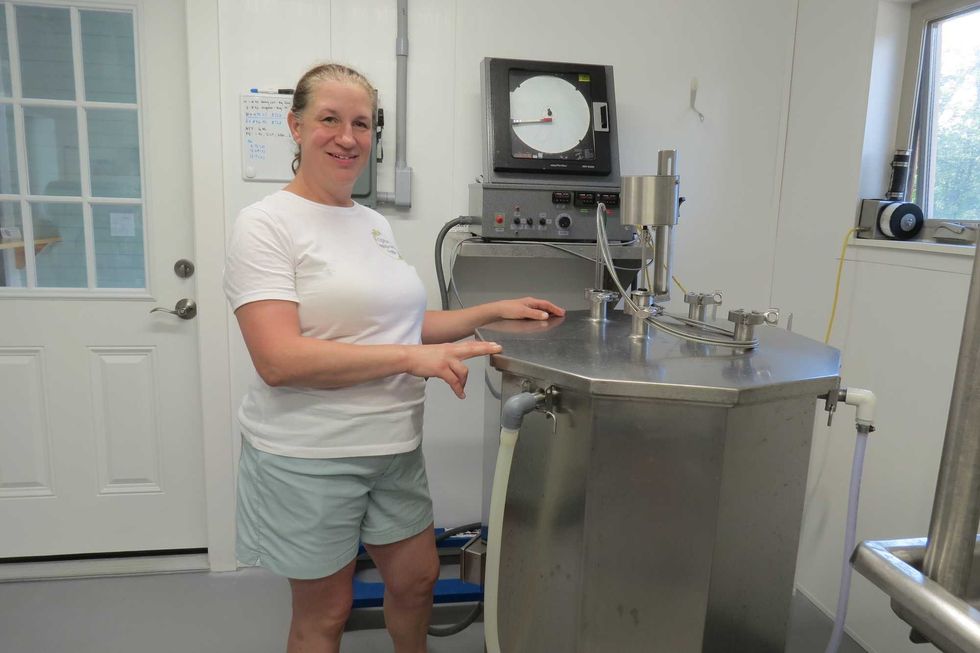 Stephanie Baldwin stands in the cheese-making room at her Clover Meadows Farm in Falls Village.Ruth Epstein
The temperature in the milk-holding tank is kept between 33 and 40 degrees.
“The key to good cheese is clean, cold milk,” she said.
The liquid is then brought up to 145 degrees for at least 30 minutes and then rapidly reduced to 80 degrees. Cheese culture is added for good flavor and rennet to allow for coagulation.
Then it sits overnight at 70 to 80 degrees to develop acidity. Next, the curds are separated from the whey.
The following day, the mixture is placed in cheesecloth and hung to drain for 18 hours. The curds become the cheese. Not wanting to waste anything, Baldwin feeds the whey back to the goats.
On the third day, the cheesecloth is removed, and the cheese is ready for packing.
Then comes the clean-up, which can take a long time. “I’m a glorified dishwasher,” she said, with a laugh.
Her cheese flavors include plain, salted, two savory varieties – lemon and thyme and garlic with chives – and one sweet variety, honey lavender.
Baldwin then turns to the next aspect of the operation: delivering the cheese to various restaurants and retailers, including 109 Cheese Shop in Kent, Ridgway Farm in Cornwall and the Warren General Store. She also sells her product at farmers’ markets throughout the area.
Goats have a special appeal to Baldwin. She talks about them having an individual personality and has names for them all.
Her schedule is rigorous. Once the milking season ends in December, she can lessen her heavy schedule for a few months before it all starts over again.
For more information visit clovermeadowsct.com.
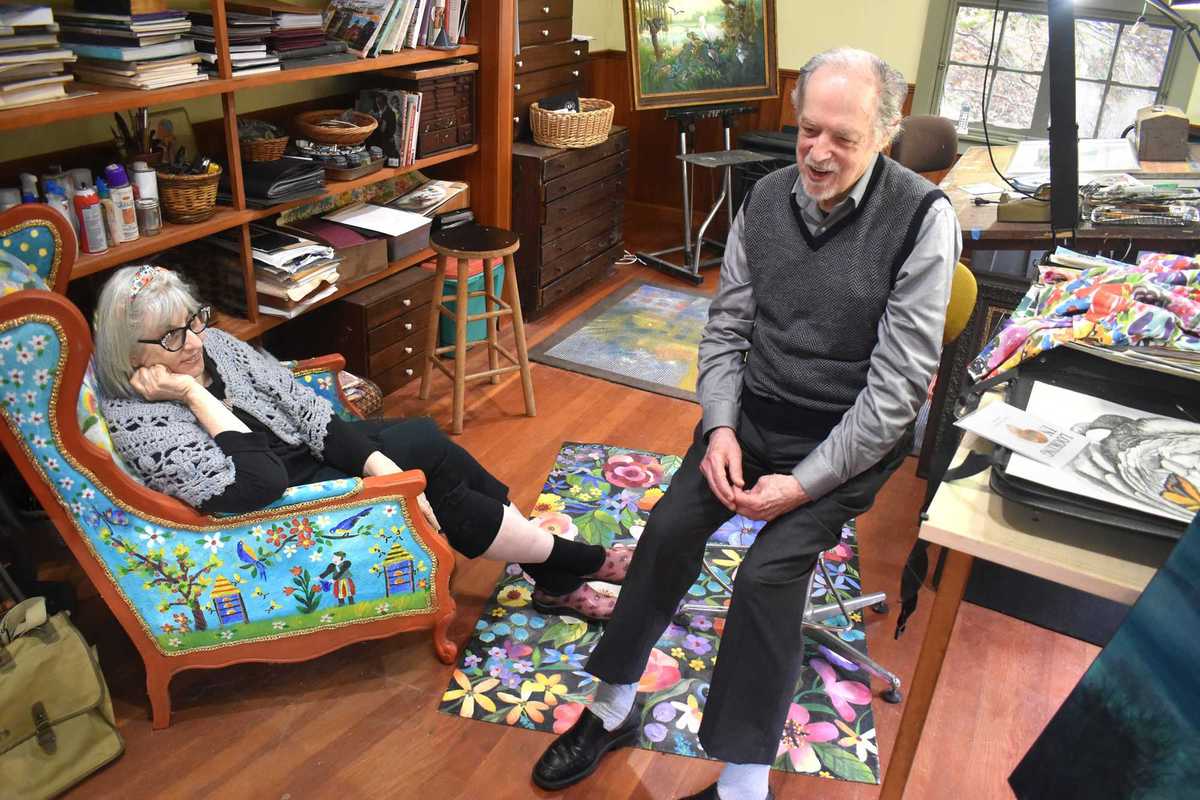
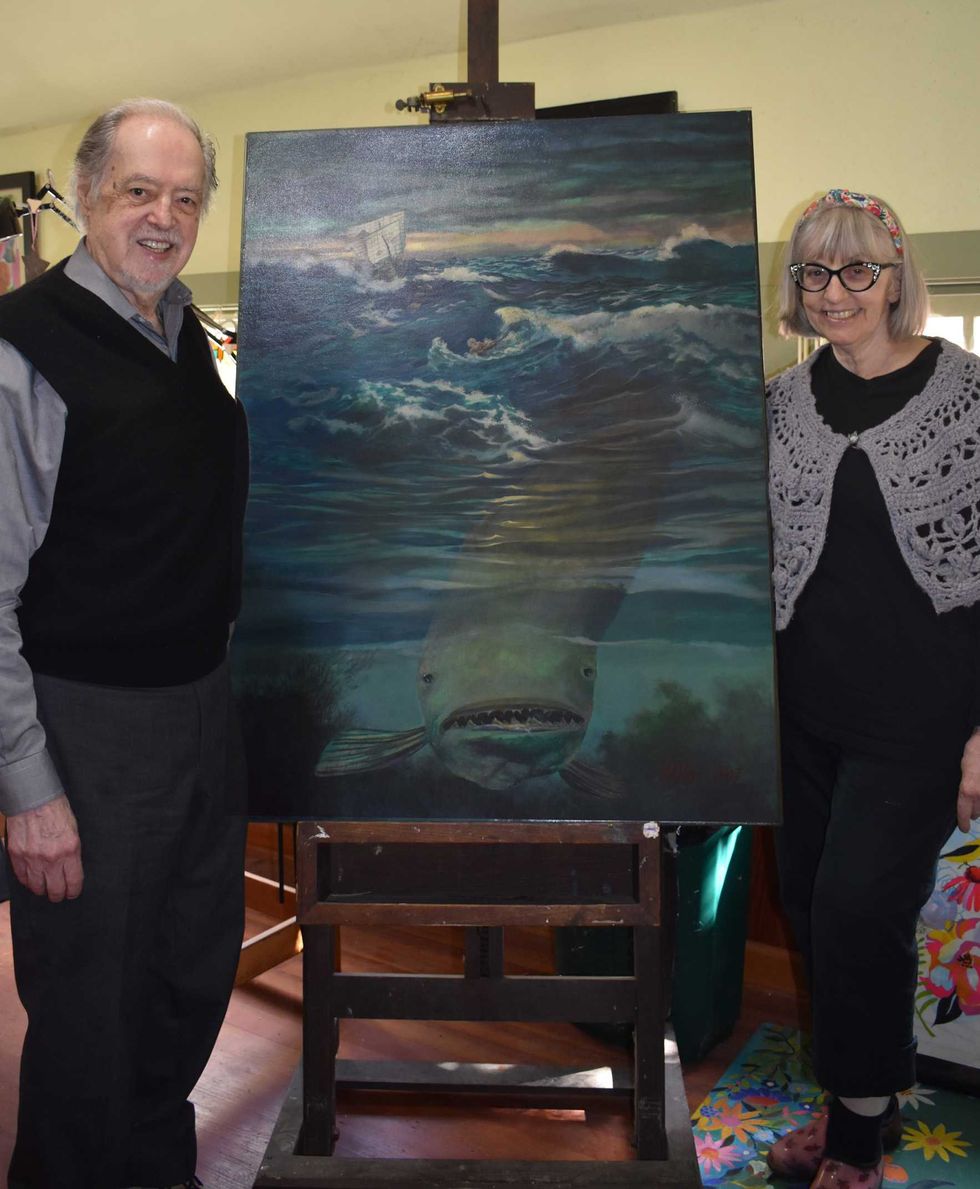 Justine and Victor Valla in their studio with a painting of Victor’s,”Jonah and the Whale.” Robin Roraback

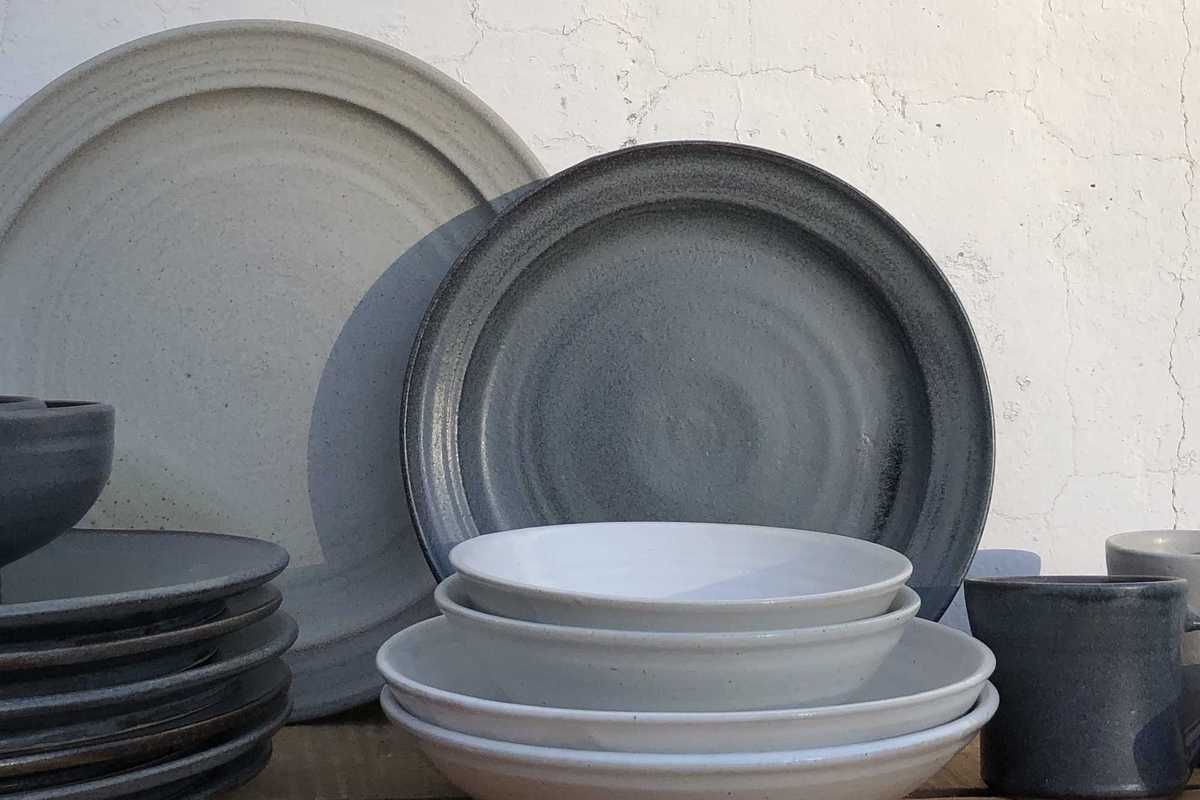
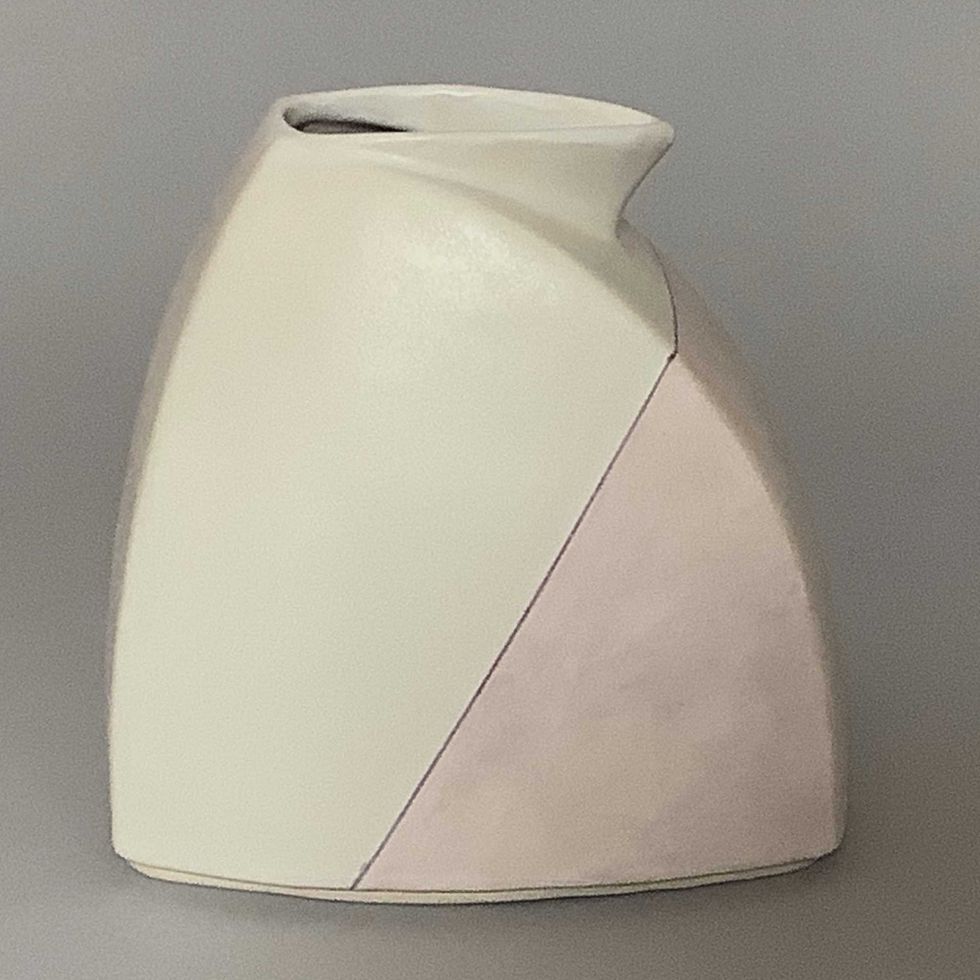 A ceramic vase by Kathleen Heidemann.Provided
 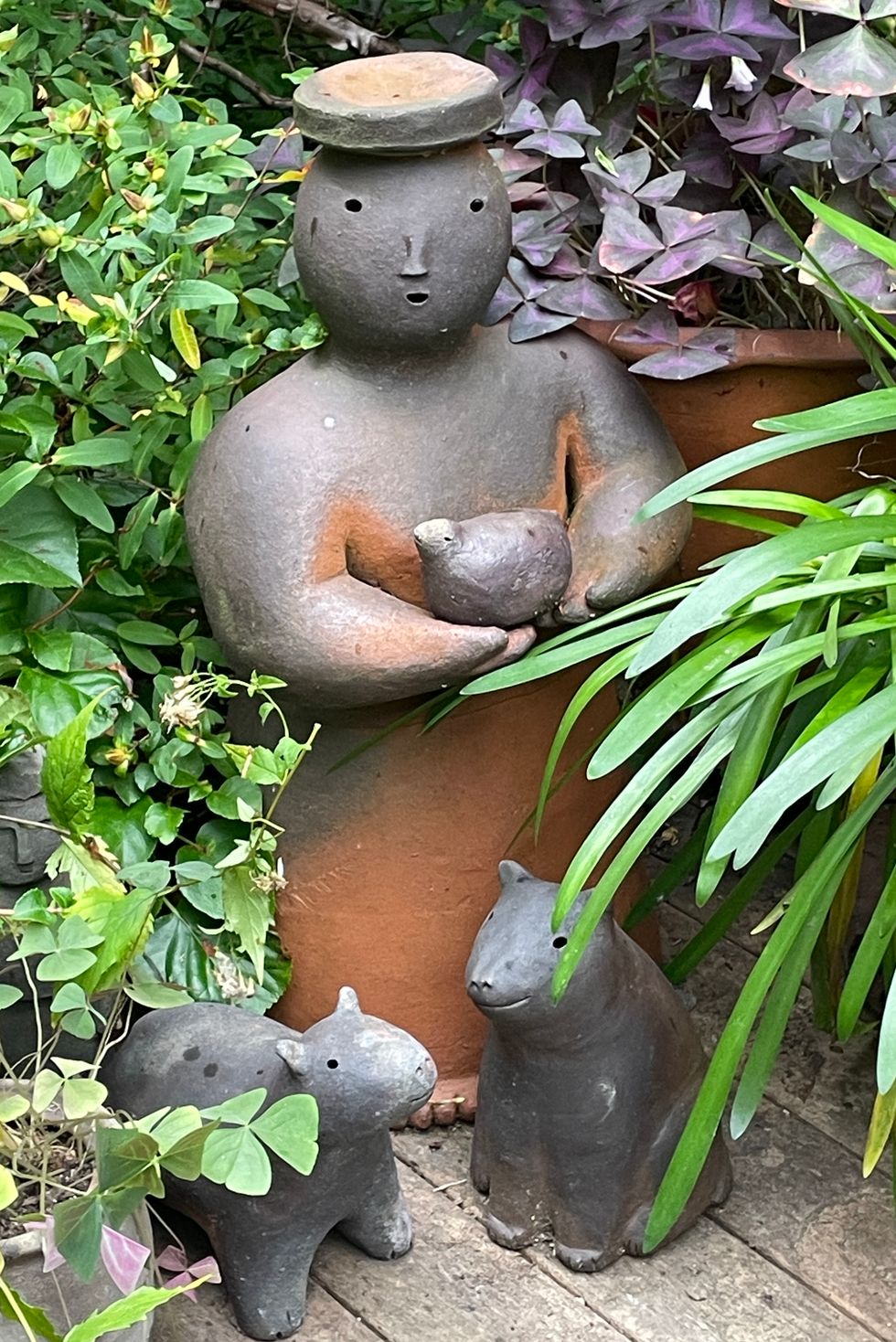 Joy Brown’s delightful ceramic sculptures.Provided