If all goes right, this is the time of year when you should have an abundance of summer fruits that want you to make them into pies.
I’m thinking of peaches, plums, blueberries and even tomatoes (yes, pizza is a pie).
Pie crust is intimidating and very few people claim to make it well. I can make a decent pie crust but I can make a fantastic pate brisée pastry dough that, in my opinion, is tastier, more buttery and much easier to work with than a traditional pie crust.
You can find a good pate brisée recipe almost anywhere, from the internet to print classics such as “The Joy of Cooking”and of course the always dependable Ina Garten. I often use one from Jacques Pepin that was published in 1994 in Food and Wine magazine; and I often use one from the website Joy of Baking.
One of the nice things with a pate brisée is that it’s sturdy enough to handle very wet ingredients, from drippy fruit to a pumpkin custard.
Here are some tips to make pie crust easier (especially if you use a pate brisée crust):
• Use cold butter
• When the recipe calls for ice water, use actual ice in your water; if small bits of ice get into your dough, that’s just fine. They’ll melt and help create layers. Add half as much water as you think you’ll need during the mixing process and then add the rest of the water little by little. With practice you’ll start to see that often you don’t need as much water as you think (or as much as the recipe calls for).
• Chill your dough in the refrigerator for a half hour before you try to roll it out. This helps keep it from getting sticky when you roll it out.
• Roll your dough out between sheets of plastic wrap; it’s less messy, it’s easier to work with, and it eliminates the need to add flour (which can make your crust tough).
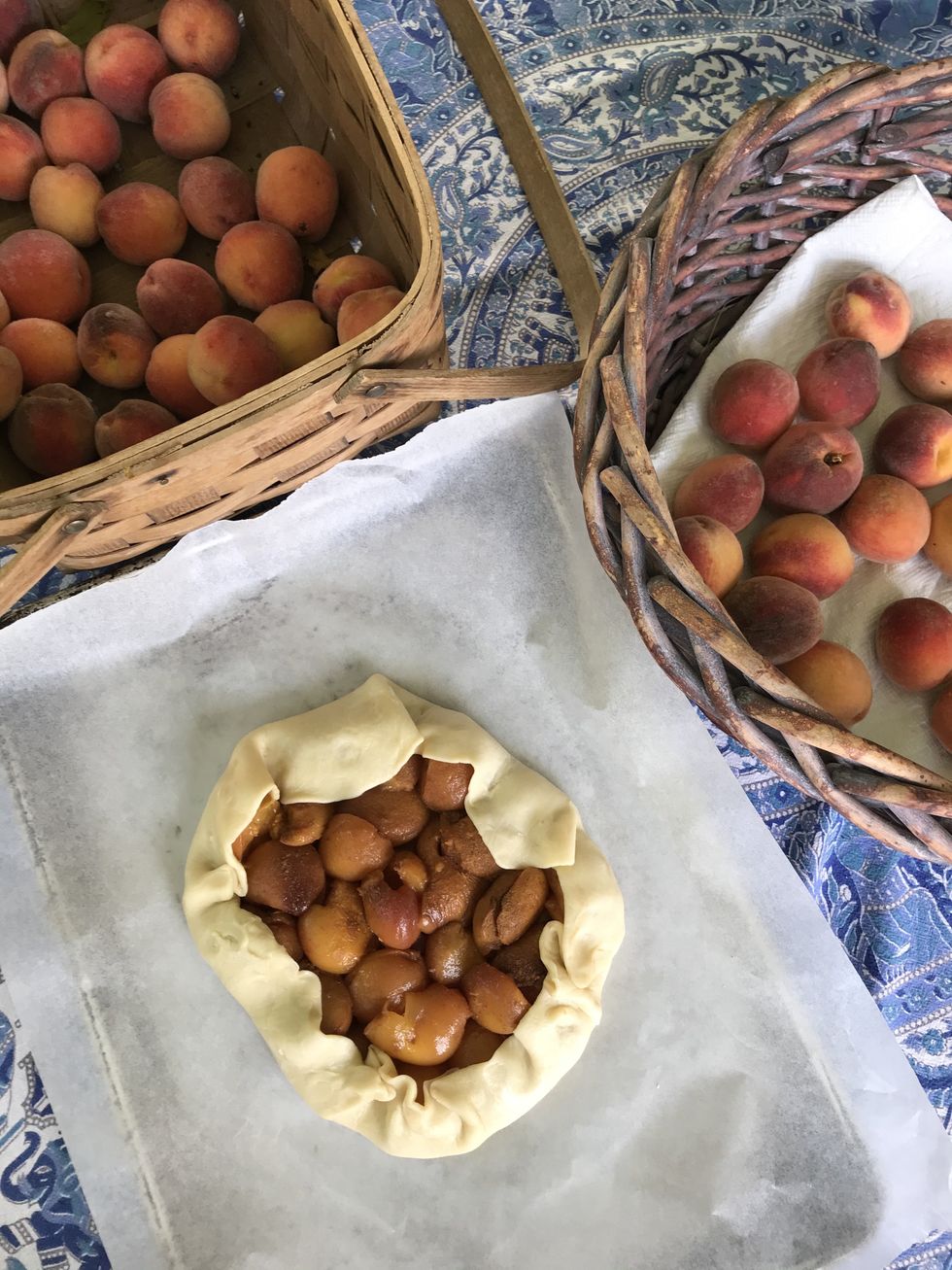
You can use pate brisée in a traditional pie pan but you can also roll it out into a big circle and drop your fruit in the center, then roll the edges of the dough up and over the outer two or three inches of your fruit circle. This is called a galette.
If you make a galette, first line a cookie sheet with parchment paper. Roll out your dough between sheets of plastic wrap, then peel the wrap off the top of the dough and slide your hand under the plastic wrap beneath the dough and flip your dough onto the parchment paper.
Ideally with a fruit filling, you want to cook the fruit down and add some tapioca that’s been dissolved in water for 30 minutes. This keeps the juices from leaking, and breaking your crust.
Add a few pats of butter (always!) and maybe cinnamon and orange zest.
I use pate brisée to make pizza crust, too, and people love it. No one has ever complained to me that it’s not a classic yeast-based dough.
For pizza, I pre-bake the dough on parchment paper on a cookie sheet, with pie weights or beans to keep it from bubbling up and getting lumpy. When it’s lightly brown, I take it out of the oven and add my pizza toppings, then bake it until the cheese melts
This recipe is from Jacques Pepin but the technique is from years of practice, with a tip I learned from Carla Lalli Music in a video on the Bon Appetit YouTube channel. She recommends cutting your dough into quarters, stacking them and rolling them out; this gives your crust a nice flakiness.
Jacques Pepin’s Pate Brisee
Adapted from Food & Wine, September 1994
1 1⁄2 cups of all-purpose flour
1 1⁄2 sticks of cold unsalted butter, cut into 1⁄2-inch pieces
1⁄4 teaspoon salt
1⁄3 cup ice water
You can do this by hand, of course, but it’s so much easier in a food processor, which also keeps you from warming up the cold butter with your hot hands.
In the food processor, combine the flour and salt (I usually add a tablespoon of sugar as well), pulse it a few times, and then add the cold butter.
You want to run the food processor as briefly as possible; within seconds you will see that the butter and flour are pretty much combined into a nice sandy mix.
Turn on the food processor and slowly add the ice water. Very quickly the dough will separate from the sides of the food processor and clump together into a ball. As soon as this happens, stop adding water and turn off the food processor.
Dump the dough out onto a nice big sheet of plastic wrap (I usually use two long sheets, one on top of the other, so I have more space to work). Squish your dough into a ball quickly; then cut it into quarters and stack the quarters on top of each other and squash them down again into a disc.
Wrap this all up and put it in the fridge for a half hour while you prepare your fruit and preheat the oven to 400 degrees (or you can leave the dough in your refrigerator for two or three days).
When you’re ready, fill your dough (or pre-bake it, for pizza).
Bake it at 400 for as long as it takes to get toasty brown, which should be about 30 minutes, depending on your oven and how thick you made the dough.
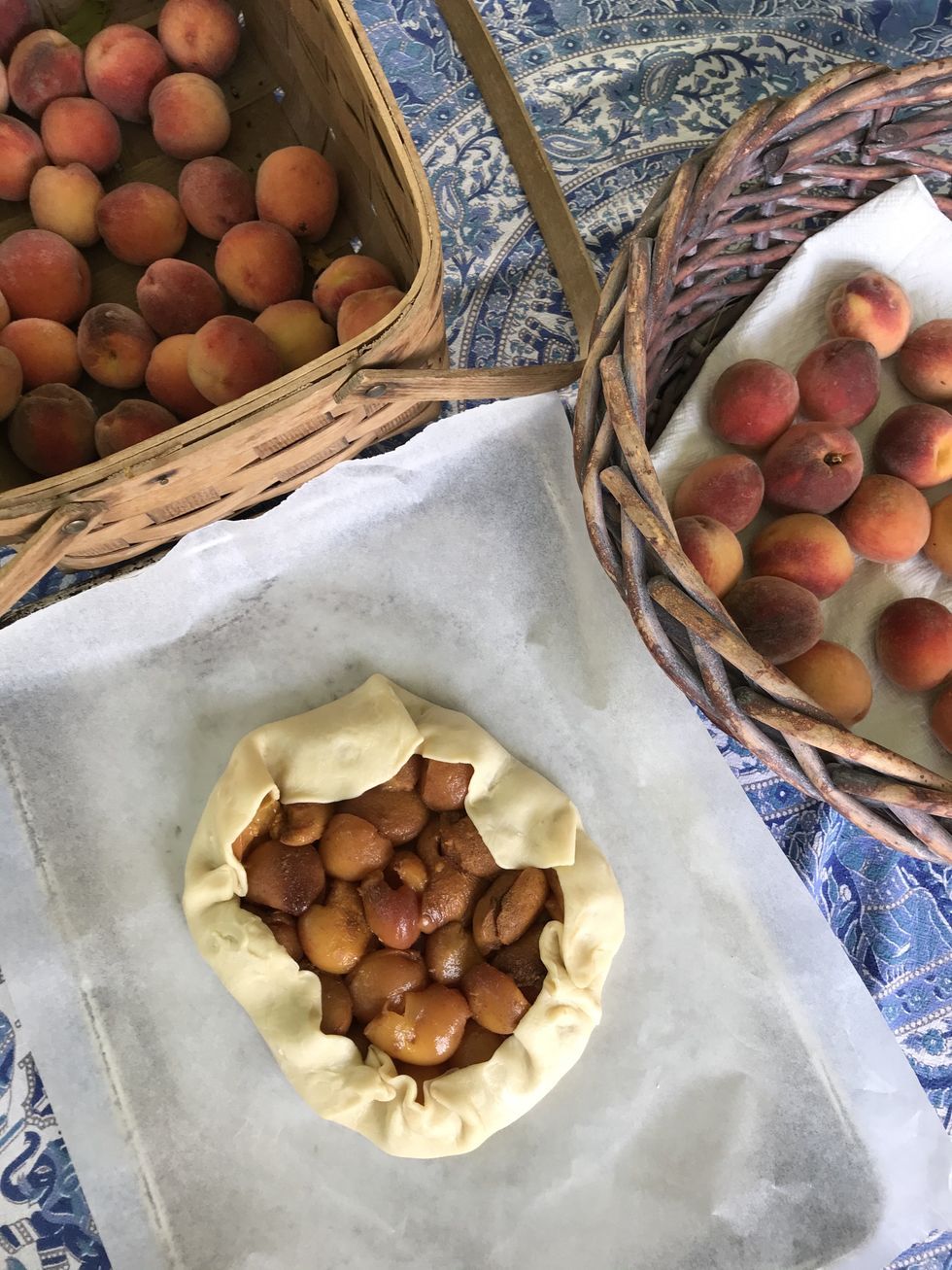
A pate brisée crust is sturdy enough that it can be folded into a galette. Photo by Cynthia Hochswender
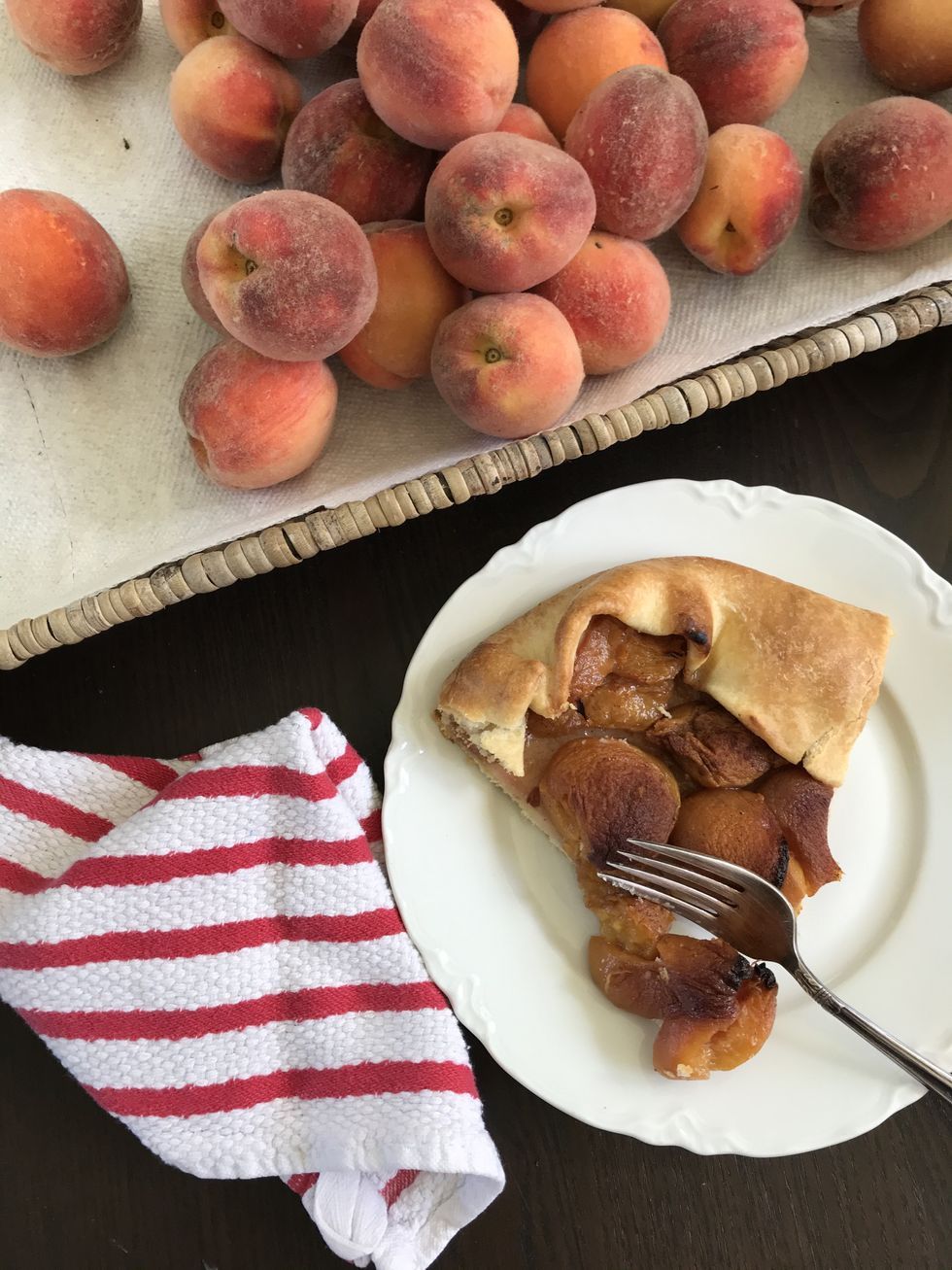
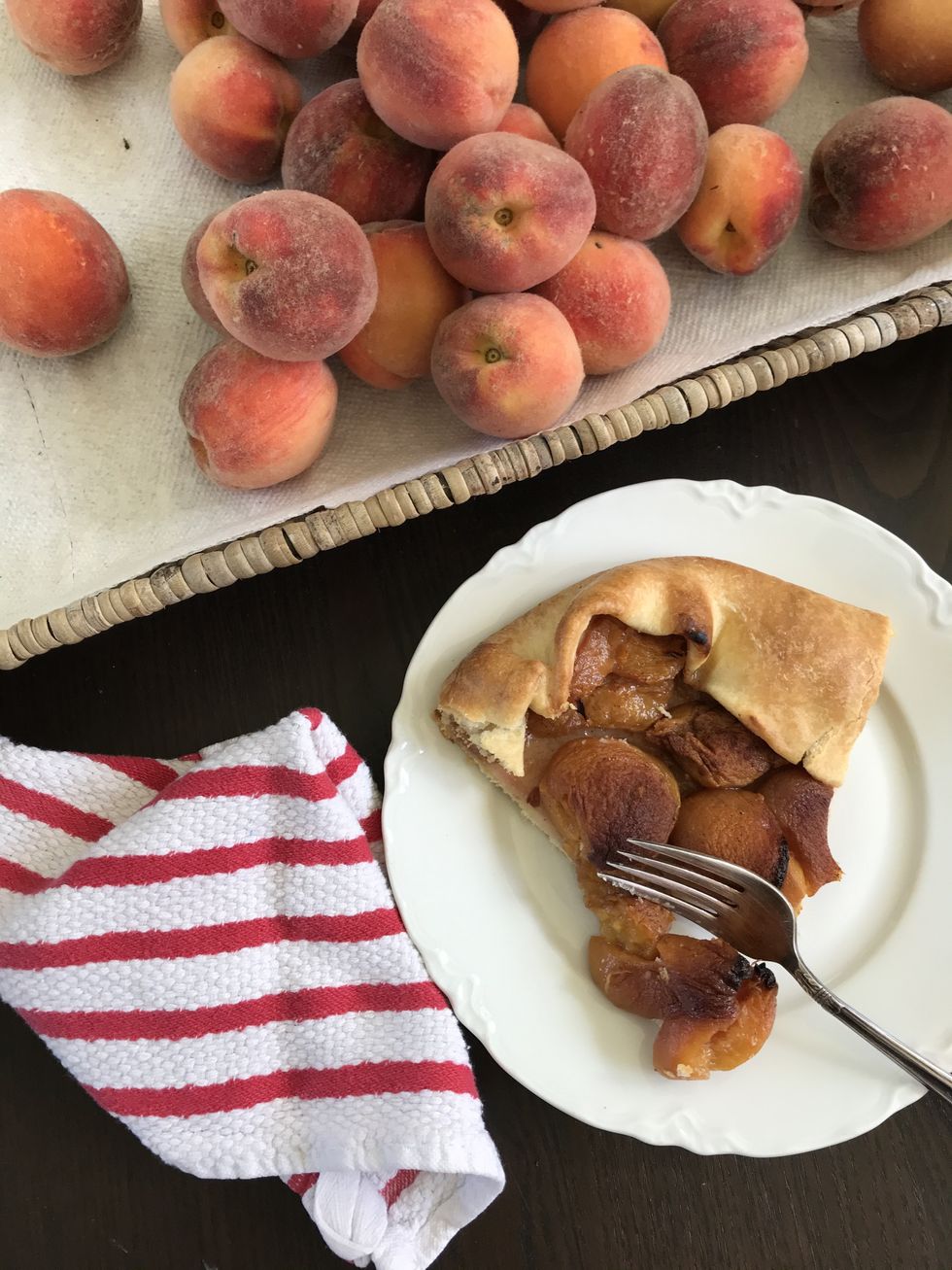
A peach galette with a flaky and delicious pate brisée crust can be a little slice of summer heaven. Photo by Cynthia Hochswender


 Tiffany Lemelin, shelter manager, brushing Marsala upon arrival.Provided
 Michael DeBarba, certified dog trainer working with Marsala.Jennifer Almquist
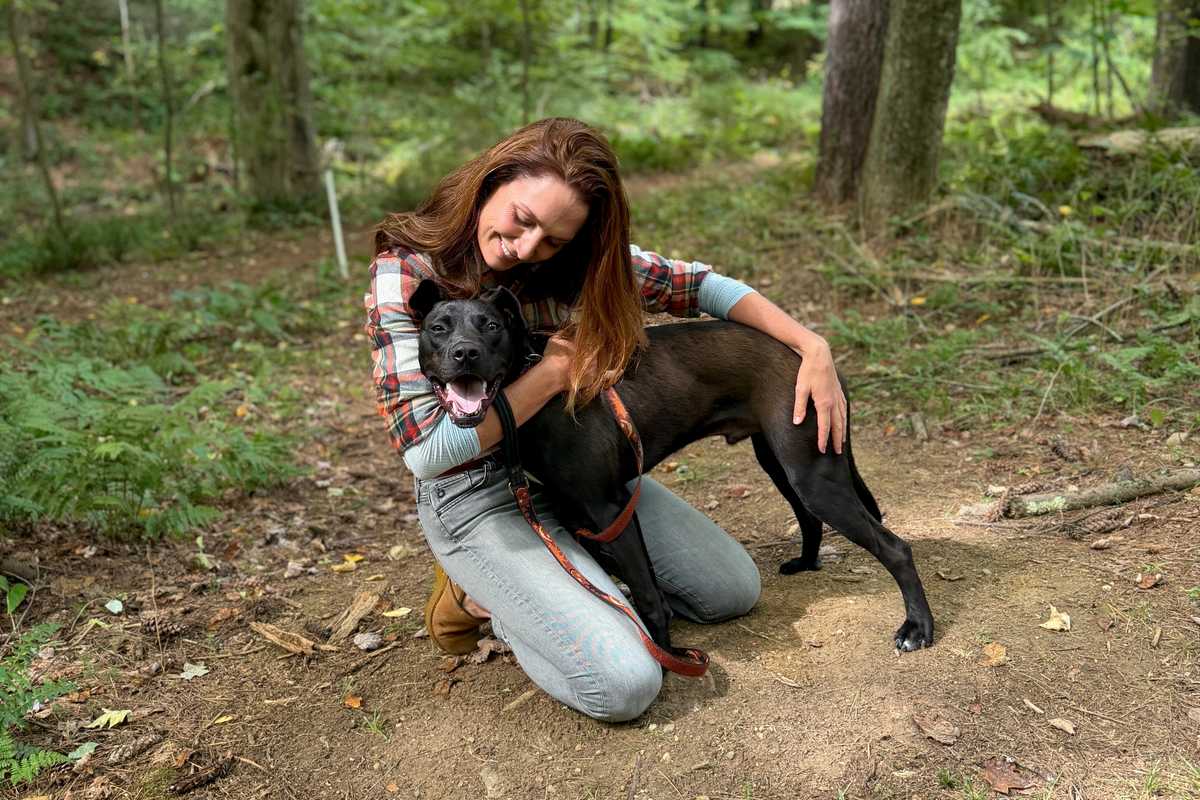 Marsala wins a heart.Jennifer Almquist
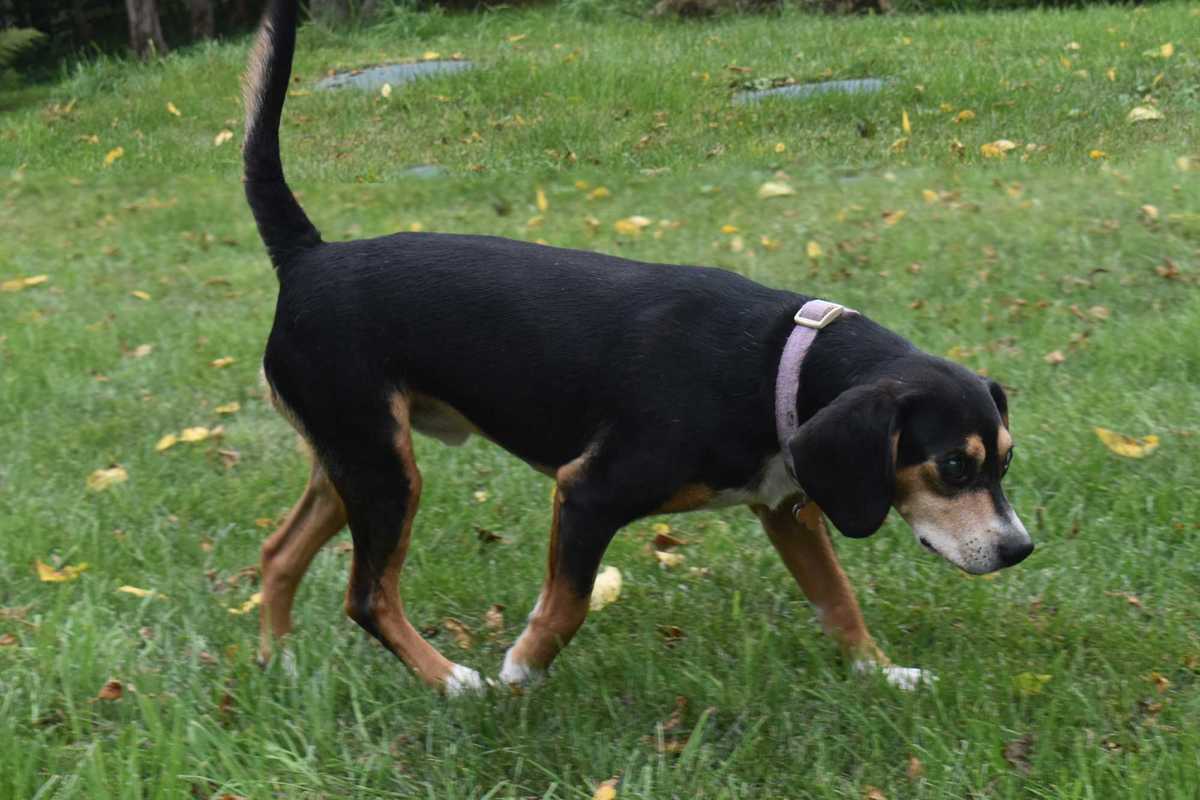
 Sadie, center, a Carolina dog, plays with her friend Negra, a terrier mix. Bella Linda, the small poodle, has since been adopted.L. Tomaino
 Wesley, a young, exuberant mix, is looking for an active home.L. Tomaino
 Bonnie and Clyde, an affectionate terrier pair.L. Tomaino

 Provided