The Litchfield County Center for Housing Opportunity has published its Northwest Connecticut Affordable Housing and Conservation Strategy, an initiative meant to organize affordable housing development and critical conservation practices as joint objectives in the Northwest Corner.
Partnering with Litchfield Hills Greenprint Collaborative, a local land protection coalition comprised of land trusts and community leaders, LCCHO invited representatives from the towns of Salisbury, Canaan, Norfolk, Sharon, Cornwall, Goshen, Kent and Warren to discuss actions and strategies within their towns to support conservation and affordable housing efforts in tandem. The group of over 60 participants representing over 40 towns and organizations met six times between February and September of 2024 before releasing the Strategy, according to the recently released document.
The purpose statement of the project argues that “cross sector and regional collaboration among town governments, housing organizations and conservation organizations is vital to achieving our affordable housing and conservation goals.”
The strategy joins adjacent regional efforts to prioritize conservation and affordable housing as conjunctive goals, such as the Hudson Valley Alliance for Housing and Conservation. Smaller efforts abound as well, as in a recent collaboration between the Pioneer Valley nonprofit Kestrel Land Trust and national NGO The Community Builders to develop affordable units among a small portion of a large, ecologically-rich parcel in Easthampton, Massachusetts, as reported by Audubon Magazine.
The guidelines for housing outlined in the report are informed by each town’s Affordable Housing Plan, meant to direct the next five-years’ development. The plans include 205 proposed homes across the eight towns involved in the initiative.
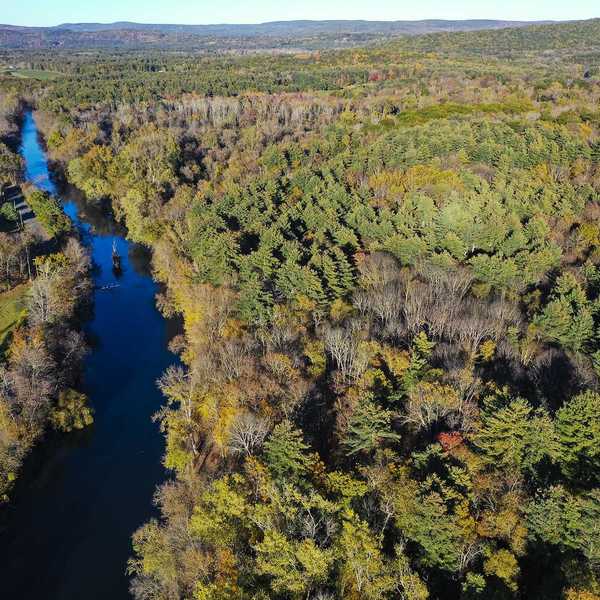
The conservation guidance informing the strategy are derived from the Housatonic Valley Association’s Follow the Forest Initiative, which seeks to protect ecological connectivity amongst the woodlands spanning from Northwest Connecticut and the Hudson Valley up through Vermont and into eastern Canada. The Strategy emphasizes keeping this corridor intact: the LCCHO Strategy reports that these forests comprise “the most intact deciduous and mixed forest region on Earth,” and that “without strategic focus, the connectivity of this massive corridor will be broken.”
Notably, the group also states that “important to our collaborative work, it is conceivable that undeveloped parcels need not be conserved in their entirety in order to maintain the integrity of core forests and their connectivity.”
A key element of the Strategy is a mapping tool developed by the HVA’s GIS Manager Stacy Deming which identifies parcels within the involved eight towns that are suitable to collaborative affordable housing development and conservation efforts.
Further information, including fundraising guides, mapping tools and data resources can be found at the Strategy’s webpage cho.thehousingcollective.org, navigating to the the Northwest Connecticut Affordable Housing and Conservation Strategy under “Impact.”



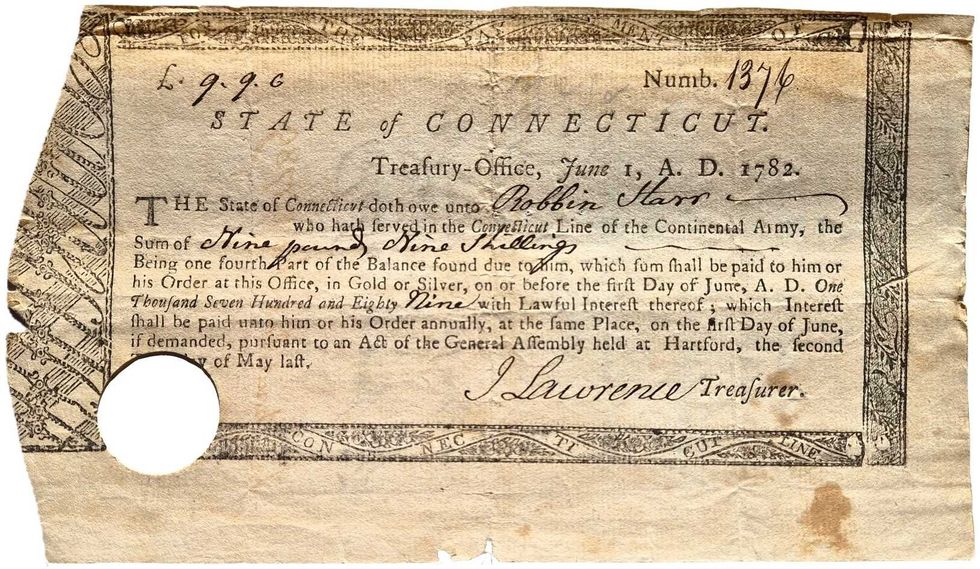 Pay Bill for Robin Starr’s service in the Continental Army.Courtesy the Alex Breanne Corporation
 John Mills speaking at Quinnipiac University.Courtesy the Alex Breanne Corporation
 Stephanie Saetta,with her rescue dog George and Blue (left), a shepherd mix awaiting his forever home.Madi Long
 Blue, a 7 year-old Shepard mix, is waiting for his forever home. Madi Long