Construction well underway for Perry Street affordable homes

Two affordable homes are being built in Salisbury using modular construction methods.
Alec Linden

Two affordable homes are being built in Salisbury using modular construction methods.
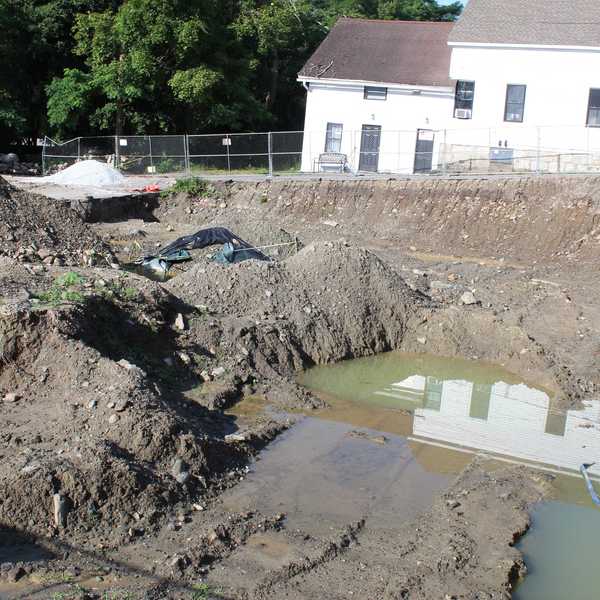
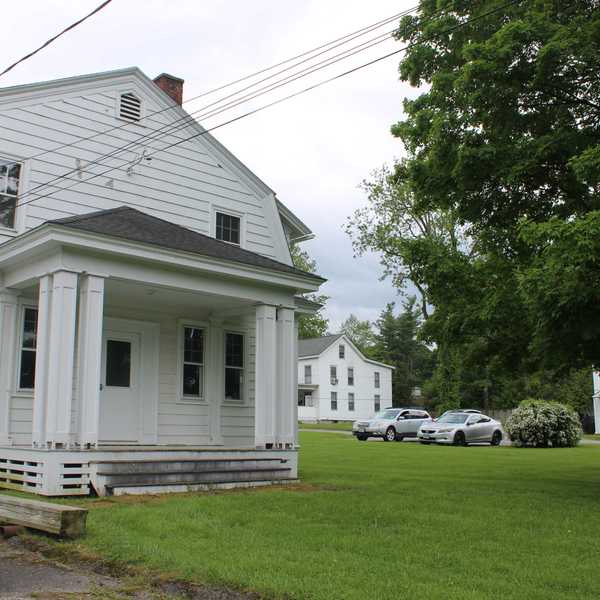
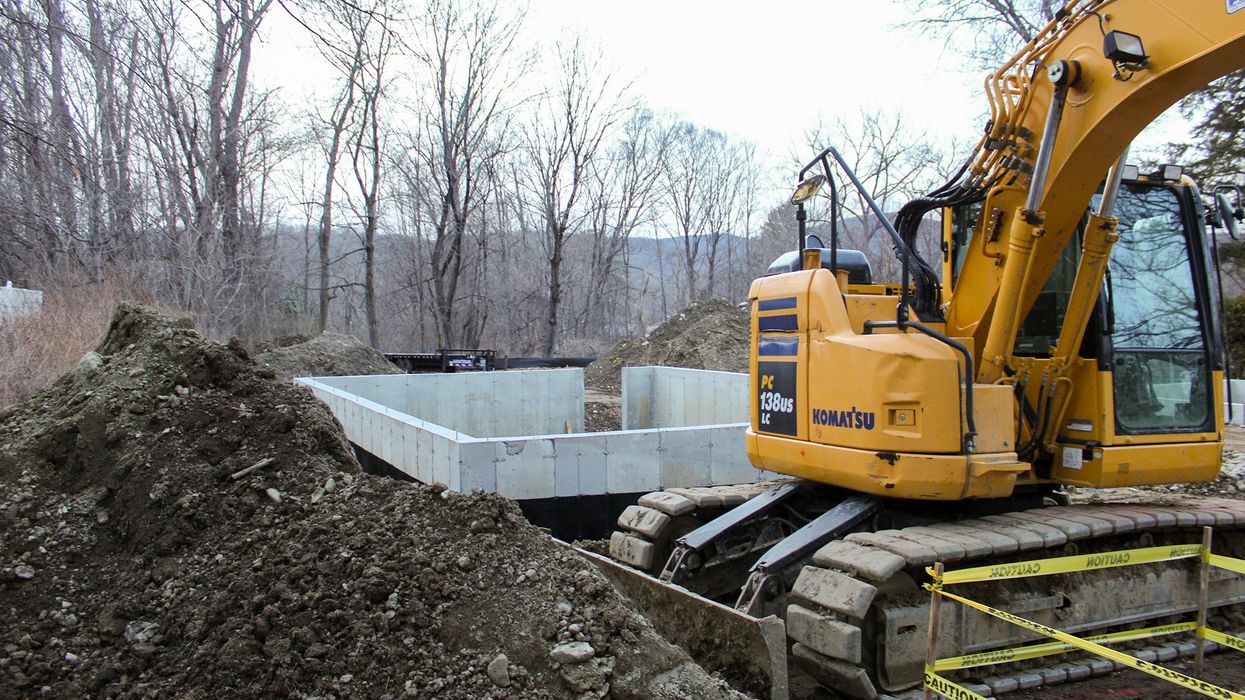
SALISBURY — Concrete foundations of two new affordable homes have been dug and poured on Perry Street, and Salisbury Affordable Housing Commission Chair Jennifer Kronholm Clark is thrilled at the progress.
“It’s really exciting,” she said in a recent interview. “We haven’t had a big construction project like this in a decade at least.”
Kronholm Clark, who also vice chairs the Salisbury Housing Trust, a non-profit that has overseen the addition of 17 affordable home opportunities to Salisbury since 2002, explained that the next steps are relatively straightforward.
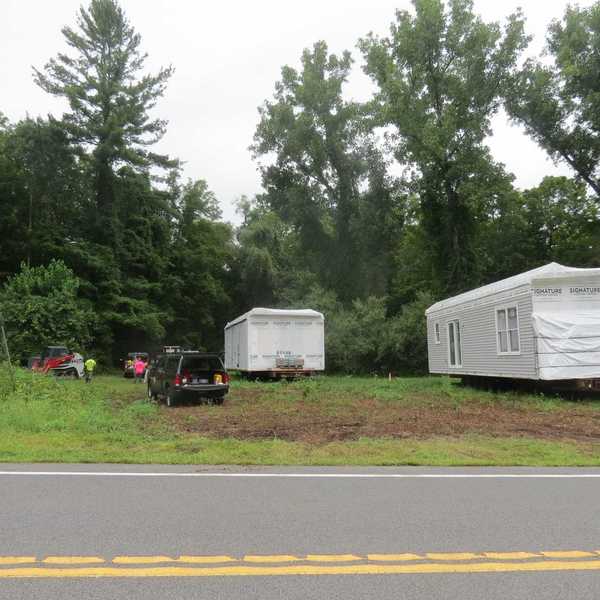
The new units are modular homes, meaning they are mostly constructed off-site at a manufacturing facility, then quickly assembled on top of the foundation.
She said that each home will be delivered to town in four pieces, for a total of eight, between April 1 and 3. The units will be staged temporarily at the Lakeville Town Grove until their installation on the 3rd.
The upper portion of Perry Street will be closed for most of the day on the 3rd as the homes are put in place, in a process involving a “really huge crane” that Kronholm Clark promised will be “dramatic.”
Once in the ground, she expects the remainder of the work to be completed quickly and the homes to be move-in ready sometime in May.
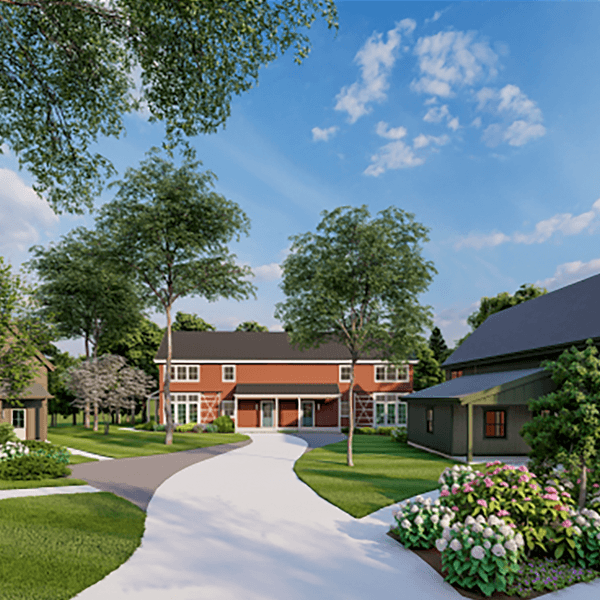
The 1,500 square foot, 3 bed and 2 bath houses will be available for purchase only at a price range between $250,000 and $280,000 which includes a $25,000 forgivable down payment assistance loan.
Eligibility requirements for ownership are that the buyer be a first-time homeowner, and that the total gross household income is below the area median income: $80,000 for one person, $91,400 for two, $102,800 for three, and $114,200 for four. The Trust will prioritize those in need of a three-bedroom home.
An information session detailing the application and purchase process will be hosted on April 10 at 7:30 p.m. on Zoom.
The Trust asks that those looking to purchase a home complete a pre-application form by April 15, which may be received by emailing Lindsay Larson at LindsayL@thehousingcollective.org.
The completion of the Perry Street houses will mark a major milestone for the Salisbury Housing Trust, which has been discussing developing affordable housing on the lot since 2013. The site was formerly home to a dry-cleaning service who vacated the property in the 1990s and left “an environmental mess,” according to Kronholm Clark. The land was then transferred to the town, who approached the Trust about developing affordable housing on the site in order to secure a state-funded grant to clean it up.
She said that the neighbors were congenial and supportive of the plan, with many preferring to see homes on the property rather than an empty brownfield. Kronholm Clark said that she hopes the installation of these new homes demonstrates to the community that affordable housing is a positive presence on Salisbury’s landscape.
A 2024 report from Torrington-based non-profit Northwest Connecticut Community Foundation found that the median home value in Salisbury grew from $473,369 to $807,848 between 2017 and 2024.
Ensuring that there are homes available far below that margin is paramount to maintaining the region’s younger workforce, she said.
“It’s important to have these options so that we don’t just become, you know, a community with a bunch of second homeowners,” she maintained.
The Perry Street project is part of a broader regional effort organized by the Litchfield County Center for Housing Opportunity to bring similar modular homes to several other locations in the county. Two more homes within the program are planned for installation in Salisbury on Undermountain Road, a proposal that has seen some controversy but which Kronholm Clark is optimistic will see broken ground soon after.
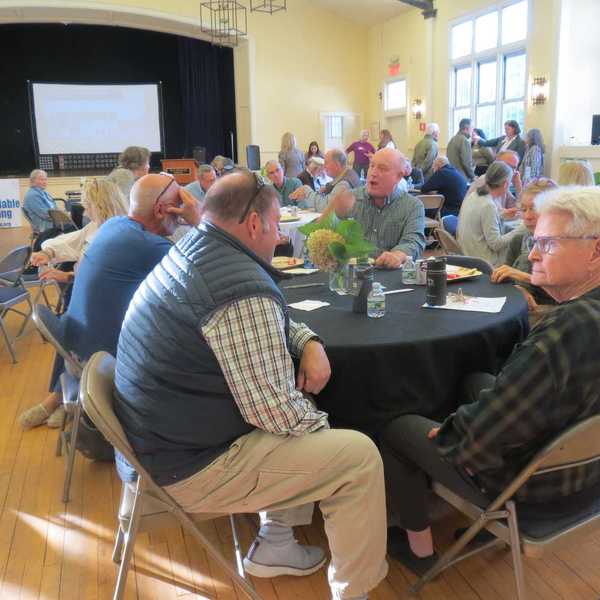
Sharon Hospital, shown here, experienced a consequential year marked by a merger agreement with Northwell Health, national recognition for patient care, and renewed concerns about emergency medical and ambulance coverage in the region.
Housing—both its scarcity and the push to diversify options—remained at the center of Sharon’s public discourse throughout the year.
The year began with the Sharon Housing Trust announcing the acquisition of a parcel in the Silver Lake Shores neighborhood to be developed as a new affordable homeownership opportunity. Later in January, in a separate initiative, the trust revealed it had secured a $1 million preliminary funding commitment from the state Department of Housing to advance plans for an affordable housing “campus” on Gay Street.
That commitment was later doubled by the state, allowing the trust to break ground in September on a project that will renovate the long-defunct Community Center—once a Masonic Temple—into four additional affordable units. Those apartments will join six already occupied units in adjacent buildings, creating a unified, 10-unit development. The project cleared its final local hurdle in November, receiving approvals from both the Zoning Commission and the Historic District Commission.
Alongside those efforts, a more contentious proposal dominated Planning and Zoning Commission agendas during the first half of the year. A condominium development proposed near Sharon Hospital drew support from residents who favor a more diverse housing mix, while neighbors raised concerns about potential impacts on property values and quality of life.
The project, proposed by Gold Dog LLC, a private development company, was approved in August following months of heated public hearings. That decision, however, has since been appealed by opponents, ensuring that housing will remain an ongoing issue.
Health
It was a consequential year for Sharon Hospital, marked by major institutional changes, national recognition, and lingering concerns about access to care.
In May, Nuvance Health, the nonprofit operator of Sharon Hospital, announced that it had formalized a merger agreement with Northwell Health, one of the largest healthcare systems in the Northeast. The announcement raised concerns among some residents who feared consolidation could lead to reduced services at a facility that serves a region often described as a healthcare desert.
Hospital President Christina McCullough sought to reassure the community, emphasizing that the merger was intended to strengthen—not diminish—local care. “It’s not about cutting resources and cutting services,” she said. “It’s about optimizing what both of those organizations have, ultimately strengthening the access to care for everyone that lives in the community.”
In July, Sharon Hospital was the only Connecticut facility included on a national list of rural hospitals considered vulnerable to potential Medicaid cuts, underscoring the financial pressures facing small hospitals nationwide.
Despite those challenges, the hospital earned national recognition the following month. In August, Sharon Hospital received a national award for excellence in stroke care. Later in the year, it was awarded its sixth consecutive “Five Star” rating from the Centers for Medicare and Medicaid Services, placing it among just 290 hospitals nationwide to receive the distinction.
The year ended on a more uncertain note, however, when the hospital announced it would discontinue its longtime emergency response provider, Northern Dutchess Paramedics, effective Jan. 1. The decision raised fresh concerns among residents about the future of ambulance coverage and emergency medical services in the region.
Nature
Sharon’s connection to its natural environment remained strong throughout 2025, with residents, conservation groups and state officials engaging in efforts to protect local ecosystems and wildlife.
In April, local conservationist and invasive species expert Tom Zetterstrom addressed a packed Town Hall, outlining strategies to protect Sharon’s woodlands from invasive oriental bittersweet. Drawing on both successes and setbacks at the Sharon Land Trust’s Hamlin Preserve, Zetterstrom highlighted the urgency of sustained management and community involvement.
That same month, concerned residents formed the Mudge Pond Association in response to a December 2024 study that warned of imminent threats to the pond from invasive species and polluted runoff. Since its formation, the group has begun piloting protective measures and planning long-term stewardship efforts for the popular lake.

Conservation efforts expanded later in the year when the Sharon Land Trust partnered with the Northeast Wilderness Trust to secure Sharon’s first “Forever Wild” protected land. Announced in late summer, the designation places roughly 700 acres surrounding Sharon Mountain under a permanent conservation easement, safeguarding critical wildlife habitat from development, logging and motorized use.
Wildlife coexistence also drew attention in December, when the state Department of Energy and Environmental Protection hosted a community roundtable on living alongside black bears. Residents emphasized a “human behavior”-focused approach, advocating for changes in food storage and waste management rather than lethal controls.
Throughout the year, the Sharon Audubon Center remained active with public programs and education initiatives, culminating in its annual December bird count. The event connected local volunteers to a nationwide community-science effort to track winter bird populations.

Holiday season
The year closed with holiday traditions that underscored Sharon’s sense of community, bringing warmth and light to the darkest days of winter. Annual tree and menorah lightings, held five days apart in mid-December, brought luminance, song and joy to the snow covered Village Green in scenes that were classically Sharon.
An overflow crowd packed Kent Town Hall on June 27 for a scheduled vote on a proposed wakesurfing ban on Lake Waramaug, prompting then–First Selectman Marty Lindenmayer to adjourn the meeting without a vote.
KENT —In 2025, Kent officials and residents spent much of the year navigating zoning disputes, regional policy issues and leadership changes that kept Town Hall at the center of community life.
The year opened with heightened tensions when a local dispute on Stone Fences Lane brought a long-running, home-based pottery studio before the Planning and Zoning Commission.
While some residents raised concerns about increased vehicle traffic associated with the studio, the commission ultimately reaffirmed the town’s support for cottage industries and the local arts community, bringing Alison Palmer Studios into zoning compliance in April through the approval of a conditioned special permit.
During deliberations, then–Vice Chair Karen Casey said she would be “terribly upset if we all of a sudden prohibit artists from living in their homes and doing their artwork,” calling such work “part of our culture here.”
In the spring, the town released the results of a community survey on recreational cannabis that had been circulated since December 2024. Sarah Chase, chair of the Cannabis Regulation Subcommittee, said the responses reflected a community that was “cautious but open-minded,” supportive of medical access, respectful of farming traditions, and focused on preserving Kent’s character.
The survey guided both the development of zoning regulations governing medical cannabis facilities and agricultural uses, and a ballot measure prohibiting the retail sale of recreational cannabis within town limits. Voters approved the ordinance banning retail on the Nov. 4 general election ballot.
The warmer months brought Kent into a high-profile regional dispute over wakesurfing on Lake Waramaug. After unprecedented turnout forced the postponement of a June vote, a proposed tri-town ban involving Kent, Washington, and Warren was approved decisively on July 31.
In Kent, 83% of voters supported the ban, which is scheduled to take effect in February. An opposition group subsequently filed an appeal, which remains under legal review.
Regional cooperation continued over the summer as Kent and New Milford joined forces to address resident concerns about large tour buses traveling along the narrow, winding South Kent Road en route to Club Getaway. Collaboration among the two towns, local residents, Club Getaway, and the state Department of Transportation ultimately resulted in a ban on large commercial buses along the road and nearby access routes.
During the summer, overcrowding at a popular swimming hole on North Kent Road prompted then–First Selectman Marty Lindenmayer to close the road until cooler autumn temperatures reduced the volume of visitors. Town officials and other stakeholders overseeing the site said they plan to work together over the winter to develop a long-term solution.
The fall brought discoveries that shed light on Kent’s past. At Good Hill Cemetery, a weathered headstone bearing a partially faded inscription memorializing two Revolutionary War–era sisters drew historians and puzzle-solvers eager to decipher its message.
Meanwhile, in Emery Park, Parks and Recreation Director Matt Busse partnered with the state archaeologist to survey the area for evidence of historic coal-worker settlements, uncovering a largely undocumented chapter of the park’s rugged history.
Also in Emery Park, town officials reviewed and accepted a bid to redevelop the long-defunct swimming pond, which has been closed for six years.
October brought lighter moments, as the Connecticut Antique Machinery Association hosted its popular Fall Fest and SPARK events, drawing residents of all ages. The month concluded with Halloween festivities on Main Street, where costumed revelers turned out in force for a contest judged by horror-rock icon Rob Zombie.
November marked a transition in town leadership. Eric Epstein was elected as the first selectman following Lindenmayer’s decision not to seek reelection. The month also saw the resignation of longtime Planning and Zoning Commission Chair Wes Wyrick, who stepped down after two decades of service. Karen Casey was elected to succeed him as chair in December.
The new officers have a full agenda in 2026. A longstanding zoning dispute with antique auto dealership Motoriot, centered on employee and inventory vehicle parking, continues following the issuance of a cease-and-desist order in November. A revised site plan is scheduled to go before P&Z on Jan. 8. Also slated for discussion is an application from substance-use disorder rehabilitation facility High Watch, which has stirred strong community response, and a zoning challenge tied to a proposed warehouse-to-residential conversion on Lane Street near downtown.
NORTH CANAAN — The past year was marked by several significant news events.
In January, the town honored Bunny McGuire for her decades of service to the community with the renaming of a park in her honor. The field, pavilion, playground and dog park on Main Street later received new signage to designate the area Bunny McGuire Park.
In February, Town Clerk Jean Jacquier stopped reporting to work amid a legal dispute, triggering months of uncertainty at Town Hall. Her prolonged absence became the focus of multiple court cases, heightened political tensions in town, and fueled debate in the lead-up to the municipal election. Following the election, Jacquier returned to her position and served through the remainder of her duly elected term.
In April, North Canaan Elementary School marked the 35th anniversary of its Arbor Day celebration, alongside the 55th anniversary of Earth Day, with the planting of a chinkapin oak as the newest addition to the school’s arboretum.
In May, the Becton, Dickinson and Company facility in North Canaan was evacuated after a hazmat scare. An employee identified a suspicious package, which resulted in a lock down and about 300 employees entered decontamination protocol, requiring them to leave clothing behind and shower before going home. The FBI transported the package from the facility to the state laboratory in Rocky Hill and all testing for active agents came back negative.

Memorial Day brought the community into town for a day of remembrance. The parade marched from Town Hall to the Doughboy statue, where residents gathered to pay respects to fallen members of the armed services.
Town commissions approved the construction of a new Dunkin’ location across from the Stop & Shop plaza on Main Street. The proposal calls for a roughly 2,000-square-foot rectangular building with 16 parking spaces and a drive-thru. Once the new site opens, the existing Dunkin’ inside the nearby gas station will close.
In July, Bunny McGuire Park was transformed into a carnival as community events unfolded across town, culminating in a parade and a grand fireworks display.

In August, Old Railroad Days made its debut, bringing the town’s rail heritage to life through four days of tours, exhibits and demonstrations. Throughout the celebration, Canaan Union Station pulsed with activity as residents and visitors gathered to take part.
At Geer Village, chef Gina Trivelli-Young opened Manna Catering in the café space formerly occupied by Railway Café. “A lot of my food is geared toward health, the nourishment of mind, body and soul,” said Trivelli-Young.
Geer also announced a “strategic partnership” with Integritus Healthcare, a 501 (c) 3 charitable organization and post-acute healthcare industry leader based out of Pittsfield. Integritus will become the management company for the Geer Village campus of services and Geer will remain the owner/operator of the programs and services, with Integritus Healthcare providing oversight.
New playground equipment was installed at NCES, which has been put to good use since school came back into session.
Douglas Library Director Norma DeMay announced her retirement from the role this year. “I’ve loved my job,” she said, full of praise for her staff and board members. “I love chatting with the people who come in. And you can’t beat a 9-minute commute.” DeMay was succeeded by Laura Moran.
Residents gathered at Colonial Theatre in October for the Canaan Foundation’s 25th anniversary, as well as a celebration of the town. The foundation was formed by a group of local citizens with a mission to enhance the quality of life for townspeople. This year a total of 24 grants were issued for a total of $28,500.
The Community Thanksgiving Dinner at the Pilgrim House provided nourishment and camaraderie for both guests and volunteers alike. Jeanine Coleman is a loyal server each year. “It’s my favorite time of year,” she said. “I love doing this.”
The Parade of Lights followed the weekend after Thanksgiving, which ushered in the holiday season. Cub Scouts donned their Santa Claus hats on Sunday, Dec. 7, at NCES to host a pancake breakfast with Santa.
The year was also marked by the election of a new first selectman, as challenger Jesse Bunce edged out incumbent Brian Ohler by two votes in a closely watched race.
In May, Cornwall residents gathered at the cemetery on Route 4 for a ceremony honoring local Revolutionary War veterans.
CORNWALL — The year 2025 was one of high spirits and strong connections in Cornwall.
January started on a sweet note with the annual New Year’s Day breakfast at the United Church of Christ’s Parish House. Volunteers served up fresh pancakes, sausage, juice, coffee and real maple syrup.
February brought a focus on housing, as legislators, local officials and affordable housing advocates gathered on a cold morning Feb. 7 on Town Street to celebrate the launch of a regional affordable housing program.
State Rep. Maria Horn, D-64, said, “What better than a cold, windy day to remind you of the importance of having a warm home,” she said.
Two new homes were completed later in the year on Town Street, and the Cornwall Housing Corporation invited the community to an open house celebration.
On the housing front, the Planning and Zoning Commission also worked throughout 2025 to address regulations that may have been restricting new home construction in town.
In March, a heroic effort by bystanders likely saved the life of a driver in a one-car accident on Route 7. The car had struck a utility pole and was surrounded by live wires when nearby residents rushed to help.
“The woman was pulled from the car with, by my estimate, 90 seconds to spare before the flames would have reached her,” said Kent Volunteer Fire Department Chief Alan Gawel.
Two of the responders, Niya Borst and Emil Urbanowicz, both students at Housatonic Valley Regional High School, were recognized in front of the student body. Borst said she and her aunt used a sledgehammer to break the rear window in an attempt to free the driver.
In April, Cornwall Consolidated School’s 7th graders completed a research project honoring Naomi Freeman, Cornwall’s first Black female landowner. As part of the project, a portion of Great Hollow Road was renamed for Freeman on an honorary basis.

In May, Cornwall held a powerful ceremony to honor local veterans of the Revolutionary War and replaced 10 refurbished grave markers in the cemetery on Route 4.
Cornwall’s Manny Matsudaira earned valedictorian honors at HVRHS.
The Village Green was the destination for summer fun with July Fest, Taste of Cornwall in August and the Agricultural Fair in September.
In the fall, Cornwall Volunteer Fire Department launched a major fundraising campaign to replace two outdated firetrucks. The effort was a huge success and CVFD successfully met its goal of $600,000.
At the fire department’s open house in October, Resident Richard Schlesinger spoke of his experience being rescued by the volunteer ambulance corps after experiencing cardiac arrest about four years ago. “They saved my life because they had the right equipment and the dedication and the skill.”
December saw the addition of a new event in Cornwall: The Parade of Lights. The illuminated procession brought cheer and joy as Cornwall concluded another trip around the sun.