I am tempting tick-bite fate by writing this, even from the safety of my office.
Eight people emailed me with a link to the New York Times article on ticks that ran in the Aug. 20 magazine section.My Instagram algorithm made sure that I saw the same story several times over.The article, “The Summer the Ticks Took Over,” by Benjamin Wallace reads like a horror story, engendering a kind of paranoia that sidewalk-hugging New Yorkers can easily fall prey to.The reader comments enhance the author’s terror and fall into key categories: readers who are living proof of the sometimes harrowing, life-altering consequences of a tick bite; readers’ instructive life hacks against ticks (“permethrin is your friend”); readers’ collective chant to kill the deer; and, finally, readers who question why anyone would ever go in the woods again.
This last category of comment is, to me, the most troublesome. Staying out of the woods means that the conditions that begat the tick proliferation (hint: it’s not the deer) will continue.You see, we are the solution, or at least part of the solution. But only if we go into the woods.
I was born in New York City, and my family moved to the nearby suburbs when I was 8. My experience with nature as a child was limited to raking up leaves in our front yard until my parents sent me, at 12 years old, to a Girl Scout camp in Mahopac, New York.There, I was enchanted by the woods; the hemlocks created a pink glow on the floor with their dead needles and, combined with their cathedral height, brought awe to a girl who, until then, would rather play with a Barbie doll than get her hands in the dirt.
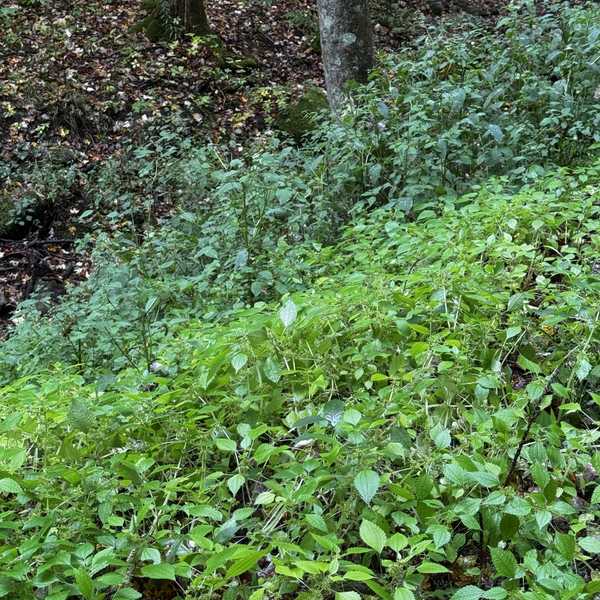
It wasn’t until 2012, when my now-husband and I bought our house and property in West Cornwall, that those memories came back to me.Where were those awe-provoking woods? Had a spell been put on the enchanted forest of my youth? The woods looked foreboding: swags of bittersweet vine choking the life out of mature trees and distorting the branches of young trees, thorns from invasive shrubs acting like barbed wire to keep humans away. And the ticks!
We began removing bittersweet from the large trees, many of them already dead from being choked by the vines. I spent the next decade, and continue still, removing the invasive undergrowth of barberry, Japanese honeysuckle, multiflora rose and the many other plants fighting to become monoculture. This was no wave of a magic wand, but it had a transformative effect. Native plants grew in to take the place of the invasives. And we noticed a marked reduction in ticks.
On Aug. 17, the Cary Institute released the findings of 35 years of research on ticks that carry Lyme.The major finding is that, rather than deer, mice and other small rodents that are the primary vector for passing the bacteria that causes Lyme to ticks. Mice are proliferating, along with the ticks that feed on them, as the loss of diversity in ecosystems promotes their survival.
James Sheppard, an infectious disease physician at Yale University, goes further: “These rodents also tend to be synanthropic — they thrive in human-altered environments. The loss of biodiversity and the urbanization and suburbanization of humans is promoting transmission of infections.”
So how do you reduce mouse populations? Removing barberry goes a long way, as this one invasive plant with its barbed branches has enabled mice, and the ticks that love them, to proliferate. Without the barberry barriers, hawks, owls, foxes and coyotes can hunt mice effectively and reduce their populations. This is biodiversity at work.
The proliferation of ticks and the severity of disease they transmit is a skin-crawling reality. We need to stay vigilant as other tick-borne infections, such as anaplasmosis and Alpha-Gal (which is not an infection but rather a tick-transmitted allergic reaction), creep into nearby areas. I am in favor of culling deer, which are vectors for the ticks that cause Alpha-Gal. In fearing the outdoors, uninformed people cannot apply the most effective solution now at our disposal for eradicating ticks. It’s a good time to cut down barberry and poison the cut stem by dabbing on glyphosate or triclopyr. And remember, permethrin, sprayed on gloves, shoes and clothing, is your friend.
Dee Salomon ungardens in Litchfield County.


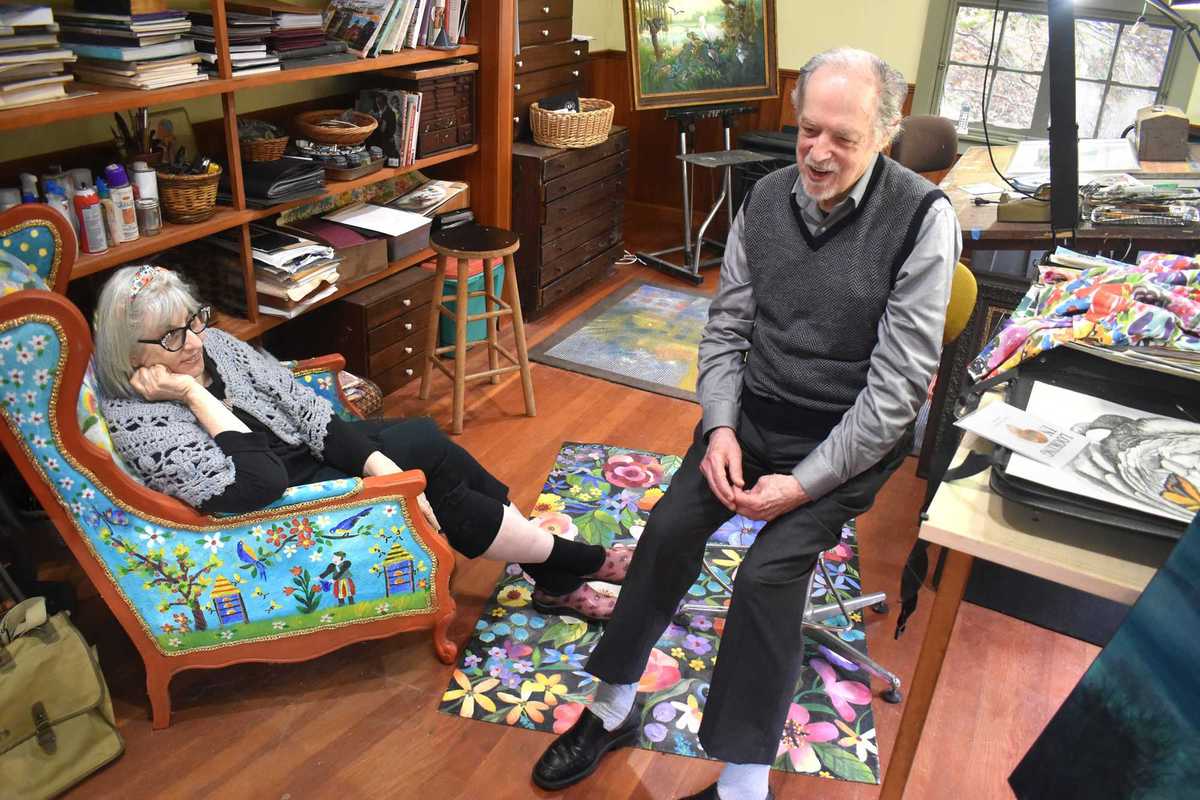
 Justine and Victor Valla in their studio with a painting of Victor’s,”Jonah and the Whale.” Robin Roraback


 A ceramic vase by Kathleen Heidemann.Provided
  Joy Brown’s delightful ceramic sculptures.Provided