One country down, only 194 more to go. Last week, the announcement of a “framework” for President Trump’s first trade deal and the first high-level meeting between the U.S. and China encouraged investors.
Wall Street’s enthusiasm was somewhat tempered, given that the United Kingdom was an easy deal to make. The terms of trade have always favored the U.S., where we have run a capital trade surplus for years. On the China front, U.S. Secretary of the Treasury Scott Bessent met with his counterpart in Switzerland last weekend; on Friday before, President Trump floated the idea of a possible decline in U.S. trade tariffs to 80%, which he said “seems right.” It was a clear message to the Chinese that he wanted to de-escalate his trade war.
[On Monday, the U.S. and China announced reduced tariffs for 90 days. Stocks soared.]
The administration is reportedly lining up deals with several other countries. India, South Korea, Japan, and Australia are in the queue, although the timing is still a question mark. India would have been first out of the box, but the government’s attention has been focused elsewhere over the past two weeks. The delay in an announcement is due to the present hostilities between India and its neighbor, Pakistan.
Given the news on tariffs, this month’s Federal Open Market Committee meeting came and went with hardly a blip. The Fed announced that they were going to sit on their hands for the foreseeable future. Chairman Jerome Powell made it clear just how uncertain the future was.
Few on Wall Street had expected anything more from the Fed than the word “uncertain” when describing Fed policy in the future. In the meantime, stocks climbed higher while precious metals, the dollar, and interest rates continued to be volatile. Gold traders were whipsawed as bullion prices have swung in $50-$100 increments daily this week. The U.S. dollar, which has been in freefall for a month, has also been erratic, while bond yields are in a trading range lately with no significant moves either way.
Both foreign and domestic traders believe the U.S. dollar will fall further. As such, they are looking at currency alternatives to place bets. Gold was the first go-to asset, but speculation has driven the price too far, too soon.
Recently I wrote, ‘For markets to continue their recovery, we need to see the following. A peace deal, the tariffs disappear, China and the U.S. come to a trade agreement, the Fed cut rates, and/or no recession.’ I forgot one more option: the successful passage of Trump’s tax bill, which could significantly impact the market dynamics.
Any two of the above will be enough to stave off a re-test of the lows. Thus far, we have made progress on the tariff front (UK, China, etc.). However, tariffs will not disappear altogether. It appears that no matter what, a 10% tariff on imports is here to stay.
I would guess the possibility of the passage of Trump’s “Big Beautiful Bill” is high, given that the Republican Congress now functions as a rubber stamp on the wishes of the president.
Bill Schmick is a founding partner of Onota Partners, Inc., in the Berkshires.




 Tiffany Lemelin, shelter manager, brushing Marsala upon arrival.Provided
 Michael DeBarba, certified dog trainer working with Marsala.Jennifer Almquist
 Marsala wins a heart.Jennifer Almquist
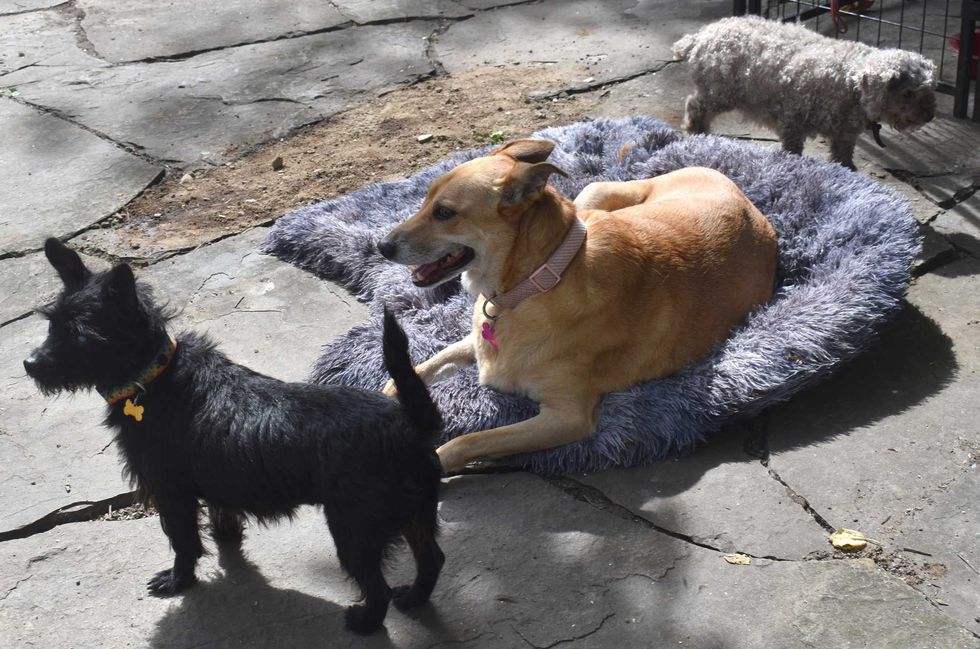 Sadie, center, a Carolina dog, plays with her friend Negra, a terrier mix. Bella Linda, the small poodle, has since been adopted.L. Tomaino
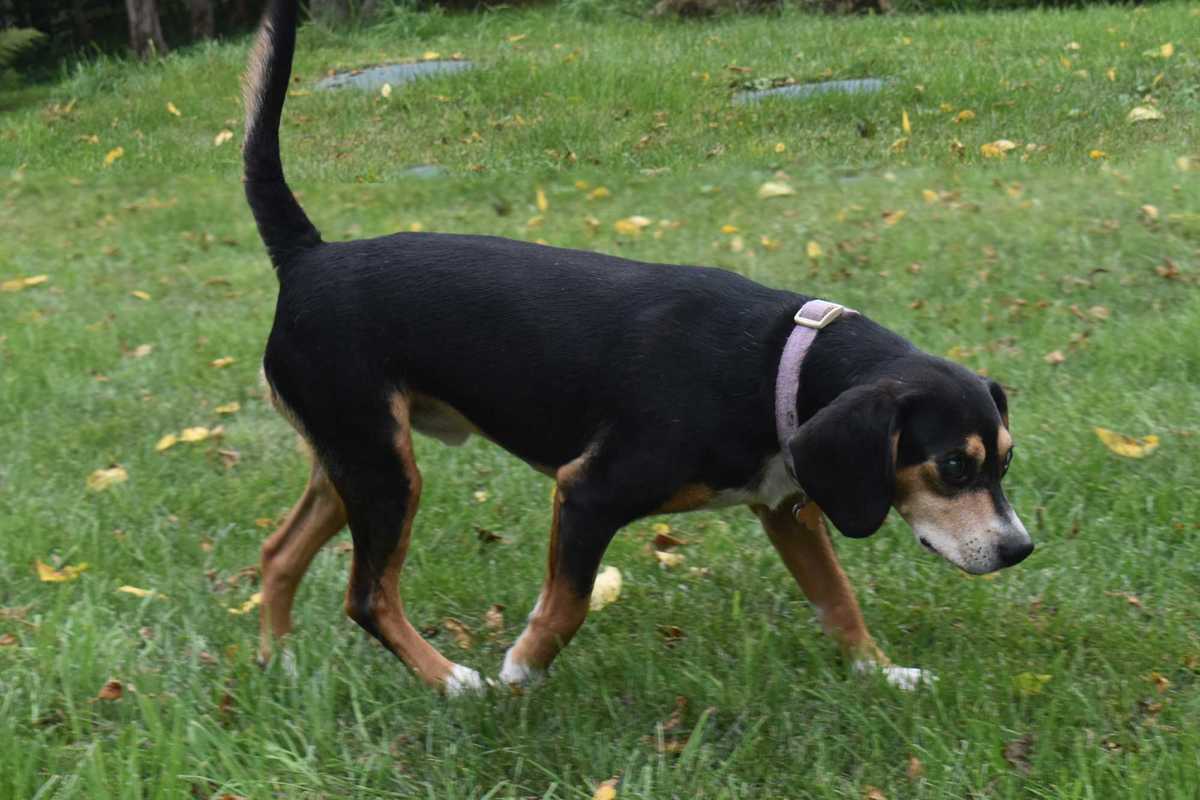
 Wesley, a young, exuberant mix, is looking for an active home.L. Tomaino
 Bonnie and Clyde, an affectionate terrier pair.L. Tomaino

 Provided