The market’s flash correction

The market’s decline has been one of the fastest in history.The fall has been fueled by the Trump administration’s economic policies. The question most investors are wrestling with is what to do about it.

Looking back on this period in a year or two, I guarantee that most investors will have trouble remembering exactly what happened. There is nothing abnormal in this decline thus far except its speed. It is a simple garden variety pullback, which occurs at least once a year if not more. It is the price of doing business for equity investors and savers with tax-deferred retirement accounts.

Given that, the decline is probably a good thing for an over-extended market on the upside. Stocks normally take the escalator up and the elevator down.In the pain game, I believe fast is better than slow when dealing with the emotional side of investing. Hopefully, the markets will bounce before too many more negative emotions surface.

I say that because emotions are your greatest enemy when investing. It would be a rare reader indeed who isn’t feeling worried and stressed right now when dealing with the market. The S&P 500 Index is down more than 10%, NASDAQ ­­­—17% and the Russell 2000 —18%.Is it time to bail?

No. The time for that decision is past. A month ago, taking some off the table may have made sense. Today it doesn’t.‘But what if it goes down even more?’ Let it, at worst you are halfway through a 20% correction but more likely on the eve of a turnaround.

Tom Lee, the founder of FSInsight, and a frequent guest on CNBC, reminds us that since 1928 going to cash and missing the 10 best days in a year reduces returns from 8% annually to —13%.

September 2022 was the last time investors were this pessimistic, according to the American Association of Individual Investors (AAII).

At the end of February, the proportion of investors identifying as bearish reached 60.6%.Historically, when this has occurred, the average subsequent 12-month return has been 24%.

How can you resist that desire to sell? Stop looking at your accounts. Watching your portfolio daily in a down market is behavioral suicide. Don’t do that.

So enough with the pep talk. Instead, the market had some good news last week for a change. The Consumer Price Index (CPI)and the Producer Price Index (PPI) came in cooler than most expected. I say ‘most’ because my forecast of weaker inflation numbers proved accurate. Next month’s data will show a 2.4% CPI, which will be weaker again. The following month should show a decrease as well. However, given the markets’ focus on tariffs and Trump’s economic policies, the inflation news did not matter to investors.

I expect the unemployment rate will rise as the administration reduces the number of the 3 million federal government workers. If you combine that trend with a slowing economy that is also being engineered by President Trump and his motley crew, we will have developed a perfect storm. That will provide a gateway for the Federal Reserve Bank to begin cutting interest rates once again.

Remember the Fed has two areas of responsibility: fighting inflation and maintaining employment. Chair Jerome Powell has already stated several times that the Fed now considers employment the focus of monetary policies. The bond market is already betting on a rate cut as early as May or June, with more to follow. That should be good for the stock market, which usually begins to discount events six months out.

The latest University of Michigan consumer sentiment numbers dropped another 10% in March.Trump has now admitted his policies will cause at least a slowdown in the economy, higher unemployment, and as for inflation, who knows?

As for the overall market, it is Trump-dependent, and the president has shown that he is no friend of the stock markets. Wall Street strategists and technicians are looking for at least a dead cat bounce.


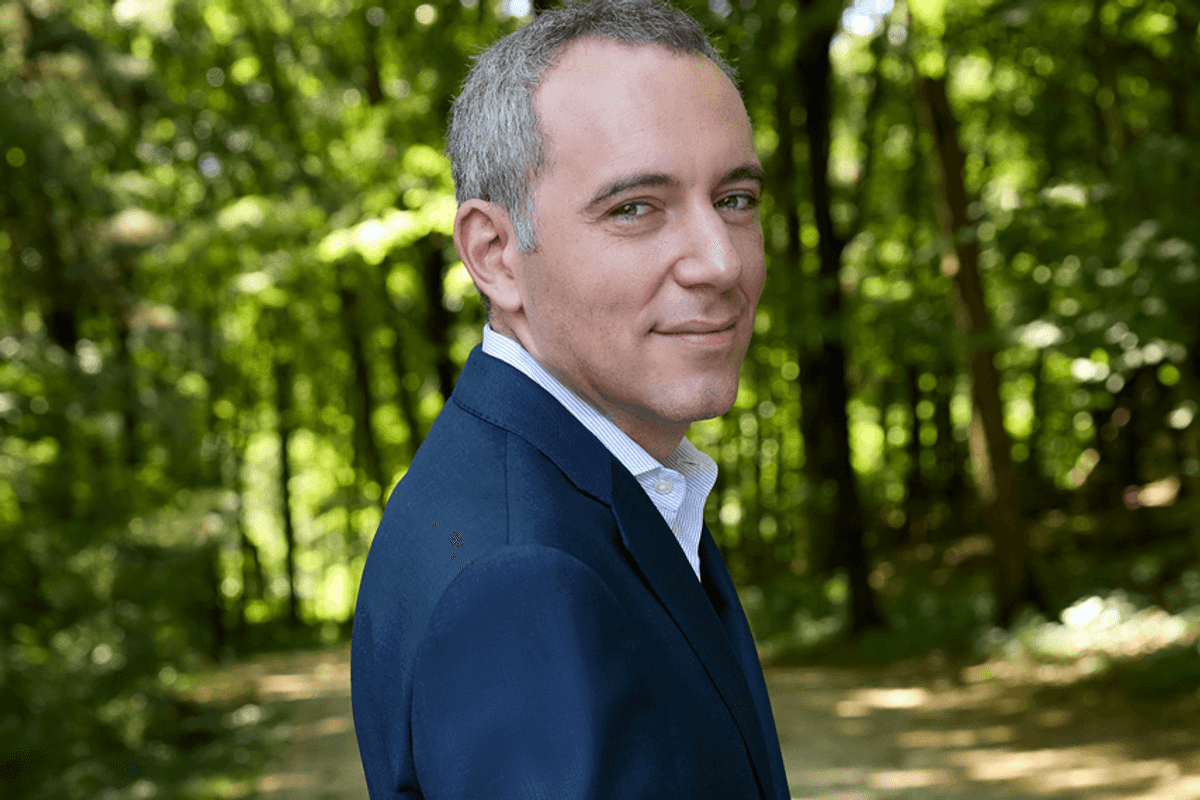
Bill Schmick is the founding partner of Onota Partners, Inc., in the Berkshires.

The views expressed here are not necessarily those of The Lakeville Journal and The Journal does not support or oppose candidates for public office.

Latest News

In remembrance:
Tim Prentice and the art of making the wind visible
In remembrance: Tim Prentice and the art of making the wind visible

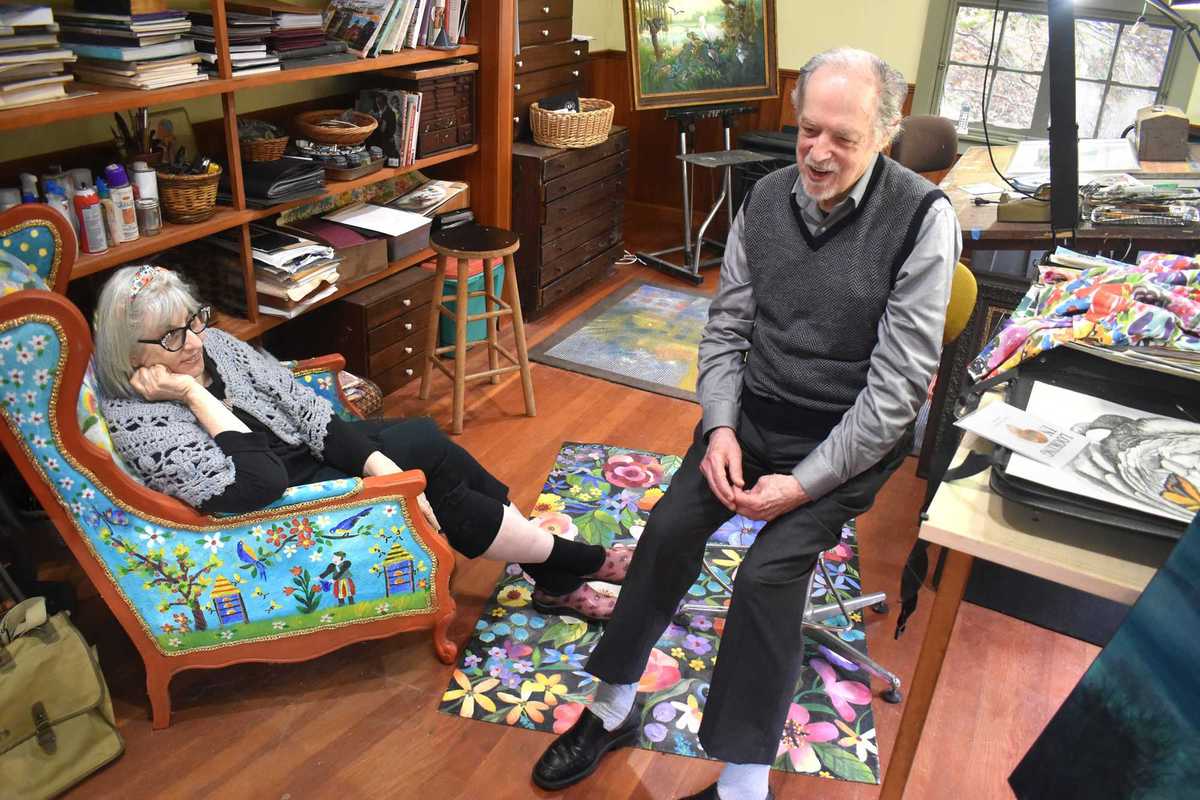
There are artists who make objects, and then there are artists who alter the way we move through the world. Tim Prentice belonged to the latter. The kinetic sculptor, architect and longtime Cornwall resident died in November 2025 at age 95, leaving a legacy of what he called “toys for the wind,” work that did not simply occupy space but activated it, inviting viewers to slow down, look longer and feel more deeply the invisible forces that shape daily life.

Prentice received a master’s degree from the Yale School of Art and Architecture in 1960, where he studied with German-born American artist and educator Josef Albers, taking his course once as an undergraduate and again in graduate school.In “The Air Made Visible,” a 2024 short film by the Vision & Art Project produced by the American Macular Degeneration Fund, a nonprofit organization that documents artists working with vision loss, Prentice spoke of his admiration for Albers’ discipline and his ability to strip away everything but color. He recalled thinking, “If I could do that same thing with motion, I’d have a chance of finding a new form.”

Keep ReadingShow less
Laurie Fendrich and Peter Plagens:
A shared 
life in art 
and love

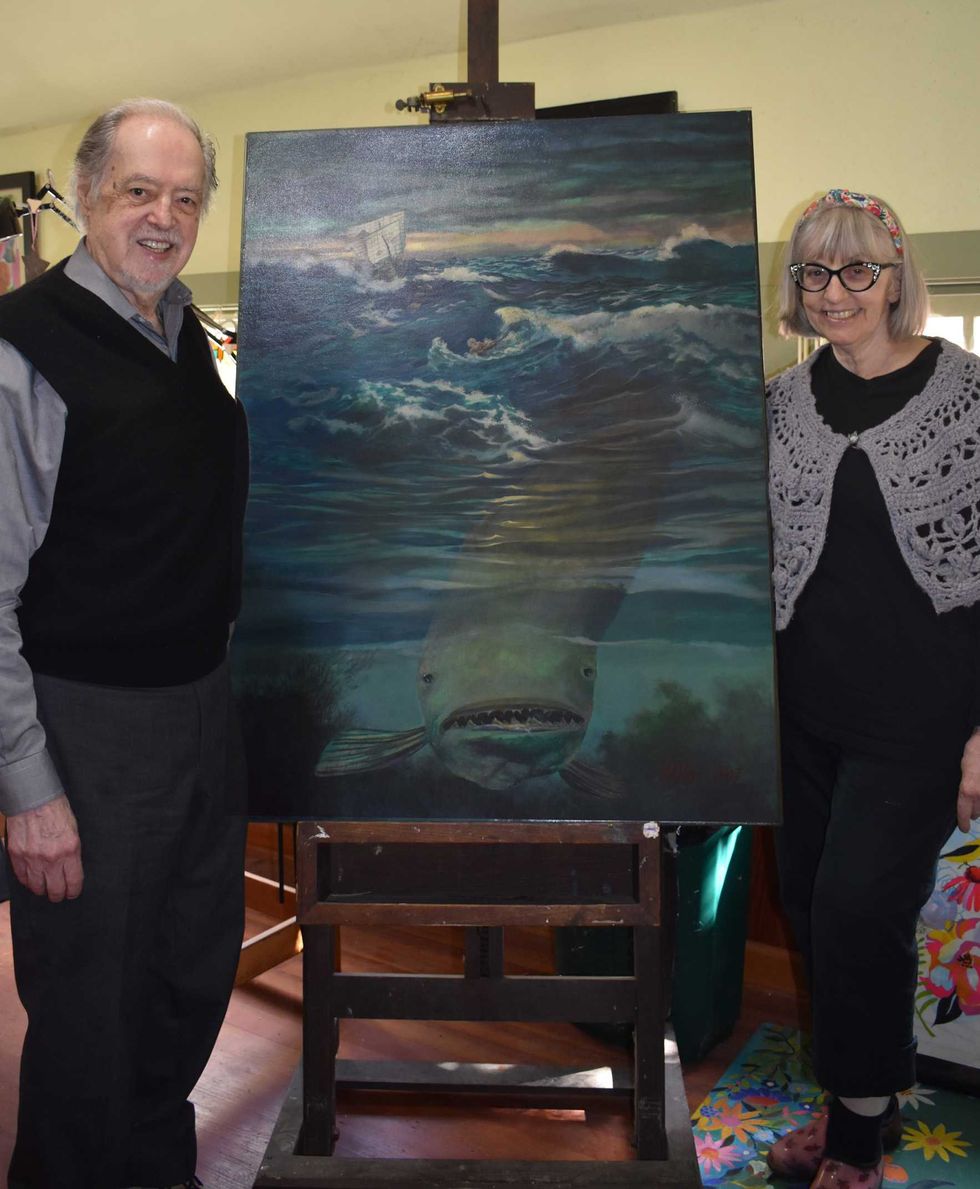
Laurie Fendrich and Peter Plagens at home in front of one of Plagens’s paintings.

Natalia Zukerman
He taught me jazz, I taught him Mozart.
Laurie Fendrich

For more than four decades, artists Laurie Fendrich and Peter Plagens have built a life together sustained by a shared devotion to painting, writing, teaching, looking, and endless talking about art, about culture, about the world. Their story began in a critique room.

“I came to the Art Institute of Chicago as a visiting instructor doing critiques when Laurie was an MFA candidate,” Plagens recalled.

Keep ReadingShow less
google preferred source

Want more of our stories on Google? Click here to make us a Preferred Source.

Strategic partnership unites design, architecture and construction

Hyalite Builders is leading the structural rehabilitation of The Stissing Center in Pine Plains.

Provided

For homeowners overwhelmed by juggling designers, architects and contractors, a new Salisbury-based collaboration is offering a one-team approach from concept to construction. Casa Marcelo Interior Design Studio, based in Salisbury, has joined forces with Charles Matz Architect, led by Charles Matz, AIA RIBA, and Hyalite Builders, led by Matt Soleau. The alliance introduces an integrated design-build model that aims to streamline the sometimes-fragmented process of home renovation and new construction.

“The whole thing is based on integrated services,” said Marcelo, founder of Casa Marcelo. “Normally when clients come to us, they are coming to us for design. But there’s also some architecture and construction that needs to happen eventually. So, I thought, why don’t we just partner with people that we know we can work well with together?”

Keep ReadingShow less
‘The Dark’ turns midwinter into a weeklong arts celebration

Autumn Knight will perform as part of PS21’s “The Dark.”

Provided

This February, PS21: Center for Contemporary Performance in Chatham, New York, will transform the depths of midwinter into a radiant week of cutting-edge art, music, dance, theater and performance with its inaugural winter festival, The Dark. Running Feb. 16–22, the ambitious festival features more than 60 international artists and over 80 performances, making it one of the most expansive cultural events in the region.

Curated to explore winter as a season of extremes — community and solitude, fire and ice, darkness and light — The Dark will take place not only at PS21’s sprawling campus in Chatham, but in theaters, restaurants, libraries, saunas and outdoor spaces across Columbia County. Attendees can warm up between performances with complimentary sauna sessions, glide across a seasonal ice-skating rink or gather around nightly bonfires, making the festival as much a social winter experience as an artistic one.

Keep ReadingShow less
Tanglewood Learning Institute expands year-round programming

Exterior of the Linde Center for Music and Learning.

Mike Meija, courtesy of the BSO

The Tanglewood Learning Institute (TLI), based at Tanglewood, the legendary summer home of the Boston Symphony Orchestra, is celebrating an expanded season of adventurous music and arts education programming, featuring star performers across genres, BSO musicians, and local collaborators.

Launched in the summer of 2019 in conjunction with the opening of the Linde Center for Music and Learning on the Tanglewood campus, TLI now fulfills its founding mission to welcome audiences year-round. The season includes a new jazz series, solo and chamber recitals, a film series, family programs, open rehearsals and master classes led by world-renowned musicians.

Keep ReadingShow less
google preferred source

Want more of our stories on Google? Click here to make us a Preferred Source.

google preferred source

Want more of our stories on Google? Click here to make us a Preferred Source.