NORTH EAST — The North East Fire District’s Board of Commissioners voted at its Sept. 15 meeting to approve the purchase of a new four-wheel-drive Quick Attack Class A pumper for the Millerton Fire Department, at an anticipated cost of $327,000. Before the truck can be purchased, however, the proposal must go to a public referendum. The board voted to hold a special election Tuesday, Nov. 10.
It is the general recommendation from the National Fire Prevention Association (NFPA) that a department’s oldest vehicle in its first line of attack vehicles should not be older than 20 years. The department is currently using a 1990 Mac pumper/tanker combination vehicle, which will reach 20 years of age in 2010.
Since the North East district was formed in 2004, the board has been putting money aside every year for the purchase of a new vehicle.
A truck committee was formed in 2006 to look into the possibilities for the upcoming replacement. It was eventually decided that two separate vehicles, a 2,000-gallon tanker and a 500-gallon compressed air foam pumper (the equivalent of a 3,000-gallon water pumper), would be better suited for the district, where there is little room to maneuver.
“The Quick Attack would get there faster,� Commissioner Jim Babbit said. “And the tanker would follow behind and supply it. A big vehicle wouldn’t get there as fast, and wouldn’t carry as much water.�
“We spec a truck for our own community,� said Lennie Morrison, who is president of the fire department and headed the truck committee. “We needed the four-wheel drive because once you leave the village, everything is uphill. And if we went with the big [combination tanker/pumper] truck, there would be a problem getting in and out of driveways.�
Babbit and Fire Commission Chairman George Lind, who sat down for an interview with The Millerton News after the meeting, also pointed out that purchasing the two separate vehicles is cheaper than buying one big four-wheel drive tanker/pumper. A smaller vehicle will be easier to handle and can respond to emergencies faster, Lind said.
“Our fire district is 42 square miles,� Lind said, “and the firehouse is in one corner of it.� The two minutes that a smaller truck could save in response time, Lind said, could make a world of difference.
“Response time to emergency incidents has been determined to be directly proportional to the success of that incident in terms of lives and property saved, injuries mitigated and manpower used,� Lind read from a written statement before the commissioners voted.
The two trucks were originally going to be purchased at the same time, but when the pumper’s GMC chassis was discontinued following the meltdown of the automobile industry, the board decided for financial reasons to purchase the two vehicles separately.
The first truck, a 2,000-gallon tanker, was ordered several months ago at the cost of $191,000. That money comes from $171,000 that the district has in its apparatus reserve line, as well as $18,000 from this year’s budget. Since the district already had the funds, only a permissive referendum was needed, meaning that unless someone spoke up in opposition to the purchase, a public vote was not required.
Residents in the North East Fire District will need to vote, however, on the purchase of the Quick Attack pumper. The board needs to plan for a worst-case scenario, and will be asking for the public’s permission to bond $327,604, to be paid back over a period of 10 years, even though both Lind and Babbit felt that number would be overstated compared to what would actually be paid.
The point that Lind and Babbit stressed was that the purchase will not result in any major increase in taxes. The first payment for the truck would not be due until 2011, a year after the purchase. Most, if not all, of the approximately $35,000 a year will come from two places. First, the district’s workmen’s compensation liability insurance line is expected to decrease by “at least 50 percent,� according to Lind, by 2011. Second, the district will have completed paying off the purchase of a new ambulance by next year, freeing up additional funds. And that will still leave the district in a position to continue setting aside funds to be ready for the next major vehicle purchase, a compressed air foam truck, sometime around 2017.
“We’re looking to the future,� Babbit said. “Throughout the years the fire department has helped out as well by not going out and buying things that they don’t absolutely need so we can put additional money aside.�
New vehicles are important to the fire department for the safety and peace of mind of the firefighters.
“You try to provide them with equipment they’re comfortable using,� Lind said. Additionally, purchasing new trucks is “good for new membership and retaining old membership.�
Morrison explained that the truck committee was made up mainly of past chiefs and firefighters who are or were pump operators. He said that the fire department has never put together a proposal for a vehicle that didn’t do exactly what it was meant to do, and it was put together by people who knew what the department needed to protect the community.
“This community has grown and grown,� he said. “And we’re only protecting it with trucks we had back in 1983.� He said there was now a need for newer and more efficient vehicles. Plus, he added, the taxpayers won’t see an increase in taxes.
“I think the community will be proud,� he concluded.
The next commissioner’s meeting will be Oct. 20 at the firehouse on Century Boulevard at 7 p.m. A public hearing will be held for this year’s fire district budget.


 Justine and Victor Valla in their studio with a painting of Victor’s,”Jonah and the Whale.” Robin Roraback


 A ceramic vase by Kathleen Heidemann.Provided
  Joy Brown’s delightful ceramic sculptures.Provided
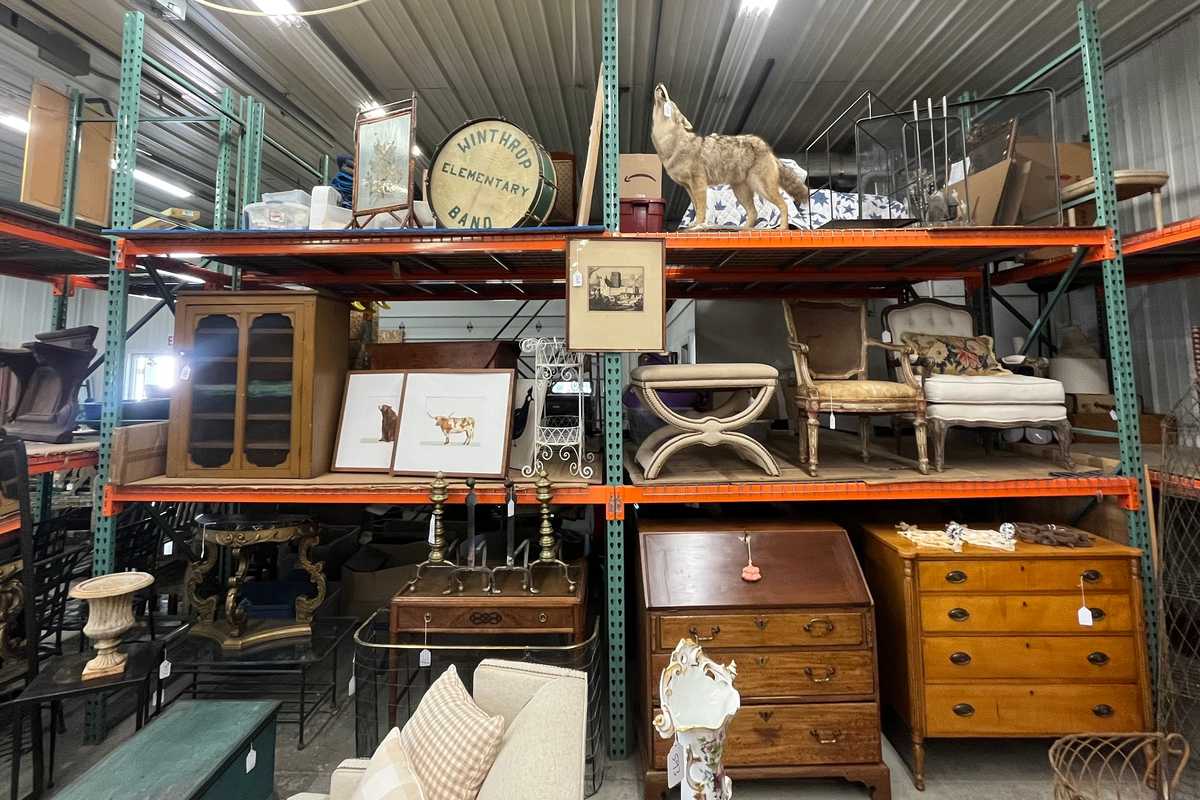
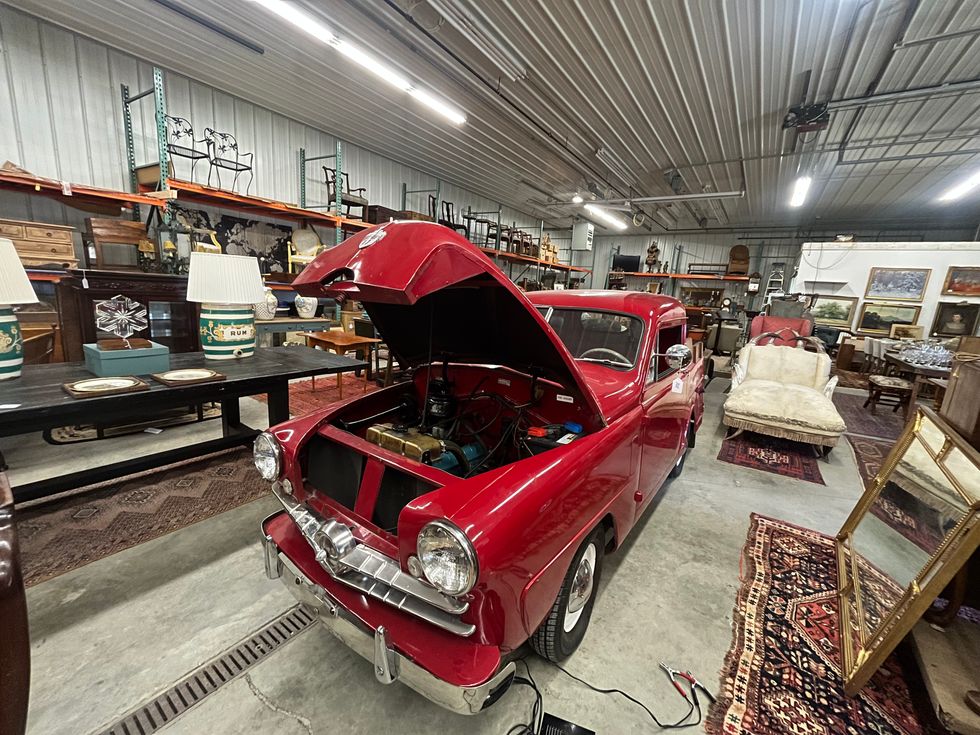 Hundreds of items at Stateline Auctions, including a candy-apple-red Crosley pickup truck.D.H. Callahan