Although I’ve been an avid user of all kinds of technological devices and instruments, I have only recently discovered the fact that I had never used or familiarized myself with one of the most instrumental and popular features of modern technology. And I came to this realization only a few weeks ago as I watched my son pull his iPhone out of his back pocket and spoke with a female person to set up an event in his calendar. The lady with a gentle and sweet voice responded saying that the calendar is now set to the precise date and time my son had indicated.
When I asked my son who the lady was he was talking to, he looked at me as if I was someone who just came from outer space. But, in a friendly and gentle way, he explained to me that the voice of the woman I just heard on the phone was simply a feature called Siri, which comes with every iPhone we buy and helps us set up appointments and any engagements we don’t want to forget. “What a nice lady,” I said, but my son didn’t waste time making it clear to me that “Nice Lady” is not really a lady but a product of a computer program.
Without making me feel like I was an old and half-witty guy, my son actually took the time and step by step walked me through the whole ritual of lightly touching the iPhone’s screen to activate Siri and setting up an event in my calendar. And I did it. Actually Siri did it. And with a voice filled with appreciation and gratitude I thanked Siri for doing such an amazing job, which made my son roll his eyes and say, “You don’t have to thank her dad, she’s not a real person.”
Amazingly, it took only a short time for me to get to know Siri well. She listened to me and with an unlimited patience she waited until I pulled myself together and dictated the details of my appointments, whether it was for a doctor’s appointment or a birthday party. Siri listened to me quietly and didn’t even raise her voice when I made mistakes by not providing the proper dates or hours of my appointments.
Later, I realized that Siri can do much more than just create events. Siri can tell me the weather forecast by my just asking her, “What’s the weather tomorrow?” Siri will immediately respond with, “Looks like snow tomorrow.” It did not take me too long to completely abandon my date books and clipboards, my pencils and pens and my yellow markers, which highlighted the importance and urgency of an appointment. Siri took care of all that by simply responding to my request with her gentle, sensuous and inviting voice.
But my friendly relationship with Siri went through a bumpy ride when I was driving through an area that was unfamiliar to me. Naturally I was totally dependent on Siri‘s navigation skills as I followed her directions with utmost concentration. I was definitely nervous and worried that I could get lost in the middle of the woods.
What made that ride more intense and dramatic was that I was actually more concerned about how Siri will react if I make a wrong turn than me actually being lost. All I was thinking was that if I ever made the wrong turn, Siri would take it as a personal insult for ignoring and dismissing her directions. And that would be very ungentlemanly behavior on my part. And knowing me, I would never make a lady feel neglected or disrespected.
But when I realized that I had made the wrong turn, I realized that Siri had no feelings or emotions to comfort me by telling me how sorry she was. Instead she kept repeating in a totally unemotional and monotonous pace the same words over and over again: “Proceed to the main route, Proceed to the main route, Proceed to the main route,” which drove me crazy!
I think that was the exact moment when I finally realized why my son was trying hard to make me understand that Siri is not a person, that she is not a lady and she has no soul. She is just a product of computer programming and she is a robot who has no soul and who could care less if I had made the wrong turn or end up in a place miles away from my home.
Having said that, as someone who is like millions of others whose everyday life is intertwined with the likes of Siri and Alexa, I will benefit from the services provided by those non-human creatures. Yet again I will always treat them with dignity and civility because regardless of their being emotionless and inhuman, believe it or not, they are fast becoming members of our own human family.
Varoujan Froundjian is a digital artist and writer. He can be reached at: varlink3050@gmail.com.

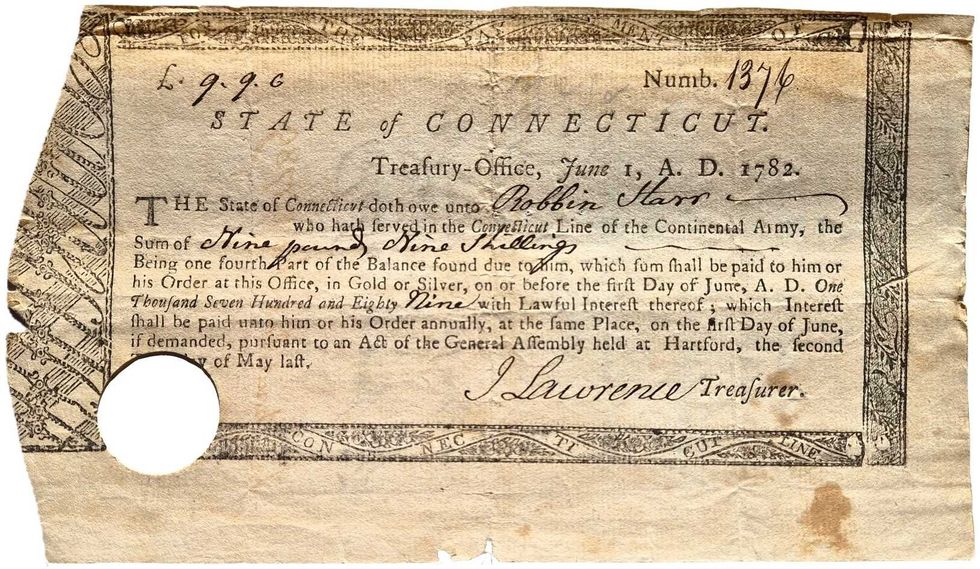 Pay Bill for Robin Starr’s service in the Continental Army.Courtesy the Alex Breanne Corporation
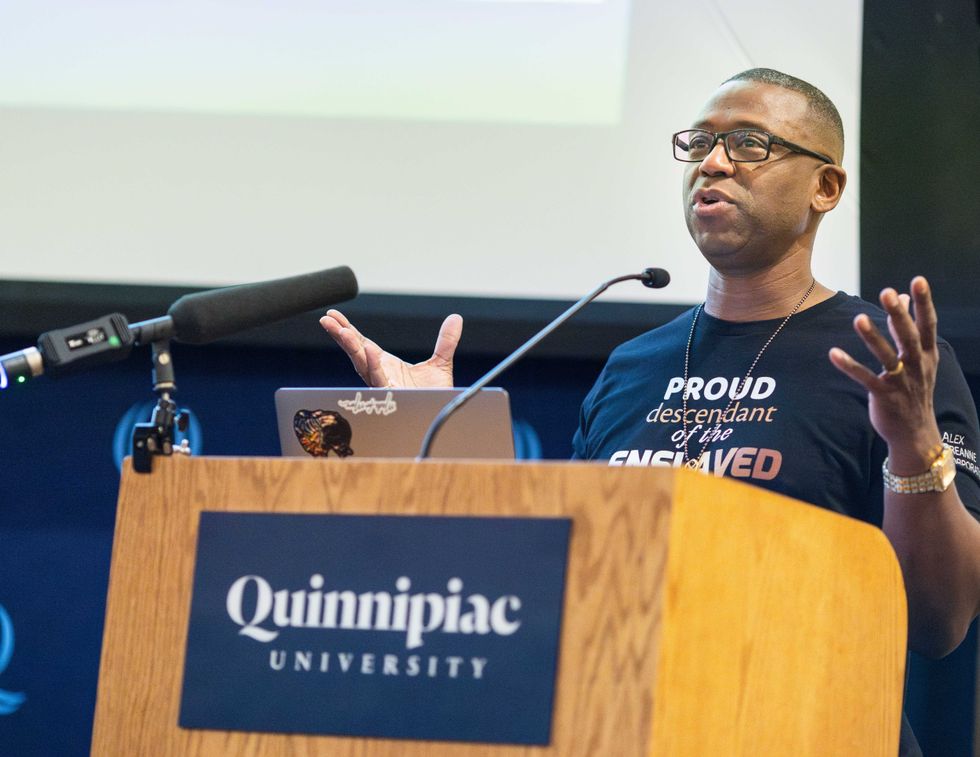 John Mills speaking at Quinnipiac University.Courtesy the Alex Breanne Corporation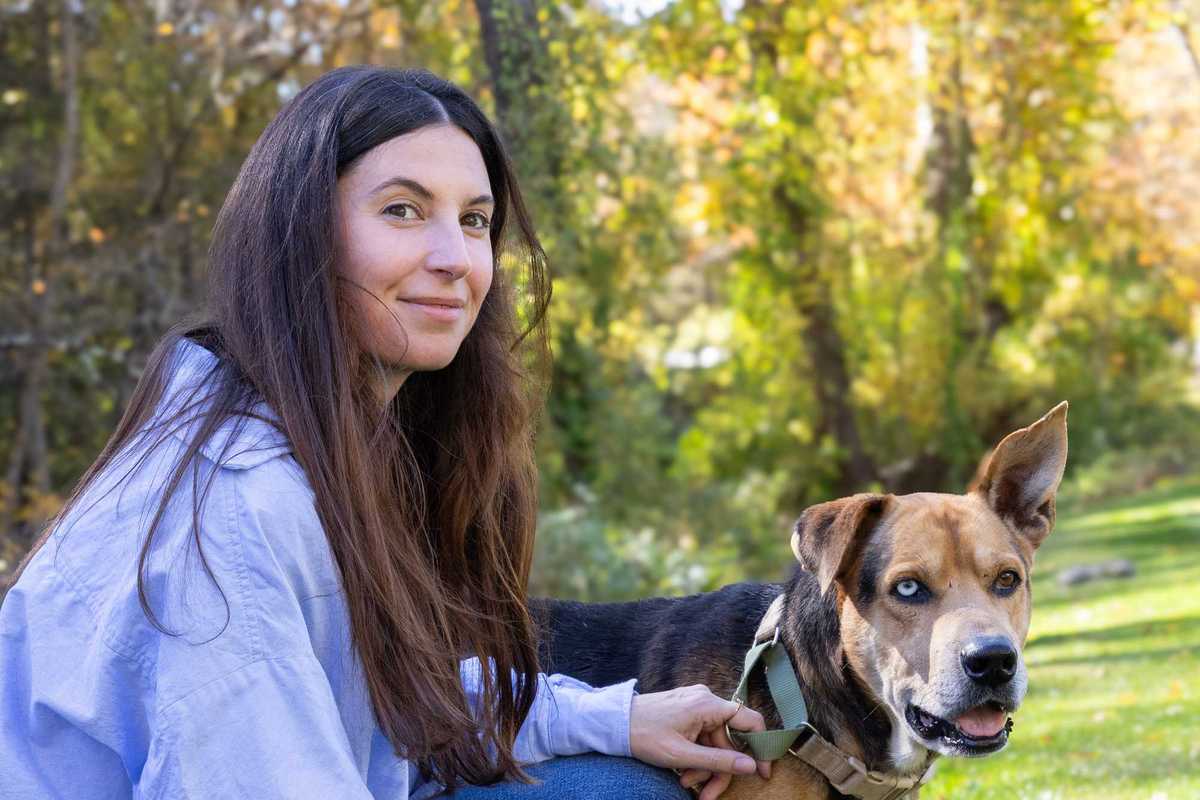
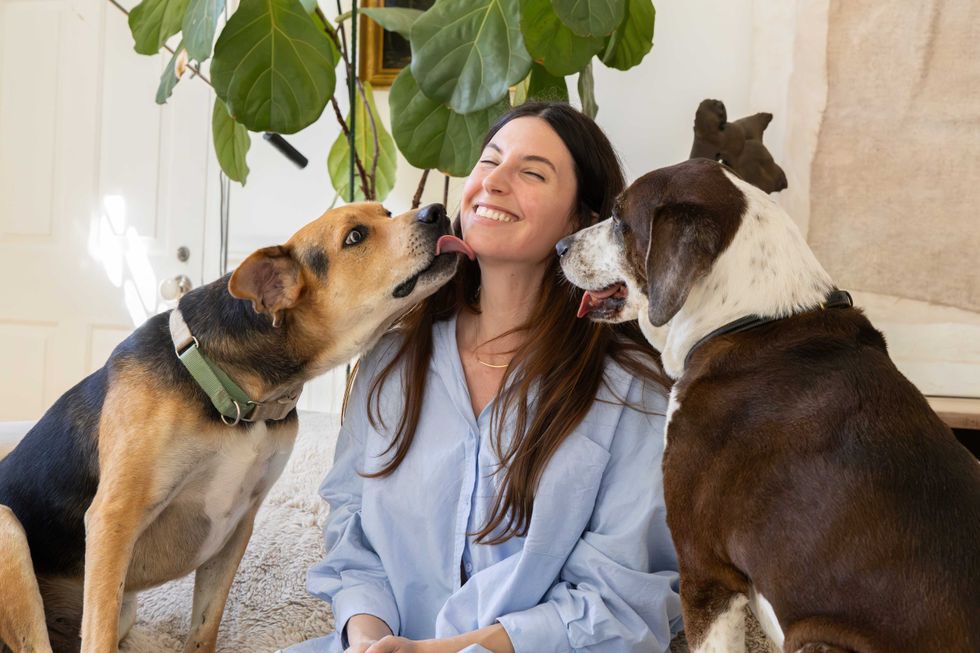 Stephanie Saetta,with her rescue dog George and Blue (left), a shepherd mix awaiting his forever home.Madi Long
 Blue, a 7 year-old Shepard mix, is waiting for his forever home. Madi Long