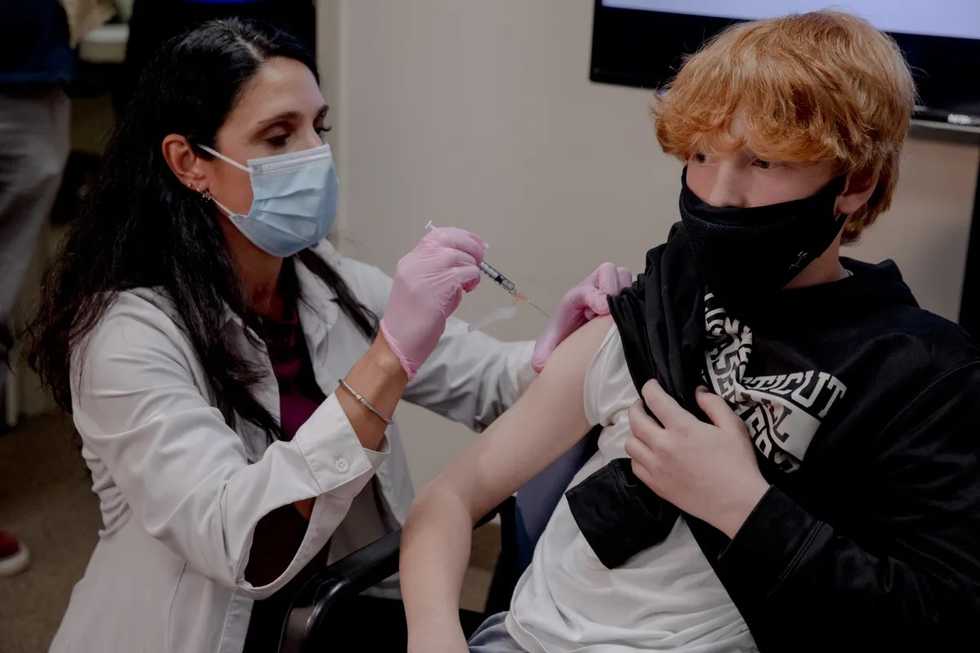
Physicians are urging parents who have adopted a wait-and-see approach to vaccinating their young children against COVID-19 to get the shot before school resumes, when kids will again be in close quarters and infection rates are expected to rise.
“We want families to get their children vaccinated, especially before going back to school, where we know children are going to be close together and some of the masking and distancing requirements are not going to be in place this school year,” said Dr. Jody Terranova, a UConn Health pediatrician and president-elect of the Connecticut chapter of the American Academy of Pediatrics. “It’s important to have as much protection as we can provide.”
Since the COVID vaccine was approved for those 6 months to 4 years old in June, uptake of the shot has been sluggish. As of Aug. 16, 14,506 children, or just 7.9%, have received at least one dose, according to state health department figures. Pfizer’s vaccine for young children requires three doses and Moderna’s requires two.
Terranova said parents of children in older age groups were more eager to get those kids vaccinated because they wanted to return to a sense of normalcy. In the early days of eligibility for 5- to 11-year-olds, for example, appointment slots filled up minutes after they became available. As of Aug. 16, nearly 98,000 5- to 9-year-olds, or about 49.5%, and nearly 155,000 10- to 14-year-olds, or 72.5%, have received at least one dose in Connecticut, according to state data.
With fewer mandated COVID precautions, the urgency appears to have waned for younger children.
“I think the older kids got it because the parents were waiting for it and wanted those kids to be able to get back to school, get back to sports, get back to activities, and it came at a time when things were more restricted,” Terranova said. “People were really looking for that vaccine to kind of get back to normal.”
Now, “folks aren’t quite convinced they need it to get back to normal, or they’ve been doing what they need to do and they don’t see it as an important piece to do their normal activities, [even though] there’s still the risk of COVID,” she said. “We’re still seeing lots of COVID, we still see some kids with complications of long COVID.
“It’s really just trying to balance and let parents see that the vaccine is very safe. And if your child gets COVID, we don’t know what will happen. So let’s weigh those risks and benefits.”
A study by the Kaiser Family Foundation noted that while vaccinations peaked nationally for both children under 5 and 5- to 11-year-olds at two weeks after eligibility, about 2.7 million, or 9.3%, of kids aged 5 to 11 had received their first dose by the peak, compared to just 283,000, or 1.4%, of children under 5.
A Kaiser survey published in July found that most parents of young children newly eligible for a COVID vaccine were reluctant to get them vaccinated, including 43% who said they would “definitely not” do so.
Another 10% said they would get their children vaccinated as soon as possible, while others were less eager, including 27% who wanted to “wait and see” how it worked in other young children and 13% who said they would only get their child vaccinated if it were required for school or child care.
Although children infected with the coronavirus are less likely to develop severe illness than adults, physicians are warning parents that cases in kids can still lead to hospitalization. Last January, as the omicron variant swept the nation, an average of 21 children were hospitalized per day with COVID in Connecticut.
“We see some very bad complications,” said Dr. Ian Michelow, head of pediatric infectious diseases and immunology at Connecticut Children’s Medical Center. “Even though they’re not common complications, the reality is that even young children can get severe COVID. That’s what we’re trying to avoid.”
As school resumes, the health of immune-compromised kids and their families is also important to remember, Michelow said.
“It’s not just the severe cases, it’s the issue of spreading in the schools, because there are kids who are immunocompromised or they’re at risk for severe disease,” he said. “We want to protect the entire community of students, their teachers and family members, because once it spreads, it can be taken home to elderly people.”
Long COVID is a risk in children. A July study published in JAMA Network Open found that 10% of children who were hospitalized with COVID had lingering symptoms, such as fatigue, weakness and shortness of breath, three months later.
Among kids who were treated in an emergency department and released, about 5% had symptoms three months later. The study examined 1,884 COVID-positive children across 36 hospitals from March 2020 to January 2021. Children who were 14 years or older, or who had four or more symptoms during their initial hospital visit, were more likely to develop long COVID, the study found.
Several Connecticut health systems, including Connecticut Children’s Medical Center and Yale New Haven Health, have launched long COVID treatment programs to help kids with the condition.
Long COVID isn’t the only concern. A recent study by the Centers for Disease Control and Prevention concluded that children and adolescents who have been diagnosed with COVID are at greater risk for Type 1 diabetes, blood clots, heart conditions and kidney failure.
CDC researchers reviewed electronic health records for nearly 800,000 U.S. children through age 17 who had COVID from 2020 through 2022 and compared them with that of nearly 2.5 million kids who had not been infected during the same timeframe. They found that young people who had been diagnosed with COVID were about two times more likely to experience a blood clot in the lung — and nearly two times more likely to experience myocarditis, inflammation of the heart muscle; cardiomyopathy, a disease that makes it more difficult for the heart to function correctly; or blood clots in veins — in the year following their illness, Fortune reported.
“We have a clinic at Connecticut Children’s, and we are getting non-stop referrals about all sorts of problems involving many different organs in the body, including neurological problems,” Michelow said. “I can’t overemphasize that this is a toll on children. And we don’t have a good handle on that, because it manifests in so many different ways. It could be neurologic, cardiac, respiratory, it could be diabetes, it’s really a very mixed group of problems that we’re seeing in these children.
“Certainly, there’s evidence that vaccines help prevent these long-term complications. And if we can prevent children from getting these infections, we can prevent these types of complications.”
Terranova encouraged parents to share personal stories of children’s illnesses if they are comfortable doing so, including on social media, so that others can understand how COVID affects kids.
The state Department of Public Health is planning to send mobile vaccination units to Connecticut’s 36 lowest-performing school districts, known as Alliance Districts. School administrators, child care workers and officials with youth camps in non-Alliance Districts can also request free mobile vaccination clinics by emailing HealthEquityTeam@ct.gov or SDE.COVID19@ct.gov (for school district administrators).
The state has ordered 2.5 million self-test kits (5 million individual tests) to be distributed to school districts and early childhood education programs. The tests are available free to students, staff and employees such as bus drivers and specialized instruction providers.
Children who have symptoms of a cold but no fever are able to attend school this year with a negative COVID test. Under a new program called Test-Mask-Go, children with mild cold symptoms (infrequent cough, runny nose, congestion) but no fever should take a COVID home test. If the test is negative, kids can attend school, but they are encouraged to wear a mask. Children who live with anyone who has tested positive for COVID in the last two weeks (and who themselves have symptoms) should not use the Test-Mask-Go strategy.
“Getting vaccinated is the best tool we have to keep kids healthy,” said Michael Bolduc, vaccine coordinator for the state’s immunization program. “What we’ve seen is that over 100,000 children have been hospitalized [aged] zero to 17. And over 400 kids under the age of 5 have died from COVID. That’s way too many; even one child dying from COVID is too many.
“We have a vaccine that’s safe and highly effective. But it’s only safe and effective if it gets used.”
To get a vaccine, parents can talk to their child’s pediatrician or visit vaccines.gov, type in a ZIP code and find clinics near them.
The Journal occasionally will offer articles from CTMirror.org, a source of nonprofit journalism and a partner with The Lakeville Journal.



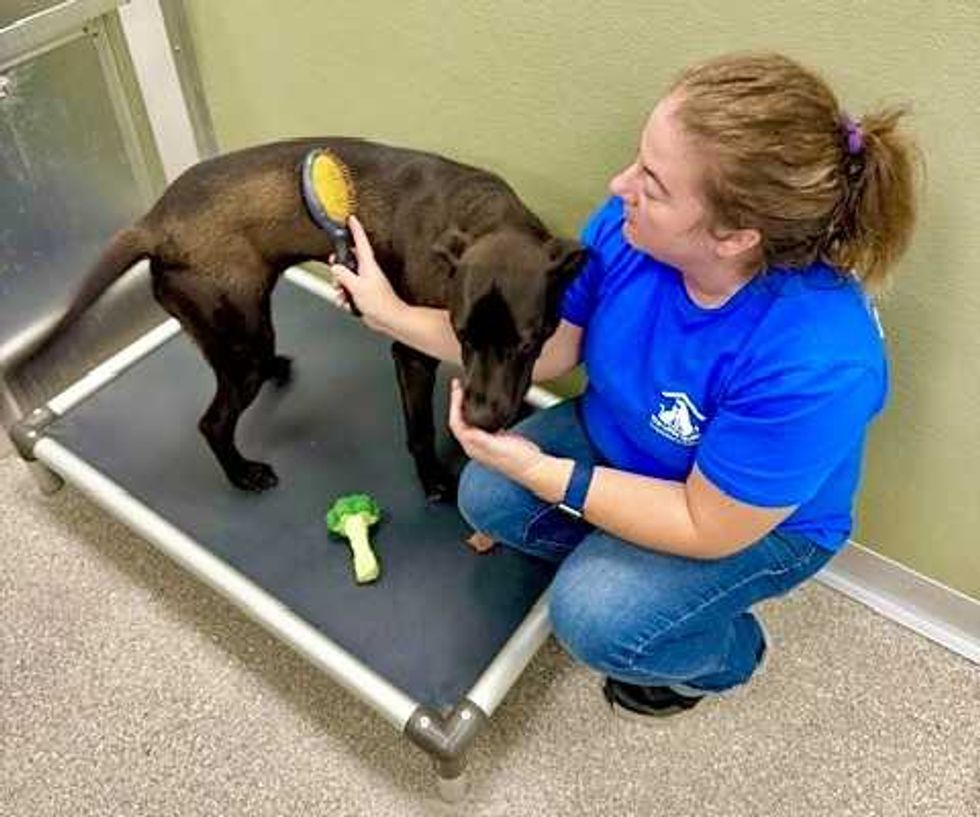 Tiffany Lemelin, shelter manager, brushing Marsala upon arrival.Provided
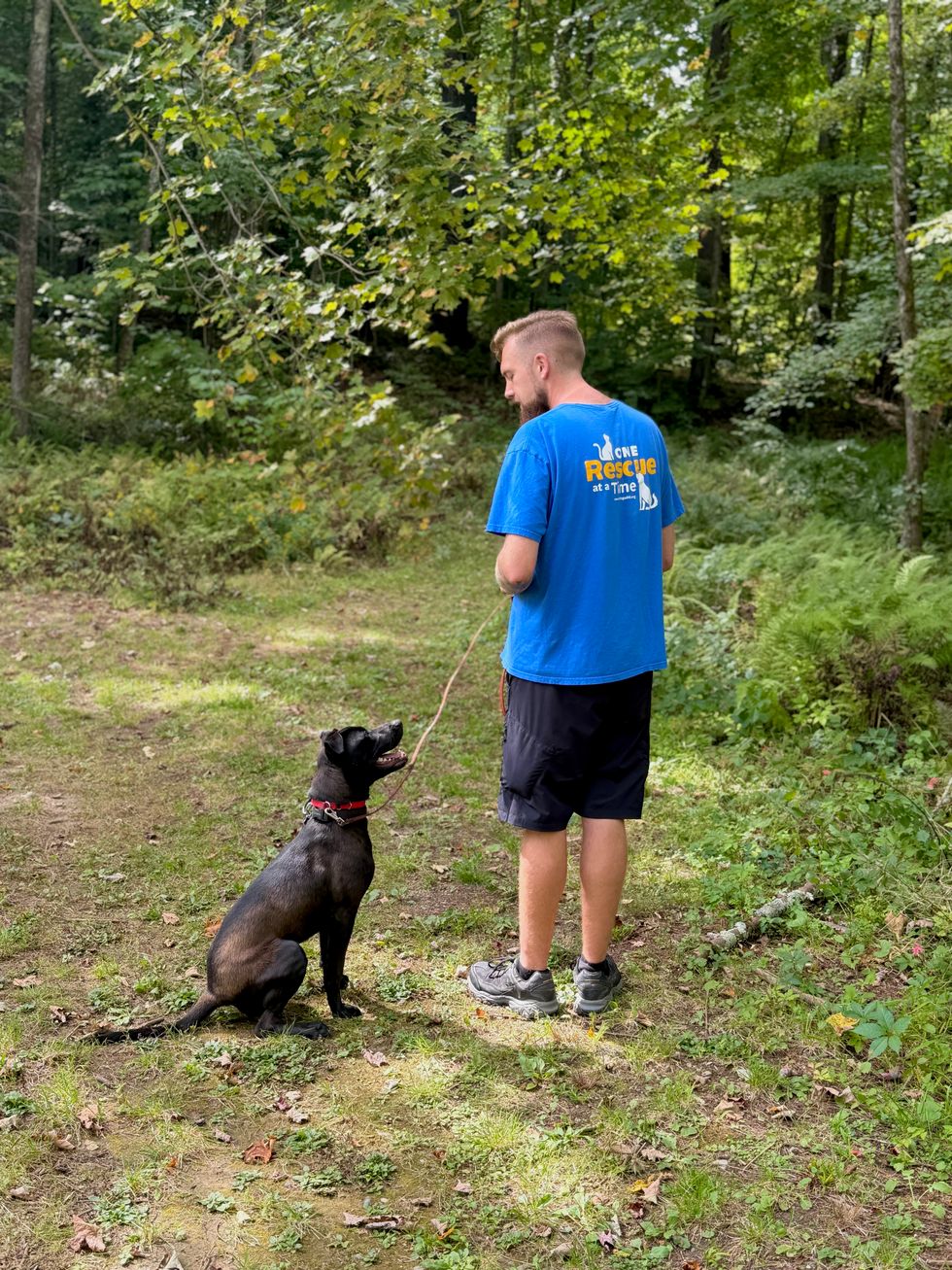 Michael DeBarba, certified dog trainer working with Marsala.Jennifer Almquist
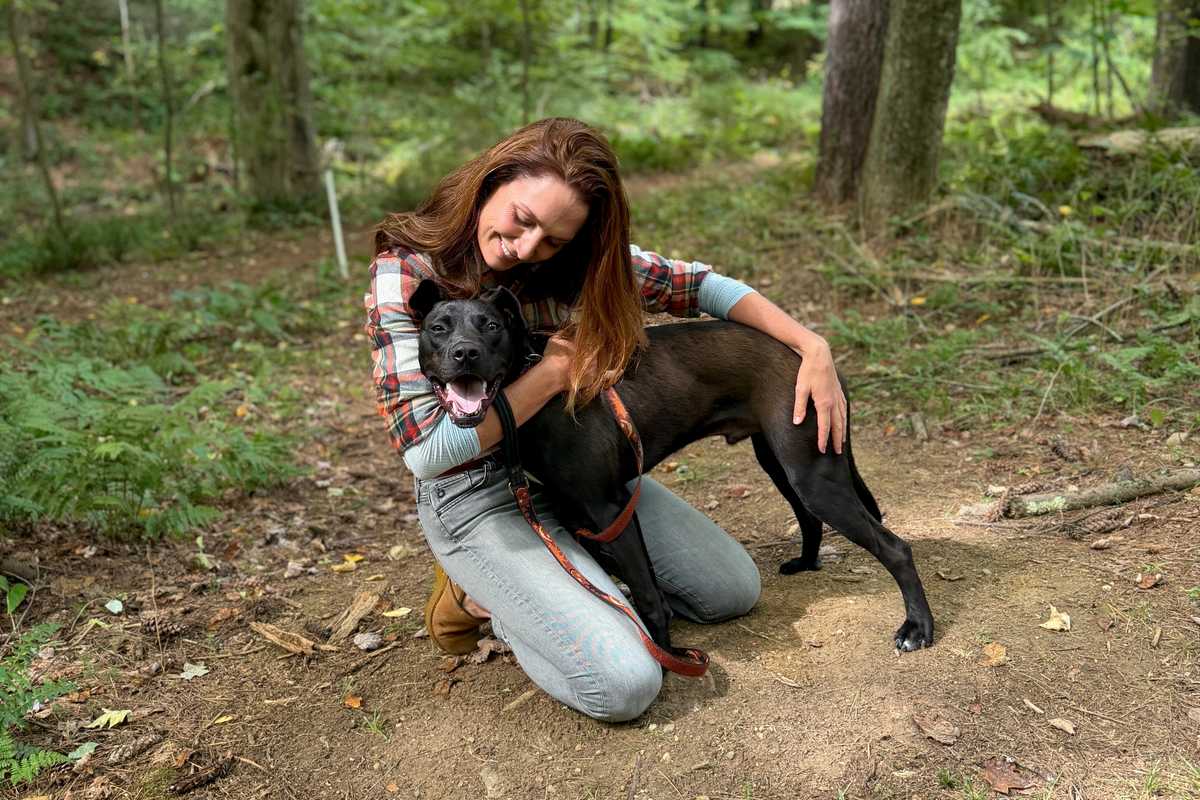 Marsala wins a heart.Jennifer Almquist

 Sadie, center, a Carolina dog, plays with her friend Negra, a terrier mix. Bella Linda, the small poodle, has since been adopted.L. Tomaino
 Wesley, a young, exuberant mix, is looking for an active home.L. Tomaino
 Bonnie and Clyde, an affectionate terrier pair.L. Tomaino

 Provided