Thank you!
Your support is sustaining the future of local news in our communities.

A Litchfield County real estate surge and its consequences

A Litchfield County real estate surge and its consequences
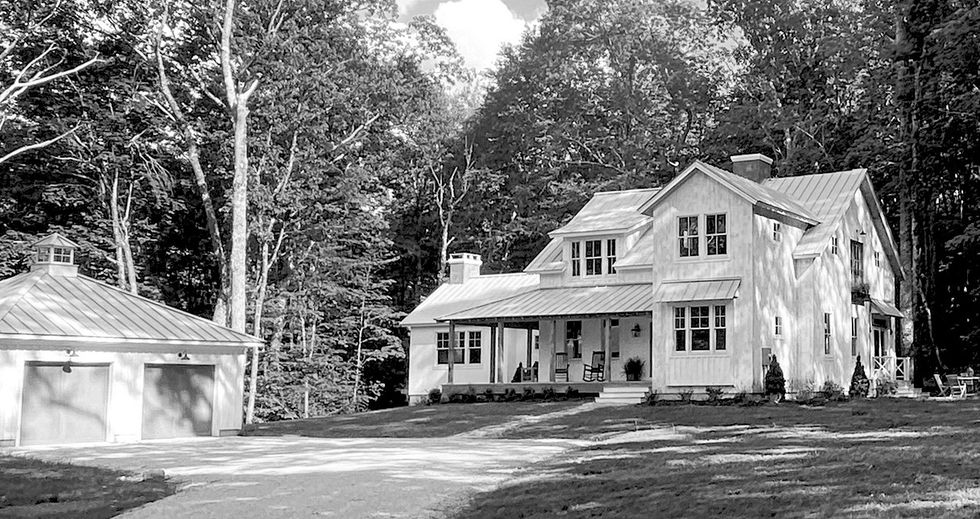
Sales of homes in Litchfield County, and their prices, surged in 2020 as city residents fled metropolitan areas for lesser populated rural communities.  This farmhouse in Sharon was listed and sold by  Sotheby’s over the summer for more than $1 million. Photo courtesy of WPSIR

The year ended with real estate sales continuing to boom in Litchfield County. 

Real estate agents had their hands full, beginning in spring, with city residents urgently seeking to buy or rent properties up here, hoping to protect themselves and their families from the spread of COVID-19. 

Somehow it all worked out, with sellers saying they were nervous about strangers coming to tour their for-sale properties — and with a notably high number of buyers agreeing to purchase properties that they had never seen in person. 

Market statistics shared by William Pitt Sotheby’s International Realty showed that even in November, when it seemed like there was nothing left to sell in the Northwest Corner, sales were up 71% over the previous year (with 171 single-family home sales).

In 2020 overall, sales were up 47% over 2019 in all towns except North Canaan. 

Obeying the laws of supply and demand, the prices of houses also increased, by an estimate 32% over 2019. In a 19 town section of Litchfield County, the sale of houses in the $2 to $4 million price range tripled, with 36 sales in 2020. Sales in the 19 towns in the “over $1 million range” increased by a 174%. In November alone there were 19 sales of “million dollar” homes, triple what was sold in the same month in 2019.

The sudden surge in newcomers of course had an impact on life in the Northwest Corner. 

One change that was commented on by longtime residents: The combination of COVID-19 and the new residents led to a vast increase in the number of people taking daily walks along main roads and back roads. Much to the chagrin of drivers, many of the pedestrians wore dark clothing and often walked close to the center of the road; duos and trios would often spread out across the roadway, walking side by side, even around blind curves. 

A positive of the influx of newcomers was increased income for several local businesses. Some restaurants did very well this year despite COVID-19, with outdoor dining and take-out orders. And area grocery stores reported that they saw a dramatic increase in sales. Although stores became more crowded, on average, it was nice to see the businesses doing well — two stores were even able to invest in new cold cases for meats, vegetables and frozen food. 

For an article on how the real estate surge impacted the region’s schools, see the story on Page A1.

Latest News

Angry bees close Mudge Pond Beach

Angry bees close Mudge Pond Beach

Officials closed the Sharon town beach at Mudge Pond on Wednesday, July 15, after a fallen tree limb exposed a large beehive. The beach is expected to reopen Thursday.

Alec Linden

SHARON – The town beach on Mudge Pond closed on Wednesday, July 15, but the cause wasn’t the smoky haze drifting in from Canadian wildfires – it was angry bees.

According to Sharon’s Parks and Recreation Director Bryan Failla, a large limb fell from an old tree near the lifeguard stand overnight, exposing a hole that houses a large beehive. He said the town made the decision to close the beach Wednesday morning “out of an abundance of caution.”

Keep ReadingShow less
Millerton dressmaker forged path as early businesswoman
Mary Kisselbrack, left, and her husband, George.
Provided

If you’ve driven down Main Street in Millerton, you’ve passed the former home and shop of one of the village’s earliest female entrepreneurs. At a time when most businesses were owned by men, Mary Kisselbrack made a name for herself in the late 1800s as a well-respected milliner and dressmaker.

On April 11, 1891, train conductor George Kisselbrack purchased a 124-by-232-foot vacant lot at 54 Main St. and hired locally renowned builders Beers and Trafford to design what would become their home and Mary’s business.

Keep ReadingShow less
Wastewater project coming to fruition after decades of debate

Millerton’s business community will soon see the completion of a public wastewater system, addressing what local officials and business owners have called a major constraint on commercial development in the community for decades.

The $13.8 million project, which is expected to serve the core of the Village of Millerton and a commercial stretch of the Town of North East along U.S. Route 44, represents one of the largest infrastructure investments in the community in decades, and brings an end to calls for a sewer system that stretch back to World War II. Officials say the system will safeguard local waterways while creating a foundation for long-term economic stability.

Keep ReadingShow less
google preferred source

Want more of our stories on Google? Click here to make us a Preferred Source.

Millerton Moviehouse marks 120 years with structural upgrades

Wooden beams made from tree trunks comprise the load-bearing structure under Millerton’s Moviehouse.

Graham Corrigan

There are a handful of buildings that have stood the test of time over Millerton’s 175-year history. But if there’s one that stands out as a singular representation of the town, it’s the Millerton Moviehouse and its iconic clock tower.

Built in 1903 as a grange hall, it was soon converted into a movie theater with a second-floor ballroom. It was one of a handful of buildings that came to define the town in the following decades, standing tall across the street from the Episcopal Church and Millerton Inn, next to Terni’s, and up the hill from Millerton’s train station.

Keep ReadingShow less
Irondale Schoolhouse: a piece of living history

Ralph Fedele sits at a desk in the historic Irondale Schoolhouse, which he led the effort to relocate to downtown Millerton.

Aly Morrissey
“It was in dire straits. Right on the road, but beautiful. I remember thinking, ‘Wouldn’t that be a great building to move into the village?’” —Ralph Fedele

A one-room schoolhouse sits on Main Street along the Harlem Valley Rail Trail, offering an opportunity for locals and visitors to step inside a piece of living history.

The Irondale Schoolhouse that now sits in downtown Millerton was not originally located on Main Street. The building was first constructed in 1858 along what is now Route 22 in the Irondale section of town, defined by Irondale road and the Old Mill that still sits along Webatuck Creek. At the time, the schoolhouse was one of 14 that served the Town of North East’s children.

Keep ReadingShow less
New Water Department building expected by summer’s end

Millerton’s former Water Department building, ravaged by fire, as it awaited demolition in summer 2025.

Aly Morrissey

Nearly 18 months after a fire destroyed Millerton’s Public Works building, which housed the Highway Department and Water Department, construction is expected to begin within weeks on a new Water Department facility and pumphouse.

The new building would restore the village’s full water pumping capacity and allow officials to end the state of emergency declared after the fire. Village officials are also planning a separate Highway garage, with details of that project still being finalized.

Keep ReadingShow less
google preferred source

Want more of our stories on Google? Click here to make us a Preferred Source.

google preferred source

Want more of our stories on Google? Click here to make us a Preferred Source.