The General Assembly adopted an omnibus measure in a special session Monday, Nov. 28 that extends Connecticut’s gasoline tax holiday, bolsters funding for winter heating assistance, discounts previously advertised pandemic bonuses for essential workers and makes a technical change to the bottle deposit program.
The Democrat-controlled Senate unanimously approved the bill 33-0 shortly after 9 p.m. The House, which Democrats also control, overwhelmingly passed it 134-7 just before 5 p.m.
Connecticut, which has been waiving its 25-cents-per-gallon retail tax on gasoline since April 1, was scheduled to end the holiday on Nov. 30.
But the measure approved on Nov. 28 will waive the full tax through Dec. 31.
It then begins to reinstate the tax by 5 cents per month: a 5-cent retail tax on gasoline in January, 10 cents per gallon in February, 15 cents in March, 20 cents in April and the full 25 cents starting May 1.
The state also has been waiving fees on Connecticut transit buses since April, and that relief also was supposed to expire Nov. 30. But under the new bill, the waiver will continue through March 31.
Gov. Ned Lamont also has endorsed this extended gas tax and bus fare holiday and is expected to sign the measure into law.
Retail prices for regular gasoline hovered around $4.30 per gallon on April 1 when the holiday began and peaked on June 14 at $4.98 per gallon, according to the AAA.
But after a summer of declines, the price began to creep upward this fall.
The $3.65 per gallon price that the AAA reported Wednesday for Connecticut is 10 cents higher than the national average.
The cost to the state of waiving the entire 25-cent retail gas tax is about $30 million per month.
Minority Republicans in both chambers tried unsuccessfully to amend the bill to waive the entire retail gasoline tax through June 30.
“Our residents need as much relief as possible,” said Rep. Holly Cheeseman of East Lyme, ranking House Republican on the Finance Committee, who said rising home heating oil and electric bills this winter, by themselves, will strain household budgets.
“Let’s give a little more break,” added Rep. Jay Case, R-Winsted, who said that a new state highway usage tax starting Jan. 1 on large commercial trucks will exacerbate inflation and drive up the cost of groceries and other goods. “My gosh, we’ve got another tax coming.”
“We are so flush with money I don’t know why we’re taxing anybody,” said Sen. Dan Champagne, R-Vernon, referring to recent projections from Lamont’s budget office that state finances could finish the fiscal year a staggering $2.85 billion in the black, a cushion equal to almost 13% of the General Fund.
But Democrats argued that extending the holiday that long could weaken the budget’s Special Transportation Fund over the long term. Democratic leaders said the state would be better served to reassess the gas tax holiday later this spring.
“The state of Connecticut is being responsive” to gasoline prices, said Senate President Pro Tem Martin M. Looney, D-New Haven. “We’re watching closely.”
The Republican proposal failed 21-12 in the Senate and 88-52 in the House, with both votes following party lines.
Adding funds for winter heating assistance
A second energy-related component in the bill approved Monday would commit close to $30 million in additional state funds, if necessary, to bolster the Low-Income Home Energy Assistance Program, commonly known as LIHEAP, which helps low-income families cover winter heating and other energy costs.
The program traditionally is funded with federal grants. Connecticut has received about $94 million from Washington this year.
Lamont noted that the total state budget for winter energy assistance this year would match last year’s level.
But energy assistance advocates say that’s far too little and want a LIHEAP budget slightly larger than $200 million.
According to Operation Fuel, a Hartford-based nonprofit energy assistance group, the energy assistance caseload between July 1 and Oct. 31 is double that of the same period in 2021.
The additional $30 million in state funds would be spent only if Congress doesn’t bolster federal resources for LIHEAP between now and January.
House Republicans also tried to amend Monday’s bill to push LIHEAP funding upward by more than $90 million.
The GOP proposal also would have created one-time payments for middle-income homeowners and renters who don’t qualify for energy assistance. Republicans specifically proposed a one-time $330 payment for homeowners and $180 payment for renters who earn between 61% and 120% of the state’s median income.
According to the United Way of Connecticut’s 2-1-1 Infoline, the median income for a family of four is $127,443. That translates into an eligible income range for this group from $77,740 to $152,931.
Democrats countered that Connecticut never before has used state dollars for LIHEAP, which has always been a federal responsibility.
“We know there is a need, we know that,” said House Majority Leader Jason Rojas, D-East Hartford. “But we do not know to what scale.”
Rojas said the legislature should commit a more modest level of state funding now, and then reassess household needs after the regular 2023 General Assembly session convenes on Jan. 4.
But Republicans — and energy assistance advocates — say many poor households will begin immediately rationing not only their heating budget but also their grocery and medication purchases if they fear they won’t have enough money to warm their homes this winter.
“Cold kills, and we don’t want anyone in Connecticut to have to face that choice,” Cheeseman said.
Democrats rejected the Republican energy assistance amendment 87-52 on a party line vote.
But there could be more assistance on the way through another venue.
Lamont announced Monday that the state’s two electricity distribution utilities, Eversource and United Illuminating, were taking steps to help mitigate surging consumer bills this winter.
Both utilities already dedicate a portion of their revenue from service contracts to help provide relief to low- and moderate-income households.
The companies filed a motion Monday with state utility regulators to allow them to front-load that relief. In other words, rather than spread out profits to provide bill assistance over the next year, the funds would be focused primarily to mitigate bills for needy households during the winter months.
The two utilities also agreed to donate a total of $13 million — $10 million from Eversource and $3 million from UI — for other energy assistance programs outside of LIHEAP.
Electric costs are projected to rise significantly in 2023 when a major rate increase takes effect.
“I appreciate Eversource and UI working with us to identify creative near-term actions that will help provide Connecticut residents with some relief from high energy costs and the significant impending rate increase on Jan. 1,” Lamont said. “Complex issues call for creative solutions, and this public-private partnership paired with the energy assistance actions expected to be taken by the General Assembly in special session today will provide residents with some much-needed relief and protection this winter.”
Extending labeling deadline for the bottle deposit program
A final element in Monday’s omnibus bill was drafted to clear up a technical issue tied to an expansion of the bottle deposit program set to begin Jan. 1.
Stores will begin collecting nickel deposits soon on a new range of bottled products, including: hard cider, plant-infused drinks, juice drinks, tea, coffee, kombucha and sports or energy drinks. The program expansion was approved in 2021.
But because of supply chain issues tied to the coronavirus pandemics, many stores haven’t been able to get these products with the proper new labels identifying the deposit.
The legislation adopted in the House on Monday still requires stores to collect the deposit on the new items starting in January, and consumers still will be able to return empties and reclaim their nickels in the new year.
But the legislation would give stores an extra six months, until July 1, to secure the proper labels identifying these items as subject to the deposit program.
The alternative, some legislators said, is that stores might withhold these items for sale.
The Journal occasionally will offer articles from CTMirror.org, a source of nonprofit journalism and a partner with The Lakeville Journal.

 A ceramic vase by Kathleen Heidemann.Provided
  Joy Brown’s delightful ceramic sculptures.Provided
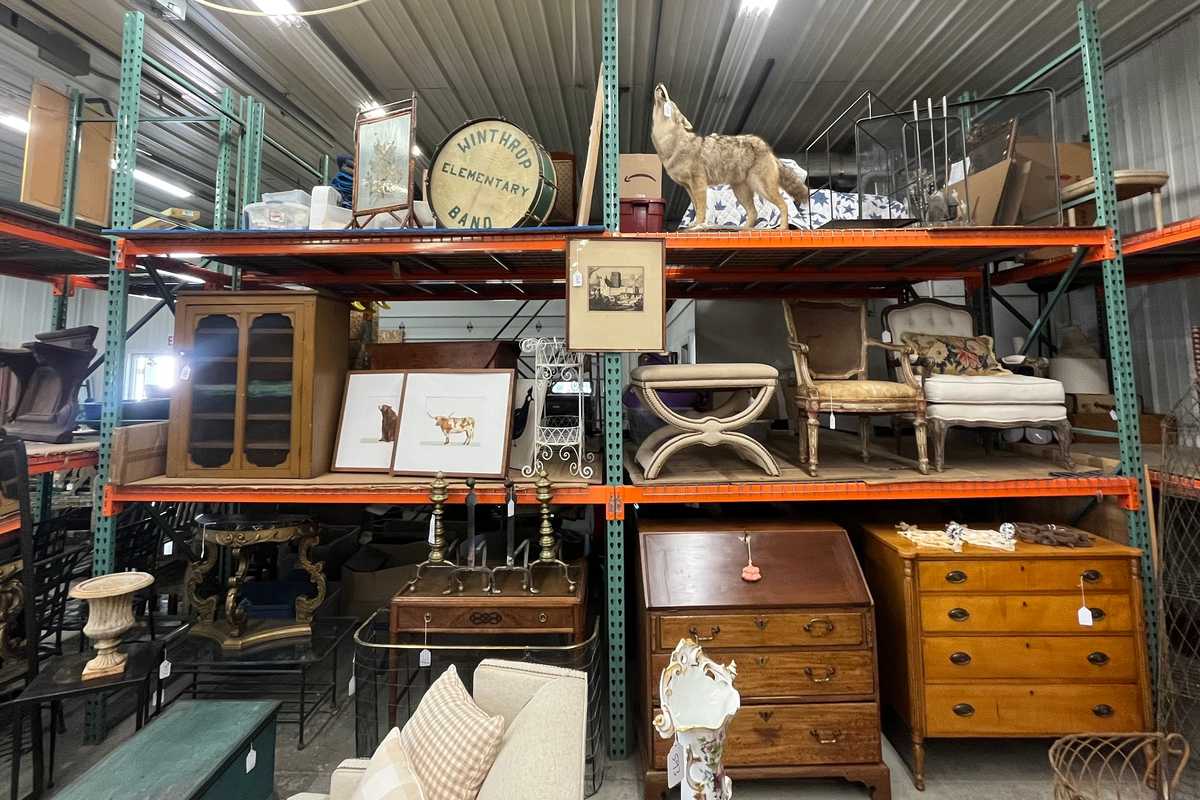
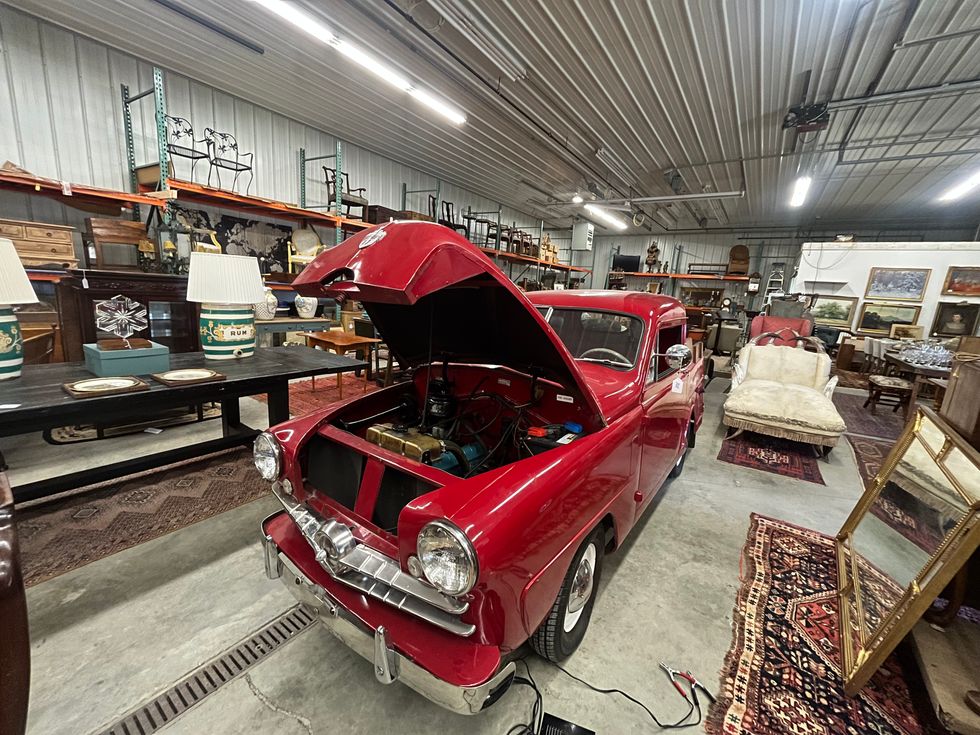 Hundreds of items at Stateline Auctions, including a candy-apple-red Crosley pickup truck.D.H. Callahan