Letting freedom ... freedom ... freedom ... ring

America has always had a complicated relationship with freedom. The comments in 1954 of Howard Mumford Jones, American intellectual, critic, and professor, are eerily prescient in 2020:

“While it is true that we in this nation remain free to be idiotic, it does not necessarily follow that we must be idiotic in order to be free!”

On one level, we have FDR’s State of the Union Address in 1941 outlining the Four Freedoms — Freedom of Speech, Freedom of Worship, Freedom from Want, Freedom from Fear. At the time, most people considered these quintessential American values. Today, many ask: Freedom for who? Freedom from what?

Our embrace of independence and individualism has been a hallmark of our national identity that has often confounded the rest of the world, friend and foe alike. At its best, this self-identification as exceptional, can-do people has fueled an entrepreneurial spirit resulting in technological leadership that is usually lacking in countries more prone to lockstep groupthink. During times of crisis, this has positioned America as the entity that must be heard from before any definitive action is taken.

Less endearing is when this morphs into an entitled attitude of national swagger, particularly when it seeps into everyday life. Attending the 1988 Calgary Winter Olympics, I witnessed this first hand. Inevitably, as we lined up for an event, the only people cutting in line, going in the “out” door, attempting to scale the stairs marked “no entry”, were … wait for it … Americans. A national tragedy? No. A poor reflection on us? Yes.

The problem seems to be that a recipe that calls for both freedom and responsibility can be problematic. Temperature variations and poor timing can really throw things off. Try adding a dash of common courtesy, and sometimes it just boils over into an inedible mess.

Perhaps another Howard Mumford Jones quote can add some insight into why we continue to fail to find the right balance between freedom and responsibility. “Ours is the age which is proud of machines that think and suspicious of men who try to.”

The words of a man who died 40 years ago. “Ours is the age …,” I’d say we’ve hardly aged at all!


M. A. Duca is a resident of Twin Lakes narrowly focused on everyday life.

The views expressed here are not necessarily those of The Lakeville Journal and The Journal does not support or oppose candidates for public office.

Latest News

Kent girls score late win against Millbrook
Pip Davies controls the puck for Kent School.
Photo by Lans Christensen

KENT Kent School's girls hockey team defeated Millbrook School 4-3 in a Valentine's Day showdown on the ice Saturday, Feb. 14.

There was no love lost between these Founders League schools situated on opposite sides of the Connecticut/New York border. Both teams had similar win-loss records, and both were eager to add to the "win" column.

Keep ReadingShow less
In remembrance:
Tim Prentice and the art of making the wind visible
In remembrance: Tim Prentice and the art of making the wind visible

There are artists who make objects, and then there are artists who alter the way we move through the world. Tim Prentice belonged to the latter. The kinetic sculptor, architect and longtime Cornwall resident died in November 2025 at age 95, leaving a legacy of what he called “toys for the wind,” work that did not simply occupy space but activated it, inviting viewers to slow down, look longer and feel more deeply the invisible forces that shape daily life.

Prentice received a master’s degree from the Yale School of Art and Architecture in 1960, where he studied with German-born American artist and educator Josef Albers, taking his course once as an undergraduate and again in graduate school.In “The Air Made Visible,” a 2024 short film by the Vision & Art Project produced by the American Macular Degeneration Fund, a nonprofit organization that documents artists working with vision loss, Prentice spoke of his admiration for Albers’ discipline and his ability to strip away everything but color. He recalled thinking, “If I could do that same thing with motion, I’d have a chance of finding a new form.”

Keep ReadingShow less
google preferred source

Want more of our stories on Google? Click here to make us a Preferred Source.

Laurie Fendrich and Peter Plagens:
A shared 
life in art 
and love

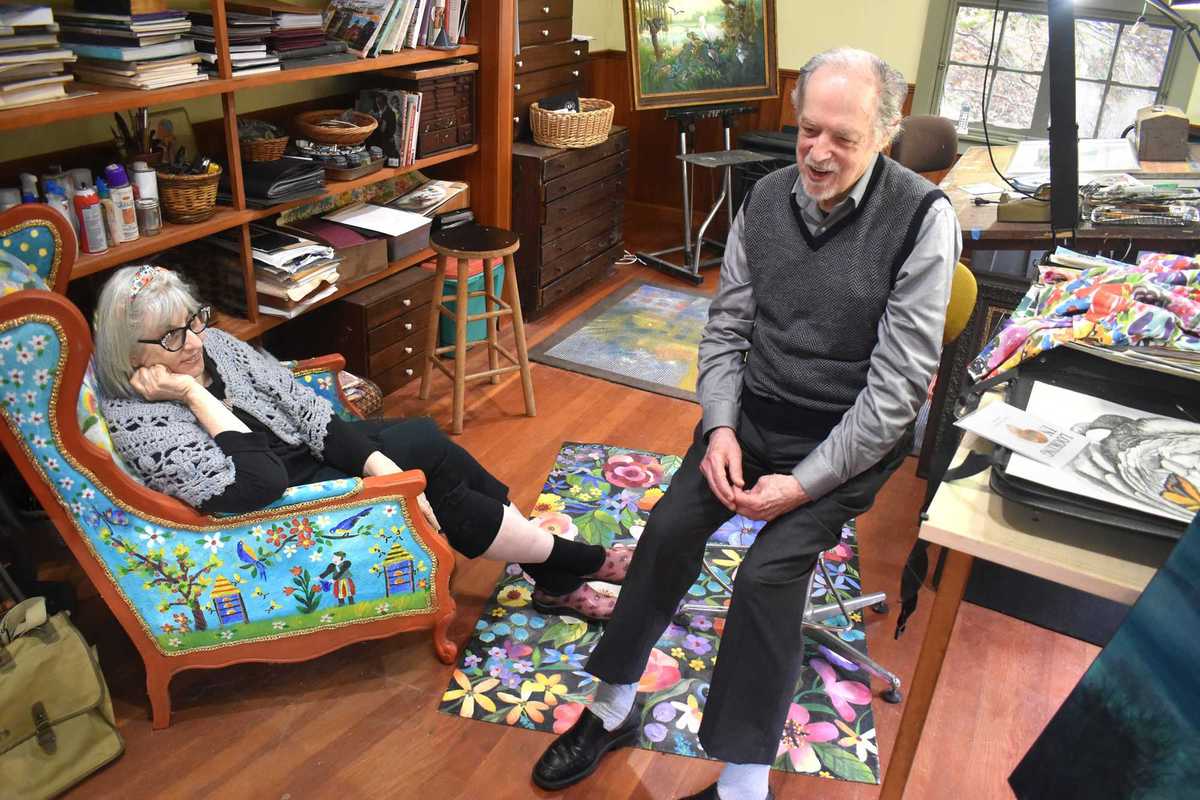
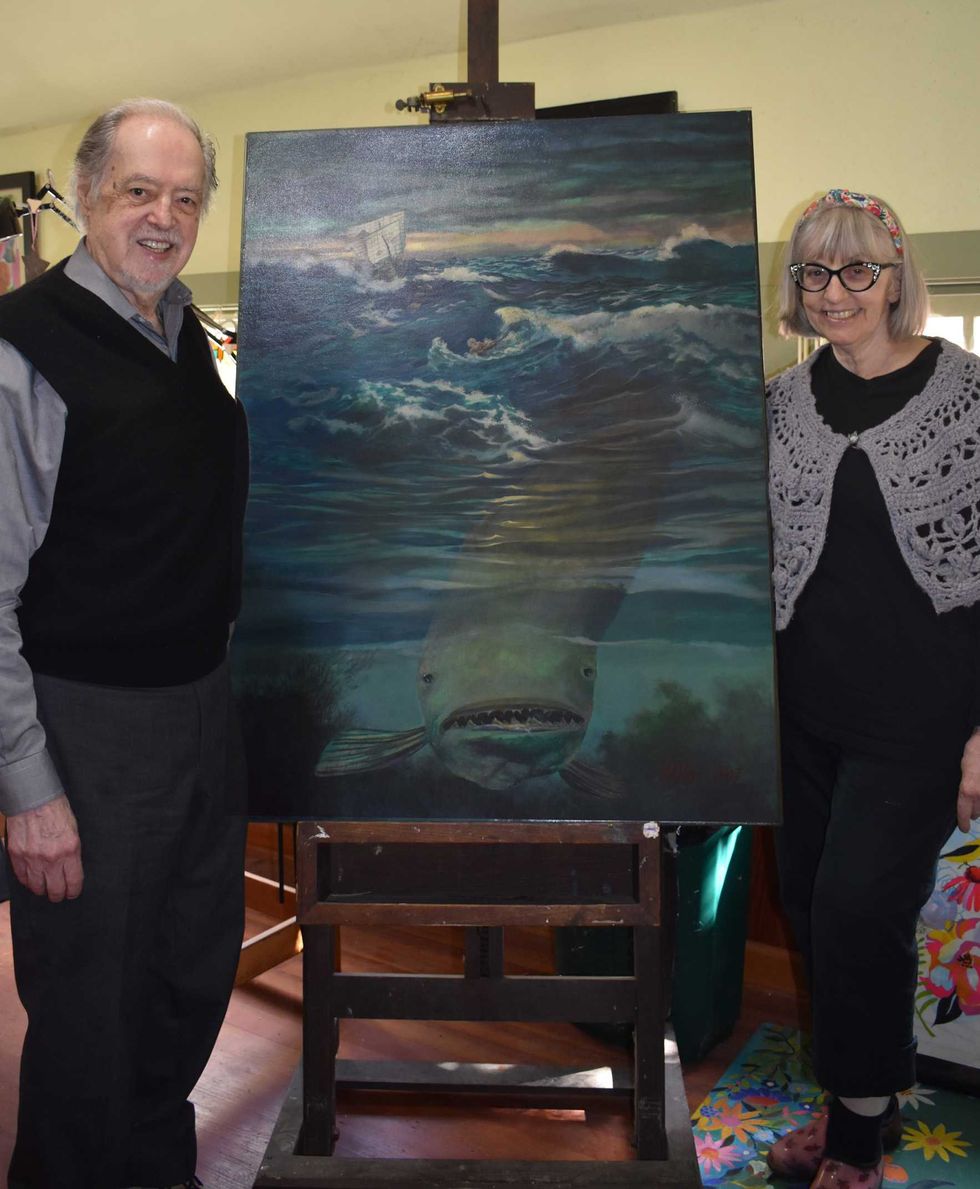
Laurie Fendrich and Peter Plagens at home in front of one of Plagens’s paintings.

Natalia Zukerman
He taught me jazz, I taught him Mozart.
Laurie Fendrich

For more than four decades, artists Laurie Fendrich and Peter Plagens have built a life together sustained by a shared devotion to painting, writing, teaching, looking, and endless talking about art, about culture, about the world. Their story began in a critique room.

“I came to the Art Institute of Chicago as a visiting instructor doing critiques when Laurie was an MFA candidate,” Plagens recalled.

Keep ReadingShow less
Strategic partnership unites design, architecture and construction

Hyalite Builders is leading the structural rehabilitation of The Stissing Center in Pine Plains.

Provided

For homeowners overwhelmed by juggling designers, architects and contractors, a new Salisbury-based collaboration is offering a one-team approach from concept to construction. Casa Marcelo Interior Design Studio, based in Salisbury, has joined forces with Charles Matz Architect, led by Charles Matz, AIA RIBA, and Hyalite Builders, led by Matt Soleau. The alliance introduces an integrated design-build model that aims to streamline the sometimes-fragmented process of home renovation and new construction.

“The whole thing is based on integrated services,” said Marcelo, founder of Casa Marcelo. “Normally when clients come to us, they are coming to us for design. But there’s also some architecture and construction that needs to happen eventually. So, I thought, why don’t we just partner with people that we know we can work well with together?”

Keep ReadingShow less
‘The Dark’ turns midwinter into a weeklong arts celebration

Autumn Knight will perform as part of PS21’s “The Dark.”

Provided

This February, PS21: Center for Contemporary Performance in Chatham, New York, will transform the depths of midwinter into a radiant week of cutting-edge art, music, dance, theater and performance with its inaugural winter festival, The Dark. Running Feb. 16–22, the ambitious festival features more than 60 international artists and over 80 performances, making it one of the most expansive cultural events in the region.

Curated to explore winter as a season of extremes — community and solitude, fire and ice, darkness and light — The Dark will take place not only at PS21’s sprawling campus in Chatham, but in theaters, restaurants, libraries, saunas and outdoor spaces across Columbia County. Attendees can warm up between performances with complimentary sauna sessions, glide across a seasonal ice-skating rink or gather around nightly bonfires, making the festival as much a social winter experience as an artistic one.

Keep ReadingShow less
google preferred source

Want more of our stories on Google? Click here to make us a Preferred Source.

google preferred source

Want more of our stories on Google? Click here to make us a Preferred Source.