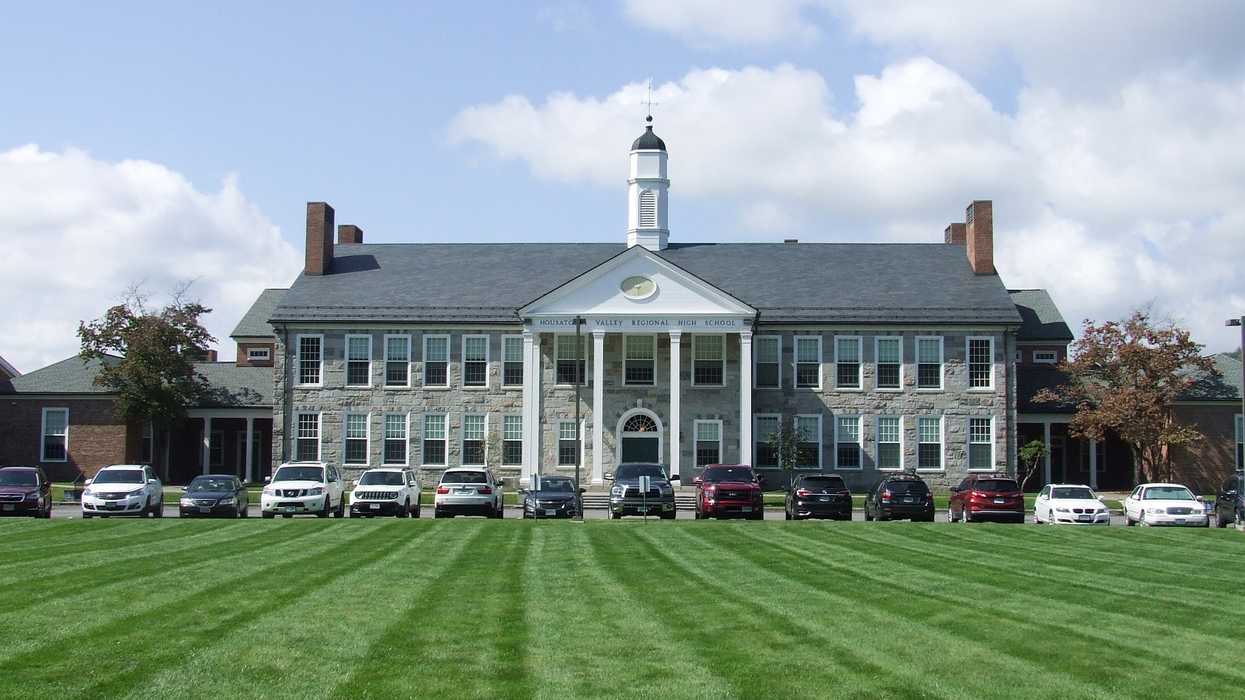
FALLS VILLAGE — Housatonic Valley Regional High School is exploring alternatives to the Berkshire League as other schools consider leaving, potentially forcing the Mountaineers to travel farther and face tougher competition.
At the Nov. 2 Region One Board of Education meeting, Athletic Director Anne MacNeil outlined possible moves to other leagues. The board also heard updates on special education and the study of how the district’s schools are organized, and announced a $181,000 grant for student mental health services.
MacNeil said Housatonic may need to consider joining the Naugatuck Valley League (NVL) or North Central Connecticut Conference (NCCC), or pursue a broader merger involving the Berkshire League.
According to MacNeil, Nonnewaug High School has applied to join the NVL for the 2027-28 school year, seeking more competitive varsity games and more opportunities for sub-varsity teams. She said conversations with Lakeview High School officials indicated that school may also leave the Berkshire League.
“This is not something that I am jumping to do. I don’t want to change leagues,” MacNeil said. But, she added, “I don’t feel we have the luxury of having a strong choice.”
MacNeil has scheduled meetings with representatives of both leagues to discuss options, including a full merger with the Berkshire League. She said gathering feedback from coaches, administrators and families would be the next step.
Travel would be a significant consideration. According to MacNeil’s presentation, the average trip to Berkshire League schools takes about 43 minutes. That would increase to about an hour in the NCCC and 80 minutes in the NVL.
Board Chair Patricia Mechare, who represents Falls Village, questioned how longer trips would affect students’ schoolwork. She also raised concerns about competing against larger schools, including Torrington High.
“Can we be competitive?” Mechare asked. “No matter how much talent you may have… I would just hate to see kids get discouraged if all they did was lose.”
MacNeil said she believed the Mountaineers could compete and that games requiring longer trips would be scheduled on Fridays to limit disruptions during the school week.
Board members also asked about competing independently. MacNeil said that would require arranging individual games across all sports and would eliminate opportunities to compete for league championships.
“It sounds like we’re very much not in the driver’s seat and it’s sort of going to be dependent on how things shake out with these two schools,” said board member David Valcin of Salisbury.
Principal Ian Strever said administrators expect to know more later this month after meeting with the two leagues. Broader changes involving the Berkshire League would take effect in the 2028-29 school year, he said.
While the athletic discussions focused on possible changes ahead, Superintendent Melony Brady-Shanley announced new funding for student mental health.
Region One learned that it would receive $181,000 through the Rural Health Transformation Grant. Brady-Shanley said the funding would support existing social workers and expand access to free telehealth counseling for students who need therapeutic support.
“It’s one huge exciting access piece to this grant,” she said.
The telehealth services would allow students to receive counseling at home, expanding access beyond the school setting.
The announcement came alongside an update from Pupil Services Director Rebecca Gaschel-Clark, who said special education enrollment had remained steady overall this school year, with 13 students entering and 13 leaving across the district’s towns.
In 2025, the board approved a 7.72% increase in the Pupil Services budget, bringing it to $7,522,557. That budget covers special education, counseling, nursing, speech and language assistance, and other student support services.
Gaschel-Clark said staff assignments had shifted as students’ needs changed. She emphasized collaboration between general education and special education staff.
“We’re always riding the wave and we’re always finding that if we’ve lost the need for services in some areas, we’ll usually find them in others. We’ve done a lot of reassigning,” she said.
She thanked staff for their flexibility in responding to those changes.
Mechare asked whether the district’s investment in student support services had become a draw for families considering moving to the area.
Gaschel-Clark said she had no data establishing that connection, but had heard positive feedback from families, including parents of preschoolers.
“And they felt really comfortable that they would get that same treatment and that same experience,” she said.
Brady-Shanley also reported that the district had completed its series of town halls gathering public feedback for the Region One organizational study and was finalizing membership of the committee that will consider reorganization options