MILLBROOK — The impact of the loss of state and federal aid combined with higher spending will increase the Millbrook School District tax levy by 4.92 percent next year, in line with the average increase of the last four years of 4.67 percent annually. While this seems like an inexorable rise, school taxes had been increasing 9.65 percent yearly from 2003 to 2007.
The 5-inch thick notebook filled with budget information is evidence of Superintendent of Schools Lloyd Jaeger’s disciplined approach to controlling the budget. Jaeger characterizes the budget as “resilient in the face of lost state aid� and is proud that “expenditure growth is at historically low levels.
“Budget restraint alone cannot avoid impact on local taxpayers,� he added.
Budgeted expenditures for the Millbrook School District are proposed to increase 3.06 percent next year, according to the school superintendent. When Jaeger arrived in Millbrook four years ago, the Millbrook school system had experienced several years of double-digit spending and tax increases combined with teacher and program cuts. Under Jaeger’s managed budget efforts, costs have been controlled to the best extent possible while the quality of Millbrook’s educational programs has been improved. In fact, over the last two years, spending growth has been halved from an average of 6.75 percent in 2007 and 2008 to 2.86 percent in 2009 and 2010.
The spending budget for the next school year totals almost $25 million, an increase of around $750,000 from the previous year. Most of this increase is attributable to contractual personnel salary increases dictated by existing contracts that account for 75 to 80 percent of the system’s operating costs. Adding to the increases was a 15-percent rise in health insurance premiums.
With reduced state aid, the cost will largely be covered by school tax levies of around $20 million. State aid of around $2.6 million and other revenues to the system will balance the budget. Jaeger pointed out that the proposed budget manages to preserve 100 percent of current programs and initiatives with no increase in class size.
This year was particularly difficult because of the predicted 10-percent reduction in state aid to schools and Albany’s use of federal stimulus money to bail out the state rather than fund education. This required Jaeger to cut a total of six-and-a-half positions, including three teachers. Reduction of one of those teaching positions was achieved through retirement, but one special education and one remedial teacher position, previously funded by federal stimulus money, had to be eliminated. Other staff reductions include cuts to operations, clerical, tech training and nursing services.
Voters will have their say on Tuesday, May 18, when they vote to pass or reject the budget; they will also elect members to the school board. In recent years the budget has passed with a 60-percent plurality of the voters, although in 2006-07 the budget was rejected in the first round.
If the budget is rejected, the school board has three choices: declare a contingent budget in effect, which would reduce expenses to the level of the previous year; submit the same budget again for a second round of public voting; or present a revised budget.
Anyone interested in serving on the school board should pick up a petition at the Millbrook school district, get 25 signatures from district voters and then return the signed petition to the office by Saturday, April 10, at 5 p.m. There are three current board members whose three-year terms expire this year and one member who is retiring after one year. The four candidates who receive the most votes will be elected.

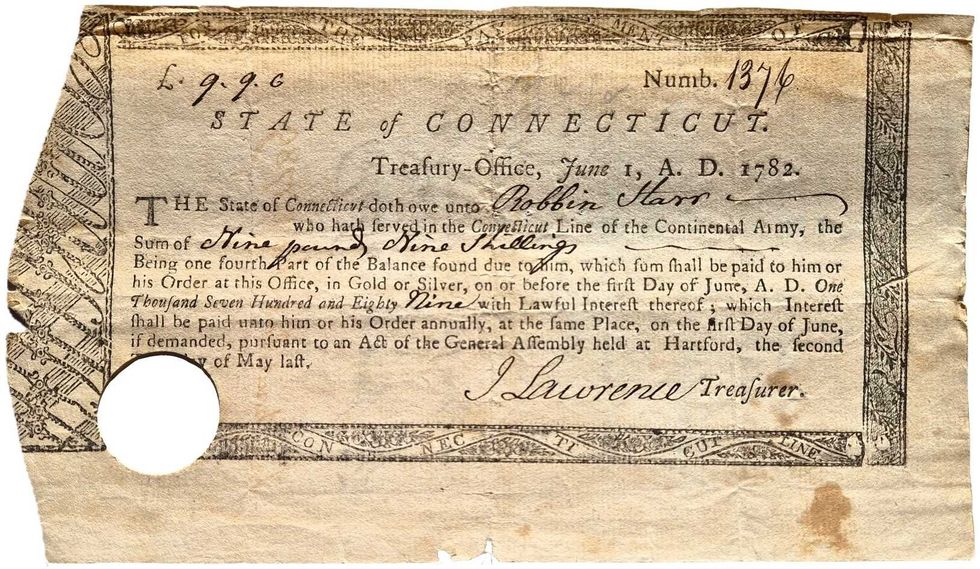 Pay Bill for Robin Starr’s service in the Continental Army.Courtesy the Alex Breanne Corporation
 John Mills speaking at Quinnipiac University.Courtesy the Alex Breanne Corporation
 Stephanie Saetta,with her rescue dog George and Blue (left), a shepherd mix awaiting his forever home.Madi Long
 Blue, a 7 year-old Shepard mix, is waiting for his forever home. Madi Long